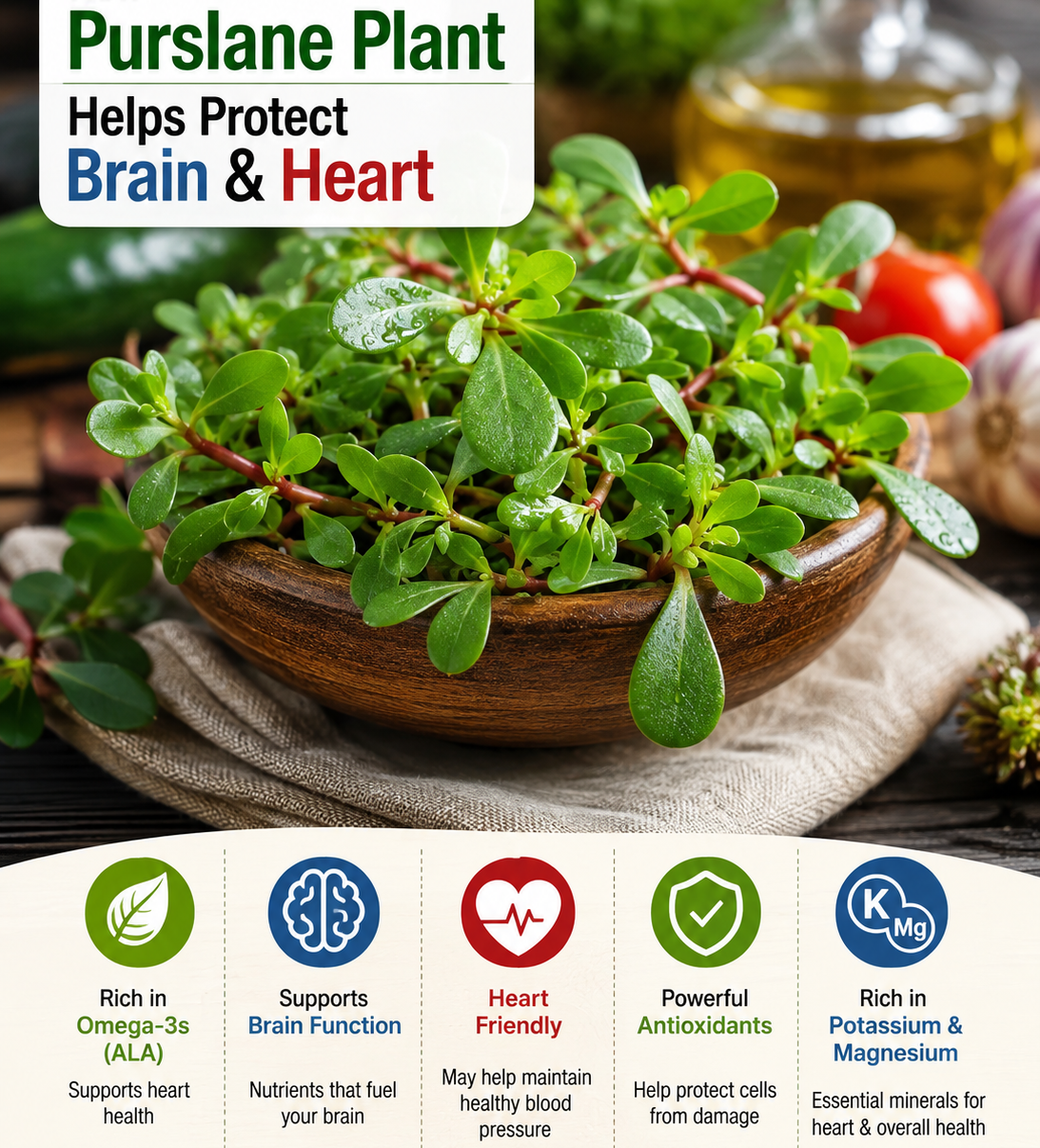
Purslane Plant Helps Protect Brain and Heart
Purslane is a small leafy plant that is often treated as a common garden weed. Its scientific name is Portulaca oleracea, and it has been eaten as a vegetable in many parts of the world for generations. What makes purslane interesting is its mix of omega-3 fatty acids, antioxidants, vitamins, and minerals.
Adding nutrient-rich greens to your diet can support overall health, and purslane offers several nutrients linked with cardiovascular and brain function. It contains alpha-linolenic acid (ALA), a plant-based omega-3 fat, along with vitamin C, vitamin E, carotenoids, magnesium, potassium, and other beneficial compounds. (PubMed)
Research does not show that eating purslane can prevent heart disease, stroke, dementia, or other medical conditions by itself. However, its nutritional profile makes it a useful addition to a balanced eating pattern focused on vegetables, fruits, whole grains, beans, nuts, and healthy fats.
What Is Purslane?
Purslane is a succulent green plant with small, rounded leaves and reddish stems. It can grow in gardens, lawns, fields, and cracks in sidewalks, but wild plants should not automatically be considered safe to eat.
Edible purslane has a slightly lemony, salty, or tangy flavor and can be eaten raw or cooked. Young leaves and tender stems are commonly added to salads, soups, sandwiches, stir-fries, and vegetable dishes.
The plant is especially notable for its ALA content. ALA is an essential omega-3 fatty acid, meaning the body needs it but cannot make enough of it on its own. Purslane also supplies antioxidant compounds that help protect cells from oxidative stress. (PubMed)
How Purslane Supports Heart Health
It Provides Plant-Based Omega-3 Fatty Acids
One of the most interesting features of purslane is its ALA omega-3 content. ALA is different from the EPA and DHA omega-3 fats found mainly in fatty fish, but it still plays an important role in a healthy diet.
Research on dietary ALA has found associations between higher intake and better cardiovascular outcomes, although the evidence does not mean that one food can prevent heart disease. (PubMed)
Purslane can therefore contribute a plant-based source of omega-3 fat to meals, especially for people who regularly include plant foods in their diet.
It May Support Healthy Blood Pressure
Potassium and magnesium are important minerals involved in normal muscle and nerve function, including the cardiovascular system. Purslane provides both minerals, although the exact nutrient content can vary depending on growing conditions and plant variety. (PubMed)
A 2025 systematic review of randomized trials found that purslane consumption was associated with a modest reduction in systolic blood pressure, while the evidence for diastolic blood pressure was less certain. The researchers also noted that more high-quality studies are needed. (PubMed)
This makes purslane an interesting food for a heart-conscious diet, but it should not replace prescribed blood-pressure treatment.
It Contains Antioxidant Compounds
Oxidative stress occurs when reactive molecules can damage cells faster than the body can control them. Diets rich in plant foods provide antioxidants and other compounds that help support the body’s natural defense systems.
Purslane contains vitamin C, vitamin E, carotenoids, phenolic compounds, flavonoids, and glutathione. Studies have measured antioxidant activity in purslane leaves, although laboratory antioxidant activity does not automatically translate into a specific health effect in people. (PubMed)
Eating purslane as part of a varied diet can increase exposure to these plant compounds without relying on supplements.
How Purslane May Support Brain Health
ALA Plays a Role in Brain Function
The brain contains a large amount of fat, and dietary fatty acids are important for normal brain structure and function. ALA is one of the essential fatty acids used by the body, although its conversion into the longer-chain omega-3 fats EPA and DHA is limited.
Research examining ALA and cognition has produced promising but still developing findings. A 2022 review reported potential cardiovascular benefits of ALA and described the evidence related to cognition as encouraging but not yet strong enough for firm conclusions. (PubMed)
For this reason, purslane is better viewed as one nutritious source of ALA rather than a treatment for memory loss or cognitive decline.
Antioxidants Help Defend Cells
Brain cells are particularly active and require a steady supply of oxygen and nutrients. Antioxidant-rich foods may help the body manage oxidative stress as part of normal cellular defense.
Purslane provides several antioxidant compounds, including vitamin C, vitamin E, carotenoids, and polyphenols. Research has identified antioxidant activity in purslane extracts and leaves, but human clinical evidence on brain protection remains limited. (PubMed)
A diet containing many colorful vegetables, fruits, legumes, nuts, and whole grains provides a broader range of protective plant compounds than relying on one food.
It Adds Important Minerals to the Diet
Purslane contains minerals such as magnesium, potassium, and calcium. These nutrients contribute to normal nerve, muscle, and cellular function.
Magnesium is involved in hundreds of biochemical reactions in the body, while potassium helps maintain normal fluid balance, nerve signaling, and muscle function. A varied diet can help provide these nutrients consistently. (PubMed)
How to Add Purslane to Your Diet
Fresh purslane can be used much like other leafy greens. Wash it thoroughly under running water and remove damaged portions before eating.
Try adding young leaves to salads for a slightly crisp texture and tangy flavor. You can also mix chopped purslane into soups, omelets, grain bowls, vegetable sautés, or bean dishes.
Another simple option is to combine purslane with tomatoes, cucumbers, onions, olive oil, and lemon juice. This creates a vegetable-rich side dish with healthy fats and several plant nutrients.
Cooking may change the levels of certain nutrients and plant compounds, so using both raw and cooked preparations can add variety to your meals.
Important Safety Considerations
Purslane contains oxalates, which can be important for people who have been advised by a healthcare professional to limit dietary oxalate. A published review reported substantial oxalate levels in fresh purslane leaves. (PubMed)
People taking medications that affect blood pressure, potassium, or fluid balance should speak with a healthcare professional before making large dietary changes involving purslane.
Do not eat a wild plant simply because it looks like purslane. Plants growing near roads, lawns treated with chemicals, or areas contaminated by animals may carry unwanted substances. When possible, use purslane that has been properly identified and grown for food.
Purslane should also be considered a food rather than a substitute for medication. A heart- and brain-supportive lifestyle includes regular physical activity, adequate sleep, healthy blood pressure and cholesterol management, not smoking, and an overall balanced diet.
The Bottom Line
Purslane is a nutrient-dense leafy green with a unique nutritional profile. Its ALA omega-3 fatty acids, antioxidants, vitamin C, vitamin E, potassium, magnesium, and other plant compounds make it a useful addition to a varied diet. (PubMed)
The strongest reason to eat purslane is not that it acts like a medicine. Its value comes from adding another whole plant food to meals while providing nutrients associated with normal cardiovascular and cellular function.
Current research suggests that purslane may support factors related to heart health, including blood pressure, while its possible role in brain health remains an area of ongoing research. (PubMed)
For better long-term health, enjoy purslane alongside other vegetables, fruits, beans, whole grains, nuts, seeds, and healthy sources of fat rather than depending on a single food.
Frequently Asked Questions
Is purslane good for the heart?
Purslane provides ALA omega-3 fats, potassium, magnesium, and antioxidants that can fit into a heart-healthy diet. (PubMed)
Can purslane help protect the brain?
Purslane supplies ALA and antioxidant compounds, but direct evidence that it prevents brain disease or cognitive decline is still limited. (PubMed)
Does purslane contain omega-3 fatty acids?
Yes. Purslane is notable for its alpha-linolenic acid (ALA), a plant-based essential omega-3 fatty acid. (PubMed)
Can purslane lower blood pressure?
Research suggests purslane may modestly reduce systolic blood pressure, but more high-quality studies are needed to confirm its long-term effects. (PubMed)
Is it safe to eat purslane every day?
Purslane can be part of a varied diet, but people who need to limit oxalates or manage certain medical conditions should ask a healthcare professional first.
What nutrients are found in purslane?
Purslane contains ALA, vitamins C and E, carotenoids, potassium, magnesium, calcium, and several antioxidant plant compounds. (PubMed)
Can purslane replace heart or brain medication?
No. Purslane is a nutritious food and should not replace prescribed medicines or professional treatment for cardiovascular or neurological conditions.
🌿 Looking for more natural wellness tips? Follow These 👇👇👇
Rosemary Tea on an Empty Stomach – Natural Morning Boost
Doctors Reveal That Eating Beets Causes…