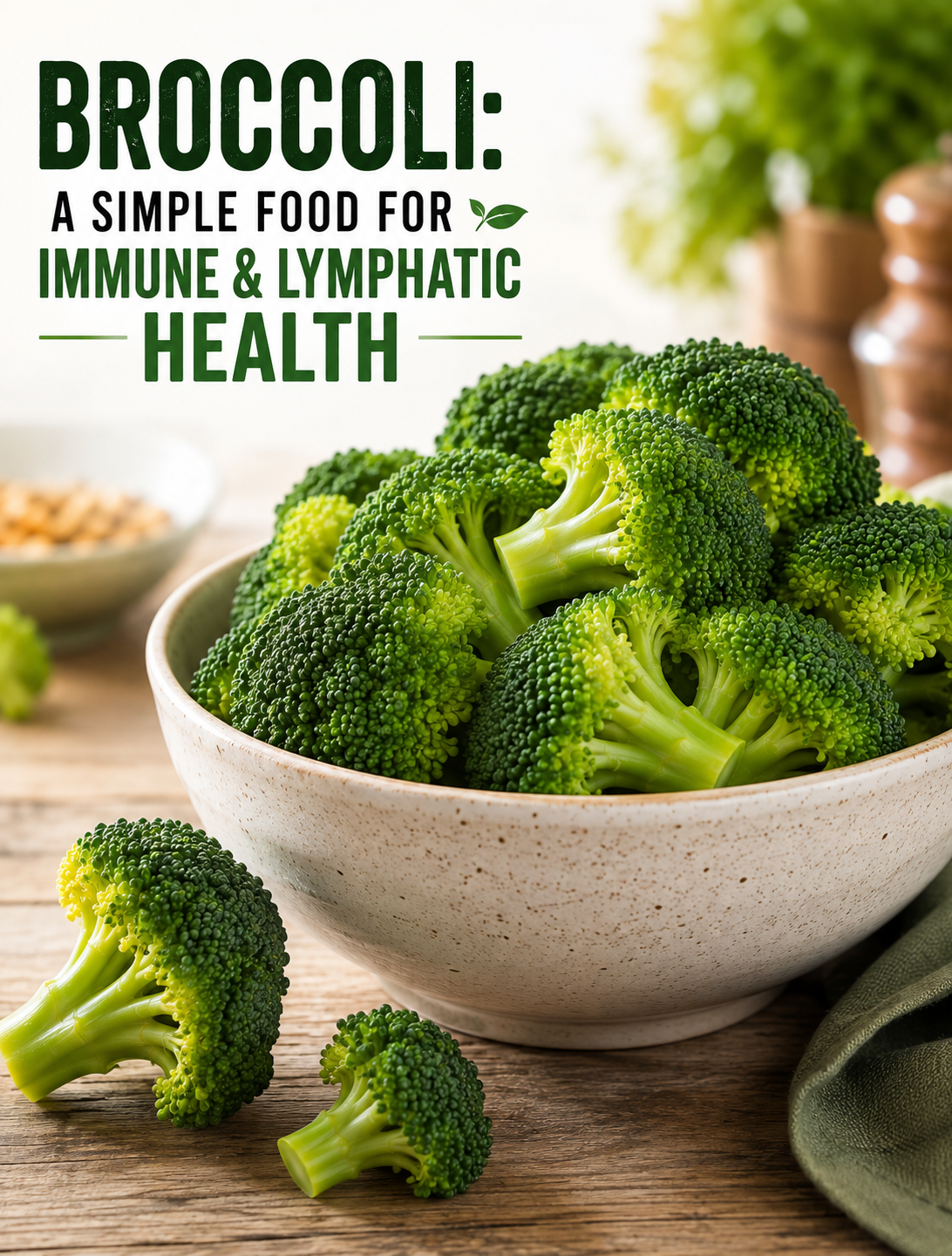
BROCCOLI:
A SIMPLE FOOD FOR IMMUNE & LYMPHATIC HEALTH
Broccoli A SIMPLE FOOD FOR IMMUNE & LYMPHATIC HEALTH is one of the easiest vegetables to add to a healthy eating plan. It is low in calories and provides vitamin C, vitamin K, folate, fiber, and other plant nutrients. These nutrients help support normal immune function and overall health.
The lymphatic system also plays an important role in your body’s defense system. It includes lymph nodes, lymph vessels, the spleen, thymus, and other tissues that help manage fluids and support immune activity. Food cannot “clean” or directly flush lymph nodes, but a balanced diet can provide nutrients your body needs to function normally.
Adding broccoli to regular meals is a simple way to increase vegetable intake. You can enjoy it raw, steamed, roasted, stir-fried, or added to soups and salads.
Why Is Broccoli Good for Immune Health?
Broccoli contains vitamin C, an essential nutrient that supports several parts of normal immune function. Your body also uses vitamin C to make collagen, which helps maintain skin and other tissues that form part of the body’s protective barriers.
One cup of chopped raw broccoli provides a useful amount of vitamin C while adding very few calories. Eating broccoli with other colorful vegetables, fruits, beans, whole grains, nuts, seeds, and lean proteins can create a more balanced diet.
Broccoli also contains antioxidants and other plant compounds. These substances help protect cells from oxidative stress as part of the body’s normal processes.
No single vegetable can prevent infections or guarantee strong immunity. The best approach is to eat a variety of nutrient-rich foods as part of an overall healthy lifestyle.
How Does Broccoli Support the Lymphatic System?
The lymphatic system helps maintain fluid balance and supports immune surveillance throughout the body. Lymph nodes filter lymph fluid and contain immune cells that help respond to foreign substances.
Broccoli does not specifically “detox” lymph nodes or make them drain faster. Instead, its nutrients contribute to a healthy diet that supports normal body functions.
Its fiber content is another reason to include broccoli in regular meals. Dietary fiber supports digestive health and helps you build a diet rich in plant foods. A healthy digestive system is one part of maintaining overall wellness.
Hydration also matters. Drinking enough fluids helps your body maintain normal fluid balance. Pairing water with vegetables such as broccoli can be a simple part of a balanced daily routine.
Key Nutrients Found in Broccoli
Broccoli offers several nutrients that make it a useful addition to meals.
Vitamin C: Supports normal immune function and collagen production.
Vitamin K: Helps with normal blood clotting and supports bone health.
Folate: Helps the body make DNA and supports normal cell division.
Fiber: Supports digestive health and helps add bulk to meals.
Plant compounds: Broccoli contains naturally occurring compounds, including glucosinolates, that are being studied for their potential health effects.
The nutritional value of broccoli can vary depending on serving size and preparation method. Eating it in different forms can also make it easier to include more vegetables in your weekly meals.
Best Ways to Eat Broccoli for Everyday Wellness
How you prepare broccoli can make a big difference in whether you enjoy eating it regularly. Simple cooking methods often work best.
Steam it: Light steaming can soften broccoli while keeping its bright color and fresh taste.
Roast it: Toss florets with a small amount of olive oil and seasonings, then roast until the edges are lightly browned.
Stir-fry it: Add broccoli to a quick meal with chicken, tofu, shrimp, or beans.
Add it to soups: Broccoli works well in vegetable, chicken, and bean-based soups.
Eat it raw: Fresh florets make a convenient snack with hummus or a yogurt-based dip.
Add it to salads: Chopped broccoli gives salads extra crunch and fiber.
For a balanced meal, combine broccoli with a protein source, a whole grain or other carbohydrate, and a source of healthy fat.
Broccoli and an Anti-Inflammatory Eating Pattern
Broccoli can fit well into an anti-inflammatory eating pattern, but it should not be treated as a cure for inflammation. A healthy eating pattern is more important than any single ingredient.
Build meals around vegetables, fruits, whole grains, beans, lentils, nuts, seeds, fish, and other minimally processed foods. Olive oil and other sources of unsaturated fats can also fit into this style of eating.
Reducing highly processed foods, excess added sugars, and foods high in saturated fat can help you create a more balanced diet. The goal is not perfection; it is making healthier choices more often.
A simple dinner could include roasted broccoli, grilled salmon, and brown rice. Another option is broccoli with chickpeas, quinoa, tomatoes, and olive oil for a plant-forward meal.
How Much Broccoli Should You Eat?
There is no special amount of broccoli required to support your lymph nodes or immune system. Instead, focus on getting a variety of vegetables throughout the week.
The Dietary Guidelines for Americans encourage adults to include vegetables as part of a healthy eating pattern. Broccoli can count toward your daily vegetable intake and can be mixed with other vegetables for greater variety.
If you are not used to eating many vegetables, start with a small serving and increase gradually. Adding broccoli to meals you already enjoy can make the change easier.
Easy Broccoli Meal Ideas
A few simple combinations can help you make broccoli part of your normal routine.
Try garlic roasted broccoli with chicken for a quick weeknight dinner. For lunch, add steamed broccoli to a turkey and whole-grain bowl with brown rice or quinoa.
For a meat-free option, combine broccoli with chickpeas, quinoa, avocado, and a lemon-olive oil dressing. You can also blend cooked broccoli into a vegetable soup for a warm and filling meal.
Frozen broccoli is another convenient choice. It can be stored for longer periods and added to quick meals when fresh produce is not available.
Important Things to Remember About Lymph Nodes
Healthy food supports your overall nutrition, but it cannot diagnose or treat a lymph node problem.
Lymph nodes can become swollen when your immune system is responding to an infection or another condition. A swollen node may improve as the underlying problem resolves, but persistent or unusual swelling should not be managed with food alone.
Talk with a healthcare professional if a swollen lymph node lasts, continues to grow, feels hard or fixed, or occurs with other concerning symptoms. Medical advice is especially important when you are unsure why the swelling is present.
Simple Takeaway
Broccoli is a nutritious vegetable that can support a healthy eating pattern. Its vitamin C, fiber, folate, vitamin K, and plant compounds make it a smart addition to meals.
It does not directly cleanse lymph nodes or “boost” the immune system overnight. Instead, include broccoli alongside other nutrient-rich foods, stay active, get enough sleep, drink adequate fluids, and follow other healthy daily habits.
Small food choices can add up over time. Making broccoli a regular part of your meals is one simple step toward a more balanced diet.
Frequently Asked Questions
1. Does broccoli help your lymph nodes?
Broccoli does not directly cleanse or treat lymph nodes, but its nutrients can contribute to an overall healthy diet that supports normal immune and body functions.
2. Is broccoli good for your immune system?
Yes. Broccoli provides vitamin C and other nutrients that support normal immune function when included as part of a balanced diet.
3. Can broccoli reduce swollen lymph nodes?
Broccoli cannot be relied on to reduce swollen lymph nodes because swelling can have many causes and may require medical evaluation.
4. What is the best way to cook broccoli?
Steaming, roasting, and quick stir-frying are simple options that make broccoli easy to include in healthy meals.
5. Is raw broccoli healthier than cooked broccoli?
Both raw and cooked broccoli can be nutritious, so the best choice is the form you enjoy and can eat regularly.
6. Can I eat broccoli every day?
For most people, broccoli can be included regularly as part of a varied diet, but eating a wide range of vegetables provides greater nutritional variety.
7. Does broccoli detox the lymphatic system?
No. There is no special food that detoxes lymph nodes; the body has its own systems for managing waste and maintaining fluid balance.
8. What foods pair well with broccoli?
Broccoli pairs well with salmon, chicken, beans, lentils, eggs, brown rice, quinoa, nuts, seeds, and olive oil for balanced meals.