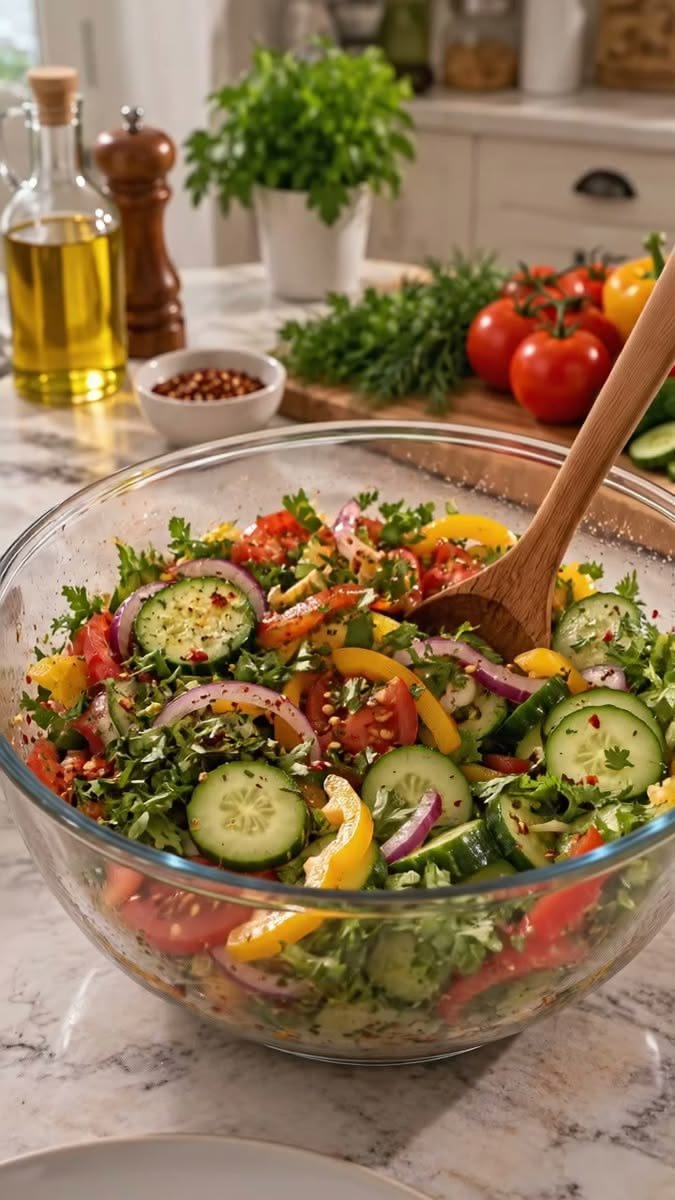
Fresh Garden Vegetable Salad
Introduction
Fresh Garden Vegetable Salad is a colorful, crisp, and refreshing dish made with a delicious combination of fresh vegetables, fragrant herbs, and a light homemade dressing. Packed with vibrant greens, juicy tomatoes, crunchy cucumbers, sweet bell peppers, and thinly sliced red onions, this salad is perfect for everyday meals, summer gatherings, picnics, and healthy lunches.
What makes this salad special is its simplicity. You don’t need complicated cooking techniques or expensive ingredients to create something flavorful and satisfying. Fresh vegetables provide natural sweetness, crunch, and color, while a tangy lemon-olive oil dressing brings everything together beautifully.
This versatile salad pairs wonderfully with grilled chicken, baked fish, roasted vegetables, sandwiches, wraps, and pasta dishes. You can also customize it with chickpeas, feta cheese, avocado, or sunflower seeds to create a more filling meal.
Whether you’re preparing a quick lunch, planning a family dinner, or looking for a refreshing side dish, Fresh Garden Vegetable Salad is an easy recipe worth making again and again.
Recipe Overview
-
Prep Time: 20 minutes
-
Cook Time: 0 minutes
-
Total Time: 20 minutes
-
Servings: 4–6
-
Course: Salad or side dish
-
Cuisine: Garden-inspired, Mediterranean-style
-
Difficulty: Easy
Ingredients
For the Salad
-
4 cups fresh romaine lettuce or mixed salad greens
-
2 medium ripe tomatoes, chopped
-
1 large cucumber, sliced
-
1 medium green bell pepper, chopped
-
1 medium red bell pepper, chopped
-
1/2 medium red onion, thinly sliced
-
1 medium carrot, peeled and grated
-
1/2 cup shredded purple cabbage
-
1/4 cup fresh parsley, chopped
-
1/4 cup sweet corn, cooked and cooled
-
1/4 cup sliced black or Kalamata olives (optional)
-
1/3 cup crumbled feta cheese (optional)
For the Homemade Dressing
-
3 tablespoons extra-virgin olive oil
-
2 tablespoons fresh lemon juice
-
1 tablespoon red wine vinegar
-
1 teaspoon Dijon mustard
-
1 teaspoon honey, optional
-
1 small garlic clove, finely minced
-
1/2 teaspoon dried oregano
-
1/4 teaspoon freshly ground black pepper
-
1/4 teaspoon salt, or to taste
Equipment Needed
-
A large salad bowl
-
A small bowl or jar for the dressing
-
A sharp kitchen knife
-
A cutting board
-
A vegetable peeler or grater
-
A salad spinner or clean kitchen towel
-
A whisk or spoon
Instructions
Step 1: Wash and Prepare the Vegetables
Begin by washing all the vegetables thoroughly under cool running water. Remove any damaged leaves from the lettuce and discard them.
If using lettuce, dry it well with a salad spinner or clean kitchen towel. Excess water can dilute the dressing and make the salad less flavorful.
Chop the lettuce into bite-sized pieces and place it in a large salad bowl. Slice the cucumber, chop the tomatoes and bell peppers, thinly slice the red onion, and grate the carrot.
Cutting the vegetables into reasonably similar sizes makes the salad easier to eat and ensures that each serving contains a balanced combination of ingredients.
Step 2: Prepare the Lettuce and Cabbage
Add the chopped lettuce and shredded purple cabbage to the salad bowl.
Romaine lettuce provides a crisp texture, while purple cabbage adds a slightly sweet flavor and attractive color. If you prefer a softer salad, substitute baby spinach or mixed spring greens for some of the lettuce.
Avoid cutting the lettuce too far in advance if you want it to remain especially crisp. Store washed greens in the refrigerator until you’re ready to assemble the salad.
Step 3: Add the Fresh Vegetables
Add the chopped tomatoes, cucumber slices, green bell pepper, red bell pepper, grated carrot, and thinly sliced red onion to the bowl.
Scatter the sweet corn over the vegetables, followed by the chopped parsley.
The tomatoes contribute juicy sweetness, cucumbers provide refreshing crunch, and bell peppers add a pleasant crispness. Carrots and cabbage contribute additional texture, making every bite colorful and satisfying.
If using olives, add them at this stage. Their salty, savory flavor complements the fresh vegetables beautifully.
Step 4: Prepare the Lemon-Olive Oil Dressing
In a small bowl, combine the extra-virgin olive oil, lemon juice, red wine vinegar, Dijon mustard, honey, minced garlic, dried oregano, salt, and black pepper.
Whisk until the ingredients are well combined and the dressing looks slightly emulsified.
Alternatively, place all the dressing ingredients in a small jar, secure the lid, and shake vigorously for 20–30 seconds.
Taste the dressing before adding it to the salad. If you prefer a tangier flavor, add a little more lemon juice. For a milder dressing, add a small amount of olive oil. If your tomatoes and carrots are already very sweet, you may not need the honey.
Step 5: Combine the Salad and Dressing
Just before serving, drizzle the dressing over the vegetables.
Using salad tongs or two large spoons, gently toss everything together until the vegetables are lightly coated.
Avoid adding all the dressing at once if you prefer a lightly dressed salad. Start with about half, toss, and add more according to your taste.
For the best texture, dress the salad shortly before serving. This helps prevent the lettuce from wilting and keeps the vegetables crisp.
Step 6: Add the Optional Toppings
If using feta cheese, sprinkle it over the salad after tossing. The creamy, salty cheese adds richness and pairs especially well with the lemon dressing.
You can also add toasted sunflower seeds, pumpkin seeds, or chopped walnuts for extra crunch.
For a more filling version, add drained chickpeas, white beans, diced avocado, or grilled chicken. If including avocado, cut it just before serving to help maintain its color and texture.
Step 7: Garnish and Serve
Finish the salad with a little extra chopped parsley, freshly ground black pepper, or a light squeeze of lemon juice.
Serve immediately in a large bowl or arrange the vegetables on a wide platter for an attractive presentation.
For individual servings, place a generous portion of greens and vegetables on each plate, then distribute the dressing and toppings evenly.
Tips for the Best Fresh Garden Vegetable Salad
1. Choose fresh, seasonal vegetables. Fresh ingredients provide the best flavor and texture. Select firm cucumbers, crisp peppers, vibrant greens, and ripe but not mushy tomatoes.
2. Dry the lettuce thoroughly. Water clinging to the leaves can dilute the dressing and prevent it from coating the greens properly.
3. Cut vegetables evenly. Bite-sized pieces make the salad easier to eat and help distribute the ingredients throughout each serving.
4. Prepare the dressing separately. Mixing the dressing in a small bowl or jar allows you to adjust the flavor before adding it to the salad.
5. Dress just before serving. Lemon juice and salt draw moisture from vegetables, while dressing can soften lettuce if added too early.
6. Balance the flavors. The best dressing combines acidity, richness, and a little sweetness. Adjust the lemon juice, olive oil, and honey according to your taste.
7. Add toppings thoughtfully. Feta, olives, seeds, and nuts provide additional flavor, but a few well-chosen toppings usually work better than adding everything at once.
8. Keep ingredients cold. Refrigerated vegetables are especially refreshing in a summer salad. However, avoid freezing fresh vegetables because it damages their texture.
Delicious Variations
1. Mediterranean Garden Salad
Add Kalamata olives, crumbled feta cheese, sliced cucumber, and dried oregano. Use lemon juice and extra-virgin olive oil for a classic Mediterranean-inspired flavor.
2. Garden Salad with Avocado
Add one ripe avocado, diced just before serving. Its creamy texture complements the crisp vegetables and tangy dressing. You can also add toasted pumpkin seeds for crunch.
3. High-Protein Garden Salad
Add grilled chicken breast, boiled eggs, chickpeas, or white beans. These ingredients make the salad more substantial and provide additional protein.
4. Creamy Garden Vegetable Salad
Replace the vinaigrette with a dressing made from plain Greek yogurt, lemon juice, Dijon mustard, garlic, and chopped herbs. Add a little water to thin it to your preferred consistency.
5. Sweet Corn and Pepper Salad
Increase the sweet corn and add extra red bell pepper. This variation has a naturally sweeter flavor and works well with grilled chicken, fish, or barbecue dishes.
6. Crunchy Cabbage Garden Salad
Use a combination of shredded green cabbage, purple cabbage, carrots, cucumber, and bell peppers. This version holds its texture longer than a salad made entirely with delicate lettuce.
7. Garden Salad with Apples and Nuts
Add thin apple slices and chopped walnuts or pecans. The sweetness of the apple and the crunch of the nuts create an appealing contrast with the tangy dressing.
8. Spicy Garden Salad
Add finely sliced jalapeño or a pinch of red pepper flakes to the dressing. The gentle heat adds excitement without overwhelming the fresh vegetable flavors.
What to Serve with Fresh Garden Vegetable Salad
Fresh Garden Vegetable Salad complements a wide range of meals.
-
Grilled chicken: The crisp vegetables and tangy dressing balance the savory flavor of grilled chicken.
-
Baked fish: Serve alongside lemon-herb salmon, cod, or other baked fish for a light meal.
-
Roasted vegetables: Pair it with roasted potatoes, zucchini, eggplant, or carrots.
-
Sandwiches and wraps: Enjoy it with chicken sandwiches, turkey wraps, or grilled vegetable pita.
-
Pasta dishes: The freshness of the salad balances creamy pasta and rich tomato sauces.
-
Rice bowls: Serve beside seasoned rice, grilled protein, and roasted vegetables.
-
Burgers: A generous serving provides a refreshing contrast to a hearty burger.
-
Soup: Pair it with vegetable soup, chicken soup, or creamy wild rice soup for a comforting lunch.
For an easy, balanced dinner, serve the salad with grilled chicken, roasted potatoes, and a slice of whole-grain bread.
Storage and Make-Ahead Instructions
Fresh Garden Vegetable Salad is best enjoyed immediately after dressing, but you can prepare several components ahead of time.
Wash and dry the lettuce, chop sturdy vegetables, and prepare the dressing separately. Store the vegetables in an airtight container in the refrigerator, keeping delicate greens away from excess moisture.
For the best quality, assemble the salad within about 1–2 days. Add tomatoes, avocado, feta, and dressing closer to serving time whenever possible.
If you have already dressed the salad, refrigerate leftovers promptly in an airtight container and consume them within about one day for the best texture. The lettuce may soften as it absorbs the dressing.
Do not leave the salad at room temperature for more than two hours, or more than one hour in temperatures above 90°F (32°C). If it contains chicken, eggs, or dairy-based dressing, keep it refrigerated and follow the same food-safety limits.
Freezing is not recommended because lettuce, cucumbers, and tomatoes become watery and lose their crisp texture after thawing.
Approximate Nutritional Information
The following estimates are for one serving when the recipe is divided into six portions, using the olive oil dressing and excluding optional feta and olives.
-
Calories: 120–160
-
Protein: 3–4 g
-
Carbohydrates: 10–14 g
-
Fat: 9–12 g
-
Fiber: 3–5 g
-
Sugar: 5–8 g
-
Sodium: Varies with added salt and toppings
These figures are estimates. Actual nutrition depends on vegetable sizes, the quantity of dressing consumed, and any optional ingredients.
Ingredient Benefits
Lettuce and leafy greens: These vegetables provide water, fiber, folate, and vitamin K. They add volume and freshness to the salad.
Tomatoes: Tomatoes contain vitamin C, potassium, and lycopene, a naturally occurring plant compound with antioxidant properties.
Cucumbers: Cucumbers have a high water content and provide a cool, refreshing crunch.
Bell peppers: Red and green peppers supply vitamin C and other plant compounds. Red peppers generally have a sweeter flavor than green peppers.
Carrots: Carrots provide beta-carotene, which the body can convert into vitamin A, an important nutrient for normal vision and immune function.
Purple cabbage: Purple cabbage contributes fiber, vitamin C, and colorful plant compounds called anthocyanins.
Olive oil: Extra-virgin olive oil provides unsaturated fats and antioxidant compounds. It also helps carry the flavors of the dressing.
Fresh parsley: Parsley adds a fresh herbal flavor and small amounts of vitamins and minerals.
Together, these ingredients provide a variety of nutrients and can help make everyday meals more colorful and satisfying. The salad’s overall nutritional value depends on portion size, dressing, and additional toppings.
Frequently Asked Questions
1. Can I make Fresh Garden Vegetable Salad ahead of time?
Yes. Wash and dry the vegetables and prepare the dressing in advance. Keep everything refrigerated separately and toss the salad shortly before serving to preserve its freshness.
2. What vegetables can I substitute?
You can use baby spinach, arugula, radishes, cherry tomatoes, zucchini ribbons, or shredded cabbage. Choose vegetables that you enjoy and that are fresh and crisp.
3. Can I make the salad without lettuce?
Absolutely. Replace the lettuce with extra cucumber, tomatoes, bell peppers, and cabbage. This creates a crunchy vegetable salad that holds up well for a little longer.
4. How can I make this salad more filling?
Add grilled chicken, boiled eggs, chickpeas, white beans, quinoa, avocado, or feta cheese. These additions provide extra protein, healthy fats, or carbohydrates.
5. Can I use bottled dressing?
Yes. A store-bought vinaigrette can save time. Choose one you enjoy and add it gradually so the vegetables do not become overly dressed.
6. How do I keep lettuce crisp?
Wash the lettuce, dry it thoroughly, and store it in a sealed container with a clean paper towel to absorb excess moisture. Keep the dressing separate until serving.
7. Is this salad suitable for vegetarians?
Yes. The basic recipe is vegetarian. If adding cheese or packaged dressing, check the ingredients if you follow specific dietary requirements.
8. Can I make it vegan?
Yes. Omit the feta cheese and use maple syrup instead of honey if you want a sweetener. Check the mustard and other packaged ingredients to ensure they meet your preferences.
9. What dressing works best?
A lemon-olive oil vinaigrette is a simple, refreshing choice. You can also use balsamic vinaigrette, apple cider vinegar dressing, or a creamy yogurt dressing.
10. Why does my salad become watery?
Tomatoes and cucumbers naturally release moisture, especially after being cut and salted. Dry the vegetables well, add the dressing just before serving, and avoid adding too much salt too early.