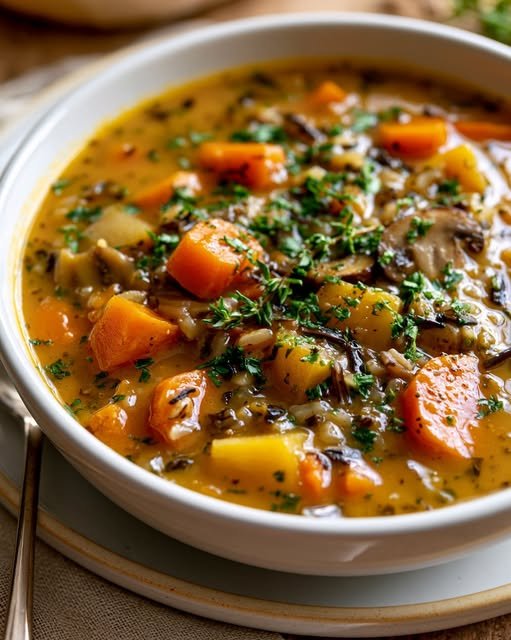
Cozy Autumn Wild Rice Soup
Introduction
Cozy Autumn Wild Rice Soup is the perfect comforting meal for chilly evenings, crisp fall afternoons, and cozy family dinners. This hearty soup combines nutty wild rice, tender vegetables, aromatic herbs, and a rich, creamy broth to create a satisfying dish that feels warm and nourishing in every spoonful.
Carrots, celery, onions, garlic, and mushrooms bring layers of flavor, while wild rice adds a pleasantly chewy texture. A creamy broth made with milk or cream gives the soup a silky finish without overpowering the earthy taste of the rice and vegetables. Thyme, rosemary, and black pepper provide the comforting aromas that make this recipe especially wonderful during autumn and winter.
This soup is versatile enough to serve as a vegetarian main course or adapt with shredded chicken for extra protein. It pairs beautifully with crusty bread, warm dinner rolls, or a fresh green salad. Best of all, it uses simple ingredients and can be prepared in one pot, making cleanup easy.
Whether you’re preparing a family meal, planning a cozy weekend dinner, or looking for a comforting recipe to share on your recipe page, this Cozy Autumn Wild Rice Soup is a delicious choice.
Recipe Overview
-
Prep Time: 15 minutes
-
Cook Time: 50–65 minutes
-
Total Time: Approximately 1 hour to 1 hour 20 minutes
-
Servings: 6
-
Cuisine: American-inspired comfort food
-
Course: Soup, lunch, or dinner
-
Difficulty: Easy to moderate
Ingredients
For the Soup
-
1 cup uncooked wild rice blend
-
2 tablespoons olive oil or butter
-
1 medium yellow onion, diced
-
2 medium carrots, peeled and sliced
-
2 celery stalks, chopped
-
8 ounces mushrooms, sliced
-
3 garlic cloves, minced
-
6 cups vegetable broth or chicken broth
-
1 teaspoon dried thyme
-
1/2 teaspoon dried rosemary
-
1/2 teaspoon dried sage
-
1/2 teaspoon paprika
-
1/4 teaspoon freshly ground black pepper
-
Salt, to taste
-
1 bay leaf
-
1 cup whole milk
-
1/2 cup heavy cream
-
2 tablespoons all-purpose flour
-
1 cup chopped fresh spinach or kale
-
1 tablespoon fresh lemon juice, optional
-
2 tablespoons chopped fresh parsley, for garnish
Optional Additions
-
1 1/2 cups cooked shredded chicken
-
1/2 cup frozen peas
-
1 small sweet potato, diced
-
A pinch of red pepper flakes
-
Extra fresh thyme for serving
Instructions
Step 1: Rinse the Wild Rice
Place the wild rice blend in a fine-mesh strainer and rinse it under cool running water. This removes surface starch and any dust or debris.
Check the package instructions because wild rice blends can have different cooking times. Some blends contain white or brown rice, while others contain mostly wild rice. The exact cooking time will depend on the variety.
Set the rinsed rice aside while you prepare the vegetables.
Step 2: Prepare the Vegetables
Dice the onion into small pieces. Peel and slice the carrots, chop the celery, and slice the mushrooms. Mince the garlic.
Try to cut the vegetables into similar-sized pieces so they cook evenly. Smaller carrot pieces will soften faster, while slightly thicker slices will retain more texture.
Keep the garlic separate from the other vegetables because it cooks quickly and can burn if added too early.
Step 3: Sauté the Onion, Carrots, and Celery
Heat the olive oil or butter in a large heavy-bottomed soup pot or Dutch oven over medium heat.
Add the diced onion, carrots, and celery. Cook for approximately 5–7 minutes, stirring occasionally, until the onion becomes translucent and the vegetables begin to soften.
This step creates the flavorful foundation of the soup. Allowing the vegetables to cook gently helps release their natural sweetness and develops a deeper flavor.
Step 4: Add the Mushrooms and Garlic
Add the sliced mushrooms to the pot. Cook for another 5–7 minutes, stirring occasionally, until the mushrooms soften and release their moisture.
Continue cooking until some of the liquid evaporates and the mushrooms begin to brown lightly. This adds a richer, more savory taste.
Stir in the minced garlic, dried thyme, rosemary, sage, paprika, and black pepper. Cook for about 30–60 seconds until fragrant.
Avoid cooking the garlic for too long because it can develop a bitter taste.
Step 5: Add the Wild Rice and Broth
Pour the vegetable or chicken broth into the pot. Add the rinsed wild rice and bay leaf, then stir everything together.
Increase the heat until the mixture reaches a gentle boil. Once boiling, reduce the heat to low and cover the pot partially with a lid.
Simmer for approximately 40–55 minutes, or according to the rice package directions, until the wild rice is tender but still pleasantly chewy.
Stir occasionally to prevent the rice from sticking to the bottom. If the soup becomes too thick before the rice is ready, add a little more broth or water.
Important: If your wild rice blend cooks faster than pure wild rice, begin checking it according to the package’s recommended time.
Step 6: Prepare the Creamy Mixture
While the rice cooks, whisk the flour into the milk in a separate bowl until smooth and free of lumps.
Once the rice is tender, reduce the heat to low. Slowly pour the milk-and-flour mixture into the soup while stirring continuously.
Allow the soup to simmer gently for 3–5 minutes, stirring frequently, until the broth begins to thicken.
Add the heavy cream and stir until incorporated. Keep the heat low and avoid allowing the soup to boil vigorously after adding the dairy, as high heat may cause an undesirable texture.
For a lighter soup, use additional milk instead of heavy cream. The result will be less rich but still creamy and comforting.
Step 7: Add Spinach or Kale
Stir in the chopped spinach and allow it to wilt for 1–2 minutes. If using kale, simmer for an additional 3–5 minutes, or until tender.
Add frozen peas at this stage if desired. They generally need only a few minutes to heat through.
If you’re adding cooked shredded chicken, stir it into the soup and simmer gently until heated thoroughly.
Step 8: Adjust the Seasoning
Remove the bay leaf from the pot.
Taste the soup and add salt as needed. The amount required will depend on the saltiness of your broth, so add it gradually.
For a brighter flavor, stir in a tablespoon of fresh lemon juice. This optional addition balances the richness of the cream and highlights the earthy flavor of the mushrooms and herbs.
If the soup is too thick, add a splash of warm broth or milk. If it is too thin, let it simmer gently for a few additional minutes, stirring frequently.
Step 9: Garnish and Serve
Ladle the hot soup into bowls and garnish with chopped fresh parsley and a sprinkle of black pepper.
For an extra-cozy presentation, add a small drizzle of olive oil or a few fresh thyme leaves.
Serve immediately with warm crusty bread, garlic toast, or soft dinner rolls. The bread is perfect for soaking up the creamy broth.
Tips for the Best Wild Rice Soup
1. Choose the right rice. Wild rice has a nutty flavor and chewy texture that makes this soup distinctive. Blends work well, but cooking times vary, so check the package directions.
2. Brown the mushrooms. Allowing mushrooms to release their moisture and develop a little color creates a deeper, more savory flavor.
3. Use fresh aromatics. Fresh garlic, onion, celery, and carrots provide the foundation for a flavorful broth.
4. Add dairy near the end. Stirring in the milk and cream after the rice has cooked helps prevent the dairy from becoming overheated during the long simmer.
5. Adjust the thickness. Wild rice absorbs liquid as it cooks and continues absorbing it during storage. Keep extra broth available to thin the soup when reheating.
6. Season gradually. Broths can contain varying amounts of sodium. Taste the soup before adding extra salt.
7. Don’t rush the simmer. Gentle cooking allows the rice to become tender and gives the vegetables and herbs time to develop their flavors.
8. Make it your own. Add cooked chicken, white beans, sweet potatoes, or extra leafy greens to suit your family’s preferences.
Delicious Variations
1. Chicken Wild Rice Soup
Add 1 1/2 to 2 cups of cooked shredded chicken. Rotisserie chicken is a convenient option. Stir it in after the rice is tender and allow it to heat through before serving.
2. Vegetarian Wild Rice Soup
Use vegetable broth and omit the chicken. Add extra mushrooms, white beans, or chickpeas for a more substantial vegetarian meal. Check the broth ingredients if preparing the soup for someone who avoids animal products.
3. Vegan Wild Rice Soup
Replace butter with olive oil, use vegetable broth, and substitute unsweetened oat milk or another suitable plant-based milk for dairy. For extra creaminess, blend a portion of cooked white beans with broth and stir it into the soup. Use a suitable plant-based thickener if needed.
4. Sweet Potato and Wild Rice Soup
Add one small diced sweet potato along with the carrots and celery. Its natural sweetness pairs beautifully with rosemary, sage, and wild rice.
5. Spinach and Mushroom Wild Rice Soup
Increase the mushrooms to 12 ounces and use two cups of spinach. This variation emphasizes the earthy mushroom flavor and adds extra vegetables.
6. Extra-Herby Autumn Soup
Add a little fresh thyme, rosemary, and sage near the end of cooking. Fresh herbs can have a stronger aroma than dried herbs, so begin with small amounts and adjust to taste.
What to Serve with Cozy Autumn Wild Rice Soup
This soup can be served as a complete meal or paired with simple sides.
-
Crusty artisan bread: Perfect for dipping into the creamy broth.
-
Garlic dinner rolls: Soft, buttery rolls complement the earthy herbs.
-
Fresh green salad: A salad with mixed greens, apples, walnuts, and a light vinaigrette adds freshness.
-
Roasted Brussels sprouts: Their caramelized edges pair nicely with the nutty rice.
-
Roasted root vegetables: Carrots, parsnips, and sweet potatoes reinforce the autumn flavors.
-
Grilled cheese sandwiches: A crispy cheese sandwich makes this soup an especially comforting lunch.
-
Baked chicken: Serve smaller bowls alongside baked chicken for a hearty family dinner.
For a simple seasonal menu, pair the soup with warm whole-grain bread and a crisp apple salad.
Storage and Reheating
Allow leftover soup to cool slightly before transferring it to shallow, airtight containers. Refrigerate within two hours of cooking.
Store in the refrigerator for 3–4 days. The wild rice will continue absorbing liquid, so the soup may become thicker after chilling.
To reheat, place a portion in a saucepan over medium-low heat. Add a splash of broth or milk and stir gently until hot throughout. Avoid vigorous boiling, especially because the soup contains dairy.
You can also reheat individual portions in the microwave in a microwave-safe bowl, stirring at intervals to distribute the heat evenly.
For freezing, the best option is to freeze the soup before adding the milk and cream. Thaw it in the refrigerator, reheat it thoroughly, and then add the dairy mixture. This helps maintain a smoother texture.
A fully prepared dairy-based soup can sometimes be frozen, but the texture may separate slightly after thawing. Stirring during gentle reheating can help improve the consistency.
Approximate Nutritional Information
The following estimates are per serving, assuming six servings and using olive oil, whole milk, heavy cream, and vegetable broth, without optional chicken or cheese.
-
Calories: 280–350
-
Protein: 7–10 g
-
Carbohydrates: 35–42 g
-
Fat: 11–17 g
-
Fiber: 4–6 g
-
Sugar: 5–8 g
-
Sodium: Varies with the broth and added salt
These values are approximate and depend on the specific ingredients, serving sizes, and amount of cream used.
Ingredient Benefits
Wild rice: Wild rice provides complex carbohydrates, fiber, and plant-based protein. Its nutty flavor and chewy texture make the soup filling and satisfying.
Carrots: Carrots contain beta-carotene, which the body can convert into vitamin A. They also contribute natural sweetness and color.
Mushrooms: Mushrooms add a savory, earthy flavor and provide nutrients such as B vitamins. Some varieties also provide vitamin D when appropriately exposed to ultraviolet light.
Spinach or kale: These leafy greens contribute vitamins, minerals, and fiber while adding freshness and color.
Garlic and onions: These aromatic vegetables provide flavor and contain naturally occurring plant compounds.
Olive oil: Olive oil provides unsaturated fats and helps sauté the vegetables while adding richness.
Milk and cream: Dairy products contribute calcium and protein, although the amount depends on the type and quantity used.
Together, these ingredients create a comforting soup that can fit into a balanced eating pattern. To increase protein, add chicken or white beans; to reduce richness, use less cream or replace it with additional milk.
Frequently Asked Questions
1. Can I use regular rice instead of wild rice?
Yes, but the texture and cooking time will change. Brown rice offers a nutty flavor, while white rice cooks more quickly and has a softer texture. Follow the package instructions and adjust the liquid as needed.
2. Can I make this soup ahead of time?
Yes. Prepare it a day ahead and refrigerate it promptly. The flavors often blend beautifully overnight, although the rice will absorb more broth. Add extra liquid when reheating.
3. How can I make the soup thicker?
Allow it to simmer gently for a few extra minutes, or add a little additional flour mixed with cold milk. Another option is to blend a small portion of the vegetables and broth, then stir it back into the pot.
4. How do I make it dairy-free?
Use olive oil instead of butter and substitute unsweetened plant-based milk for dairy milk. Blend some cooked white beans into the broth for a creamy texture without heavy cream.
5. Can I add chicken?
Absolutely. Add cooked shredded chicken near the end of cooking and simmer until thoroughly heated. This makes the soup more protein-rich and turns it into a heartier main course.
6. Why is my soup too thick the next day?
Wild rice continues absorbing liquid as it sits. Stir in a little broth or milk while reheating until the desired consistency returns.
7. Can I cook this soup in a slow cooker?
Yes. Combine the broth, rice, vegetables, and seasonings in a slow cooker and cook until the rice is tender according to your appliance and rice type. Add the milk, cream, flour mixture, and spinach near the end. Avoid adding dairy at the beginning of a long cooking period.
8. Is wild rice gluten-free?
Wild rice itself is naturally gluten-free. However, all-purpose flour is not. To make the recipe gluten-free, use a suitable gluten-free flour or cornstarch slurry and verify that the broth and other packaged ingredients are gluten-free.