5 Simple Body Reset Tricks to Feel More Refreshed and Relaxed
Sometimes you do not need an expensive supplement, complicated morning routine, or hour-long wellness session to feel a little better.
A few simple habits can help you slow down, refresh your mind, or become more aware of your body.
You may have seen viral posts calling these habits “body reset buttons.” While your body does not literally have hidden reset switches, some simple actions can still help you feel calmer, more alert, or refreshed.
The important thing is to separate helpful wellness habits from exaggerated internet claims.
Below are five easy body reset tricks you can try during your normal day.
What Are Body Reset Tricks?
“Body reset” is not an official medical term.
On social media, people often use the phrase to describe small habits that may help them relax, wake up, refocus, or temporarily step away from stress.
Think of these techniques as simple wellness breaks rather than medical treatments.
They cannot cure anxiety, insomnia, fatigue, or other health conditions. However, some habits—especially controlled breathing—have been studied for their potential effects on relaxation and the autonomic nervous system. Research reviews have found that slow breathing can influence heart-rate variability and other processes connected with relaxation and stress regulation.
Here are five easy ideas to try.
1. Try a 60-Second Eye and Screen Reset
If you spend hours looking at your phone, laptop, or television, your eyes may feel tired by the end of the day.
Instead of aggressively blinking for a full minute, try a gentler version.
Put your phone down.
Close your eyes for about 20 to 60 seconds.
Relax your forehead, jaw, and shoulders.
Take several comfortable breaths.
Then slowly open your eyes.
This simple pause gives you a short break from visual stimulation.
Try It Before Bed
Dim the lights and put your phone away.
Close your eyes and breathe slowly for approximately one minute.
Think of this as a relaxation routine rather than a trick that will instantly make you fall asleep.
There is no good reason to promise that blinking rapidly will “trick your brain” into sleep within a certain number of minutes.
Instead, use the moment as a signal that your day is winding down.
2. Brush Your Teeth With Your Non-Dominant Hand
Here is one of the more fun body reset tricks.
If you normally brush your teeth with your right hand, try using your left hand occasionally.
If you are left-handed, try your right.
It will probably feel awkward at first.
That is exactly what makes it interesting.
You suddenly have to pay attention to an activity that normally happens almost automatically.
Why Try It?
The main benefit is not that switching hands magically “activates” your brain.
Instead, it changes an ordinary routine into something that requires more concentration.
You have to think about:
- How you hold the toothbrush
- How much pressure you use
- Where you move your hand
- What direction you brush
- How carefully you perform the task
It can be a fun mindfulness-style challenge in the morning.
However, brushing properly is more important than completing the challenge.
If your teeth are not being cleaned effectively with your opposite hand, switch back.
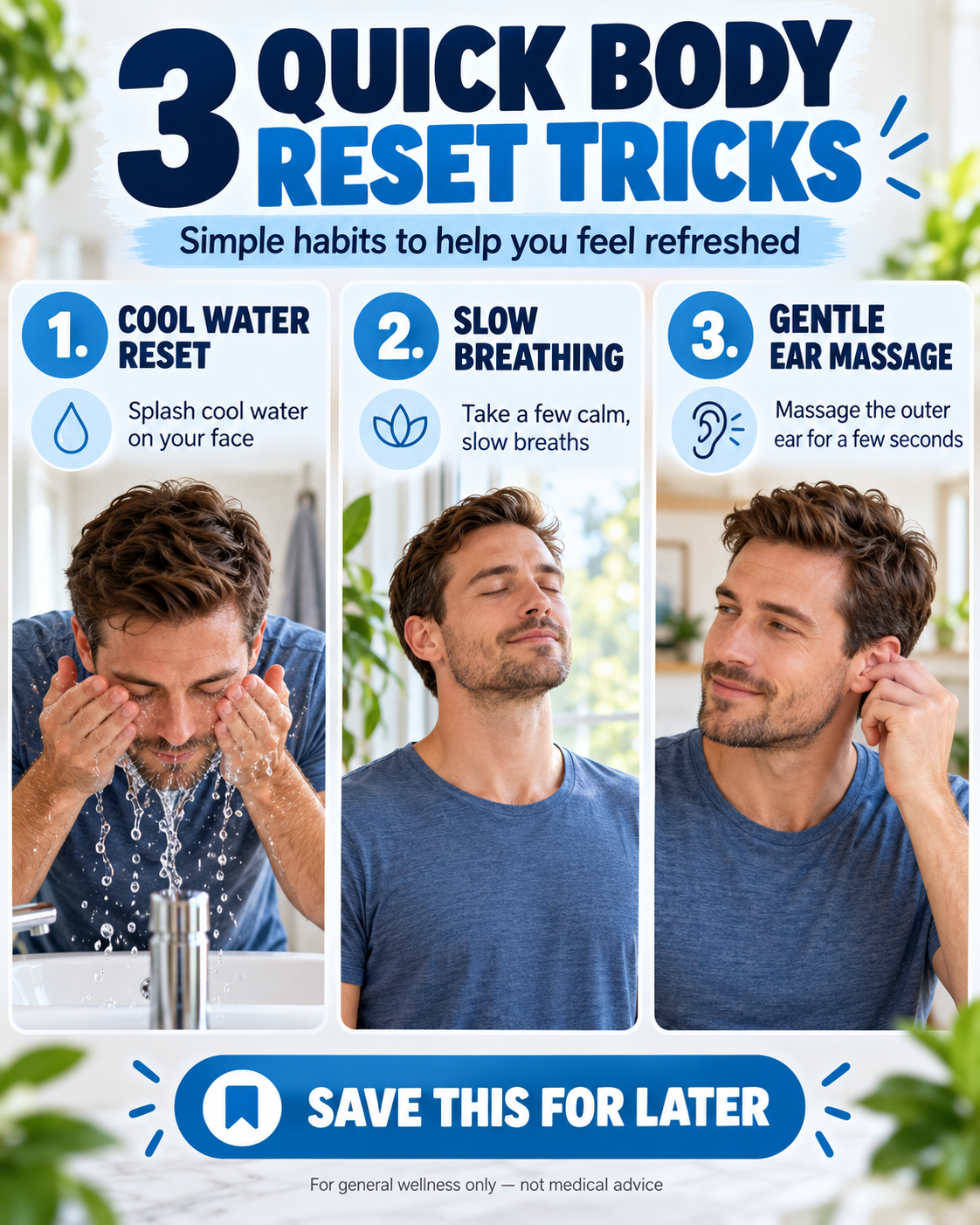
3. Use Cool Water for a Morning Refresh
Feeling sleepy when you first get up?
Try splashing comfortable cool water on your face.
The sudden temperature change can feel refreshing and may temporarily increase feelings of alertness.
Cold exposure has been associated with increased alertness in some research, although evidence for full-body cold-water exposure should not automatically be applied to a simple facial splash. Cleveland Clinic similarly notes that cold exposure may help people feel more alert while distinguishing a simple splash from stronger cold-water exposure.
How to Try It
Use cool—not painfully icy—water.
Splash your face gently several times.
Pat your skin dry with a clean towel.
Then continue your normal morning routine.
You can also simply wash your face with cool water if splashing feels uncomfortable.
Remember
Cold water is not a replacement for sufficient sleep.
If you constantly feel exhausted despite getting enough rest, it is worth discussing the problem with a healthcare professional rather than repeatedly trying to “hack” tiredness.
4. Try the Slow-Breathing Reset
Of all the body reset tricks in this article, controlled slow breathing has some of the strongest scientific support.
Breathing patterns interact with the autonomic nervous system, which helps regulate processes such as heart rate and the body’s stress response.
Reviews of slow-breathing research have reported changes in heart-rate variability, respiratory sinus arrhythmia, and other measures related to autonomic function. Some studies also report improvements in relaxation and reduced feelings of arousal or anxiety.
Try This Simple Version
Sit comfortably.
Relax your shoulders.
Breathe in gently through your nose.
Then breathe out slowly and comfortably.
Repeat for several breaths.
There is no need to force yourself to take extremely deep breaths.
The goal is comfortable, controlled breathing.
A Simple Pattern
You might try:
Breathe in for about 4 seconds.
Breathe out for about 5 or 6 seconds.
Repeat several times.
A slightly longer exhale feels relaxing for many people.
A recent review of slow breathing and heart-rate variability also highlighted breathing patterns involving longer exhalations, although research is still developing.
Stop if you become dizzy or uncomfortable.
5. Try a Gentle Ear Massage
After spending hours at a desk or looking at screens, a quick self-massage can simply feel pleasant.
Using clean hands, gently massage the outside of your ears.
Start near the top and move downward.
You can also gently massage the area immediately around the ears.
Continue for approximately 20 to 30 seconds.
What Does It Do?
The safest reason to recommend this habit is simple:
It may feel relaxing.
Avoid claims that rubbing your ears will dramatically boost circulation, detox your body, balance hormones, or treat medical conditions.
Those claims require much stronger evidence.
Think of an ear massage as a short self-care break rather than a medical treatment.
A 2-Minute Body Reset Routine
You can also combine several of these body reset tricks into one short routine.
First 30 Seconds
Put your phone down and close your eyes.
Relax your jaw and shoulders.
Next 30 Seconds
Take several slow, comfortable breaths.
Keep your exhale slightly longer than your inhale if that feels natural.
Next 30 Seconds
Splash cool water on your face or gently wash your face.
Final 30 Seconds
Massage your ears, temples, or shoulders gently.
Then return to your day.
The goal is not to create a magical biological reset.
The goal is simply to interrupt a stressful or tiring moment with a short period of intentional self-care.
When These Tricks May Be Most Useful
You could try a short reset:
- After working at a computer for several hours
- During a stressful afternoon
- Before beginning an important task
- After scrolling on your phone for too long
- During your morning routine
- Before your evening wind-down routine
- Whenever you need a brief mental break
Consistency can be more valuable than trying to make any one wellness trick perfect.
What These Tricks Cannot Do
Social media wellness videos often turn simple habits into dramatic medical claims.
You may see statements such as:
“Do this for 10 seconds to instantly stop anxiety.”
“This pressure point resets your nervous system.”
“This trick knocks you out in five minutes.”
“This activates your brain instantly.”
Those statements should be treated cautiously.
Slow breathing, relaxation, and other simple behaviors can influence how you feel, but they are not guaranteed treatments for medical conditions.
Breathing research is promising, but researchers also note that more evidence is needed to fully understand how different techniques should be used in different health conditions.
How to Make Your Daily Reset More Effective
Simple habits work best when they support the basics rather than replace them.
Get Enough Sleep
A cold-water splash can make you feel refreshed temporarily, but it cannot replace healthy sleep.
Drink Enough Water
Dehydration can contribute to tiredness and difficulty concentrating.
Move Regularly
If you have been sitting for a long time, stand up and walk for a few minutes.
Step Away From Screens
Taking occasional screen breaks can help you mentally disconnect from constant notifications and information.
Slow Your Breathing
If you are feeling tense, controlled breathing is one of the simplest techniques you can practice almost anywhere.
A systematic review of breathing practices suggests that regulated breathing techniques may support stress and anxiety reduction through effects involving the autonomic nervous system, although breathing exercises should not be considered a substitute for professional treatment when it is needed.
Frequently Asked Questions
Do body reset tricks really work?
It depends on what you mean by “work.”
Simple actions such as slow breathing or taking a sensory break may help you feel calmer or more refreshed.
However, there is no literal reset button that instantly changes every system in your body.
Can slow breathing help with stress?
Research suggests that controlled slow breathing can affect autonomic processes and may promote relaxation