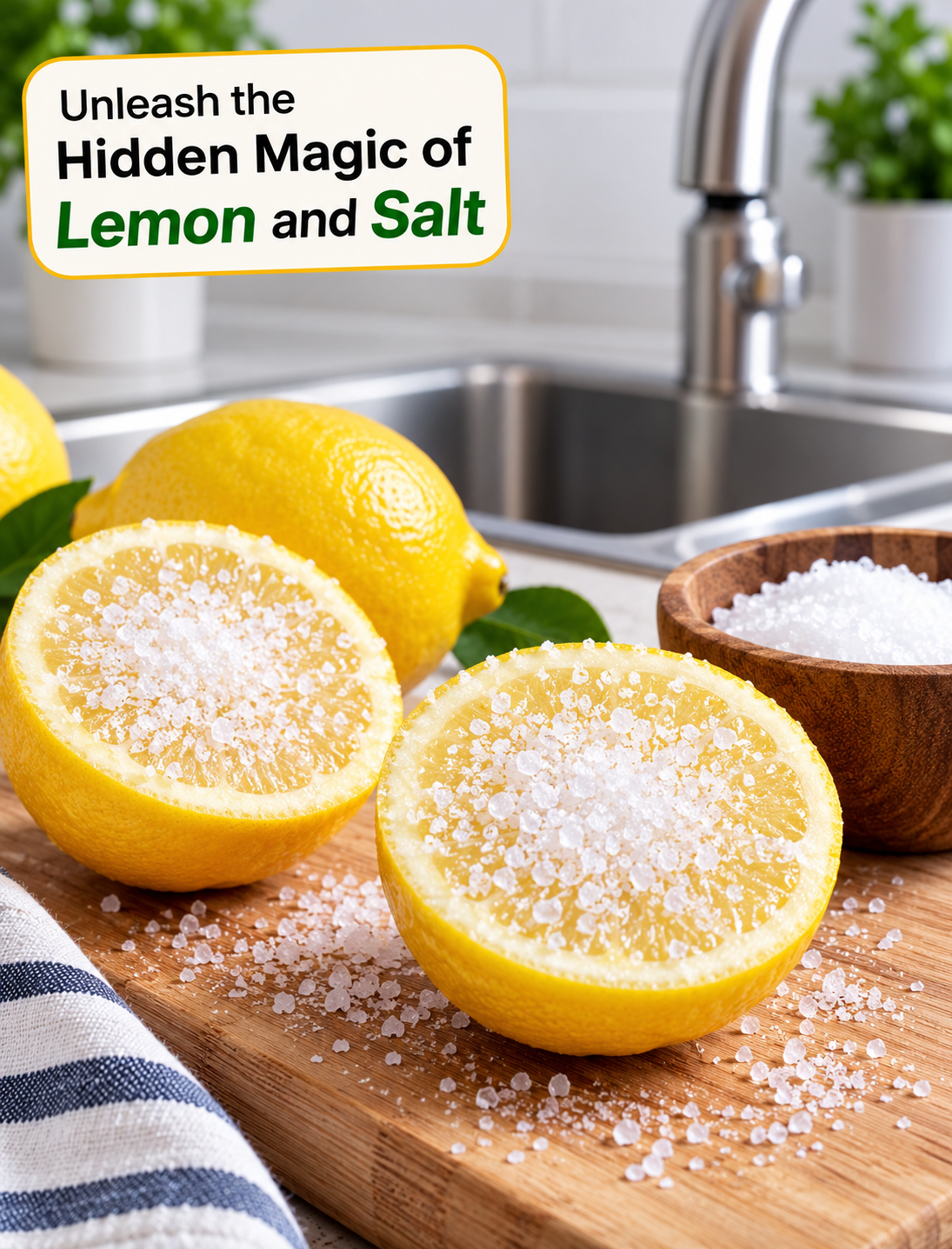
Unleash the Hidden Magic of Lemon and Salt
Lemon and salt are two simple kitchen staples that can do much more than add flavor to food. When used correctly, their acidity, texture, and fresh scent make them useful for everyday household tasks, food preparation, and simple self-care routines.
A fresh lemon contains citric acid and vitamin C, while salt provides a mild abrasive texture that can help loosen grime. Together, they can become a practical, low-cost option for certain cleaning jobs and kitchen tasks.
The key is knowing where this combination works well and where it should be avoided. Lemon and salt are not a cure-all, and they should not replace medical treatment or proven cleaning products when stronger solutions are needed.
Why Lemon and Salt Work So Well Together
Lemon juice contains citric acid, which can help break down some mineral deposits, food residue, and surface buildup. Salt adds gentle scrubbing power, making it easier to lift stuck-on residue from suitable surfaces.
This combination is especially useful for:
- Removing light stains and food residue
- Freshening certain kitchen surfaces
- Cleaning some cutting boards and sinks
- Loosening mineral buildup
- Deodorizing areas with food odors
- Creating a simple homemade cleaning paste
The results depend on the surface, the type of residue, and how long the mixture remains in contact with it.
Lemon and Salt for Natural Kitchen Cleaning
One of the easiest ways to use this combination is for basic kitchen cleaning. The acidic juice helps loosen residue, while salt provides a textured surface for gentle scrubbing.
Step-by-Step Kitchen Cleaning Method
- Cut a fresh lemon in half. Use a juicy lemon for the best coverage.
- Sprinkle a small amount of salt over the cut surface.
- Rub the lemon gently over a suitable non-porous surface.
- Let the juice sit briefly if residue needs extra time to loosen.
- Wipe the area with a clean damp cloth.
- Rinse the surface thoroughly if it comes into contact with food.
- Dry the area completely to prevent leftover moisture.
This method can work well on stainless-steel sinks and some cutting boards, but always check the manufacturer’s care instructions first.
Freshen Up Cutting Boards and Kitchen Surfaces
Cutting boards can hold strong food odors after preparing ingredients such as garlic, onions, and fish. Lemon can help provide a fresh citrus scent, while salt can help scrub away surface residue.
For a basic cleaning routine, sprinkle salt over a suitable cutting board and rub it gently with half a lemon. Rinse the board well with clean water and allow it to dry completely.
For food-safety purposes, washing with hot soapy water remains important, especially after handling raw meat, poultry, or seafood. Lemon and salt should be treated as a supplemental cleaning method rather than a substitute for proper sanitation.
Remove Light Mineral Buildup
Citric acid in lemon juice can help loosen some hard-water deposits. This can be useful around faucets, sinks, and other suitable non-porous areas.
Step-by-Step Mineral Deposit Method
- Apply fresh lemon juice to the affected area.
- Sprinkle a small amount of salt over the surface.
- Rub gently with a soft sponge or cloth.
- Leave it for a short period if the buildup is stubborn.
- Rinse the area thoroughly with water.
- Dry the surface with a clean towel.
Do not use acidic lemon juice on marble, limestone, travertine, or other acid-sensitive stone because it can etch or dull the finish.
Use Lemon and Salt to Freshen Your Home
The bright scent of lemon can make a room feel fresher, while salt can help with light scrubbing jobs. This makes the combination handy for small household cleaning tasks where heavy-duty chemicals are unnecessary.
You can use it around appropriate sinks, stainless-steel surfaces, and other acid-safe areas. Always test the mixture on a small hidden spot before treating a larger surface.
For strong odors, mold, heavy grease, or sanitation concerns, use a cleaner specifically designed for the problem instead of relying only on homemade mixtures.
Lemon and Salt for Simple Self-Care
Lemon and salt are sometimes promoted online as a natural beauty treatment, but caution is important. Lemon juice is acidic and may irritate skin, increase sensitivity to sunlight, or cause a reaction in some people.
Salt can also be abrasive, so rubbing a concentrated lemon-and-salt mixture on the face or irritated skin may cause dryness or discomfort.
If you want to use lemon as part of a beauty routine, avoid applying concentrated lemon juice directly to your skin. Choose gentle, tested skincare products when treating dark spots, uneven tone, acne, or sensitive skin.
Can You Drink Lemon Water With Salt?
Lemon water can be a refreshing drink, but adding salt is not necessary for most people. Lemon provides flavor and vitamin C, while most diets already provide enough sodium.
A simple glass of water with lemon can be an easy way to increase fluid intake. However, lemon water should not be presented as a treatment for digestive disorders, infections, or other medical conditions.
If you have been advised to limit sodium, avoid adding salt to drinks unless your healthcare professional recommends it.
Important Safety Tips
Natural ingredients are not automatically safe for every surface or person. Follow these precautions before using a lemon-and-salt mixture.
- Avoid natural stone: Lemon acid can damage marble, limestone, and similar surfaces.
- Protect sensitive skin: Do not use lemon juice on irritated, broken, or sunburned skin.
- Rinse food-contact surfaces: Wash treated kitchen surfaces thoroughly after cleaning.
- Patch-test surfaces: Test an inconspicuous area before widespread use.
- Do not mix with bleach: Never combine lemon or other acids with chlorine bleach.
- Protect your eyes: Keep the mixture away from your eyes and rinse with water if contact occurs.
- Use proper disinfectants when needed: Homemade mixtures should not replace products designed for disinfection.
Easy Lemon and Salt Routine to Try at Home
If you want to make this simple combination part of your household routine, start with one practical task rather than trying to use it everywhere.
Step-by-Step Routine
- Choose a surface that is safe for acidic cleaners.
- Cut a fresh lemon into halves or quarters.
- Sprinkle a light layer of salt onto the cut lemon.
- Rub the lemon gently over the surface.
- Avoid aggressive scrubbing that could scratch the finish.
- Wipe away the residue with a damp cloth.
- Rinse food-contact areas thoroughly.
- Dry the surface with a clean towel.
- Store the remaining lemon in the refrigerator for later use.
This simple approach keeps the process inexpensive, quick, and easy to repeat.
The Simple Power of Everyday Ingredients
Lemon and salt are not magical cures, but they can be surprisingly useful when used for the right jobs. Lemon’s citric acid can help loosen certain deposits, while salt adds mild scrubbing power.
The best results come from using this combination selectively and safely. It can be a helpful addition to a household cleaning routine, especially for suitable kitchen surfaces and light residue.
At the same time, proper cleaning methods, food-safety practices, and surface-care instructions should always come first. Simple ingredients can be useful without being treated as miracle solutions.
Frequently Asked Questions
1. What happens when you mix lemon and salt?
Lemon provides acidic juice while salt adds mild abrasive action, creating a mixture that can help loosen and scrub certain types of surface residue.
2. Can lemon and salt clean a kitchen sink?
Yes, the mixture can help clean suitable non-porous sinks, especially stainless steel, but the surface should be rinsed and dried afterward.
3. Can lemon and salt remove hard-water stains?
Lemon’s citric acid can help loosen some mineral deposits, while salt provides gentle scrubbing action on compatible surfaces.
4. Is lemon and salt safe for marble?
No. Lemon is acidic and can etch or dull marble and other acid-sensitive natural stone surfaces.
5. Can you use lemon and salt on your face?
It is not recommended because lemon can irritate skin and increase sun sensitivity, while salt can be too abrasive for facial skin.
6. Does lemon water with salt detox the body?
There is no need for a lemon-and-salt drink to “detox” the body, and adding extra sodium is unnecessary for most people.
7. Can lemon and salt disinfect surfaces?
They can help clean and freshen some surfaces, but they should not be considered a reliable substitute for a properly labeled disinfectant.
8. How often can you use lemon and salt for cleaning?
Use it only when appropriate for the surface and task, and follow the manufacturer’s cleaning instructions to prevent surface damage.