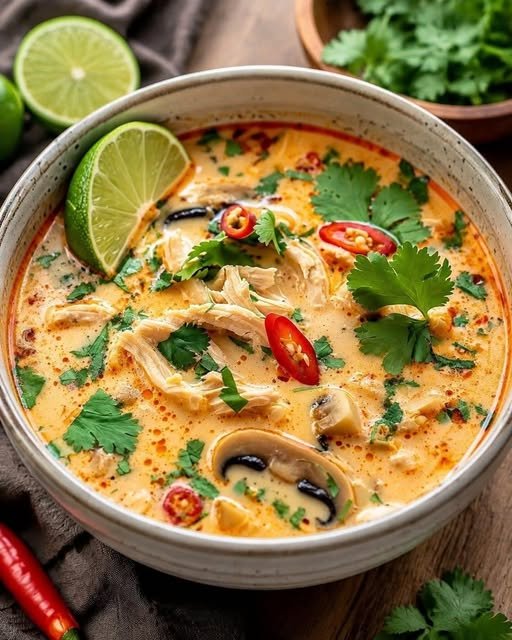
Thai Coconut Chicken Soup
Description
Thai Coconut Chicken Soup, also known as a Tom Kha Gai–inspired soup, is a creamy, aromatic Thai-style soup made with tender chicken, coconut milk, mushrooms, ginger, lime, garlic, and fragrant herbs. It combines creamy coconut milk with bright lime juice, savory chicken broth, and gentle heat from red chili. The result is a comforting soup that tastes rich without being heavy.
This recipe is perfect for a cozy weeknight dinner because it comes together in about 40 minutes. The balance of salty, creamy, tangy, spicy, and slightly sweet flavors makes every spoonful flavorful. Serve it on its own for a light meal or alongside steamed jasmine rice for something more substantial.
Prep Time: 15 minutes
Cook Time: 25 minutes
Total Time: 40 minutes
Servings: 6
Course: Soup / Main Dish
Cuisine: Thai-inspired
Difficulty: Easy
Ingredients
For the Soup
- 1½ lb boneless, skinless chicken breasts or thighs, thinly sliced
- 1 tablespoon vegetable oil or coconut oil
- 1 small yellow onion, thinly sliced
- 3 cloves garlic, minced
- 1 tablespoon fresh ginger, grated
- 4 cups low-sodium chicken broth
- 1 can (13.5–14 oz) full-fat coconut milk
- 8 oz mushrooms, sliced
- 1 red bell pepper, thinly sliced
- 1–2 tablespoons Thai red curry paste
- 2 tablespoons fish sauce
- 1 tablespoon soy sauce
- 1 teaspoon brown sugar
- 1 stalk lemongrass, bruised and cut into pieces
- 3 kaffir lime leaves, optional
- 1 cup baby spinach, optional
- 2 tablespoons fresh lime juice
- 2 green onions, sliced
- ¼ cup fresh cilantro, chopped
- 1–2 red chilies, sliced, optional
For Serving
- Lime wedges
- Fresh cilantro
- Sliced green onions
- Thinly sliced red chili
- Steamed jasmine rice, optional
Instructions
1. Prepare the Chicken
Slice the chicken into thin, bite-sized pieces.
Chicken thighs are especially flavorful and remain juicy during cooking, while chicken breast provides a leaner option.
Set the chicken aside while preparing the aromatics.
2. Sauté the Aromatics
Heat the oil in a large heavy-bottomed pot over medium heat.
Add the sliced onion and cook for approximately 3–4 minutes, until it begins to soften.
Add minced garlic and fresh ginger.
Cook for another 30–60 seconds, stirring frequently.
Be careful not to brown the garlic because burnt garlic can give the soup a bitter flavor.
3. Add the Curry Paste
Add 1–2 tablespoons of Thai red curry paste.
Stir it into the aromatics and cook for approximately 1 minute.
This brief cooking step helps release the fragrant oils and spices in the curry paste.
Use 1 tablespoon for a milder soup and 2 tablespoons for a more pronounced spicy flavor.
4. Add the Broth
Slowly pour in the chicken broth while stirring.
Add the lemongrass and kaffir lime leaves if using.
Bring the mixture to a gentle simmer.
Allow it to simmer for approximately 5 minutes so the broth can absorb the aromatic flavors.
5. Add the Coconut Milk
Pour in the coconut milk.
Stir gently until completely combined.
Keep the soup at a gentle simmer rather than allowing it to boil aggressively.
A gentle cooking temperature helps maintain a smooth coconut broth.
6. Add the Mushrooms and Bell Pepper
Add sliced mushrooms and red bell pepper.
Simmer for approximately 4–5 minutes, until the vegetables begin to soften.
The mushrooms absorb the aromatic coconut broth while the bell pepper contributes sweetness and color.
7. Add the Chicken
Add the sliced chicken to the simmering soup.
Stir gently to separate the pieces.
Cook for approximately 7–10 minutes, or until the chicken is completely cooked through.
The exact cooking time depends on the thickness of the chicken pieces.
For food safety, chicken should reach an internal temperature of 165°F (74°C).
Avoid prolonged boiling because it can make chicken breast tough.
8. Season the Soup
Add fish sauce, soy sauce, and brown sugar.
Stir and taste.
Thai-style soups are all about balance.
You want the broth to have a combination of:
- Salty
- Tangy
- Creamy
- Spicy
- Slightly sweet
Adjust the seasonings according to your preference.
9. Add Lime Juice
Turn the heat to low or remove the pot from the heat.
Add fresh lime juice.
Adding lime juice toward the end preserves its bright, fresh flavor.
Taste again.
If the soup tastes too rich, add more lime juice.
If it needs more saltiness, add a small amount of fish sauce.
10. Add Greens
If using spinach, stir it into the hot soup.
It will wilt within approximately 1–2 minutes.
You can also use baby bok choy, kale, or other quick-cooking greens.
11. Garnish
Remove the lemongrass pieces and kaffir lime leaves before serving if desired.
Ladle the soup into bowls.
Top with fresh cilantro, green onions, sliced chili, and an extra squeeze of lime.
Serve immediately.
Notes
Coconut Milk
Full-fat coconut milk creates the creamiest soup.
Light coconut milk can be used if preferred, although the broth will be thinner and less rich.
Chicken
Chicken thighs provide excellent flavor and stay tender.
Chicken breast works well when sliced thinly and cooked just until done.
Curry Paste
Thai red curry paste varies in spice level by brand.
Start with less and add more if needed.
Fish Sauce
Fish sauce provides the distinctive savory depth associated with many Thai-style dishes.
If you don’t have fish sauce, soy sauce can be used, although the flavor will be different.
Lime
Fresh lime juice is highly recommended.
Bottled lime juice generally lacks the same fresh aroma.
Lemongrass
Lemongrass adds a citrusy, floral aroma.
If you can’t find fresh lemongrass, you can omit it or use a small amount of prepared lemongrass paste.
Tips for the Best Thai Coconut Chicken Soup
1. Don’t Boil the Coconut Milk Aggressively
Keep the soup at a gentle simmer.
High heat can cause the coconut milk to separate.
2. Add Lime at the End
Fresh lime juice tastes brightest when added after most of the cooking is finished.
3. Balance the Flavors
Don’t rely on one ingredient for the final flavor.
Taste the soup and adjust lime juice, fish sauce, curry paste, and sugar until the flavors are balanced.
4. Slice Chicken Thinly
Thin slices cook quickly and evenly.
5. Don’t Overcook the Chicken
Once chicken reaches 165°F, it is done.
6. Use Fresh Aromatics
Fresh garlic, ginger, lime, cilantro, and lemongrass create a much more vibrant soup.
7. Adjust the Spice
Start conservatively with curry paste and chili.
You can always add more heat, but it’s difficult to remove it once added.
How to Make It More Authentic-Tasting
For a more traditional Tom Kha Gai–style flavor profile, use:
- Galangal instead of regular ginger when available
- Kaffir lime leaves
- Lemongrass
- Thai chilies
- Fish sauce
- Fresh lime juice
- Coconut milk
Galangal has a more distinctive citrusy, peppery flavor than ginger.
If authentic ingredients aren’t available, ginger makes a convenient substitute and still produces a delicious Thai-inspired soup.
Vegetable Variations
This soup is very flexible.
You can add:
- Baby corn
- Snow peas
- Bok choy
- Zucchini
- Carrots
- Broccoli
- Spinach
- Bell peppers
- Bean sprouts
Add vegetables according to their cooking time.
Harder vegetables should go in earlier, while spinach and other delicate greens should be added near the end.
Protein Variations
Shrimp
Replace chicken with peeled shrimp.
Add shrimp during the final 3–5 minutes because shrimp cook quickly.
Tofu
Use firm or extra-firm tofu for a vegetarian option.
Press the tofu first, then cut it into cubes.
Salmon
Small pieces of salmon can also work well in the coconut broth.
Mixed Seafood
Shrimp, scallops, and white fish can create a delicious seafood variation.
Vegetarian Thai Coconut Soup
To make a vegetarian version, replace chicken with tofu and use vegetable broth.
Replace fish sauce with additional soy sauce or a vegetarian fish-sauce alternative.
Add mushrooms, bell peppers, spinach, and other vegetables for a satisfying meal.
For a vegan version, use a vegan curry paste because some curry pastes may contain shrimp paste or other seafood ingredients.
Serving Suggestions
Thai Coconut Chicken Soup can be served by itself or with:
Jasmine Rice
Steamed jasmine rice is one of the best accompaniments. The rice absorbs the creamy, flavorful broth.
Rice Noodles
Add cooked rice noodles directly to individual bowls for a more substantial meal.
Thai Cucumber Salad
A crisp cucumber salad provides a refreshing contrast to the creamy soup.
Steamed Vegetables
Broccoli, bok choy, or green beans make easy side dishes.
Fresh Herbs
Cilantro, Thai basil, and green onions provide freshness.
Make-Ahead Instructions
The soup can be prepared ahead of time, but for the best texture, add the lime juice and fresh herbs just before serving.
If making it in advance:
- Prepare the soup according to the recipe.
- Cool it relatively quickly.
- Store it in an airtight container in the refrigerator.
- Add fresh lime and herbs after reheating.
The flavors often become even more developed after resting overnight.
Storage
Store leftover soup in an airtight container in the refrigerator for approximately 3–4 days.
Reheat gently on the stovetop over medium-low heat.
Avoid a vigorous boil.
If the soup has thickened in the refrigerator, add a splash of chicken broth or water while reheating.
Add fresh lime juice and cilantro just before serving.
Freezing
The soup can be frozen, although coconut milk can sometimes change texture after thawing.
For best results, freeze the soup without fresh herbs and lime juice.
Cool completely before transferring to freezer-safe containers.
Leave some space at the top because liquids expand as they freeze.
Thaw overnight in the refrigerator.
Reheat gently and whisk the broth to bring the texture back together.
Add fresh lime juice and herbs after reheating.
Servings
This recipe makes approximately 6 servings.
Serving size: About 1½ cups.
If serving the soup with rice or noodles, you may find that one bowl is enough for a complete meal.
Approximate Nutritional Information
Estimated per serving without rice:
- Calories: 380–430 kcal
- Protein: 30–35 g
- Carbohydrates: 12–16 g
- Dietary Fiber: 2–3 g
- Total Fat: 24–28 g
- Saturated Fat: 17–21 g
- Cholesterol: 80–100 mg
- Sodium: 800–1,100 mg
- Potassium: 600–750 mg
These values are estimates and can vary depending on the chicken cut, coconut milk, curry paste, fish sauce, and exact quantities used.
Serving the soup with rice or noodles will increase carbohydrates and calories.
Benefits of This Recipe
1. Good Source of Protein
Chicken provides high-quality protein, which helps support normal muscle and tissue maintenance.
2. Contains Vegetables
Mushrooms, bell peppers, onions, and optional spinach contribute vitamins, minerals, fiber, and naturally occurring plant compounds.
3. Provides Healthy Ingredients
Fresh ginger, garlic, lime, herbs, and vegetables add flavor while contributing various nutrients.
4. Coconut Milk Provides Energy
Coconut milk contributes fat and makes the soup satisfying and creamy.
Because it is relatively high in saturated fat, portion size and overall dietary balance are worth considering.
5. Hydrating Meal
Soup contains a significant amount of liquid, making it a comforting way to contribute to daily fluid intake.
6. Customizable
You can increase the vegetables, change the protein, adjust the spice, or make it vegetarian according to your preferences.
7. Flavorful Without Complicated Cooking
Most of the flavor comes from simple aromatics and seasonings rather than complicated techniques.
Frequently Asked Questions
Q1: Is Thai Coconut Chicken Soup the same as Tom Kha Gai?
This recipe is Tom Kha Gai–inspired. Traditional Tom Kha Gai generally uses ingredients such as galangal, lemongrass, kaffir lime leaves, coconut milk, chilies, lime, and fish sauce.
Q2: Can I use ginger instead of galangal?
Yes. Ginger is easier to find and makes a good substitute, although the flavor will not be identical.
Q3: Can I use chicken breast?
Absolutely. Slice it thinly and avoid overcooking.
Q4: Can I use chicken thighs?
Yes. Chicken thighs are particularly good because they remain tender and flavorful.
Q5: Can I make this soup less spicy?
Yes. Use less red curry paste and omit the fresh chili.
Q6: How can I make it spicier?
Add extra red curry paste, Thai chilies, red pepper flakes, or chili oil.
Q7: Can I use light coconut milk?
Yes. The soup will be lighter and less creamy.
Q8: Can I use coconut cream?
Yes, but coconut cream is much richer. You may need to dilute it with additional broth.
Q9: Can I add noodles?
Yes. Rice noodles work particularly well. Cook them separately and add them to individual bowls to prevent them from absorbing too much broth.
Q10: Can I use shrimp instead of chicken?
Yes. Add shrimp near the end and cook until pink and opaque, usually about 3–5 minutes depending on size.
Q11: Can I make it vegetarian?
Yes. Replace chicken with tofu or additional mushrooms and use vegetable broth.
Q12: Can I make it vegan?
Yes. Use tofu, vegetable broth, coconut milk, and a vegan curry paste. Replace fish sauce with soy sauce or another vegan alternative.
Q13: Why is my coconut milk separating?
Coconut milk can separate when exposed to very high heat or prolonged boiling. Keep the soup at a gentle simmer.
Q14: Why does my soup taste too sour?
Add a small amount of brown sugar or coconut milk to balance the acidity.
Q15: Why does my soup taste too sweet?
Add a little fresh lime juice and fish sauce to bring the flavors back into balance.
Q16: Can I use bottled lime juice?
Yes, but fresh lime juice provides a brighter flavor.
Q17: Can I add spinach?
Yes. Add it during the final 1–2 minutes so it stays vibrant.
Q18: How long does Thai coconut chicken soup last?
Keep it refrigerated and consume within approximately 3–4 days.
Q19: Can I freeze it?
Yes, although the coconut milk may change texture slightly. Reheat gently and whisk the broth before serving.
Q20: What can I serve with it?
Jasmine rice, rice noodles, steamed vegetables, cucumber salad, or crusty bread can all complement the soup.