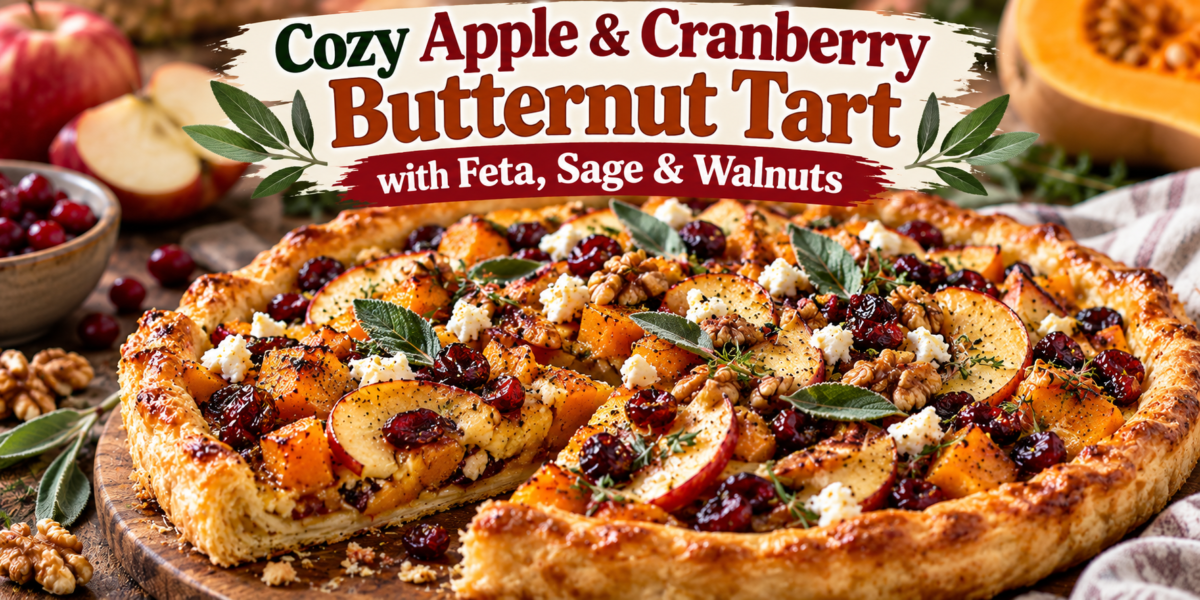
Cozy Apple & Cranberry Butternut Tart with Feta, Sage & Walnuts
This Butternut Tart brings together roasted butternut squash, crisp apples, tart dried cranberries, creamy feta, fragrant sage, and toasted walnuts on a golden pastry crust. Every slice offers a delicious contrast between sweet roasted vegetables, tangy cheese, buttery pastry, and crunchy nuts. The result is cozy enough for a cool evening yet elegant enough for a holiday table or weekend gathering.
The beauty of this Butternut Tart is that it looks impressive without requiring complicated techniques. The butternut squash can be roasted while the pastry is prepared, and the remaining ingredients come together quickly. Apple adds freshness and a gentle sweetness, while cranberries provide little bursts of tart flavor. Fresh sage gives the tart a warm, earthy aroma that pairs especially well with roasted squash.
This Butternut Tart works beautifully as a vegetarian main course, a brunch centerpiece, or a generous side dish. Serve it with a crisp green salad for lunch, or place it beside roasted vegetables and a simple soup for a comforting dinner.
Prep Time: 25 minutes
Cook Time: 45 minutes
Total Time: 1 hour 10 minutes
Servings: 8 slices
Ingredients
For the Butternut Filling
- 3 cups peeled butternut squash, cut into small cubes
- 1 medium apple, thinly sliced
- ½ cup dried cranberries
- ¾ cup crumbled feta cheese
- ½ cup walnuts, roughly chopped
- 1 tablespoon fresh sage, finely chopped
- 2 tablespoons extra virgin olive oil
- 1 tablespoon honey or maple syrup
- ½ teaspoon ground cinnamon
- ¼ teaspoon ground nutmeg
- ½ teaspoon sea salt
- ¼ teaspoon black pepper
For the Tart Base
- 1 sheet refrigerated puff pastry or pie pastry
- 1 egg, beaten
- 1 tablespoon all-purpose flour, for dusting
- 1 tablespoon olive oil or melted butter for brushing
Optional Finishing Ingredients
- Extra crumbled feta
- Fresh sage leaves
- A small drizzle of honey
- Freshly cracked black pepper
- A few toasted walnut pieces
- Fresh thyme leaves
Step-by-Step Instructions
1. Prepare the Oven
First, preheat the oven to 400°F (200°C). Line a large baking sheet with parchment paper. If you are using a tart pan, lightly grease it and keep it ready for the pastry.
For the best Butternut Tart, avoid placing the tart into a cold oven because the pastry may become greasy before it has a chance to puff and brown.
2. Roast the Butternut Squash
Place the cubed butternut squash on the prepared baking sheet. Drizzle with one tablespoon of olive oil, then add the cinnamon, nutmeg, salt, and black pepper. Toss until the cubes are evenly coated.
Spread the squash into a single layer. Roast for 20–25 minutes, turning once halfway through. The edges should become golden and lightly caramelized while the centers remain tender.
3. Toast the Walnuts
While the squash roasts, place the chopped walnuts in a dry skillet over medium-low heat. Toast them for 3–5 minutes, stirring frequently.
The walnuts are ready when they smell fragrant and become lightly browned. Transfer them to a plate immediately so they stop cooking.
Toasted walnuts give the Butternut Tart a deeper nutty flavor and a satisfying crunch. Watch them carefully because nuts can burn quickly.
4. Prepare the Apple
Wash the apple, remove the core, and slice it thinly. There is no need to peel it unless you prefer a softer texture.
Toss the apple slices gently with the remaining tablespoon of olive oil and honey or maple syrup. Set them aside.
Choose an apple with a balance of sweetness and acidity. A slightly tart variety provides a pleasant contrast with the sweet squash and cranberries.
5. Prepare the Pastry
Lightly dust your work surface with flour. Gently roll out the pastry if needed until it is large enough to fit your tart pan or baking sheet.
Transfer the pastry carefully to the prepared pan. Press it gently into the corners without stretching it.
Trim any excess pastry around the edges. If you are making a free-form tart, simply fold the edges inward slightly to create a rustic border.
Prick the center of the pastry several times with a fork. This helps prevent the middle from puffing excessively during baking.
6. Build the Filling
Once the squash has roasted, allow it to cool for a few minutes. Place it in a bowl with the apple slices, dried cranberries, chopped sage, and toasted walnuts.
Add about half of the feta and gently toss everything together. Avoid stirring too aggressively because the roasted squash should remain in recognizable pieces.
This combination creates the heart of the Butternut Tart. The squash provides a creamy roasted texture, apples add brightness, cranberries add tart sweetness, and walnuts contribute crunch.
7. Assemble the Tart
Spread the vegetable and fruit mixture evenly over the pastry, leaving about a 1-inch border around the edges.
Scatter the remaining feta over the top. Arrange a few apple slices visibly across the surface for an attractive finish.
Fold the pastry border slightly inward if you are making a rustic tart. Brush the exposed pastry with beaten egg.
8. Bake
Place the assembled tart in the preheated oven. Bake for approximately 20–25 minutes, or until the pastry is puffed and deeply golden and the filling is hot.
The Butternut Tart should have crisp edges and a golden base. The feta will soften and lightly brown, while the apples become tender and the cranberries warm.
9. Finish with Fresh Sage
Remove the tart from the oven and allow it to cool for 8–10 minutes. Scatter fresh sage leaves or additional chopped sage over the top.
For a slightly sweeter finish, drizzle a very small amount of honey over the warm tart. Add freshly cracked black pepper and a few extra toasted walnuts.
10. Slice and Serve
Use a sharp knife to cut the tart into eight slices. A serrated knife works particularly well if you want to preserve the crisp pastry.
Serve the Butternut Tart warm or at room temperature. It can be enjoyed as a vegetarian main dish, a side, or a brunch recipe.
Tips for the Best Butternut Tart
Keep the Squash Right for a Butternut Tart
Cutting the squash into similar-sized cubes ensures that everything roasts evenly. Smaller pieces also distribute more easily across the pastry.
However, avoid making the cubes extremely small because they can become too soft before the pastry finishes baking.
Avoid a Watery Butternut Tart
Butternut squash and apples can release moisture during cooking. Roasting the squash first is therefore important because it removes excess moisture and intensifies the flavor.
For a crisp Butternut Tart, make sure the roasted squash is not steaming hot when it goes onto the pastry.
Do Not Overload the Pastry
A generous filling is appealing, but too much can make the pastry difficult to bake properly. Keep the filling relatively shallow and spread it evenly.
Leaving a clean border also gives the finished tart a defined crust and attractive presentation.
Balance the Sweetness in the Butternut Tart
Honey and cranberries already contribute sweetness. If you prefer a more savory tart, reduce the honey and add extra black pepper or a pinch of chili flakes.
For a sweeter version, add a little more honey after baking rather than increasing the amount inside the tart.
Use Fresh Sage in the Butternut Tart
Fresh sage provides a stronger and more aromatic flavor than dried sage. Chop it finely for the filling and reserve a few whole leaves for decoration.
If fresh sage is unavailable, use dried sage sparingly because its flavor is more concentrated.
Serving Suggestions for the Butternut Tart
Serve the Butternut Tart with a simple arugula salad dressed with lemon juice and olive oil. The peppery greens provide a fresh contrast to the sweet roasted filling.
For a larger vegetarian meal, pair it with lentil salad, roasted Brussels sprouts, green beans, or a warm grain salad.
It also makes an excellent brunch dish with scrambled eggs, fresh fruit, and yogurt.
Make-Ahead Instructions
The butternut squash can be roasted one day ahead and stored in an airtight container in the refrigerator. The walnuts can also be toasted in advance.
When you are ready to assemble the Butternut Tart, allow the roasted squash to come close to room temperature before placing it on the pastry.
The tart can be assembled several hours ahead and refrigerated before baking. If the pastry becomes very cold, add a few extra minutes to the baking time.
Storage Instructions
Store leftover tart in an airtight container in the refrigerator for up to three days.
To reheat, place individual slices on a baking sheet and warm them at 350°F (175°C) for approximately 8–12 minutes. This method helps restore some of the pastry’s crispness.
Avoid reheating for too long because the apples and squash may become overly soft.
The Butternut Tart can also be served cold or at room temperature. However, reheating in the oven generally gives the best pastry texture.
Freezing is possible, but the texture of the fruit and vegetables may soften after thawing. If freezing, wrap individual portions securely and use them within one month.
Frequently Asked Questions
Can I use frozen butternut squash?
Yes. Thaw it completely and drain away excess liquid before roasting. Frozen squash may need slightly less roasting time, so check it regularly.
Can I use a different cheese?
Absolutely. Goat cheese works particularly well, while ricotta creates a softer filling. Parmesan can also be sprinkled over the top for a stronger savory flavor.
Can I use pears instead of apples?
Yes. Pears provide a softer and sweeter flavor. Choose firm pears so they maintain their shape during baking.
Can I make this tart without nuts?
Yes. Simply omit the walnuts. For crunch, use pumpkin seeds or sunflower seeds instead.
Can I use dried herbs?
Yes, although fresh sage provides the best aroma. If using dried sage, start with a small amount and adjust according to taste.
Can I make it dairy-free?
Yes. Replace the feta with a dairy-free cheese alternative or omit it entirely. Use pastry that contains no dairy ingredients.
Flavor and Texture Notes
The contrast between textures is one of the highlights of this Butternut Tart. The pastry should be crisp around the edges, while the roasted squash remains tender and slightly caramelized. Thin apple slices soften in the oven without completely disappearing, giving each bite a delicate fruit texture. Cranberries add a chewy, tart element, and toasted walnuts provide a satisfying crunch.
For a richer Butternut Tart, crumble a little extra feta over each serving. The salty cheese cuts through the sweetness of the honey and fruit. A squeeze of lemon can also brighten the finished dish, especially when serving it alongside rich holiday foods.
If you prefer stronger savory flavors, add a pinch of rosemary or thyme with the sage. For a warmer spice profile, a tiny amount of allspice can complement the cinnamon and nutmeg without overwhelming the fruit.
This balance makes the recipe suitable for both casual meals and special occasions at home or gatherings. It is easy to customize.
Nutrition Information
Approximate nutrition per serving:
Calories: 340 kcal
Protein: 7g
Carbohydrates: 42g
Fat: 17g
Fiber: 5g
Sugar: 17g
Sodium: 430mg
Nutrition values are estimates and may vary depending on the pastry, cheese, fruit, and other ingredients used.
Final Thoughts
This Butternut Tart is a wonderful example of how simple seasonal ingredients can become an elegant meal. Roasted squash provides a naturally creamy base, while apples and cranberries introduce bright fruit flavors. Feta adds salty richness, sage contributes an earthy aroma, and walnuts complete the dish with a satisfying crunch.
The pastry provides a buttery foundation that holds all the ingredients together while becoming crisp and golden in the oven. Because the filling is roasted before assembly, the final tart develops deeper flavor without becoming overly wet.
For a cozy family dinner, serve the tart with a green salad and warm soup. For a holiday gathering, cut it into smaller squares and place them on a serving platter with fresh herbs and toasted walnuts.
With its golden crust, colorful filling, and balance of sweet and savory flavors, the Butternut Tart makes an inviting centerpiece for many occasions. It is comforting enough for everyday meals yet attractive enough for entertaining.
Prepare the components ahead when possible, keep the filling reasonably dry, and allow the baked tart to rest before slicing. Those simple steps help preserve the crisp pastry and clean layers.
Whether served warm for dinner, at room temperature for brunch, or alongside a holiday spread, this tart offers a satisfying combination of roasted vegetables, fruit, cheese, herbs, and nuts in every bite.