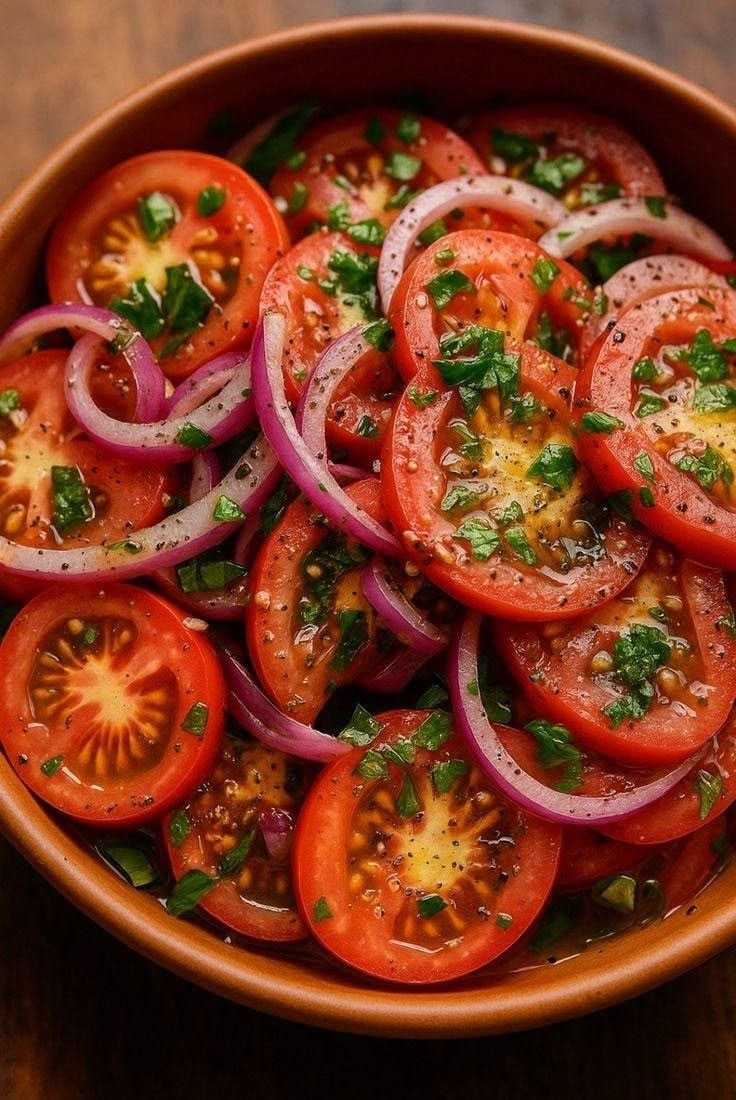
Fresh Tomato & Red Onion Salad
1. Introduction
Fresh Tomato & Red Onion Salad is a simple, colorful, and refreshing dish made with juicy ripe tomatoes, crisp red onions, fresh herbs, and a light homemade dressing. This salad brings together the natural sweetness of tomatoes, the sharp flavor of red onions, and the bright acidity of lemon juice or vinegar to create a delicious combination that complements almost any meal.
Inspired by Mediterranean-style salads, this recipe uses fresh ingredients and a straightforward preparation method. It does not require cooking, complicated techniques, or expensive ingredients. Everything comes together in a few minutes, making it an excellent choice for busy weekdays, summer lunches, family dinners, picnics, and outdoor gatherings.
The secret to making an exceptional tomato and red onion salad is choosing flavorful tomatoes, slicing the onions thinly, and allowing the ingredients to rest briefly before serving. This short resting period helps the flavors blend while the dressing lightly coats every piece of tomato and onion.
Whether you serve it alongside grilled chicken, baked fish, roasted vegetables, rice, or warm flatbread, this fresh salad adds brightness, color, and flavor to your table.
2. Recipe Details
-
Preparation Time: 15 minutes
-
Resting Time: 10 minutes
-
Cooking Time: 0 minutes
-
Total Time: 25 minutes
-
Servings: 4 people
-
Course: Salad, side dish, or light lunch
-
Cuisine: Mediterranean-inspired
-
Difficulty: Easy
-
Dietary Style: Vegetarian, vegan, and naturally gluten-free
3. Ingredients
The following ingredients make four generous side servings.
For the salad
-
4 medium ripe tomatoes, approximately 600 grams
-
1 medium red onion
-
1 small cucumber, optional
-
2 tablespoons freshly chopped parsley
-
1 tablespoon freshly chopped mint, optional
-
2 tablespoons crumbled feta cheese, optional
-
A few fresh basil leaves, optional
For the dressing
-
3 tablespoons extra-virgin olive oil
-
1½ tablespoons fresh lemon juice
-
1 teaspoon red wine vinegar, optional
-
½ teaspoon salt, or to taste
-
¼ teaspoon freshly ground black pepper
-
½ teaspoon dried oregano
-
1 small garlic clove, finely grated, optional
-
A small pinch of red pepper flakes, optional
Optional additions
You can customize the salad with a handful of pitted Kalamata olives, thinly sliced bell peppers, diced avocado, or a few capers. For extra crunch, add toasted sunflower seeds immediately before serving.
If you prefer a more traditional, minimalist salad, simply use tomatoes, red onion, parsley, olive oil, lemon juice, salt, and black pepper. The natural flavors of these ingredients are enough to make a delicious dish.
4. Choosing the Best Ingredients
Tomatoes
Tomatoes are the foundation of this recipe, so their quality makes a significant difference. Choose tomatoes that feel firm but yield slightly when pressed. They should have a fresh aroma and vibrant color without large bruises or soft, damaged areas.
Roma tomatoes are a good choice because they have relatively firm flesh and fewer watery seed pockets. Vine-ripened tomatoes provide a juicy texture and rich flavor, while heirloom tomatoes can add beautiful colors and a slightly sweet, complex taste.
Cherry or grape tomatoes also work well. Simply cut them in half or quarters, depending on their size.
Avoid tomatoes that are excessively hard or pale because they may lack sweetness. If your tomatoes are very juicy, you can remove some of the seeds before chopping them.
For the best flavor, allow refrigerated tomatoes to come closer to room temperature before preparing the salad.
Red onion
Red onions contribute crunch, color, and a pleasant sharpness that balances the sweetness of ripe tomatoes.
Choose an onion that feels firm, has dry outer skin, and shows no signs of mold or soft spots. Slice it thinly so that its flavor is distributed evenly throughout the salad.
If you find raw onion too strong, soak the sliced onion in cold water for 5–10 minutes. Drain thoroughly and pat dry before adding it to the salad. This simple technique can soften its sharpness while preserving its crisp texture.
Olive oil and lemon
Extra-virgin olive oil gives the dressing a smooth texture and rich, fruity flavor. Fresh lemon juice adds brightness, helping balance the natural sweetness of the tomatoes.
Use good-quality olive oil if possible, but there is no need to purchase an expensive bottle. A fresh lemon and a well-balanced oil are more important than a complicated dressing.
5. Step-by-Step Instructions
Step 1: Wash and prepare the vegetables
Wash the tomatoes, cucumber, parsley, and mint under clean running water. Gently dry the vegetables with a clean kitchen towel.
Remove the tomato stems and inspect the tomatoes for damaged areas. Cut each tomato into bite-sized wedges or medium chunks.
If you prefer a neat presentation, cut the tomatoes into evenly sized wedges. For a rustic salad, irregular chunks are perfectly suitable.
Place the chopped tomatoes in a large mixing bowl.
If you are using cucumber, trim both ends and cut it into half-moons or small cubes. Add it to the bowl.
Step 2: Slice the red onion
Peel the red onion and cut it in half from top to bottom. Place each half flat-side down on a cutting board and slice it into thin strips.
Thin slices are ideal because they distribute the onion flavor without overwhelming the tomatoes.
Add the onion directly to the bowl. If you prefer a milder flavor, soak the slices in cold water first, then drain and dry them thoroughly.
Avoid slicing the onion into thick chunks unless you specifically enjoy a stronger onion flavor.
Step 3: Prepare the fresh herbs
Finely chop the parsley and mint, if using. If you choose basil, tear the leaves gently instead of chopping them too finely.
Fresh herbs contribute fragrance and freshness, making the salad taste more vibrant.
Add the parsley and mint to the tomatoes and onions. Reserve a small amount of herbs for garnishing the finished salad.
Step 4: Make the dressing
In a small bowl, combine the olive oil, fresh lemon juice, red wine vinegar, salt, black pepper, and dried oregano.
Add the grated garlic and red pepper flakes if desired.
Whisk the ingredients until they are well combined. The dressing may separate slightly after standing, which is normal. Simply whisk it again before pouring.
Taste a small amount of the dressing. It should taste bright, lightly tangy, and balanced rather than excessively sour or salty.
Adjust the lemon juice, olive oil, and seasoning according to your preference.
Step 5: Combine the ingredients
Pour the dressing over the tomatoes, red onion, cucumber, and herbs.
Using two large spoons, gently toss the salad until the vegetables are evenly coated.
Be careful not to crush the tomatoes. Ripe tomatoes can release their juices quickly, especially if they are stirred too vigorously.
The goal is to coat every piece with dressing while preserving the natural texture of the vegetables.
Step 6: Allow the flavors to develop
Let the salad rest for approximately 10 minutes before serving.
During this time, the lemon juice and olive oil mingle with the tomato juices, while the onion gradually absorbs some of the dressing.
The resting period also allows the herbs and oregano to release their fragrance.
Do not leave the salad at room temperature for an extended period, especially in hot weather. If you need to prepare it ahead, refrigerate it and add the dressing closer to serving time.
Step 7: Add optional toppings
If you are using feta cheese, crumble it over the salad just before serving. Add olives, basil leaves, or toasted seeds if desired.
Feta provides a creamy, salty contrast to the juicy tomatoes, while olives contribute a savory Mediterranean flavor.
For a vegan version, leave out the feta or replace it with a suitable plant-based alternative.
Step 8: Serve and enjoy
Transfer the salad to a clean serving bowl or arrange it on a shallow platter.
Spoon some of the flavorful dressing from the bottom of the mixing bowl over the vegetables. Finish with freshly ground black pepper and the reserved herbs.
Serve immediately for the best combination of crisp onion, juicy tomatoes, and bright dressing.
6. Serving Suggestions
Fresh Tomato & Red Onion Salad is versatile enough to accompany many different dishes.
With grilled chicken: Serve it beside lemon-herb chicken, grilled chicken breasts, or Mediterranean chicken skewers. The salad’s acidity balances the savory flavor of the meat.
With fish: Pair it with baked cod, grilled salmon, or lemon-garlic white fish. Its fresh ingredients complement seafood without overpowering it.
With rice and grains: Spoon the salad alongside rice, couscous, quinoa, or bulgur wheat. You can also mix the ingredients into cooked, cooled grains to create a more substantial meal.
With bread: Serve it with toasted sourdough, warm pita, flatbread, or crusty bread. The tomato juices and olive oil make a delicious accompaniment for dipping.
With Mediterranean bowls: Add chickpeas, cucumber, olives, feta, and cooked quinoa for a more filling vegetarian bowl.
At gatherings: Place the salad on a large platter with grilled vegetables, roasted potatoes, hummus, and other simple side dishes.
For an attractive presentation, arrange the tomato wedges in overlapping layers and scatter the onion slices and herbs across the top.
7. Helpful Tips for the Best Results
Use ripe but firm tomatoes
Very firm tomatoes can taste bland, while overly soft tomatoes may turn mushy. Choose tomatoes that are ripe, aromatic, and able to hold their shape after cutting.
Slice onions thinly
Thinly sliced onions distribute their flavor more evenly. If your onion is particularly sharp, soak it briefly in cold water.
Season in stages
Add some seasoning to the dressing first, then taste the salad before serving. Tomatoes vary in sweetness and acidity, so the ideal balance may change with the season.
Avoid overdressing
Start with the recommended amount of dressing. You can always add a little more olive oil or lemon juice, but too much liquid can make the salad heavy and watery.
Add herbs at the right time
Fresh parsley and mint can be added while tossing. Delicate basil leaves are best added near the end to preserve their appearance and fragrance.
Choose the right bowl
A wide bowl makes tossing easier and allows the dressing to reach all the ingredients without crushing the tomatoes.
Do not refrigerate for too long after dressing
The salad is most appealing shortly after preparation. Extended storage can soften the tomatoes, reduce the onion’s crunch, and cause additional liquid to collect at the bottom.
8. Variations to Try
Mediterranean tomato, onion, and feta salad
Add crumbled feta cheese, Kalamata olives, oregano, and a little extra-virgin olive oil. This variation offers a savory, tangy flavor and pairs beautifully with grilled foods.
Tomato and red onion cucumber salad
Add one large cucumber and a little extra parsley. The cucumber contributes a crisp texture and makes the salad particularly refreshing during warm weather.
Tomato, onion, and avocado salad
Add one ripe but firm avocado immediately before serving. Gently toss with the dressing to avoid crushing it. The avocado creates a creamy contrast to the tomatoes and onions.
Spicy tomato and onion salad
Add thinly sliced fresh chili or a pinch of red pepper flakes. A little spice gives the salad a lively finish and works especially well alongside grilled chicken or fish.
Chickpea tomato salad
Add one drained and rinsed can of chickpeas. Increase the dressing slightly if needed and add extra parsley. The chickpeas provide additional protein and fiber, turning the salad into a more substantial side dish or light meal.
Balsamic tomato and onion salad
Replace the red wine vinegar with a small amount of balsamic vinegar. This produces a slightly sweeter, deeper flavor that works well with basil and mozzarella.
9. Nutritional Information
The following values are estimates for one of four servings, using the listed core ingredients and olive oil, lemon juice, and herbs. Actual values will vary according to tomato size, the amount of dressing consumed, and optional additions.
| Nutrient | Approximate amount per serving |
|---|---|
| Calories | 145–165 kcal |
| Protein | 2 g |
| Carbohydrates | 10–12 g |
| Dietary fiber | 3 g |
| Total fat | 11–14 g |
| Saturated fat | 1.5–2 g |
| Sugar | 6–8 g |
| Sodium | 250–350 mg |
Adding feta cheese, olives, avocado, or chickpeas will change the nutritional values. Salt content can also vary significantly depending on how much you use.
These estimates assume the dressing is distributed among four servings and consumed with the salad.
10. Health and Nutrition Benefits
Fresh Tomato & Red Onion Salad provides a variety of vegetables and plant-based nutrients in a simple preparation.
Tomatoes provide vitamin C and lycopene. Tomatoes contain vitamin C, potassium, and lycopene, a naturally occurring carotenoid that gives many tomatoes their red color. Lycopene has been studied for its antioxidant properties.
Red onions provide beneficial plant compounds. Red onions contain flavonoids, including quercetin, and other naturally occurring compounds. They also contribute a small amount of fiber.
Olive oil provides unsaturated fats. Extra-virgin olive oil is rich in monounsaturated fat and contains various plant compounds. Replacing some sources of saturated fat with unsaturated fats can support a heart-healthy eating pattern.
Fresh herbs contribute flavor. Parsley, mint, and basil add fragrance and small amounts of micronutrients. They allow you to create a flavorful dish without relying on heavy sauces.
The salad contributes dietary fiber. Tomatoes and onions provide fiber, which contributes to normal digestive function when consumed as part of a balanced diet.
It can fit many eating patterns. The basic recipe is vegetarian, vegan, and gluten-free. It can also fit a lower-carbohydrate eating pattern, depending on portion size and the rest of the meal.
No single salad guarantees weight loss or prevents disease. Its benefits come from including a variety of vegetables, appropriate portions, and balanced meals as part of an overall healthy eating pattern.
11. Storage and Make-Ahead Instructions
This salad is best served fresh, but you can prepare some ingredients ahead of time.
-
Prepare the vegetables: Wash and dry the vegetables, then store the chopped ingredients separately in airtight containers in the refrigerator.
-
Prepare the dressing: Mix the dressing in a small jar and refrigerate it separately. Shake or whisk before using.
-
Combine before serving: Toss the vegetables with the dressing approximately 10 minutes before the meal.
-
Store leftovers safely: Refrigerate leftover dressed salad in a covered container and aim to consume it within 1–2 days for the best quality.
-
Check the texture: Tomatoes will soften and release liquid during storage, so leftovers may not have the same crisp texture as freshly prepared salad.
Do not leave cut vegetables sitting out for more than two hours, or more than one hour when the temperature is above 90°F (32°C). Discard food that has been left out too long or shows signs of spoilage.
Freezing is not recommended because tomatoes and cucumbers become soft and watery after thawing.
12. Frequently Asked Questions
Q1: Can I make tomato and red onion salad ahead of time?
Yes. You can cut the vegetables and prepare the dressing a few hours ahead. Store them separately in the refrigerator and combine them shortly before serving for the freshest texture.
Q2: How do I make raw red onion taste milder?
Slice the onion thinly and soak it in cold water for 5–10 minutes. Drain and dry it well before adding it to the salad. This helps reduce its sharp flavor.
Q3: Which tomatoes are best for this recipe?
Roma, vine-ripened, heirloom, cherry, and grape tomatoes all work well. Choose ripe, flavorful tomatoes that hold their shape when sliced.
Q4: Can I make this recipe without vinegar?
Absolutely. Fresh lemon juice alone provides enough acidity for a bright, refreshing dressing. Adjust the amount according to your taste.
Q5: Is feta cheese necessary?
No. Feta is an optional ingredient. The basic recipe is flavorful without cheese and remains vegan when you use plant-based ingredients.
Q6: Can I add cucumber?
Yes. Cucumber adds crunch and freshness. Add it just before tossing the salad, particularly if you are preparing the dish ahead of time.
Q7: What can I serve with this salad?
It pairs well with grilled chicken, baked fish, roasted vegetables, rice, couscous, chickpeas, pita bread, and Mediterranean-inspired grain bowls.
Q8: Why does my salad become watery?
Tomatoes naturally release juice after cutting, especially when salt is added. Use firm, ripe tomatoes, avoid excessive mixing, and dress the salad shortly before serving.
Q9: Is this salad suitable for meal preparation?
It is suitable for preparing ingredients in advance, but a fully dressed salad is less ideal for several days of meal preparation. Keep the vegetables and dressing separate until needed.
Q10: Can I make the salad more filling?
Yes. Add chickpeas, white beans, quinoa, grilled chicken, or another protein source. These additions can turn the side salad into a more substantial meal.