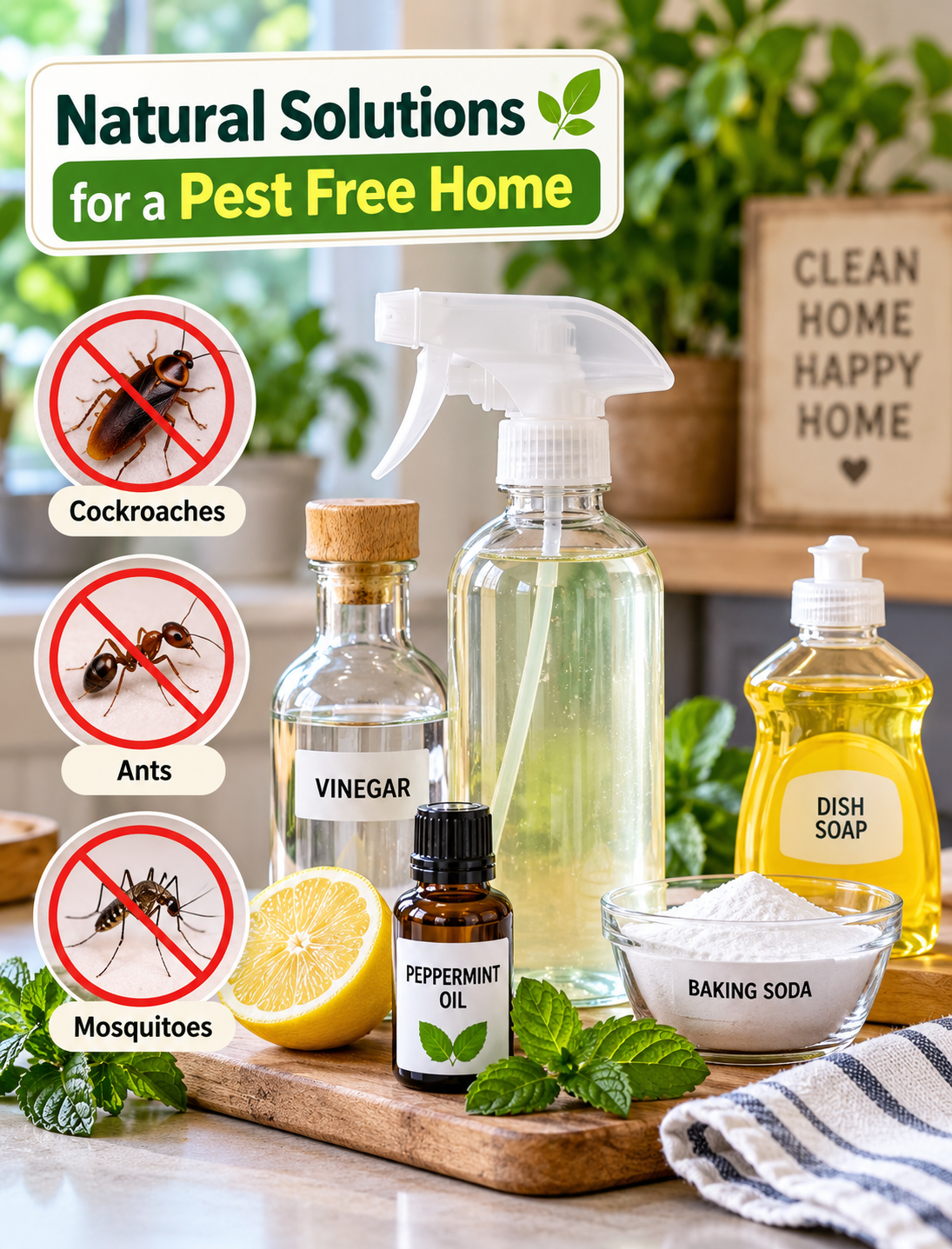
Natural Solutions for a Pest Free Home
Pests such as ants, cockroaches, mosquitoes, and flies can quickly make a home uncomfortable.Natural Solutions for a Pest Free Home Many homeowners want effective ways to manage these unwanted visitors without relying heavily on strong chemical products.
Natural pest control can be a useful part of a home-care routine when combined with good sanitation, moisture control, and simple prevention steps. Common household items such as vinegar, baking soda, and certain essential oils may help discourage some insects from entering or staying in problem areas.
The key is to focus on prevention first. A clean, dry, well-sealed home gives pests fewer places to find food, water, and shelter.
Why Opt for Natural Approaches?
Natural methods can reduce the need for frequent use of conventional pesticides inside living spaces. They can also be simple, inexpensive, and convenient for routine household maintenance.
However, natural does not always mean risk-free. Essential oils can irritate skin, and some ingredients may be harmful to pets if used incorrectly. Always follow product labels and keep homemade mixtures away from children, pets, food, and food-preparation surfaces.
For a lasting solution, combine natural deterrents with practical pest prevention. Removing crumbs, fixing leaks, sealing gaps, and reducing standing water can address the conditions that attract insects.
Natural Ingredients for Pest Control
Several common household ingredients are often used as insect deterrents. Their effectiveness can vary depending on the pest, location, and severity of the problem.
1. Vinegar
Vinegar has a strong smell that can help discourage ants from traveling across treated surfaces. A diluted vinegar solution can also be useful for cleaning areas where food residue may attract insects.
How to use it:
- Mix equal parts water and white vinegar.
- Place the solution in a labeled spray bottle.
- Wipe suitable hard surfaces where ants commonly travel.
- Avoid using vinegar on surfaces that can be damaged by acidic cleaners.
2. Baking Soda
Baking soda is commonly included in DIY pest-control recipes. It is sometimes combined with sugar as a homemade cockroach bait, but results are inconsistent and it should not be considered a reliable replacement for professional treatment during a serious infestation.
Keep any bait completely inaccessible to children and pets.
3. Peppermint Oil
Peppermint oil has a strong scent that some insects may avoid. It can be used as a scent-based deterrent around selected entry points.
Always dilute essential oils before household use and avoid applying them directly to skin, pets, or food-contact surfaces.
4. Lavender and Eucalyptus
Lavender and eucalyptus oils are also commonly used in natural insect-repellent routines. Their strong aromas may help make certain areas less attractive to some flying insects.
Essential oils should be stored safely and used according to their labels.
Recipe for Natural Insecticide Made at Home
A simple vinegar-based spray can be used as a household cleaning and deterrent solution for appropriate hard surfaces.
Ingredients:
- ½ cup white vinegar
- ½ cup water
- 10 drops peppermint essential oil
- 1 teaspoon mild dish soap
Important: Do not mix this solution with bleach or other cleaning chemicals.
Step-by-Step Instructions
Step 1: Prepare the Spray Bottle
Use a clean spray bottle that has not previously contained bleach or another chemical cleaner. Label the bottle clearly after preparing the mixture.
Step 2: Add Water and Vinegar
Pour ½ cup of water and ½ cup of white vinegar into the bottle. This creates the basic solution without making the mixture unnecessarily concentrated.
Step 3: Add Peppermint Oil
Add about 10 drops of peppermint essential oil. Close the bottle before gently mixing the ingredients.
Step 4: Add Dish Soap
Add 1 teaspoon of mild dish soap. Avoid excessive soap because too much can leave a sticky residue on surfaces.
Step 5: Shake Gently
Close the bottle securely and shake it gently before each use. Natural mixtures can separate during storage.
Step 6: Apply Carefully
Spray appropriate hard surfaces, cracks, or entry areas where insects are commonly noticed. Do not spray near food, pet bowls, electrical outlets, or sensitive materials.
Step 7: Clean the Area
After treating the area, remove crumbs, food residue, standing water, and other conditions that may attract pests. Prevention makes any deterrent strategy more useful.
Extra Advice for a House Free of Pests
Natural sprays work best when they are part of a broader prevention routine. Follow these practical steps to make your home less attractive to common household insects.
Keep Food Sealed
Store cereal, flour, sugar, snacks, and pet food in tightly closed containers. Wipe counters and dining areas after meals to remove crumbs and spills.
Take Out the Trash
Use bins with secure lids and remove household garbage regularly. Clean the inside of trash containers if food residue or liquid accumulates.
Seal Cracks and Gaps
Inspect areas around doors, windows, pipes, cabinets, and utility openings. Use suitable caulk or weatherstripping to close small entry points.
Fix Water Leaks
Leaking faucets and pipes can create moisture that attracts insects. Repair plumbing problems and dry wet areas as soon as possible.
Remove Standing Water
Mosquitoes can breed in small amounts of stagnant water. Empty water from buckets, plant saucers, outdoor containers, and other items that collect rain.
Keep Bathrooms Dry
Use ventilation after showers and wipe excess moisture from surfaces. Check under sinks for leaks or damp areas.
Maintain Outdoor Areas
Keep vegetation trimmed away from exterior walls and remove piles of leaves or debris near the foundation. These areas can provide shelter for insects.
When Natural Methods Are Not Enough
DIY solutions may help with minor pest activity, but they are not guaranteed to eliminate an established infestation. A large number of cockroaches, recurring ant trails, mosquito problems, or signs of pests inside walls may require professional evaluation.
Look for warning signs such as repeated sightings, droppings, damaged food packaging, nests, unusual odors, or pest activity that continues despite cleaning and prevention.
Professional pest control can identify the source of the problem and recommend an appropriate treatment plan. If you use any pesticide, read the label carefully and follow all directions for application, storage, ventilation, and re-entry.
A Simple Pest Prevention Routine
Use this step-by-step routine each week:
- Inspect: Check kitchens, bathrooms, basements, garages, and entry points.
- Clean: Remove crumbs, grease, food residue, and trash.
- Dry: Address leaks and wipe away standing moisture.
- Seal: Close small cracks and gaps around potential entry points.
- Declutter: Reduce cardboard, paper piles, and unused items where pests can hide.
- Monitor: Pay attention to recurring insect activity and possible sources.
- Act Early: Address signs of infestation before the problem becomes widespread.
FAQs About Natural Solutions for a Pest Free Home
Are natural pest control methods effective?
They can help deter some insects and support prevention, but their results vary by pest and infestation level.
Does vinegar kill cockroaches?
Vinegar is mainly useful as a cleaner and odor-based deterrent; it should not be relied on to eliminate a cockroach infestation.
Can peppermint oil keep ants away?
Peppermint oil may discourage some ants because of its strong scent, but it does not remove the colony or solve the underlying infestation.
What naturally keeps mosquitoes away from a home?
Removing standing water, using screens, reducing outdoor breeding areas, and keeping doors closed can help reduce mosquito activity.
How can I prevent cockroaches naturally?
Keep food sealed, remove garbage, fix moisture problems, clean regularly, and seal cracks around doors, pipes, cabinets, and walls.
Is baking soda safe for pest control?
Baking soda should be used carefully and kept away from children and pets, especially when combined with other ingredients as bait.
How often should I clean areas where pests appear?
Clean kitchens, bathrooms, and food-preparation areas regularly, while immediately removing spills, crumbs, food waste, and excess moisture.
When should I call a pest control professional?
Contact a professional when pest activity is persistent, widespread, or returns after cleaning and basic prevention measures.
Final Thoughts
A pest-resistant home starts with simple daily habits. Keeping food sealed, controlling moisture, removing standing water, cleaning regularly, and closing entry points can make your home less appealing to unwanted insects.
Natural ingredients such as vinegar and peppermint oil may complement these habits, but they should not be treated as a guaranteed cure for infestations. When pest activity continues or becomes extensive, professional assessment is the safer and more dependable next step.
For more practical home-care ideas and helpful household solutions, visit DoorDraz and make simple prevention part of your regular home routine.