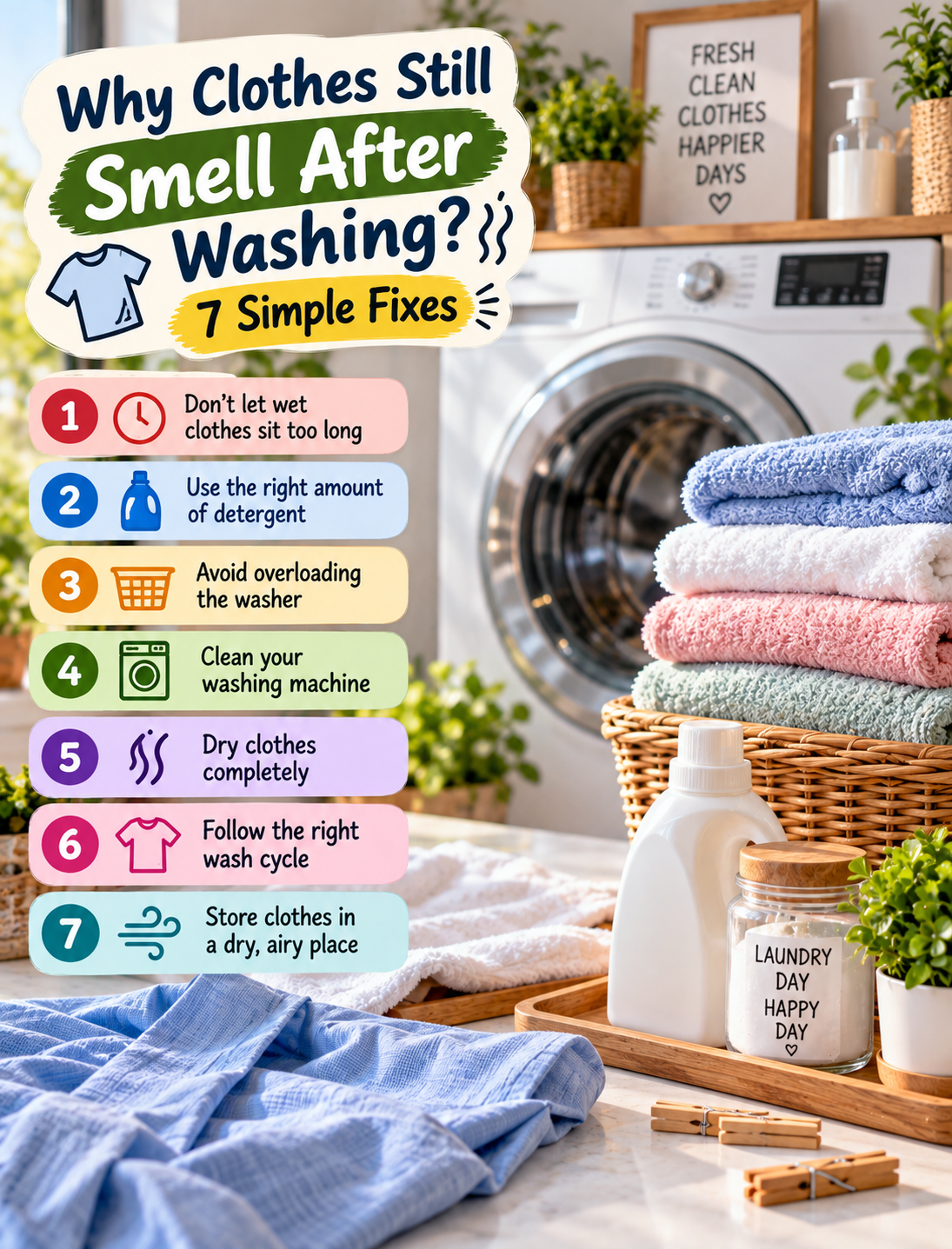
Why Do Your Clothes Still Smell After Washing? 7 Simple Fixes
Clean clothes should smell fresh after washing. But sometimes a shirt, towel, workout top, or pair of jeans comes out of the washer with the same musty or sour smell it had before the cycle.
The problem does not always mean your detergent is bad.
Lingering laundry odors can come from trapped sweat and body oils, too much detergent, an overloaded washer, damp clothes sitting too long, incomplete drying, or buildup inside the washing machine.
The good news is that you can usually narrow down the cause with a few simple checks.
Why Do Clothes Still Smell After Washing?
Several small laundry habits can contribute to persistent odors.
Common causes include:
- Wet clothes sitting in the washer after the cycle
- Using more detergent than recommended
- Overloading the washing machine
- Clothes not drying completely
- A washer that needs cleaning
- Sweat and body oils trapped in fabric
- A dirty detergent dispenser or door gasket
- Using a wash cycle that does not match the load
A strong smell can also become harder to remove when an item has been repeatedly washed without addressing the original cause.
Before changing several things at once, start with the easiest checks.
Step 1: Remove Wet Clothes Promptly
One of the simplest fixes is also one of the easiest to overlook.
When wet laundry stays inside the washer for too long, the damp environment can contribute to mildew-related odors. Whirlpool and Maytag both recommend removing laundry as soon as possible after the cycle ends.
Make This a Habit
As soon as the wash cycle finishes:
- Open the washer.
- Remove the clothes.
- Shake out heavier items.
- Transfer them to the dryer or drying area.
- Start drying promptly.
If clothes already smell musty because they sat wet for too long, consider rewashing them before drying.
Do not simply dry a noticeably musty load and hope the smell disappears.
Step 2: Stop Using More Detergent Than Needed
More detergent does not automatically mean cleaner clothes.
Too much detergent can leave residue behind, while too little may not clean heavily soiled laundry properly. The American Cleaning Institute recommends following the detergent label and fabric-care instructions.
Check Your Detergent Amount
Look at:
- Load size
- Soil level
- Detergent concentration
- Washer type
- Manufacturer instructions
If you have a high-efficiency washer, use detergent designed for HE machines when required by your appliance.
Avoid guessing the amount by filling the measuring cap to the top unless the label specifically tells you to do so.
A properly measured dose can help reduce residue and improve rinsing.
Step 3: Avoid Overloading the Washer
A packed washer may look efficient, but clothes need enough space to move during the wash.
When the drum is overloaded, water and detergent may not circulate through the fabrics as effectively. Whirlpool specifically recommends leaving enough room for clothes to move during the wash action.
Try This Instead
Before starting a load:
- Avoid tightly packing the drum.
- Separate very bulky items when needed.
- Follow your washer’s load-size guidance.
- Give towels and heavy fabrics enough room to move.
- Do not force one more shirt into an already full load.
If your clothes regularly come out unusually wet, check the load size and spin settings as well.
Step 4: Make Sure Clothes Dry Completely
Laundry can smell clean when it comes out of the washer and develop a musty odor later if it stays damp for too long.
Thick towels, hoodies, jeans, and heavy cotton items often need extra drying time.
Check the Thickest Parts
Before folding laundry, check:
- Waistbands
- Pockets
- Cuffs
- Seams
- Towel centers
- Thick collars
If any area still feels damp, continue drying according to the garment’s care instructions.
For air-dried clothes, leave enough space between garments for air to circulate.
Good airflow is especially important in humid laundry rooms.
Step 5: Clean the Washing Machine
Sometimes the clothes are not the main problem.
Residue from detergent, fabric softener, moisture, and other buildup can contribute to unpleasant washer odors. Whirlpool recommends regular washer-cleaning maintenance and checking the owner’s manual for the correct cleaning method.
Check These Areas
Depending on your washer model, inspect:
- Drum
- Door gasket
- Detergent dispenser
- Fabric-softener compartment
- Door area
- Other areas identified in your owner’s manual
Front-load washers deserve particular attention around the rubber door gasket because moisture and residue can collect there.
Use the Washer’s Cleaning Cycle
If your machine has a Clean Washer cycle, follow the manufacturer’s instructions.
Do not automatically use bleach, vinegar, or another cleaning product unless your appliance instructions allow it. Different washers have different cleaning requirements.
Step 6: Match the Wash Cycle to the Clothes
A heavily sweaty workout load may need different treatment from lightly worn everyday clothing.
Check the garment care label before changing the water temperature or cycle.
For washable fabrics that can safely tolerate warmer water, a suitable warm or hot cycle may help with stubborn odors. Whirlpool notes that higher-temperature cycles can help with odor removal when the fabric’s care instructions permit them.
For Workout Clothes
Synthetic athletic fabrics can hold onto sweat and body oils.
Try:
- Turn garments inside out if appropriate.
- Do not leave sweaty clothes sitting in a closed laundry basket for days.
- Use the correct detergent amount.
- Avoid overloading the washer.
- Follow the garment’s care label.
- Dry completely after washing.
Avoid using high heat on fabrics that the care label says should be air-dried or dried at low temperatures.
Step 7: Check Where the Clothes Wait Before and After Washing
Laundry odors can begin before the washing cycle even starts.
A damp towel thrown into a closed hamper can develop a stronger odor than a towel allowed to dry before going into the laundry.
Improve Your Laundry Routine
Before washing:
- Let damp towels dry before putting them in a hamper.
- Do not leave wet workout clothes in a closed bag.
- Wash heavily sweaty items according to their care instructions.
- Avoid letting damp laundry sit for days.
After washing:
- Remove the load promptly.
- Dry clothes thoroughly.
- Do not leave damp laundry in a basket.
- Make sure the drying area has reasonable airflow.
These small changes can prevent odors from becoming harder to remove.
What If Your Clothes Still Smell After These Fixes?
If the smell keeps returning, work through the problem systematically.
Check the Clothes
Does the odor affect only certain items?
If yes, the fabric may be holding onto sweat, body oils, or product residue.
Check the Washer
Does the washer itself smell when it is empty?
If yes, inspect the areas your manufacturer’s cleaning instructions identify.
Check Your Laundry Habits
Ask yourself:
- Am I leaving clothes wet overnight?
- Am I overloading the washer?
- Am I using the recommended detergent amount?
- Are clothes fully dry before storage?
- Do I clean my washer regularly?
Changing one or two habits at a time makes it easier to identify what is actually helping.
A Simple Laundry Reset
If a load has developed a musty smell, try this basic reset:
1. Remove the Clothes
Take the laundry out of the washer instead of leaving it damp.
2. Check the Washer
Look for obvious moisture, residue, or buildup in areas that your owner’s manual says to clean.
3. Rewash When Needed
Follow the garment care label and choose an appropriate cycle.
4. Use the Correct Detergent Amount
Measure according to the detergent and washer instructions.
5. Dry Completely
Do not fold or store clothing while it is still damp.
6. Review the Cause
If the smell returns, investigate the washer, load size, detergent amount, and drying routine rather than simply adding more detergent.
Best Practices for Fresh-Smelling Laundry
You do not need a complicated laundry routine.
Keep these habits simple:
- Remove laundry promptly after washing.
- Measure detergent instead of guessing.
- Avoid overloading the washer.
- Clean the washer according to its manual.
- Keep damp clothes from sitting in closed spaces.
- Dry laundry completely before folding.
- Follow clothing care labels.
- Give heavily worn clothing appropriate washing attention.
- Clean detergent dispensers as recommended.
- Keep the washer interior ventilated according to the appliance instructions.
A consistent routine is usually easier to maintain than repeatedly trying to rescue badly scented laundry.
Quick Laundry Checklist
Save this checklist for your next wash:
Before Washing
- Check clothing care labels
- Separate heavily soiled items when appropriate
- Do not overload the washer
- Measure detergent correctly
- Check that damp laundry has not been sitting too long
During Washing
- Use the correct cycle
- Use the appropriate water temperature
- Use HE detergent if your washer requires it
- Consider an extra rinse if your machine offers it and the load needs it
After Washing
- Remove clothes promptly
- Check thick areas for remaining moisture
- Dry completely
- Avoid leaving damp clothes in a basket
- Store only when fully dry
Frequently Asked Questions
Why do my clothes smell musty right after washing?
Wet clothes left too long in the washer, detergent residue, an overloaded load, incomplete drying, or washer buildup can contribute to musty odors.
Does using more detergent make clothes smell fresher?
Not necessarily; excessive detergent can leave residue, so use the amount recommended for your detergent, load, and washer.
How quickly should I remove clothes from the washer?
Remove them as soon as practical after the cycle finishes to reduce the chance of damp odors developing.
Why do towels smell even after washing?
Towels can retain moisture and body oils, and their thick fabric may take longer to clean and dry completely.
Should I clean my washing machine?
Yes, follow your washer manufacturer’s recommended cleaning routine, especially if the machine itself develops an odor.
Can overloading cause smelly laundry?
Yes, an overloaded washer can limit movement and reduce how effectively water and detergent reach the fabrics.
Why do workout clothes still smell after washing?
Sweat and body oils can remain trapped in some fabrics, especially synthetic athletic clothing, if the load is not cleaned and dried properly.
Should I dry clothes longer if they smell musty?
First identify the cause; if clothing is still damp, dry it completely according to its care label, but persistent odor may require rewashing or washer maintenance.
Final Thoughts
When clothes still smell after washing, the answer is not always more detergent.
Start with the basics: remove wet laundry promptly, use the correct detergent amount, avoid overloading, clean your washer, and dry clothes completely.
If the odor keeps returning, look at the entire laundry process instead of focusing only on the clothing.
Your washer, detergent, load size, drying method, and storage habits all play a role in keeping laundry fresh.
A few small changes can make laundry day easier and help prevent that frustrating moment when freshly washed clothes still do not smell fresh.
Note: Always follow the care label on your clothing and the manufacturer’s instructions for your specific washer before changing water temperature, using cleaning products, or performing maintenance.