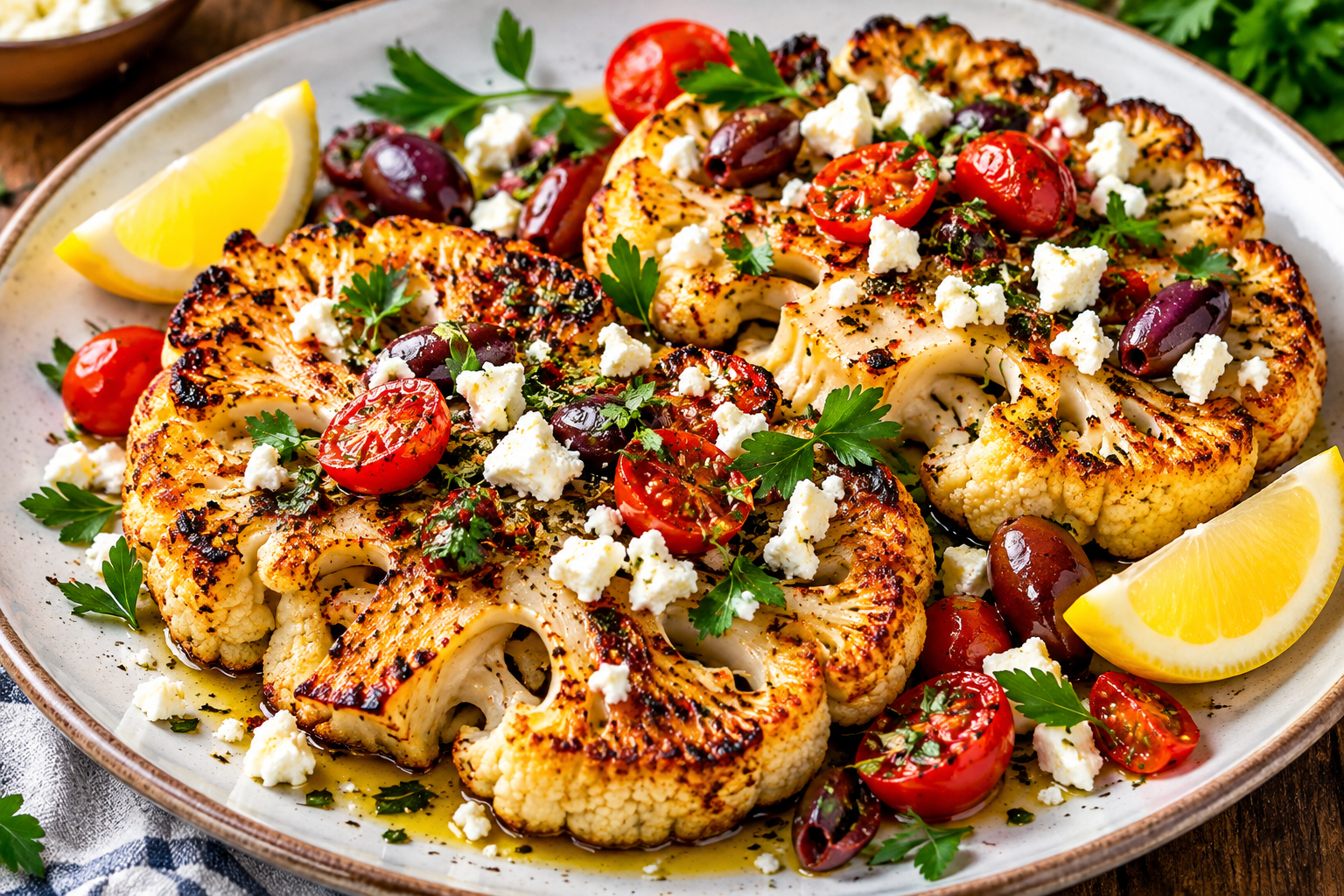
Mediterranean Roasted Cauliflower Steaks

Mediterranean Cauliflower Steaks with feta, herbs and roasted tomatoes

Mediterranean Roasted Cauliflower Steaks

Mediterranean Roasted Cauliflower Steaks are a simple, colorful, and satisfying way to turn cauliflower into a flavorful main dish or side. Thick slices of cauliflower are brushed with olive oil, garlic, paprika, oregano, and lemon, then roasted until the edges become golden and slightly crisp while the center stays tender.

The finishing touches make this recipe especially good. Crumbled feta, fresh parsley, juicy cherry tomatoes, and a drizzle of lemon-herb olive oil add brightness, creaminess, and classic Mediterranean flavor.

This recipe is naturally vegetarian, easy to prepare, and works well for weeknight dinners, meal prep, or a lighter holiday side.

Why You’ll Love This Recipe

These Mediterranean Roasted Cauliflower Steaks are:

  • Easy to prepare
  • Full of Mediterranean flavor
  • Crispy around the edges
  • Tender in the center
  • Vegetarian-friendly
  • Naturally gluten-free
  • Made with simple ingredients
  • Great as a side or light main dish
  • Ready in under an hour

Ingredients

For the Cauliflower Steaks

  • 1 large head cauliflower
  • 3 tablespoons extra virgin olive oil
  • 3 garlic cloves, minced
  • 1 teaspoon smoked paprika
  • 1 teaspoon dried oregano
  • 1/2 teaspoon ground cumin
  • 1/2 teaspoon onion powder
  • 1/2 teaspoon salt
  • 1/4 teaspoon black pepper
  • 1 tablespoon fresh lemon juice

For the Mediterranean Topping

  • 1/3 cup crumbled feta cheese
  • 1/2 cup cherry tomatoes, quartered
  • 2 tablespoons fresh parsley, chopped
  • 1 tablespoon extra virgin olive oil
  • 1 teaspoon fresh lemon juice
  • 1/2 teaspoon dried oregano
  • Pinch of black pepper

Optional Garnishes

  • Lemon wedges
  • Fresh dill
  • Red pepper flakes
  • Kalamata olives
  • Toasted pine nuts

How to Cut Cauliflower Steaks

Remove the outer leaves from the cauliflower but keep the center stem intact.

Place the cauliflower upright on a cutting board.

Slice straight through the center into thick pieces about 3/4 to 1 inch thick.

Depending on the size of the cauliflower, you will usually get two to four good steaks.

Do not throw away the smaller florets that fall off. Roast them on the same baking sheet alongside the steaks.

Instructions

Step 1: Preheat the Oven

Preheat your oven to 425°F or 220°C.

Line a large baking sheet with parchment paper or lightly grease it with olive oil.

A hot oven is important because it helps the cauliflower develop browned, caramelized edges instead of becoming soft and watery.

Step 2: Make the Seasoning Mixture

In a small bowl, combine the olive oil, minced garlic, smoked paprika, oregano, cumin, onion powder, salt, black pepper, and lemon juice.

Mix until everything is evenly combined.

Step 3: Season the Cauliflower

Arrange the cauliflower steaks carefully on the baking sheet.

Brush the top of each steak generously with the seasoned olive oil mixture.

Turn them carefully and brush the other side.

Make sure some of the oil and seasoning reaches between the florets.

Step 4: Roast

Place the baking sheet in the oven.

Roast for about 18 to 20 minutes.

Carefully flip each cauliflower steak using a wide spatula.

Return to the oven and roast for another 12 to 15 minutes.

The cauliflower should be tender when pierced with a fork and deeply golden around the edges.

If you prefer extra browning, broil for the final 1 to 2 minutes.

Watch closely so the garlic and cauliflower do not burn.

Step 5: Prepare the Mediterranean Topping

While the cauliflower is roasting, combine the cherry tomatoes, parsley, olive oil, lemon juice, oregano, and black pepper in a small bowl.

Gently toss everything together.

Keep the feta separate until serving so it stays crumbly and fresh.

Step 6: Assemble

Transfer the roasted cauliflower steaks to serving plates.

Spoon the tomato and herb mixture over the top.

Sprinkle generously with crumbled feta.

Finish with fresh parsley and an extra squeeze of lemon.

Serve immediately while the cauliflower is warm.

Tips for Perfect Cauliflower Steaks

Choose a Large, Firm Cauliflower

A large head of cauliflower makes it easier to cut thick steaks that stay together during roasting.

Keep the Stem Intact

The center stem holds the cauliflower steak together.

Do not remove it before slicing.

Cut Thick Slices

Thin cauliflower steaks can break apart or dry out.

Aim for approximately 3/4 to 1 inch thickness.

Use Enough Olive Oil

Cauliflower absorbs flavor well, and olive oil helps the outside become beautifully browned.

You do not need to soak it, but make sure both sides are lightly coated.

Roast at High Heat

A higher oven temperature encourages caramelization.

This creates the golden roasted flavor that makes cauliflower steaks so good.

Do Not Crowd the Pan

Leave some space between the cauliflower pieces.

Crowding traps steam and can prevent proper browning.

Mediterranean Flavor Additions

You can easily customize these cauliflower steaks.

Kalamata Olives

Add sliced Kalamata olives on top for a salty Mediterranean flavor.

Tahini Sauce

Drizzle with a simple tahini sauce made from tahini, lemon juice, garlic, and water.

Tzatziki

Serve with a spoonful of creamy tzatziki on the side.

Toasted Pine Nuts

Sprinkle toasted pine nuts over the finished cauliflower for extra crunch.

Fresh Dill

Fresh dill pairs especially well with feta and lemon.

Chili Flakes

Add red pepper flakes if you like a little heat.

What to Serve With Mediterranean Roasted Cauliflower Steaks

These cauliflower steaks work well with many dishes.

Serve them with:

  • Greek salad
  • Chickpea salad
  • Lemon herb chicken
  • Grilled salmon
  • Quinoa
  • Couscous
  • Hummus
  • Tzatziki
  • Roasted potatoes
  • Lentil salad

For a vegetarian meal, serve the cauliflower with quinoa, chickpeas, hummus, and a fresh cucumber tomato salad.

Can I Make Them Vegan?

Yes.

Simply leave out the feta or replace it with a plant-based feta alternative.

You can also drizzle the cauliflower with tahini sauce for extra richness.

Can I Make This Recipe Low Carb?

Yes.

Cauliflower is naturally lower in carbohydrates than potatoes, pasta, or rice.

To keep the meal lower in carbohydrates, serve the cauliflower with grilled chicken, fish, eggs, salad, or another non-starchy vegetable.

How to Store Leftovers

Allow the cauliflower to cool completely.

Place leftovers in an airtight container and refrigerate for up to 3 to 4 days.

Store the feta and fresh tomato topping separately if possible.

This helps preserve the texture.

How to Reheat

For the best texture, reheat cauliflower steaks in the oven at 375°F or 190°C for about 8 to 10 minutes.

You can also reheat them in a skillet over medium heat.

The microwave works, but the cauliflower will become softer.

Add the fresh feta and tomato topping after reheating.

Can You Make Cauliflower Steaks Ahead of Time?

Yes.

You can slice the cauliflower and prepare the seasoning mixture several hours ahead.

Store both separately in the refrigerator.

Brush and roast the cauliflower shortly before serving for the best texture.

Nutritional Information

Approximate nutrition per serving, based on 4 servings:

Calories: 190

Protein: 6 g

Carbohydrates: 12 g

Fiber: 4 g

Sugar: 5 g

Fat: 14 g

Saturated Fat: 4 g

Sodium: 420 mg

Nutrition may vary depending on the amount of feta, olive oil, and toppings used.

Frequently Asked Questions

Why do my cauliflower steaks fall apart?

Cauliflower steaks usually fall apart when they are cut too thinly or when too much of the center stem is removed.

Cut through the center of the cauliflower and keep the stem intact.

Can I use frozen cauliflower?

Frozen cauliflower is not ideal for cauliflower steaks because it is already separated into florets and contains more moisture.

Fresh cauliflower gives the best results.

Can I cook cauliflower steaks on the grill?

Yes.

Brush the cauliflower with the seasoning mixture and grill over medium heat for approximately 5 to 7 minutes per side.

Cook until tender and lightly charred.

How do I know when cauliflower steaks are done?

The edges should be golden brown and slightly crisp.

A fork or sharp knife should slide easily into the thickest part of the stem.

Can I make these without feta?

Absolutely.

You can leave the feta out or replace it with tahini, hummus, vegan feta, or a spoonful of Greek yogurt.

Are cauliflower steaks a main dish?

They can be.

For a more filling vegetarian meal, serve them with chickpeas, lentils, quinoa, hummus, or another protein-rich side.

Final Thoughts

Mediterranean Roasted Cauliflower Steaks are proof that a simple vegetable can become the centerpiece of a beautiful meal.

Roasting gives the cauliflower a tender center and caramelized edges, while garlic, paprika, oregano, lemon, feta, and fresh herbs bring plenty of Mediterranean flavor.

This recipe is simple enough for a weeknight dinner but attractive enough to serve to guests. Add your favorite Mediterranean toppings and serve it hot from the oven for the best flavor and texture.

Recipe Summary

Prep Time: 10 minutes

Cook Time: 35 minutes

Total Time: 45 minutes

Servings: 4

Course: Main Dish or Side Dish

Cuisine: Mediterranean-Inspired

Diet: Vegetarian, Gluten-Free
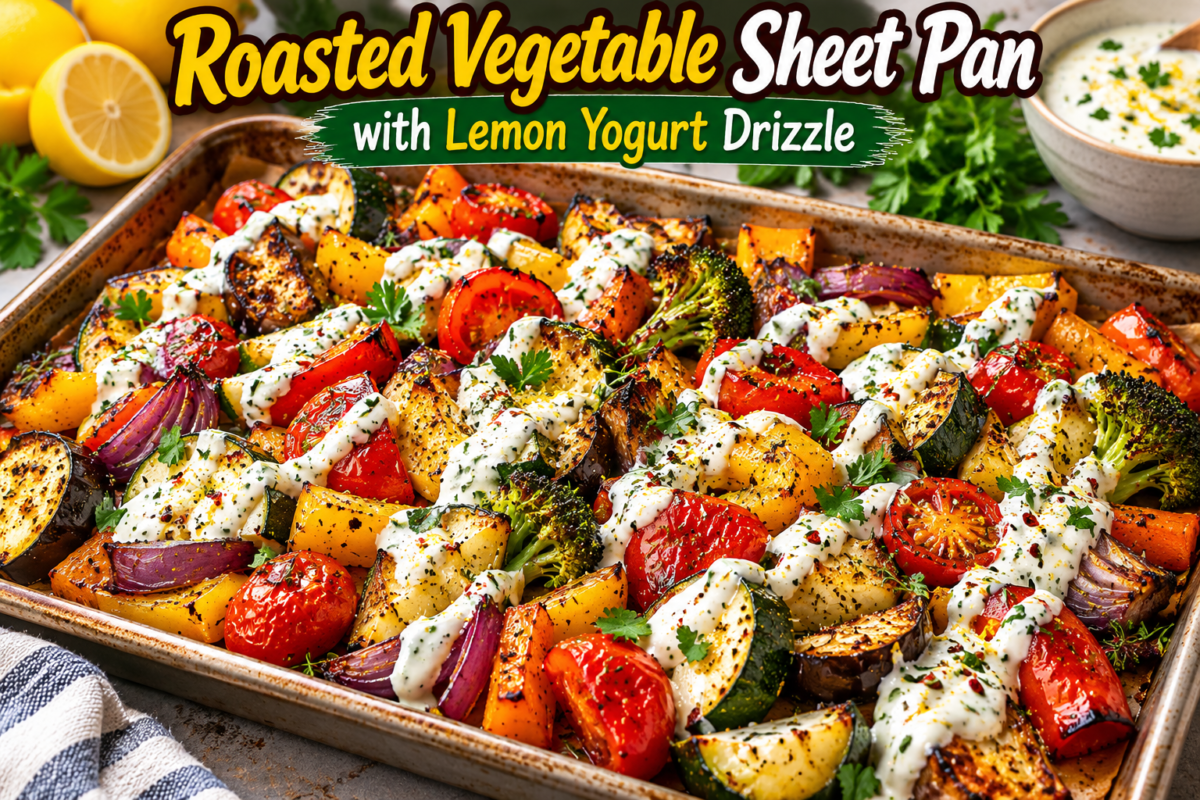
Roasted Vegetable Sheet Pan with Lemon Yogurt Drizzle

Roasted Vegetable Sheet Pan with colorful roasted zucchini, bell peppers, tomatoes, broccoli, eggplant, red onion, and lemon yogurt drizzle

Roasted Vegetable Sheet Pan with Lemon Yogurt Drizzle

This Roasted Vegetable Sheet Pan is a colorful Mediterranean-inspired recipe made with tender roasted vegetables, fragrant herbs, extra virgin olive oil, and a creamy lemon yogurt drizzle. It is simple enough for a busy weeknight but flavorful enough to serve as a beautiful side dish or light vegetarian meal.

The vegetables become golden and slightly caramelized in the oven while the cool lemon yogurt sauce adds a bright and creamy finish. Garlic, oregano, paprika, lemon, and fresh herbs bring all the flavors together without making the recipe complicated.

This Roasted Vegetable Sheet Pan is a simple way to turn everyday vegetables into a flavorful Mediterranean meal.

Prep Time: 20 minutes

Cook Time: 35 minutes

Total Time: 55 minutes

Servings: 4 to 6

Ingredients

For the Roasted Vegetables
  • 2 medium zucchini, sliced
  • 1 red bell pepper, sliced
  • 1 yellow bell pepper, sliced
  • 1 medium red onion, cut into wedges
  • 1 medium eggplant, cut into cubes
  • 1 cup cherry tomatoes
  • 1 cup broccoli florets
  • 3 tablespoons extra virgin olive oil
  • 1 teaspoon dried oregano
  • 1 teaspoon smoked paprika
  • ½ teaspoon garlic powder
  • ½ teaspoon sea salt
  • ½ teaspoon black pepper
  • ¼ teaspoon red pepper flakes, optional
  • For the Lemon Yogurt Drizzle
  • 1 cup plain Greek yogurt
  • 2 tablespoons fresh lemon juice
  • 1 teaspoon lemon zest
  • 1 small garlic clove, finely grated
  • 1 tablespoon extra virgin olive oil
  • 2 tablespoons fresh parsley, finely chopped
  • ¼ teaspoon sea salt
  • ¼ teaspoon black pepper

    For Garnishing

  • Fresh parsley
  • Fresh dill
  • Lemon wedges
  • Extra virgin olive oil
  • Crumbled feta cheese, optional

Instructions

Preparing the Vegetables

Begin by preheating the oven to 425°F or 220°C. A hot oven is important because it helps the vegetables roast quickly while creating golden edges and tender centers.

Wash and dry all the vegetables thoroughly. Excess water can create steam and prevent proper browning.

Slice the zucchini into medium rounds or half moons. Cut the bell peppers into strips and the red onion into wedges. Cut the eggplant into bite sized cubes and divide the broccoli into small florets.

Place all the vegetables on a large sheet pan.

Add the cherry tomatoes last because they cook faster and release moisture as they roast.

Seasoning the Vegetables

Drizzle the vegetables with extra virgin olive oil. Sprinkle oregano, smoked paprika, garlic powder, sea salt, black pepper, and red pepper flakes over the top.

Use a large spoon or clean hands to toss everything together.

Make sure the oil and seasonings coat the vegetables evenly. This helps every piece develop flavor during roasting.

Spread the vegetables across the sheet pan in a single layer.

Avoid stacking the vegetables because crowded vegetables release moisture and steam instead of roasting. If your pan is small, use two sheet pans.

Roasting the Vegetables

First, place the sheet pan in the preheated oven and roast the vegetables for about 20 minutes.

After 20 minutes, remove the pan and gently turn the vegetables with a spatula. Next, return the pan to the oven and continue roasting.

While the vegetables cook, check their texture and color. The zucchini should become tender, while the peppers and onions should develop golden edges.

Finally, roast everything for another 12 to 15 minutes. Remove the pan when the vegetables are tender and lightly caramelized.

Making the Lemon Yogurt Drizzle

Meanwhile, add Greek yogurt, lemon juice, lemon zest, grated garlic, olive oil, parsley, salt, and black pepper to a small bowl.

Whisk the ingredients until the sauce becomes smooth and creamy. If it feels too thick, add one or two teaspoons of water.

Taste the sauce and adjust the lemon, salt, or garlic as needed. For extra freshness, add a little more lemon zest.

Finally, keep the sauce refrigerated until the roasted vegetables are ready.

Finishing the Roasted Vegetable Sheet Pan

Remove the vegetables from the oven and allow them to cool for a few minutes.

Transfer them to a large serving platter or leave them directly on the sheet pan for a rustic presentation.

Drizzle the lemon yogurt sauce generously over the warm vegetables.

Add fresh parsley and dill.

For an extra Mediterranean touch, sprinkle crumbled feta cheese over the top.

Finish with a little extra virgin olive oil and fresh lemon juice.

Serve while the vegetables are warm and the yogurt sauce is cool and creamy.

Tips for the Best Roasted Vegetables

Cut Vegetables Evenly

First, cut the vegetables into similar-sized pieces. This helps them cook evenly. As a result, each piece will have a better texture. Next, spread the vegetables evenly across the sheet pan.

Do Not Overcrowd the Pan

This is one of the most important tips for achieving roasted rather than steamed vegetables.

Give the vegetables enough room to spread across the pan. If necessary, use two baking sheets.

Dry the Vegetables First

Pat the vegetables dry after washing them.

Less surface moisture means better caramelization and more concentrated flavor.

For the best Roasted Vegetable Sheet Pan, keep the vegetables in a single layer so they roast instead of steaming

Use Enough Olive Oil

A light coating of olive oil helps the vegetables brown and prevents them from becoming dry.

Avoid adding excessive oil because it can make the vegetables greasy.

Add the Yogurt After Roasting

Do not add the yogurt sauce before roasting.

The cool lemon yogurt is designed to contrast with the warm roasted vegetables, so add it just before serving.

Vegetable Variations

Mediterranean Potato Version

Add baby potatoes or diced Yukon Gold potatoes to make the dish more filling.

Because potatoes take longer to cook, roast them for about 15 minutes before adding the quicker cooking vegetables.

Chickpea Version

Add drained and dried chickpeas to the sheet pan.

Toss them with olive oil, oregano, paprika, and garlic powder before roasting.

They become slightly crispy and add plant-based protein and texture.

Mushroom Version

Add sliced mushrooms for a deeper savory flavor.

Mushrooms roast beautifully and pair especially well with garlic, oregano, and lemon yogurt.

Sweet Potato Version

Diced sweet potato adds natural sweetness and beautiful color.

Combine it with red onion, zucchini, and bell peppers for a hearty autumn-inspired variation.

How to Serve This Recipe

As a Side Dish

Serve the roasted vegetables alongside grilled chicken, baked salmon, shrimp, or Mediterranean meatballs.

This Roasted Vegetable Sheet Pan also works beautifully as a light lunch with warm pita and hummus.

The lemon yogurt drizzle adds enough flavor to make simple proteins taste fresh and complete.

This Roasted Vegetable Sheet Pan is also delicious with grilled chicken, baked salmon, or shrimp.

As a Vegetarian Main Meal

Serve the vegetables over quinoa, couscous, brown rice, or warm orzo.

Add chickpeas and feta for a more filling vegetarian meal.

With Warm Bread

Warm pita bread is excellent for scooping up the roasted vegetables and lemon yogurt sauce.

You can also serve the dish with toasted sourdough or flatbread.

As a Mediterranean Bowl

Add cooked quinoa to a bowl and top it with roasted vegetables, cucumber, olives, feta, fresh herbs, and lemon yogurt sauce.

This creates a satisfying Mediterranean-style lunch or dinner.

Meal Prep Instructions

Preparing Ahead

The vegetables can be washed, cut, and stored in the refrigerator several hours before roasting.

You can also prepare the lemon yogurt sauce ahead of time and keep it refrigerated.

When you are ready to cook, season the vegetables and place them directly onto the sheet pan.

The sauce can be made up to two days ahead.

This Roasted Vegetable Sheet Pan is also convenient for meal prep because the vegetables can be prepared ahead of time.

Storing Leftovers

Store roasted vegetables in an airtight container in the refrigerator for up to four days.

Keep the lemon yogurt sauce in a separate sealed container.

Separating the sauce from the vegetables helps preserve the roasted texture.

Reheating

Reheat the vegetables in a skillet, oven, or air fryer.

The oven or air fryer provides the best texture because it helps restore some of the roasted edges.

Add the lemon yogurt sauce after reheating.

Health Benefits

Rich in Vegetables

This recipe contains several colorful vegetables that provide fiber, vitamins, minerals, and beneficial plant compounds.

Using different colored vegetables also adds variety to the meal.

This Roasted Vegetable Sheet Pan makes it easy to enjoy several colorful vegetables in one flavorful meal.

Greek Yogurt Protein

Greek yogurt adds protein and creates a creamy sauce without requiring heavy cream.

Healthy Fats

Extra virgin olive oil provides a flavorful source of unsaturated fat and is a classic ingredient in Mediterranean-style cooking.

Fiber Rich Ingredients

Vegetables and optional chickpeas provide dietary fiber, which can help make the meal more filling.

Fresh Flavor Without Heavy Sauces

The lemon yogurt drizzle gets its flavor from lemon, garlic, herbs, and yogurt instead of a heavy creamy sauce.

Nutrition Information

Approximate Nutrition Per Serving

Calories: 285 kcal

Protein: 10g

Carbohydrates: 25g

Fiber: 7g

Fat: 16g

Saturated Fat: 4g

Sugar: 10g

Sodium: 520mg

Nutrition values are approximate and can vary depending on portion sizes and the specific ingredients used.

Frequently Asked Questions

Can I make this Roasted Vegetable Sheet Pan ahead of time

Yes. The vegetables can be roasted ahead and refrigerated for up to four days. Reheat them before serving and add the lemon yogurt drizzle afterward.

Can I use frozen vegetables

Fresh vegetables generally provide better roasting results, but some frozen vegetables can be used. Thaw and dry them well before roasting to reduce excess moisture.

Can I make this recipe vegan

Yes. Replace Greek yogurt with an unsweetened plant-based yogurt and make sure the yogurt contains no dairy ingredients. This Roasted Vegetable Sheet Pan can easily be adapted with your favorite plant-based ingredients.

What other vegetables can I use

You can use cauliflower, carrots, mushrooms, asparagus, sweet potatoes, Brussels sprouts, or green beans.

Choose vegetables with similar cooking times or add harder vegetables earlier.

How do I make the vegetables extra crispy

Use a large sheet pan, avoid overcrowding, dry the vegetables well, and roast at a high temperature.

You can also finish them under the broiler for a short time.

Can I add cheese

Yes. Crumbled feta is an excellent choice and adds a salty Mediterranean flavor.

Parmesan or goat cheese can also work depending on the flavor you want.

What can I use instead of Greek yogurt

You can use plain yogurt, labneh, or a dairy-free yogurt alternative.

If using regular yogurt, you may need slightly less lemon juice because it is usually thinner than Greek yogurt.

How do I keep a Roasted Vegetable Sheet Pan from becoming soggy?
To keep a Roasted Vegetable Sheet Pan crisp, dry the vegetables well, avoid overcrowding the tray, and roast them at a high temperature.

Serving and Presentation Tips

Create Contrast

For the most attractive presentation, serve warm golden vegetables with the cool white lemon yogurt sauce.

Add fresh green herbs and bright lemon wedges around the platter.

Finish Just Before Serving

Drizzle the yogurt sauce immediately before serving.

This keeps the vegetables looking vibrant and prevents them from becoming soggy.

Add Mediterranean Garnishes

A few Kalamata olives, crumbled feta, fresh dill, parsley, toasted pine nuts, or sesame seeds can make the finished dish look even more inviting.

Final Thoughts

This Roasted Vegetable Sheet Pan is an easy way to turn everyday vegetables into a flavorful Mediterranean meal. High heat brings out their natural sweetness and creates delicious golden edges.

The creamy lemon yogurt drizzle adds a fresh and tangy contrast. Fresh herbs and lemon juice make the dish even brighter.

For serving, enjoy the vegetables as a side dish with grilled chicken, salmon, or shrimp. You can also add quinoa or chickpeas to make a satisfying vegetarian meal.

Overall, this recipe is colorful, flexible, and simple enough for a busy weeknight. It is also a great option for meal prep and family dinners.