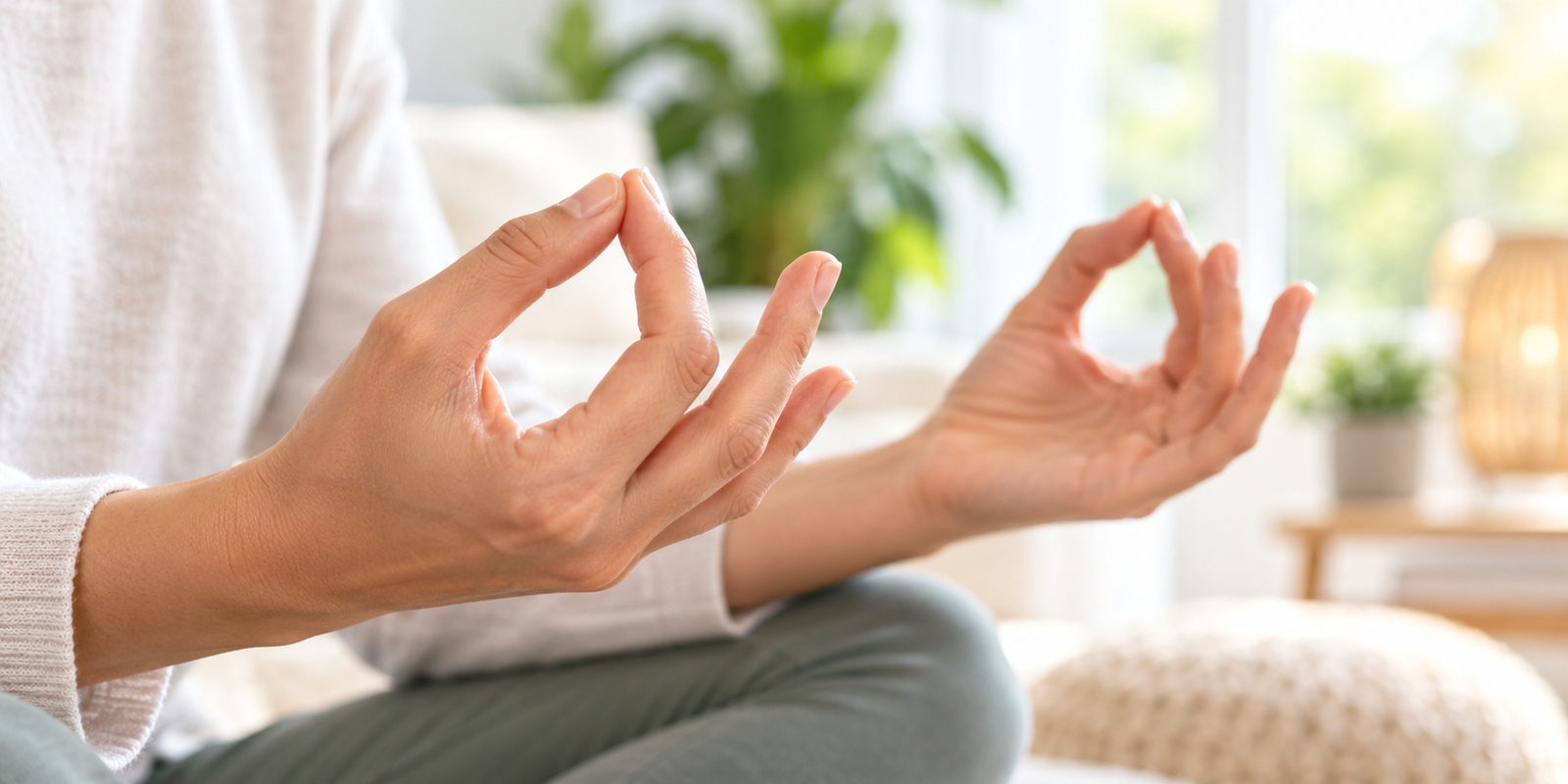
Finger Exercises to Wake Up Your Brain: 7 Simple Movements for Focus and Coordination
Did you know that a few simple finger movements can challenge your brain and help improve hand coordination?
Your hands and brain constantly communicate whenever you write, type, hold a cup, button a shirt, or perform everyday activities. Even something as simple as touching each fingertip to your thumb requires coordination between your nervous system, muscles, and joints.
Finger exercises to wake up your brain have become popular as a quick way to practice attention, finger control, and mental engagement.
Although the phrase “wake up your brain” sounds exciting, these exercises do not literally switch your brain on. Your brain remains active throughout the day and even while you sleep.
Instead, controlled finger movements give your brain a small motor coordination challenge that requires attention and practice.
The best part? You can perform these exercises at home, at your desk, or during a short break without any expensive equipment.
In this article, you’ll discover seven simple finger exercises, their potential benefits, how to perform them correctly, and what science says about hand movements and brain health.
What Are Finger Exercises for the Brain?
Finger exercises are controlled hand movements that encourage you to use individual fingers, both hands, or specific movement patterns.
Some exercises involve touching your fingertips together. Others require switching finger positions, reversing sequences, or performing different movements with each hand.
Your brain coordinates these activities through networks involved in movement planning, sensation, attention, and motor control.
For example, when you touch your index finger to your thumb, your nervous system helps control the timing and position of that movement.
When you repeat the same exercise using your middle, ring, and little fingers, the coordination challenge changes slightly.
Performing these movements slowly can help you notice how your fingers respond and where you have difficulty maintaining control.
However, finger exercises should not be confused with scientifically proven treatments for memory loss, dementia, or neurological conditions.
7 Simple Finger Exercises to Wake Up Your Brain
1. Thumb-to-Fingertip Touches
This is one of the easiest finger exercises to practice.
It requires you to move each finger toward your thumb in a specific order.
How to Do It:
- Sit comfortably with your shoulders relaxed.
- Hold one hand in front of you, palm facing upward or forward.
- Touch the tip of your index finger to your thumb.
- Separate them and touch your middle finger to your thumb.
- Continue with your ring finger and little finger.
- Reverse the sequence until you return to your index finger.
- Repeat using your other hand.
Suggested Practice: Start with 3–5 complete sequences per hand.
Potential Benefit: This movement practices finger dexterity, precision, and sequential motor coordination.
Did You Know? Your ring finger may feel more difficult to move independently because finger movements are influenced by shared muscles, tendons, and overlapping neural control.
2. Finger Spreading Exercise
Finger spreading is a simple movement that activates muscles involved in separating and bringing your fingers together.
How to Do It:
- Hold your hands in front of you.
- Keep your palms open and fingers relaxed.
- Slowly spread your fingers apart.
- Hold for approximately two seconds.
- Bring your fingers back together.
- Repeat without forcing the movement.
Suggested Practice: 10 comfortable repetitions.
Potential Benefit: This exercise may help maintain finger mobility and improve awareness of hand positioning.
It can also provide a gentle movement break after extended periods of typing or using a phone.
3. Finger Tapping Sequence
Finger tapping adds a timing challenge to ordinary finger movements.
How to Do It:
- Place one hand comfortably on a table.
- Keep your palm and fingers relaxed.
- Lift and gently tap your index finger.
- Continue with your middle, ring, and little fingers.
- Repeat the sequence in reverse.
- Practice with the opposite hand.
Suggested Practice: 3–5 slow sequences per hand.
Potential Benefit: Finger tapping challenges timing, sequencing, and fine motor coordination.
Try maintaining a steady rhythm rather than moving as quickly as possible.
4. Opposite-Hand Finger Patterns
This exercise challenges you to perform different movements with each hand.
How to Do It:
- Raise both hands in front of you.
- On your left hand, touch your thumb to your index finger.
- On your right hand, touch your thumb to your little finger.
- Move through the fingertip sequence in opposite directions.
- Pause if you become confused.
- Restart slowly and focus on accuracy.
Suggested Practice: 30–60 seconds.
Potential Benefit: Performing different patterns with each hand challenges coordination and attention.
This activity may feel more difficult than repeating the same movement with both hands.
Difficulty does not necessarily indicate a brain health problem. It often reflects the unfamiliar nature of the task.
5. Finger-to-Thumb Speed Challenge
Once you are comfortable with thumb-to-fingertip touches, you can gradually increase the pace.
How to Do It:
- Begin with your thumb and index finger.
- Move through all four fingers in order.
- Reverse the pattern.
- Repeat slowly until your movements feel controlled.
- Increase speed slightly while maintaining accuracy.
Suggested Practice: 20–30 seconds at a comfortable pace.
Potential Benefit: This exercise provides additional practice in sequencing and movement timing.
Speed is not the main goal. Controlled, accurate movement is more important.
6. Finger Lift Exercise
Finger lifts help you practice controlling individual fingers.
How to Do It:
- Place your hand palm-down on a flat table.
- Keep your wrist relaxed.
- Lift your index finger slightly.
- Lower it gently.
- Continue with each remaining finger.
- Repeat with your other hand.
Suggested Practice: 5 gentle lifts per finger.
Potential Benefit: Finger lifts encourage movement awareness and control.
Some fingers may be harder to lift independently because of normal anatomical differences.
Do not force fingers to move beyond their comfortable range.
7. Finger Pattern Memory Challenge
This exercise combines hand movement with a simple memory task.
How to Do It:
- Create a short sequence, such as index finger, ring finger, middle finger, and little finger.
- Touch each named fingertip to your thumb.
- Repeat the sequence without looking at written instructions.
- Try reversing the order.
- Once comfortable, practice a different pattern.
Suggested Practice: 1–2 minutes.
Potential Benefit: Remembering and performing a movement sequence engages attention, working memory, and motor planning during the task.
However, becoming better at this exercise does not automatically mean that your general memory or intelligence will improve.
5 Potential Benefits of Regular Finger Exercises
1. Supports Hand-Eye Coordination
When you watch your fingers move and adjust their positions, your brain uses visual and sensory information to guide movement.
Practicing these movements may improve your ability to perform the practiced actions more accurately.
Hand-eye coordination is useful for everyday activities such as writing, cooking, using a phone, and handling small objects.
2. Encourages Fine Motor Control
Fine motor skills involve controlled movements of the small muscles of the hands and fingers.
Activities such as fingertip touches and individual finger lifts provide opportunities to practice these skills.
Regular practice may help some people maintain or improve dexterity, depending on their starting ability and health.
3. Challenges Attention
Some finger exercises require you to remember which finger moves next.
You may need to slow down, concentrate, and correct mistakes.
This makes the activity a simple attention challenge.
However, temporary concentration during an exercise should not be confused with proven improvements in long-term attention or cognitive performance.
4. Helps Maintain Comfortable Finger Movement
Gentle movements take finger joints through part of their normal range of motion.
For otherwise healthy hands, comfortable movement may help maintain mobility.
People with arthritis or hand injuries may require adapted exercises recommended by a clinician or hand therapist.
5. Provides a Convenient Movement Break
Finger exercises can be performed almost anywhere.
They may be a pleasant break from typing, scrolling, or other repetitive activities.
Taking short breaks and changing tasks can also help reduce prolonged static hand positions.
Finger exercises alone cannot prevent every repetitive strain injury, but they can be one component of a comfortable work routine.
Can Finger Exercises Really Wake Up Your Brain?
The phrase “wake up your brain” is best understood as a metaphor.
Your brain is already active, even when you are resting.
When you perform a new finger movement, the brain must coordinate sensory information and motor commands.
More complicated patterns may also engage attention and working memory.
Learning a movement can involve practice-related changes in motor performance.
But these facts do not establish that a brief finger routine increases IQ, reverses memory loss, or prevents dementia.
Research on hand exercises and neurological rehabilitation often involves carefully designed programs for specific populations.
Results from rehabilitation studies cannot automatically be applied to healthy adults performing a few seconds of finger movements.
Think of these exercises as small coordination challenges, not miracle brain treatments.
A Simple 3-Minute Daily Finger Exercise Routine
If you are new to finger exercises, this short routine is a practical place to start.
First Minute: Thumb-to-Fingertip Touches
Move from your index finger to your little finger and reverse the sequence.
Use slow, precise movements.
Second Minute: Finger Spreading and Tapping
Spread your fingers comfortably for a few repetitions.
Then gently tap individual fingers on a tabletop.
Third Minute: Opposite-Hand Coordination
Perform fingertip sequences in opposite directions with your left and right hands.
Keep the pace manageable.
If your hands become tired or uncomfortable, stop and rest.
There is no established requirement to perform this particular routine every day for brain health.
When Is the Best Time to Practice Finger Exercises?
You can practice finger exercises whenever they fit comfortably into your routine.
In the morning: Try a short sequence as an enjoyable coordination activity when beginning your day.
During work breaks: Practice gentle finger movements after prolonged typing or phone use.
In the afternoon: Use a new finger pattern as a brief attention challenge.
Before bedtime: Perform slow, comfortable movements if you find them relaxing.
No particular time of day has been established as providing superior brain health benefits from these exercises.
Choose a schedule that suits your preferences and comfort.
Can Finger Exercises Improve Memory?
Finger exercises may involve remembering movement sequences, especially when performing unfamiliar patterns.
Practicing a sequence can improve your ability to remember and execute that particular sequence.
However, this is not the same as demonstrating improvements in everyday memory.
There is insufficient evidence that simple fingertip exercises alone prevent age-related memory decline, treat Alzheimer’s disease, or substantially improve general cognitive functioning.
For long-term brain health, broader habits have stronger evidence, including regular physical activity, adequate sleep, managing cardiovascular risk factors, maintaining social engagement, and following appropriate medical advice.
Finger exercises can be a fun addition to these habits, not a substitute.
Are Finger Exercises Helpful for Older Adults?
Gentle finger movements may help some older adults practice hand dexterity and coordination.
These skills are relevant to many activities of daily living, including fastening buttons, handling utensils, and writing.
However, exercises should be tailored to an individual’s abilities.
People with painful arthritis, nerve conditions, weakness, recent injuries, or reduced hand sensation may need professional guidance.
An occupational therapist or hand therapist can recommend appropriate activities when hand function is limited.
Finger exercises should not be promoted as guaranteed dementia prevention.
Common Finger Exercise Mistakes to Avoid
Moving too quickly: Prioritize accurate, controlled movements before increasing speed.
Forcing painful joints: Never bend or stretch your fingers beyond a comfortable range.
Practicing through numbness: Stop if you experience persistent tingling, weakness, or unusual sensations.
Holding unnecessary tension: Keep your shoulders, wrists, and hands relaxed.
Expecting immediate brain improvements: A few repetitions will not instantly improve intelligence or memory.
Ignoring medical symptoms: Exercises should never replace evaluation of new or progressive neurological symptoms.
Who Should Be Careful With Finger Exercises?
Most healthy adults can perform gentle finger movements, but some people need extra care.
Consult a healthcare professional before starting if you have recently injured your hand, undergone hand surgery, have an unstable finger joint, or experience significant pain with movement.
People with rheumatoid arthritis, severe osteoarthritis, tendon disorders, or nerve problems may require modified exercises.
Stop if an exercise produces sharp pain, worsening swelling, or numbness.
Sudden weakness affecting one hand or arm, especially with facial drooping, difficulty speaking, or other sudden neurological symptoms, can be a sign of stroke and requires emergency medical care.
Frequently Asked Questions
Do Finger Exercises Really Stimulate the Brain?
Finger exercises engage brain networks involved in movement, sensation, and sometimes attention. However, this does not mean they have been proven to improve general brain health or intelligence.
What Is the Best Finger Exercise for Brain Coordination?
Thumb-to-fingertip touches are a simple starting exercise because they involve controlled sequencing and finger movement.
Can Finger Exercises Improve Concentration?
They can require concentration while you perform them, but there is insufficient evidence that a short finger routine creates lasting improvements in attention.
How Many Minutes Should I Practice Daily?
You can begin with one to three minutes of gentle practice. There is no scientifically established daily duration specifically required for cognitive benefits.
Can Finger Exercises Prevent Dementia?
No. There is no reliable evidence that simple finger exercises alone prevent Alzheimer’s disease or other forms of dementia.
Are Finger Exercises Good for Children?
Age-appropriate hand activities may help children practice fine motor skills and coordination. Activities should be safe, enjoyable, and matched to their developmental abilities.
Can I Do Finger Exercises Before Bed?
Yes. Gentle finger movements can be performed before bedtime if they are comfortable. However, they are not an established treatment for insomnia.
Do Finger Exercises Improve Hand Strength?
Some hand exercises can improve strength when appropriate resistance and progression are included. Gentle fingertip touching primarily practices movement and coordination rather than substantial muscle strength.
Can Finger Exercises Help After a Stroke?
Specific hand rehabilitation exercises may be useful for some stroke survivors, but they should be selected by a qualified rehabilitation professional based on the individual’s condition.
How Quickly Will I Notice Results?
You may become more comfortable with a particular finger pattern after practicing it. Improvements in coordination vary, and no specific timeframe is established for broader cognitive benefits.
Final Thoughts
Finger exercises are a simple and accessible way to practice hand coordination, movement control, and attention.
From thumb-to-fingertip touches to more challenging opposite-hand patterns, these movements provide small motor tasks that can be performed almost anywhere.
Although they are sometimes promoted as exercises that “wake up your brain,” their benefits should be understood realistically.
They may help you practice dexterity and coordination, but they are not proven treatments for dementia, memory loss, or other neurological conditions.
For better overall brain health, combine enjoyable mental and physical activities with regular exercise, adequate sleep, balanced nutrition, and appropriate healthcare.
Try touching each fingertip to your thumb, one by one, then reverse the order. It’s a quick and fun way to practice finger control today!
Medical Disclaimer
This article is for general educational purposes only and is not a substitute for professional medical advice. Individuals with hand injuries, persistent pain, weakness, numbness, or neurological conditions should seek appropriate healthcare guidance.