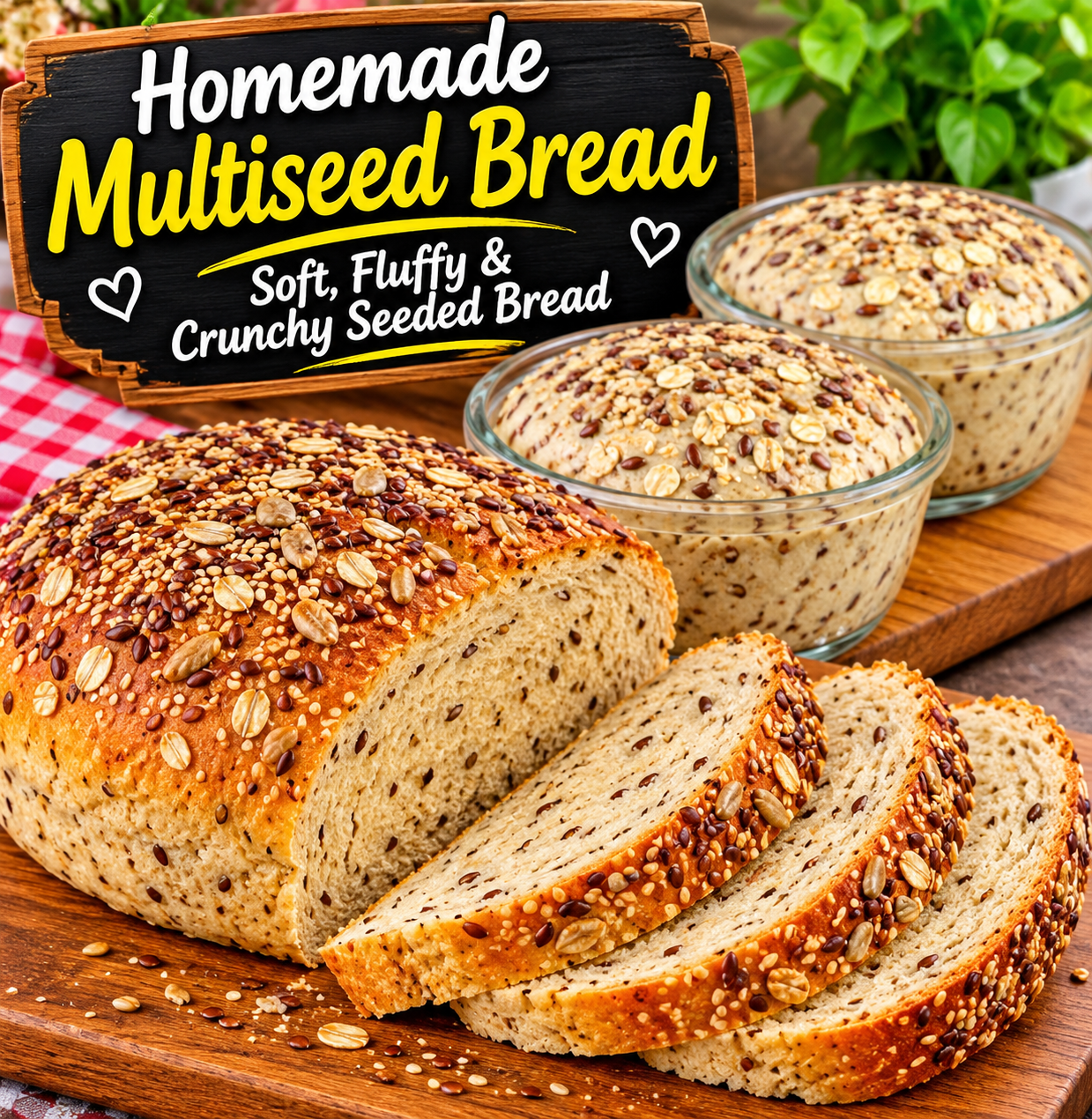
Homemade Multiseed Bread – Soft, Fluffy & Crusty Seeded Bread
This Homemade Multiseed Bread is a delicious, wholesome bread with a soft, fluffy interior and a beautifully golden, crunchy crust. Packed with sunflower seeds, sesame seeds, and flaxseeds, every slice is full of flavor and texture.
It’s perfect for breakfast, sandwiches, toast, or enjoying with butter and your favorite spread. The best part? You can make this delicious bakery-style seeded bread right in your own kitchen using simple ingredients.
Homemade Multiseed Bread Recipe
Recipe Overview
Prep Time: 20 minutes
Rising Time: 1 hour 30 minutes
Cook Time:30–35 minutes
Total Time: About 2 hours 25 minutes
Servings: 10–12 slices
Course: Breakfast, Side Dish
Cuisine:American, European
Difficulty: Easy
Ingredients
For the Bread Dough
– 3 cups all-purpose flour or bread flour
– 1 cup warm water
– 2 tablespoons olive oil
– 2 tablespoons honey
– 2 teaspoons instant yeast
– 1 teaspoon salt
– 2 tablespoons sunflower seeds
– 1 tablespoon flaxseeds
– 1 tablespoon sesame seeds
– 2 tablespoons rolled oats
For the Topping
– 1 tablespoon sunflower seeds
– 1 tablespoon sesame seeds
– 1 tablespoon flaxseeds
– 1 tablespoon rolled oats
– 1 egg, beaten (for brushing)
Instructions
Step 1: Activate the Yeast
In a large mixing bowl, combine warm water, honey, and instant yeast. Stir gently and let the mixture sit for 5–10 minutes if using active dry yeast, until foamy.
Step 2: Prepare the Dough
Add flour, salt, olive oil, sunflower seeds, flaxseeds, sesame seeds, and rolled oats. Mix everything until a rough dough forms.
Step 3: Knead the Dough
Transfer the dough to a lightly floured surface. Knead for approximately 8–10 minutes until smooth, soft, and elastic. If the dough feels too sticky, add a little flour, one tablespoon at a time.
Step 4: First Rise
Place the dough in a lightly greased bowl. Cover with a clean kitchen towel or plastic wrap. Allow it to rise in a warm place for about 60–90 minutes, or until doubled in size.
Step 5: Shape the Bread
Gently punch down the risen dough to release excess air. Divide it into two equal portions for two small round loaves, or keep it whole for one large loaf.
Shape each portion into a smooth round loaf.
Step 6: Add the Seed Topping
Place the shaped dough into greased, oven-safe baking dishes. Brush the tops with beaten egg and sprinkle generously with sunflower seeds, sesame seeds, flaxseeds, and oats.
Step 7: Second Rise
Cover the dough loosely and let it rise for another 25–35 minutes until slightly puffy.
Step 8: Bake the Bread
Preheat your oven to 375°F (190°C).
Bake for 30–35 minutes, or until the bread is golden brown and sounds hollow when tapped underneath. The center should reach approximately 190–200°F (88–93°C).
Step 9: Cool and Slice
Remove the bread from the oven and let it rest for 10 minutes before carefully removing it from the baking dishes. Transfer to a wire rack and cool completely before slicing.
Enjoy your homemade multiseed bread!
Helpful Tips
– Use warm, not hot, water to protect the yeast.
– Toast the seeds lightly for extra flavor.
– Avoid adding too much flour while kneading.
– Allow enough time for both rises.
– Let the bread cool before slicing to maintain its soft texture.
– Use oven-safe glass dishes only, and follow the manufacturer’s temperature instructions.
Storage Instructions
Store the completely cooled bread in an airtight container or bread bag at room temperature for up to 3 days.
For longer storage, slice the bread and freeze it in a freezer-safe bag for up to 2 months. Toast frozen slices directly when needed.
Frequently Asked Questions
1. Can I use whole wheat flour?
Yes! Replace up to half of the all-purpose flour with whole wheat flour. You may need a little extra water because whole wheat flour absorbs more moisture.
2. Can I make this bread without eggs?
Absolutely. Brush the top with milk or a little olive oil instead of egg wash.
3. Why is my bread dense?
Dense bread can result from insufficient rising time, too much flour, or inactive yeast. Make sure the dough doubles in size during the first rise.
4. Can I use different seeds?
Yes! Pumpkin seeds, chia seeds, poppy seeds, sunflower seeds, sesame seeds, and flaxseeds are excellent choices.
5. How do I know when the bread is ready?
The crust should be golden brown, and the loaf should sound hollow when tapped underneath. A thermometer is the most reliable way to check the center.
Tips for Perfect Homemade Bread
Always use warm water, not boiling water.
Measure flour carefully to avoid dense bread.
Knead until the dough becomes smooth and elastic.
Give the dough enough time to rise.
Sprinkle plenty of seeds on top for a beautiful bakery-style finish.
Allow the bread to cool before cutting for neat slices.
Best Ways to Serve Multiseed Bread
Here are some tasty ways to enjoy your homemade bread:
With butter: Serve warm slices with creamy butter.
Breakfast toast: Toast and spread with honey or jam.
Sandwiches: Use it for chicken, turkey, cheese, or vegetable sandwiches.
With soup: Enjoy a slice alongside creamy tomato or vegetable soup.
Avocado toast: Top toasted bread with mashed avocado and black pepper.
With eggs: Serve alongside scrambled or fried eggs.
Final Thoughts
Homemade Multiseed Bread is a wonderful addition to any breakfast table. Its golden crust, soft interior, and delicious combination of crunchy seeds make every slice satisfying. Serve it toasted with butter, alongside soup, or use it to prepare your favorite sandwiches. Once you try this easy homemade bread, you may never want store-bought seeded bread again!