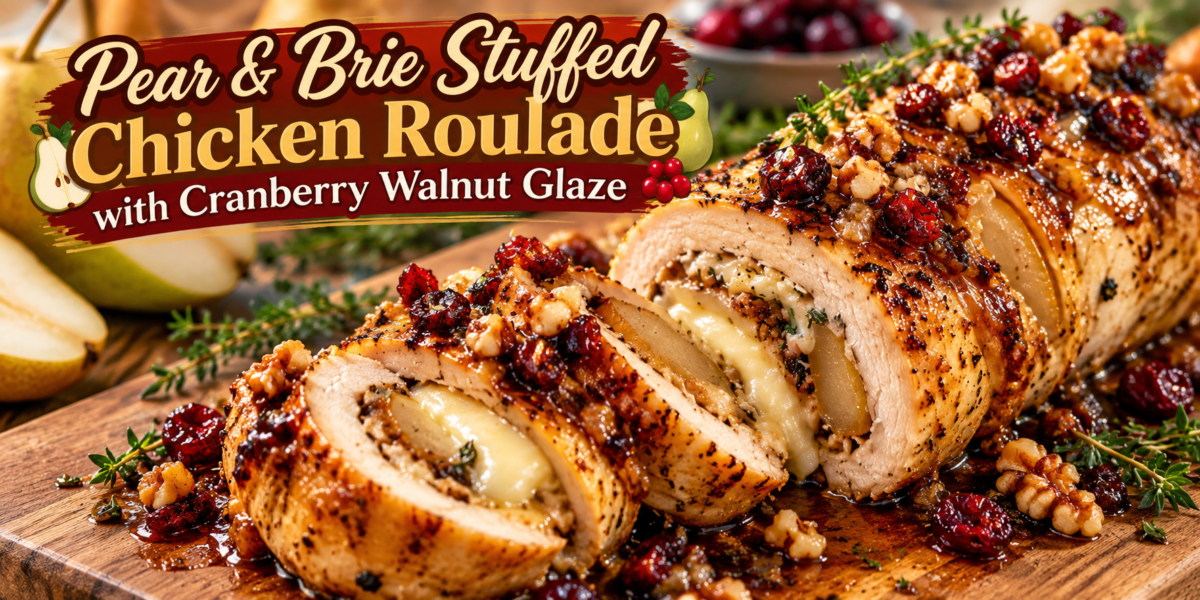
Pear & Brie Stuffed Chicken Roulade with Cranberry Walnut Glaze
This Chicken Roulade combines tender chicken breast with creamy Brie,, sweet pear, fragrant thyme, and toasted walnuts. A glossy cranberry glaze finishes the dish with a sweet-tart flavor. The result is a golden, elegant main course with a creamy spiral center.
Although it looks impressive, the preparation is straightforward. First, butterfly and flatten the chicken. Next, layer it with the filling, roll it tightly, and secure it with kitchen twine. After that, sear the rolls until golden and finish them in the oven. Meanwhile, prepare the cranberry walnut glaze so everything is ready together.
Pear and Brie create a delicious balance of creamy, fruity, and savory flavors. Toasted walnuts add crunch, while fresh thyme brings an earthy note. Together, these ingredients make Chicken Roulade a beautiful choice for holidays, dinner parties, or a cozy family meal.
Prep Time: 25 minutes
Cook Time: 35–40 minutes
Total Time: About 1 hour 5 minutes
Servings: 6
Ingredients
For the Chicken
3 large boneless, skinless chicken breasts, about 2½–3 pounds total
1 tablespoon extra virgin olive oil
1 teaspoon sea salt
½ teaspoon freshly ground black pepper
1 teaspoon garlic powder
1 teaspoon dried thyme
½ teaspoon smoked paprika
For the Filling
6 ounces creamy Brie, rind removed if preferred, sliced thinly
2 ripe but firm pears, cored and thinly sliced
½ cup toasted walnuts, finely chopped
2 tablespoons fresh thyme leaves
1 tablespoon fresh parsley, finely chopped
1 small garlic clove, minced
¼ teaspoon black pepper
Pinch of sea salt
For the Cranberry Walnut Glaze
1 cup fresh or frozen cranberries
½ cup orange juice
2 tablespoons pure maple syrup
1 tablespoon honey
½ cup chicken broth
2 tablespoons chopped walnuts
1 tablespoon balsamic vinegar
1 teaspoon orange zest
½ teaspoon fresh thyme leaves
Pinch of salt
For Cooking
1 tablespoon olive oil
1 tablespoon butter
Kitchen twine or heat-safe cooking string
Step-by-Step Instructions
1. Prepare the Oven
First, preheat the oven to 375°F (190°C). Lightly grease a baking dish or prepare a large oven-safe skillet.
Next, place the chicken on a clean work surface. Pat the breasts dry with paper towels. As a result, dry chicken is easier to flatten, season, and brown during searing.
2. Butterfly the Chicken
Using a sharp knife, carefully slice each chicken breast horizontally. Stop before cutting all the way through, then open the breast like a book.
Place the butterflied chicken between two sheets of plastic wrap or parchment paper. Using the flat side of a meat mallet, gently pound the chicken until it is about ¼ inch thick.
However, avoid pounding too hard. The goal is to create an even surface without tearing the meat.
Next, season both sides lightly with salt, black pepper, garlic powder, thyme, and smoked paprika.
For this reason, an even thickness is important for Chicken Roulade because it helps the chicken cook evenly and keeps the filling inside the roll.
3. Prepare the Filling
Arrange the flattened chicken pieces on your work surface. Place a layer of Brie slices over each breast, leaving about ½ inch around the edges.
Next, add the thin pear slices over the Brie. Sprinkle the toasted walnuts, fresh thyme, parsley, minced garlic, and black pepper over the pear.
Avoid adding too much filling. An overly full roll can be difficult to close, and the cheese may escape during cooking.
The pear should be ripe enough to taste sweet but firm enough to hold its shape. Very soft pears can release extra moisture and make rolling harder.
4. Roll the Chicken
Starting from one long side, carefully roll the chicken into a tight cylinder. Keep the filling tucked inside as you roll.
Once rolled, place the seam underneath. Then, tie the chicken securely with kitchen twine at several points, including near both ends.
The Chicken Roulade should feel firm but not compressed. If a little filling pushes out, gently tuck it back inside before tying.
Repeat the process with the remaining chicken breasts.
5. Sear the Chicken Roulade
Heat a large oven-safe skillet over medium-high heat. Add the olive oil and butter.
When the butter begins to foam, carefully place the Chicken Roulade in the skillet with the seam side down.
Sear for 2–3 minutes per side, turning gently with tongs. Continue until the outside is golden brown on most sides.
Meanwhile, searing the Chicken Roulade before baking creates a flavorful crust. It also helps the exterior hold its shape. Therefore, the center does not need to be fully cooked yet because the oven will finish the chicken.
6. Finish in the Oven
Transfer the skillet to the preheated oven. Alternatively, place the browned chicken in a prepared baking dish.
Bake for about 20–25 minutes, depending on the size and thickness of the rolls.
Use an instant-read thermometer to check the thickest part of the chicken. It should reach 165°F (74°C) for food safety.
Afterward, transfer the chicken to a cutting board. Tent it loosely with foil and let it rest for 8–10 minutes.
As a result, resting allows the juices to redistribute. It also gives the melted Brie time to settle inside the roll.
7. Make the Cranberry Walnut Glaze
While the chicken rests, prepare the glaze.
Add the cranberries, orange juice, maple syrup, honey, chicken broth, balsamic vinegar, orange zest, thyme, and salt to a small saucepan.
Bring the mixture to a gentle simmer over medium heat. Cook for 8–10 minutes, stirring occasionally.
As the cranberries soften, press a few against the side of the pan with the back of a spoon. Leave some berries whole for texture.
During the final 2 minutes, add the chopped walnuts.
The glaze should become glossy and slightly thick. If it seems too thick, add a tablespoon of broth. If it remains too thin, simmer for another minute or two.
As a result, this cranberry topping gives Chicken Roulade a bright, sweet-tart finish. It also balances the richness of the Brie.
8. Slice the Chicken
Remove the kitchen twine carefully with kitchen scissors. Avoid pulling the string because it may disturb the filling.
Next, using a sharp knife, slice each roll into rounds about ¾–1 inch wide.
The cut side of the Chicken Roulade should reveal a beautiful spiral of chicken, pear, Brie, herbs, and walnuts.
Arrange the slices on a warm serving platter. Then, spoon the cranberry walnut glaze over the top.
9. Garnish and Serve Chicken Roulade
Finish the Chicken Roulade with fresh thyme, extra chopped walnuts, and a little orange zest.
Finally, serve it immediately while the Brie is still soft and creamy.
Tips for the Best Results
Use Firm Pears
Choose pears that are ripe but still firm. Bosc, Anjou, or slightly underripe Bartlett pears work well.
However, very soft pears can become mushy during cooking. They may also release too much moisture into the filling.
Do Not Overfill
Although it can be tempting to add extra Brie, pears, and walnuts, keep the filling moderate. This makes rolling much easier.
In addition, a thin, even layer gives Chicken Roulade a more attractive spiral when sliced.
Roll Tightly
Roll the chicken firmly enough to hold the filling together. At the same time, avoid squeezing the filling out.
Place the seam underneath before tying. This helps maintain the shape during searing and baking.
Secure the Chicken Properly
Use several pieces of kitchen twine instead of tying only the ends. This keeps the center closed and prevents the filling from escaping.
Before serving, always remove the twine.
Sear Before Baking
Searing creates browned edges and adds another layer of flavor. Keep the skillet hot, but avoid burning the butter.
If the chicken browns too quickly, lower the heat slightly before transferring it to the oven.
Use a Thermometer
The safest way to check whether the chicken is cooked is to measure its internal temperature. The thickest part should reach 165°F (74°C).
Serving Suggestions
Serve the Chicken Roulade with roasted baby potatoes, mashed sweet potatoes, wild rice, or creamy polenta. These sides pair well with the sweet-tart cranberry glaze.
For vegetables, choose roasted Brussels sprouts, green beans, asparagus, carrots, or honey-roasted root vegetables.
Meanwhile, a simple arugula salad with lemon vinaigrette provides a fresh contrast to the rich Brie and walnut filling.
For a holiday dinner, first arrange the sliced Chicken Roulade on a large platter. Spoon the cranberry glaze over the center, then add fresh thyme sprigs, orange slices, and a few whole cranberries.
Make-Ahead Instructions
The chicken can be butterflied, filled, rolled, and tied several hours before cooking. Keep the prepared rolls covered in the refrigerator until you are ready to cook.
In addition, the cranberry glaze can be prepared one day ahead. Store it in an airtight container in the refrigerator. Warm it gently before serving.
For the best texture, cook the Chicken Roulade close to serving time. This keeps the chicken juicy and allows the Brie to remain creamy.
If you are preparing the dish for guests, complete the rolling and tying earlier in the day. Then, sear and bake the chicken shortly before dinner.
Storage and Reheating Chicken Roulade
Store leftover chicken in an airtight container in the refrigerator for up to three days.
Keep the cranberry walnut glaze in a separate container when possible.
To reheat, place the chicken slices in a covered oven-safe dish with a small splash of chicken broth. Warm at 325°F (165°C) until heated through.
For this reason, avoid overheating because repeated high-temperature reheating can dry the chicken. It can also cause the Brie filling to separate.
The glaze can be reheated gently in a saucepan. If it becomes too thick, add a teaspoon or two of orange juice or broth.
Frequently Asked Questions
Can I use chicken thighs?
Chicken breasts are easier to flatten and roll. However, boneless, skinless chicken thighs can also work if they are opened and flattened evenly. The cooking time may vary.
Which pears work best?
Firm Bosc and Anjou pears are excellent choices because they hold their shape during baking. A firm Bartlett pear can also work.
Can I replace Brie?
Yes. Camembert, mild goat cheese, or another soft melting cheese can be used. Brie provides the creamy texture and mild flavor that pairs especially well with pear.
Can I replace walnuts?
Yes. Pecans, almonds, or hazelnuts are good alternatives. Toasting the nuts first gives the filling more flavor.
Can I use dried cranberries?
Fresh or frozen cranberries are ideal for the glaze because they break down into a naturally thick sauce. Dried cranberries can also be used, but they will produce a sweeter and less tart glaze.
Can I make this without alcohol?
Yes. This Chicken Roulade recipe contains no wine or other alcohol. Orange juice, balsamic vinegar, and chicken broth provide enough acidity and depth for the glaze.
How do I stop the Brie from leaking?
Leave a small border around the edges of the chicken and avoid overfilling. Roll the meat tightly and secure it well with twine. These steps help keep the filling inside the Chicken Roulade.
Nutrition Information
Approximate nutrition per serving:
Calories: 510 kcal
Protein: 48g
Carbohydrates: 25g
Fat: 25g
Fiber: 3g
Sugar: 15g
Sodium: 620mg
Nutrition values are estimates. They can vary according to ingredient brands, portion sizes, cheese amounts, and the quantity of glaze served.
Flavor Variations
For extra sweetness, add a small amount of dried cranberries inside the chicken along with the pear and Brie.
If you want a stronger herb flavor, use fresh sage instead of some of the thyme. Sage pairs particularly well with pear, walnuts, and poultry.
For additional brightness, add orange zest directly to the chicken filling.
For a little heat, add a pinch of red pepper flakes to the cranberry glaze.
You can also replace part of the Brie with goat cheese for a tangier flavor.
Final Thoughts
This Chicken Roulade makes an elegant centerpiece with tender chicken, creamy Brie, sweet pear, fragrant herbs, toasted walnuts, and a glossy cranberry glaze. The combination creates a satisfying balance of savory, sweet, creamy, fruity, and nutty flavors.
Above all, the key to success is preparing the chicken evenly. Flatten the breasts carefully, keep the filling moderate, roll tightly, and secure each piece well with kitchen twine. Searing before baking gives the exterior a beautiful golden crust. Resting afterward helps keep the meat juicy and allows the Brie filling to settle.
Meanwhile, the cranberry walnut glaze adds both brightness and richness. Serve Chicken Roulade with roasted vegetables, potatoes, wild rice, or a fresh green salad.
For a festive presentation, arrange thick slices on a serving platter. Spoon the warm glaze over them, then finish with fresh thyme, orange zest, toasted walnuts, and a few whole cranberries.
Overall, this Chicken Roulade is suitable for family dinners, holiday gatherings, and special occasions. This Chicken Roulade also remains practical enough for a home kitchen and can be prepared ahead for easier entertaining.