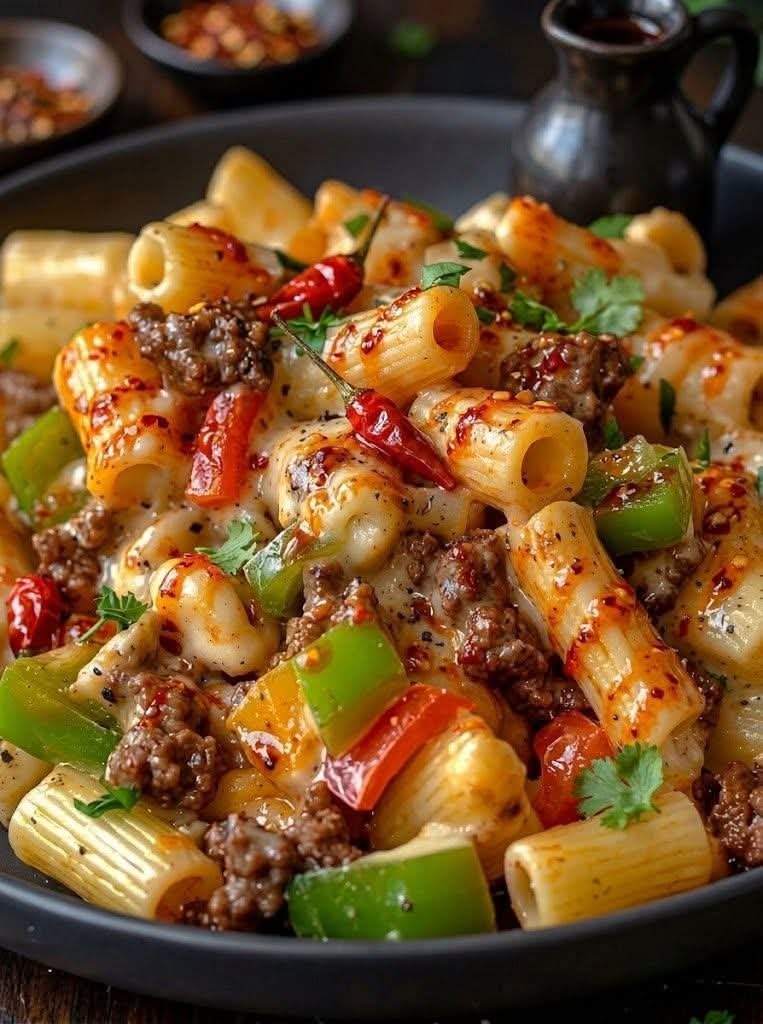
Philly Cheesesteak Pasta
Cheesesteak Pasta is a creamy, cheesy, and satisfying dinner inspired by the classic Philly cheesesteak sandwich. Cheesesteak Pasta combines tender beef, sautéed onions, bell peppers, pasta, and a rich cheese sauce in one comforting dish that works perfectly for busy weeknights, family dinners, or casual gatherings.
The recipe delivers all the familiar flavors of a cheesesteak in an easy pasta format. The beef stays juicy, the vegetables add sweetness and texture, and the creamy cheese sauce coats every bite without making the dish overly heavy.
Prep Time: 20 minutes
Cook Time: 30 minutes
Total Time: 50 minutes
Servings: 6
Ingredients
For the Beef and Vegetables
- 1 pound thinly sliced beef sirloin or shaved steak
- 1 tablespoon olive oil
- 1 tablespoon butter
- 1 medium yellow onion, thinly sliced
- 1 green bell pepper, thinly sliced
- 1 red bell pepper, thinly sliced
- 8 ounces mushrooms, sliced
- 3 garlic cloves, minced
- 1 teaspoon Worcestershire sauce
- 1/2 teaspoon smoked paprika
- 1/2 teaspoon salt
- 1/4 teaspoon black pepper
Ingredients For the Pasta and Sauce
- 12 ounces penne, rotini, or rigatoni
- 2 tablespoons butter
- 2 tablespoons all-purpose flour
- 2 cups beef broth
- 1 cup milk
- 4 ounces cream cheese, softened
- 1 1/2 cups shredded provolone cheese
- 1 cup shredded mozzarella cheese
- 1/2 cup grated Parmesan cheese
- Salt and black pepper, to taste
For Garnishing
- Fresh parsley
- Extra shredded provolone
- Cracked black pepper
- Red pepper flakes, optional
Why You’ll Love This Recipe
Cheesesteak Pasta is hearty enough to serve as a complete meal, but it is still simple enough for a weeknight. The beef, onions, peppers, and mushrooms bring familiar cheesesteak flavor, while the creamy sauce turns the dish into cozy comfort food.
Another reason to love Cheesesteak Pasta is its flexibility. You can change the pasta, vegetables, cheeses, or spice level to suit your family’s taste.
How to Make Cheesesteak Pasta
Step 1: Cook the Pasta
Bring a large pot of salted water to a boil.
Add the pasta and cook until just al dente according to the package directions.
Drain well, reserving about 1/2 cup of pasta water in case you need to loosen the sauce later.
Step 2: Prepare the Beef
Pat the beef dry with paper towels.
If using sirloin, slice it very thinly against the grain.
Season with salt, black pepper, and smoked paprika.
Step 3: Sear the Beef
Heat olive oil in a large skillet over medium-high heat.
Add the beef in a single layer and cook for 2 to 3 minutes, turning as needed, until browned.
Avoid overcrowding the pan. Cook in batches if necessary.
Transfer the cooked beef to a plate.
Step 4: Cook the Vegetables
Reduce the heat to medium.
Add butter to the same skillet, then add onion, green bell pepper, red bell pepper, and mushrooms.
Cook for 6 to 8 minutes until the vegetables soften and begin to caramelize.
Step 5: Add the Garlic
Stir in the garlic and cook for about 30 seconds.
Add Worcestershire sauce and scrape the browned bits from the bottom of the skillet.
These browned bits add extra flavor to the finished dish.
Step 6: Make the Roux
Push the vegetables to one side of the skillet or transfer them temporarily to a bowl if your pan is crowded.
Add butter and let it melt.
Sprinkle in the flour and whisk for about 1 minute.
Step 7: Add the Broth and Milk
Slowly pour in the beef broth while whisking.
Add the milk and continue whisking until the mixture becomes smooth.
Cook for 3 to 4 minutes until the sauce begins to thicken.
Step 8: Add the Cream Cheese
Reduce the heat to low.
Add the softened cream cheese and stir until completely melted into the sauce.
The cream cheese helps the sauce stay creamy and smooth.
Step 9: Add the Shredded Cheese
Add provolone, mozzarella, and Parmesan a little at a time.
Stir gently after each addition until the cheese melts.
Avoid boiling the sauce once the cheese has been added.
Step 10: Return the Beef and Vegetables
Add the cooked beef and vegetables back to the skillet.
Stir until they are evenly coated in the sauce.
Step 11: Add the Pasta
Add the drained pasta and toss gently until every piece is coated.
If the sauce feels too thick, add a splash of reserved pasta water.
Cheesesteak Pasta should be creamy and saucy without being runny.
Step 12: Taste and Adjust
Taste the pasta and add extra salt, black pepper, or Worcestershire sauce if needed.
If you want more richness, add a small handful of extra provolone.
Step 13: Garnish and Serve
Remove the skillet from the heat.
Sprinkle with parsley, cracked black pepper, and a little extra cheese.
Serve Cheesesteak Pasta warm while the sauce is smooth and creamy.
Serving Suggestions
Cheesesteak Pasta is filling enough to serve on its own, but a simple side can make the meal feel more complete.
Serve it with garlic bread, toasted baguette slices, or warm dinner rolls to soak up the cheese sauce.
A crisp green salad with a tangy vinaigrette is another good choice because the acidity balances the richness of the pasta.
Roasted broccoli, green beans, asparagus, or Brussels sprouts also pair well with Cheesesteak Pasta.
If you want a hearty pasta dinner, try this One-Pot Sausage and Fennel Rigatoni with savory sausage, tender fennel, and rich sauce in one easy pot.
Recipe Tips
Use thinly sliced beef for the most tender texture.
Do not overcook the beef. A quick sear keeps it juicy and prevents it from becoming tough.
For the best Cheesesteak Pasta, cook the pasta only until al dente because it will continue to soften slightly when mixed with the hot sauce.
Freshly shredded cheese melts more smoothly than pre-shredded cheese.
Keep the sauce over low heat once the cheese goes in.
If the sauce thickens too much, loosen it with pasta water or a splash of milk.
Easy Variations
Cheesesteak Pasta is easy to customize with different vegetables, cheeses, and seasonings.
For extra heat, add sliced jalapeños, red pepper flakes, or pepper jack cheese.
You can replace provolone with white American cheese, Monterey Jack, cheddar, or a blend of your favorites.
For a vegetable-heavy version, add extra mushrooms, spinach, zucchini, or roasted peppers.
Ground beef can also replace sliced steak if that is what you have available.
You can even turn Cheesesteak Pasta into a baked casserole by transferring it to a baking dish, topping with extra cheese, and baking until bubbly.
For a crispy vegetable side, try these Cheesy Zucchini Carrot Croquettes with tender zucchini, sweet carrot, melted cheese, and a golden crunchy exterior.
Make-Ahead Instructions
Cheesesteak Pasta can be partially prepared ahead to make dinner faster.
Slice the beef and vegetables up to one day in advance and store them separately in the refrigerator.
You can also cook the pasta ahead, toss it lightly with oil, and refrigerate it.
For the best texture, prepare the cheese sauce shortly before serving.
Storage and Reheating
Store leftover Cheesesteak Pasta in an airtight container in the refrigerator for up to 4 days.
To reheat on the stovetop, place the pasta in a skillet over low heat with a splash of milk or beef broth.
Stir gently until warmed through.
Individual portions can also be reheated in the microwave in short intervals, stirring between each interval.
Nutrition Information
Approximate nutrition per serving:
Calories: 620
Protein: 36 g
Carbohydrates: 52 g
Fat: 30 g
Saturated Fat: 16 g
Fiber: 4 g
Sugar: 7 g
Sodium: 880 mg
Nutrition values are estimates and may vary depending on the beef, pasta, cheese, milk, and serving size.
Frequently Asked Questions
Can I use ground beef?
Yes. Ground beef works well and is an affordable alternative to sliced steak.
What pasta shape is best?
Penne, rigatoni, rotini, or shells all work well because they hold the creamy sauce.
Can I make Cheesesteak Pasta without mushrooms?
Yes. Simply leave them out or replace them with extra peppers or onions.
What cheese tastes most like a classic cheesesteak?
Provolone is a great choice. White American cheese can also be used for a smoother, more traditional sandwich-style flavor.
Can I use leftover steak?
Yes. Slice it thinly and stir it in near the end so it does not overcook.
How do I keep the sauce creamy?
Use low heat after adding the cheese and avoid boiling the sauce.
Can I make Cheesesteak Pasta spicy?
Yes. Add hot peppers, red pepper flakes, or pepper jack cheese.
Can I bake the finished pasta?
Yes. Transfer it to a baking dish, top with extra cheese, and bake at 375°F or 190°C until hot and bubbly.
Final Thoughts
Cheesesteak Pasta combines tender beef, sweet peppers, onions, mushrooms, and creamy cheese sauce in one satisfying dinner.
The familiar sandwich-inspired flavors make Cheesesteak Pasta a great choice for families who enjoy rich, savory comfort food.
Because Cheesesteak Pasta is flexible, easy to reheat, and simple to customize, it works well for weeknights, meal prep, or casual entertaining.
Keep Cheesesteak Pasta in your dinner rotation whenever you want an easy, cheesy meal with classic Philly-inspired flavor.