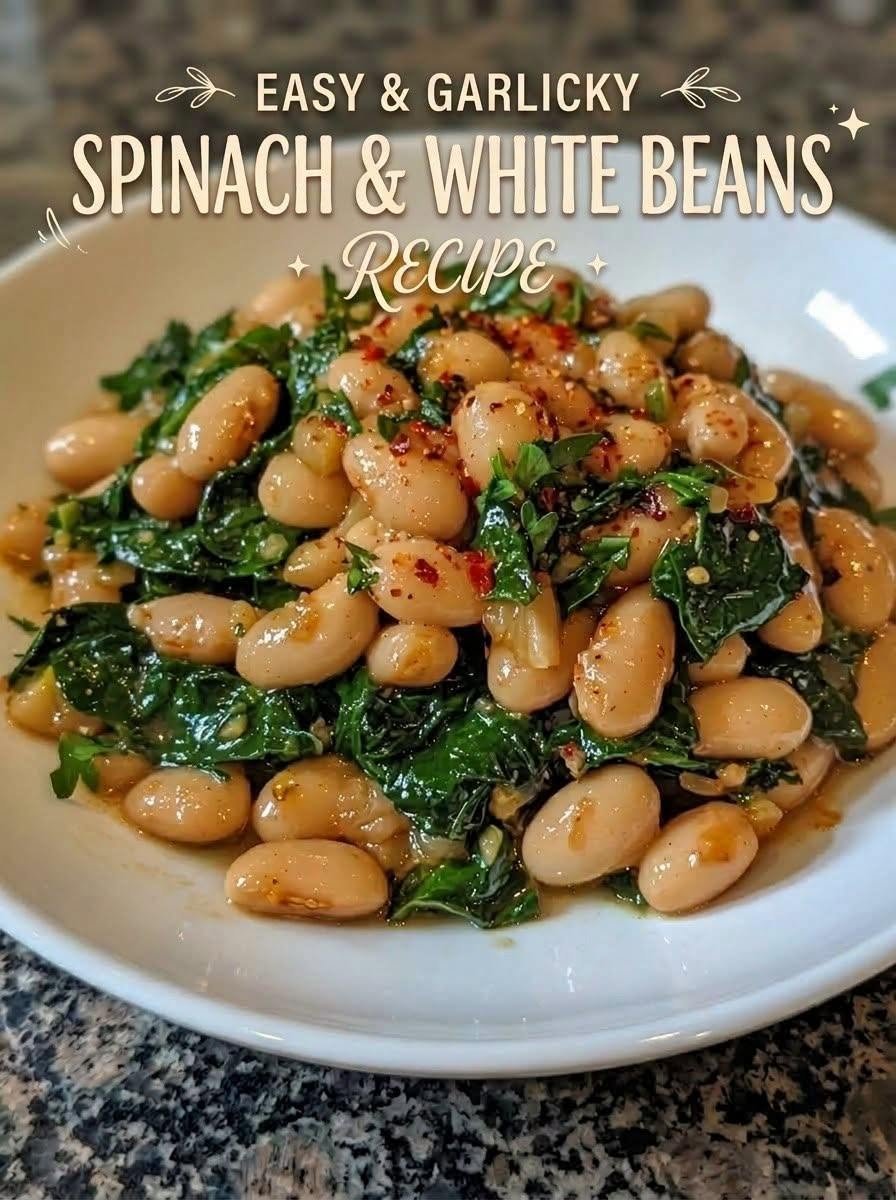
Spinach and White Beans
1. Recipe Description
Spinach and White Beans is a comforting, nutritious, and flavorful dish made with tender white beans, fresh spinach, garlic, olive oil, and aromatic herbs. This simple recipe combines Mediterranean-inspired ingredients to create a satisfying meal that is perfect for lunch, dinner, or a hearty side dish.
The white beans become tender and creamy as they simmer with garlic, vegetable broth, and seasonings. Fresh spinach adds beautiful green color, a delicate earthy flavor, and a soft texture. A splash of fresh lemon juice brightens the dish, while Parmesan cheese adds a savory finish.
One of the best things about this recipe is its simplicity. You do not need expensive ingredients or complicated cooking techniques to prepare something delicious. Canned white beans make preparation quick and convenient, while fresh herbs and a little olive oil provide plenty of flavor.
You can serve Spinach and White Beans with crusty bread, steamed rice, roasted vegetables, or grilled chicken. It can also be enjoyed on its own as a vegetarian meal. For a creamier texture, mash some of the beans into the broth, creating a naturally thick and delicious sauce without needing heavy cream.
This recipe is ideal for busy weeknights, meal preparation, and anyone looking for an easy way to enjoy beans and leafy greens.
2. Recipe Information
-
Preparation Time: 10 minutes
-
Cooking Time: 20–25 minutes
-
Total Time: 30–35 minutes
-
Servings: 4
-
Course: Main Dish or Side Dish
-
Cuisine: Mediterranean-inspired
-
Cooking Method: Stovetop
-
Difficulty: Easy
-
Flavor Profile: Savory, garlicky, earthy, fresh, and slightly tangy
3. Ingredients
Main Ingredients
-
2 cans white beans, approximately 15 ounces each, drained and rinsed
-
5 ounces fresh spinach
-
3 tablespoons extra-virgin olive oil
-
1 medium yellow onion, finely chopped
-
4 cloves garlic, minced
-
1 cup vegetable broth
-
1 medium tomato, diced, optional
-
1 tablespoon fresh lemon juice
-
½ teaspoon salt, or to taste
-
¼ teaspoon freshly ground black pepper
-
½ teaspoon dried oregano
-
¼ teaspoon red pepper flakes, optional
For Finishing
-
¼ cup grated Parmesan cheese, optional
-
2 tablespoons chopped fresh parsley
-
1 teaspoon lemon zest, optional
-
1 tablespoon extra-virgin olive oil
-
Freshly ground black pepper, to taste
Optional Additions
-
½ teaspoon smoked paprika
-
¼ teaspoon ground cumin
-
½ cup chopped mushrooms
-
¼ cup chopped sun-dried tomatoes
-
1 tablespoon nutritional yeast for a dairy-free savory flavor
-
1 small sprig fresh rosemary or thyme
4. Step-by-Step Instructions
Step 1: Prepare the Ingredients
Begin by gathering all your ingredients. Drain the canned white beans in a colander and rinse them under cool running water. Allow them to drain thoroughly.
Cannellini beans, great northern beans, and navy beans are all suitable choices. Cannellini beans have a creamy texture and hold their shape well, making them particularly good for this recipe.
Wash the fresh spinach thoroughly and remove any damaged leaves. If the leaves are large, roughly chop them into smaller pieces. Baby spinach can be used whole.
Finely chop the onion, mince the garlic, and dice the optional tomato. Prepare the parsley and lemon so they are ready when needed.
Having everything prepared before cooking makes the process quicker and helps prevent the garlic from burning while you chop other ingredients.
Step 2: Sauté the Onion
Place a large skillet or saucepan over medium heat. Add three tablespoons of olive oil and allow it to warm gently.
Add the chopped onion and cook for approximately 4–5 minutes, stirring occasionally. The onion should soften and become translucent without browning too much.
This step builds the flavor foundation of the dish. Slowly softened onions contribute natural sweetness that balances the earthy beans and spinach.
If the onion begins to brown too quickly, lower the heat slightly. You want it tender and fragrant rather than dark or crispy.
Step 3: Add the Garlic and Seasonings
Add the minced garlic to the softened onion and cook for approximately 30–60 seconds, stirring continuously.
Stir in the dried oregano, black pepper, and red pepper flakes if using. Add the smoked paprika or cumin if you prefer a deeper, warmer flavor.
Be careful not to burn the garlic, because burnt garlic can make the entire dish taste bitter.
If you are using diced tomato, add it now and cook for another 2–3 minutes until it begins to soften and release its juices.
Step 4: Add the White Beans
Add the drained white beans to the skillet. Stir gently so they become coated with the fragrant onion, garlic, and olive oil mixture.
Allow the beans to cook for approximately 2 minutes, stirring occasionally. This helps them absorb the seasoning before the broth is added.
White beans are naturally mild in flavor, so seasoning them well at this stage makes a noticeable difference.
Avoid stirring too vigorously, as some beans may break apart. A gentle folding motion helps preserve their shape.
Step 5: Pour in the Vegetable Broth
Pour one cup of vegetable broth into the skillet. Stir gently and bring the mixture to a gentle simmer.
Reduce the heat to medium-low and cook uncovered for approximately 8–10 minutes.
During this time, the broth absorbs the flavors of the garlic, onion, herbs, and beans. Some of the beans will soften further, creating a richer texture.
If the mixture looks too dry, add a little more broth or water. If it seems too watery, continue simmering uncovered for a few additional minutes.
For a thicker, creamier consistency, gently mash a small portion of the beans against the side of the skillet with the back of a spoon. The released starch will naturally thicken the broth.
Step 6: Add the Fresh Spinach
Add the spinach in handfuls, stirring after each addition. Although five ounces may seem like a large quantity, fresh spinach reduces considerably as it cooks.
Continue cooking for approximately 2–4 minutes, until the leaves are wilted and tender.
Avoid cooking the spinach for too long. Prolonged cooking can dull its bright green color and soften its texture excessively.
Taste a bean to check that it is tender. If you are using canned beans, they should already be cooked, so this stage mainly allows the flavors to combine.
Step 7: Add Lemon Juice
Remove the skillet from the heat or reduce the heat to very low.
Stir in one tablespoon of fresh lemon juice. The acidity brightens the flavors and balances the richness of the olive oil and creamy beans.
If you enjoy a stronger citrus flavor, add a little lemon zest as well.
Taste the dish and adjust the seasoning. Add salt gradually, since canned beans and vegetable broth can already contain sodium.
A little additional black pepper or a small pinch of red pepper flakes can provide more depth without overpowering the beans.
Step 8: Finish with Parmesan and Fresh Herbs
If you are using Parmesan cheese, sprinkle it into the warm bean mixture and stir gently until incorporated.
The cheese adds a salty, savory flavor and can make the broth slightly richer. For a vegan version, omit the Parmesan or use a suitable plant-based alternative.
Add the chopped fresh parsley and drizzle a little extra-virgin olive oil over the top.
Allow the dish to rest for approximately 2 minutes before serving. This gives the flavors time to settle and helps the sauce develop a pleasant consistency.
Step 9: Serve Warm
Transfer the Spinach and White Beans to shallow bowls or a serving dish.
Finish with extra parsley, freshly ground black pepper, and lemon zest if desired.
Serve immediately with crusty bread for dipping into the flavorful broth. You can also spoon the beans over rice, quinoa, or toasted sourdough.
For a more substantial dinner, pair them with grilled chicken, roasted fish, or baked tofu.
The result is a comforting dish with creamy beans, tender greens, fragrant garlic, and a bright lemon finish.
5. Tips for the Best Results
Choose the right beans: Cannellini and great northern beans provide a creamy texture while holding their shape during simmering.
Rinse canned beans: Rinsing removes excess canning liquid and can help reduce surface starch and sodium, depending on the product.
Do not burn the garlic: Add it after the onion has softened and cook it briefly.
Adjust the broth: Use less broth for a thicker side dish or a little more for a soupier consistency.
Mash some beans: Crushing a small portion creates a naturally creamy sauce without adding cream or flour.
Add spinach near the end: This preserves its fresh color and prevents it from becoming overly soft.
Use fresh lemon: Lemon juice balances the savory ingredients and makes the dish taste brighter.
Season gradually: Taste before adding extra salt, particularly if your broth contains sodium.
Choose good olive oil: A small finishing drizzle of flavorful olive oil enhances the Mediterranean character of the dish.
6. Serving Suggestions
Spinach and White Beans can be served in several delicious ways.
-
With crusty bread: Toasted sourdough or whole-grain bread is perfect for soaking up the broth.
-
Over rice: Serve the beans over fluffy white or brown rice for a filling meal.
-
With grilled chicken: The creamy beans and greens complement simply seasoned chicken.
-
Alongside baked fish: Lemon-herb fish pairs beautifully with the garlic and spinach.
-
With roasted vegetables: Carrots, zucchini, and bell peppers add color and texture.
-
Over pasta: Toss the beans with cooked pasta and a little extra broth for a hearty dinner.
-
With poached eggs: Add a softly cooked egg on top for a satisfying brunch or lunch.
-
As a grain bowl: Combine the beans with quinoa, fresh greens, and lemon dressing.
For a Mediterranean-inspired presentation, serve the beans in shallow bowls with parsley, lemon wedges, olive oil, and toasted bread on the side.
7. Storage and Reheating
Allow the cooked beans to cool slightly, then transfer them to an airtight container and refrigerate within two hours.
Store in the refrigerator for up to 3–4 days. The beans may absorb more broth as they sit, so add a splash of water or vegetable broth when reheating.
To reheat on the stovetop, place the beans in a saucepan over medium-low heat. Stir occasionally until heated through, adding liquid as needed.
For microwave reheating, place a serving in a microwave-safe bowl, cover loosely, and heat in short intervals, stirring between intervals until evenly hot.
The recipe can also be frozen in suitable airtight containers for approximately 2–3 months for best quality. Thaw in the refrigerator overnight and reheat thoroughly. The spinach may become softer after freezing, but the dish should remain flavorful.
If possible, add fresh parsley and a little lemon juice after reheating to restore its fresh flavor.
8. Nutritional Information
The following values are estimates per serving, assuming four servings and excluding optional Parmesan cheese.
-
Calories: 280–340 kcal
-
Protein: 12–16 g
-
Carbohydrates: 32–40 g
-
Fat: 12–16 g
-
Saturated Fat: 2–3 g
-
Fiber: 9–13 g
-
Sugar: 3–6 g
-
Sodium: 350–650 mg
Actual nutrition depends on the type of beans, the amount of olive oil used, and the sodium content of the vegetable broth.
9. Potential Health Benefits
White beans: White beans provide plant-based protein, dietary fiber, and nutrients such as folate, iron, and magnesium. Fiber contributes to digestive health and can help make meals more satisfying.
Spinach: Spinach supplies vitamin K, folate, and other vitamins and minerals. It also contains carotenoids and other naturally occurring plant compounds.
Olive oil: Extra-virgin olive oil provides predominantly monounsaturated fats and contributes to the dish’s smooth texture and flavor.
Garlic and onions: These vegetables provide flavor and contain naturally occurring plant compounds. They also help make the recipe satisfying without relying on heavy sauces.
Lemon juice: Lemon adds brightness with very few calories. Its vitamin C can also support the absorption of non-heme iron from plant foods when consumed as part of the same meal.
This dish can be part of a balanced eating pattern, particularly when served with whole grains and additional vegetables. Nutritional needs vary, and the recipe is not intended to treat or prevent any medical condition.
10. Frequently Asked Questions
Q1: Can I use dried white beans instead of canned beans?
Yes. Cook dried beans according to package instructions until tender before adding them to the recipe. Never add uncooked dried beans directly to the skillet and expect them to soften during the short simmering time.
Q2: Can I use frozen spinach?
Yes. Thaw the spinach and squeeze out excess moisture before adding it. You may need to adjust the cooking time slightly.
Q3: Which white beans work best?
Cannellini beans are ideal for their creamy texture. Great northern beans and navy beans are also suitable.
Q4: How can I make the dish creamier?
Mash some of the beans into the broth, or stir in a small amount of cream or cream cheese. Mashing the beans is an easy dairy-free option.
Q5: Can I make this recipe vegan?
Yes. Use vegetable broth and omit the Parmesan, or substitute a plant-based alternative. The remaining ingredients are naturally plant-based.
Q6: Can I add more vegetables?
Absolutely. Mushrooms, zucchini, kale, sun-dried tomatoes, and roasted red peppers all work well.
Q7: How do I make it spicy?
Add red pepper flakes, a pinch of cayenne, or a little chopped fresh chili when cooking the garlic.
Q8: Is this recipe suitable for meal prep?
Yes. It stores well in the refrigerator for several days and can be reheated for quick lunches or dinners.
Q9: Can I serve Spinach and White Beans as a main course?
Yes. It can be enjoyed on its own, particularly with bread or grains. For a more protein-rich meal, add tofu or serve it with eggs, fish, or chicken.
Q10: Why does my dish look watery?
It may contain too much broth or excess moisture from the spinach. Simmer uncovered for a few minutes and mash some beans to thicken the sauce naturally.