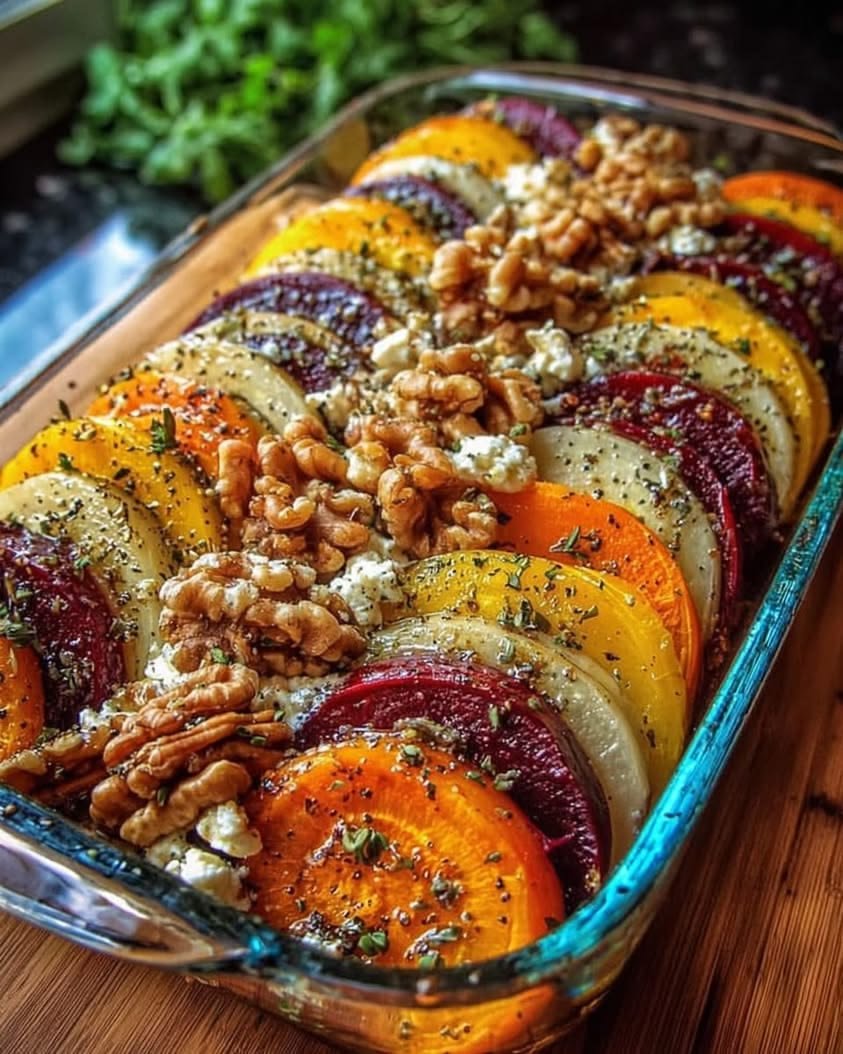
Multi-Colored Root Vegetable and Walnut Bake
Description
This Multi-Colored Root Vegetable and Walnut Bake is a beautiful, hearty side dish that brings together the natural sweetness, earthy flavor, and vibrant colors of roasted root vegetables. A combination of sweet potatoes, carrots, parsnips, golden beets, and red beets creates a stunning presentation, while toasted walnuts add a delicious crunch. Everything is finished with aromatic herbs, garlic, olive oil, and a light maple-Dijon glaze that caramelizes beautifully in the oven.
Perfect for autumn and winter dinners, holiday gatherings, Sunday meals, or a cozy vegetarian main course, this bake is both comforting and elegant. The vegetables become tender on the inside while their edges turn golden and lightly caramelized. Fresh rosemary and thyme add warmth, while lemon juice balances the natural sweetness.
Unlike a traditional heavy casserole, this recipe lets the vegetables remain the star. There is no need for a rich cream sauce or excessive cheese. Instead, simple Mediterranean-inspired ingredients create layers of flavor while keeping the dish colorful and naturally wholesome.
The walnuts are added toward the end of baking so they become lightly toasted without burning. A final sprinkle of fresh herbs and feta cheese is optional but highly recommended for an extra savory finish.
Ingredients
For the Root Vegetable Bake
- 2 medium sweet potatoes, peeled and cut into 1-inch cubes
- 3 large carrots, peeled and sliced diagonally
- 2 medium parsnips, peeled and sliced
- 2 medium golden beets, peeled and cut into small wedges
- 2 medium red beets, peeled and cut into small wedges
- 1 medium red onion, cut into wedges
- 4 cloves garlic, finely minced
- 3 tablespoons extra-virgin olive oil
- 1 tablespoon pure maple syrup
- 1 tablespoon Dijon mustard
- 1 tablespoon fresh lemon juice
- 1 teaspoon dried thyme
- 1 teaspoon dried rosemary
- ½ teaspoon smoked paprika
- ½ teaspoon ground cumin
- 1 teaspoon kosher salt
- ½ teaspoon freshly ground black pepper
- ¾ cup walnuts, roughly chopped
Optional Garnishes
- 2 tablespoons fresh parsley, chopped
- 1 tablespoon fresh thyme leaves
- ¼ cup crumbled feta cheese
- 1 tablespoon pumpkin seeds
- 1 teaspoon lemon zest
- A small drizzle of extra-virgin olive oil
Instructions
1. Prepare the Oven
Preheat your oven to 425°F (220°C). Line a large rimmed baking sheet with parchment paper or lightly grease it with olive oil.
A large baking sheet is important because overcrowding the vegetables can cause them to steam rather than roast. If necessary, divide everything between two baking sheets.
2. Prepare the Vegetables
Wash and peel all of the root vegetables.
Cut the sweet potatoes into approximately 1-inch cubes. Slice the carrots and parsnips diagonally into pieces of similar thickness. Cut the golden and red beets into small wedges.
Try to keep the vegetables relatively similar in size. This helps them cook evenly.
Cut the red onion into chunky wedges and set everything aside.
Because red beets can stain lighter vegetables, you can keep them separate while preparing the ingredients. If you want the finished dish to maintain distinct colors, roast the red beets on a separate section of the baking sheet or on their own pan.
3. Make the Flavorful Glaze
In a small bowl, whisk together the olive oil, maple syrup, Dijon mustard, lemon juice, minced garlic, thyme, rosemary, smoked paprika, cumin, salt, and black pepper.
The mixture should be smooth and fragrant.
The maple syrup adds just enough sweetness to encourage caramelization without making the dish taste like dessert. Dijon mustard provides acidity and savory depth, while lemon juice brightens all of the naturally earthy flavors.
4. Season the Vegetables
Place the sweet potatoes, carrots, parsnips, golden beets, red onion, and red beets into a very large mixing bowl.
Pour the prepared glaze over the vegetables.
Toss thoroughly with a large spoon or clean hands until every piece is lightly coated.
Make sure the vegetables are spread into a single layer on the baking sheet. Leave a little space between pieces whenever possible.
5. Begin Roasting
Place the baking sheet in the preheated oven.
Roast for approximately 25 minutes.
After 25 minutes, carefully remove the pan and use a spatula to turn the vegetables. This helps them brown evenly on multiple sides.
Return the baking sheet to the oven and continue roasting for another 15–20 minutes.
The vegetables should be fork-tender with caramelized edges.
6. Add the Walnuts
When the vegetables are nearly finished, sprinkle the chopped walnuts evenly over the top.
Return the pan to the oven for another 5–7 minutes.
Keep a close eye on the walnuts because they can go from perfectly toasted to burnt quickly.
They should become fragrant and lightly golden.
7. Check for Doneness
Insert a fork into the thickest pieces of sweet potato, beet, carrot, and parsnip.
They should be tender but not falling apart.
If the vegetables are still firm, continue roasting for another 5–10 minutes.
The exact cooking time can vary depending on the size of the vegetables and how crowded the pan is.
8. Finish the Bake
Remove the vegetables from the oven and allow them to rest for approximately 5 minutes.
Sprinkle with fresh parsley and thyme.
If desired, add crumbled feta cheese, lemon zest, and a few pumpkin seeds.
For an especially fresh finish, squeeze a little additional lemon juice over the vegetables immediately before serving.
Why This Recipe Works
The beauty of this dish comes from the combination of contrasting textures and flavors.
Sweet potatoes provide creamy softness and natural sweetness. Carrots become tender and caramelized around the edges, while parsnips contribute a slightly nutty, earthy flavor.
Golden and red beets add beautiful color and a deep earthy sweetness. Red onion becomes soft and caramelized during roasting, bringing savory richness to the entire dish.
The walnuts provide the necessary crunch.
The maple-Dijon glaze ties everything together. The maple syrup encourages browning, Dijon adds savory sharpness, and lemon prevents the dish from becoming overly sweet.
Fresh herbs finish the bake with brightness.
Tips for the Best Root Vegetable Bake
Cut Everything Evenly
One of the most important tips is to cut the vegetables into similar-sized pieces.
Large chunks take longer to cook, while small pieces may become too soft or burn before larger pieces are finished.
Don’t Overcrowd the Pan
Give the vegetables room.
If they are packed tightly together, moisture becomes trapped and the vegetables steam instead of roast.
For the best caramelized edges, use two baking sheets if necessary.
Use High Heat
Roasting at 425°F creates the ideal environment for browning and caramelization.
A lower temperature can still cook the vegetables, but they may not develop the same golden edges.
Add Walnuts Later
Walnuts do not need the entire roasting time.
Adding them during the final few minutes allows them to toast without burning.
Don’t Skip the Lemon
The vegetables and maple syrup are naturally sweet. Lemon juice adds acidity that balances the dish.
A final squeeze of lemon immediately before serving can make the entire recipe taste fresher.
Variations
Add Chickpeas
For additional protein and texture, add one can of drained and rinsed chickpeas.
Pat the chickpeas dry before roasting and toss them with the vegetables.
They become lightly crispy while absorbing the flavorful glaze.
Add Brussels Sprouts
Halved Brussels sprouts make an excellent addition.
Add them with the other vegetables and roast until their edges become deeply golden.
Add Apples
For a more autumn-inspired version, add one or two firm apples cut into wedges during the final 20 minutes of roasting.
Apples pair beautifully with sweet potatoes, walnuts, and maple.
Make It Spicy
Add ¼–½ teaspoon crushed red pepper flakes or a pinch of cayenne pepper to the glaze.
The subtle heat contrasts beautifully with the sweet vegetables.
Add Feta
Crumbled feta adds a creamy, salty element that works particularly well with roasted beets and walnuts.
Add it after roasting rather than before so it remains fresh and creamy.
Make It Vegan
The basic recipe is already vegan as written.
If using feta, simply leave it out or replace it with a plant-based feta alternative.
Serving Suggestions
This colorful bake works beautifully as a side dish for roasted chicken, turkey, pork, or fish.
It can also become a complete vegetarian meal when served over:
- Quinoa
- Brown rice
- Farro
- Couscous
- Bulgur
- Wild rice
For a Mediterranean-inspired plate, serve the vegetables with hummus, warm pita bread, cucumber salad, and a simple yogurt or tahini sauce.
For a holiday meal, place the roasted vegetables on a large serving platter and garnish with fresh herbs, toasted walnuts, feta, and lemon zest.
The colors make this dish especially attractive on a buffet table.
Creamy Tahini Serving Sauce
For an optional sauce, whisk together:
- ¼ cup tahini
- 2 tablespoons lemon juice
- 1 small garlic clove, minced
- 2–4 tablespoons warm water
- Pinch of salt
Whisk until creamy and smooth.
Drizzle over the warm vegetables just before serving.
The nutty tahini complements the walnuts and roasted root vegetables beautifully.
Meal Prep and Storage
This recipe is excellent for meal preparation.
Allow the roasted vegetables to cool completely before transferring them to airtight containers.
Store in the refrigerator for up to 4 days.
For the best texture, store the tahini sauce and fresh garnishes separately.
To reheat, place the vegetables on a baking sheet and warm them in a 375°F oven for 10–15 minutes.
You can also reheat individual portions in the microwave, although the vegetables will be softer.
For maximum crispness, reheating in an oven or air fryer is recommended.
Can You Freeze It?
Yes, although freezing will slightly change the texture of the vegetables.
Allow the bake to cool completely and transfer it to a freezer-safe container.
Freeze for up to 2 months.
Thaw overnight in the refrigerator and reheat in a 375°F oven until hot.
For best results, add fresh walnuts and herbs after reheating rather than freezing them with the vegetables.
Nutrition Information
Approximate nutrition per serving, without optional feta:
- Calories: 360
- Protein: 7g
- Carbohydrates: 48g
- Fat: 18g
- Fiber: 10g
- Sugar: 15g
- Sodium: 480mg
Nutrition values will vary depending on the exact vegetables, oil, walnuts, and garnishes used.
Health and Nutrition Benefits
Rich in Fiber
Root vegetables provide dietary fiber that supports healthy digestion and contributes to a satisfying meal.
Naturally Colorful
The variety of vegetables provides different plant compounds and antioxidants, making this dish both nutritious and visually appealing.
Healthy Fats
Walnuts and extra-virgin olive oil provide unsaturated fats that fit well into a balanced eating pattern.
Plant-Based
The recipe is naturally vegetarian and vegan when served without feta.
Naturally Satisfying
The combination of fiber-rich vegetables, healthy fats, and crunchy walnuts makes this bake filling without requiring a heavy sauce.
Frequently Asked Questions
Can I use different root vegetables?
Absolutely. You can substitute turnips, rutabaga, celery root, or butternut squash depending on what you have available.
Do I have to peel the vegetables?
Peeling is recommended for beets, parsnips, and some varieties of carrots, but well-scrubbed carrots and sweet potatoes can be left unpeeled if desired.
Can I prepare this ahead of time?
Yes. You can chop the vegetables and prepare the glaze several hours ahead. Keep them refrigerated separately until ready to roast.
Why are my vegetables not crispy?
The most common reason is overcrowding. Spread the vegetables across the pan in a single layer and make sure the oven is fully preheated.
Can I use pecans instead of walnuts?
Yes. Pecans are an excellent substitute and provide a slightly sweeter flavor.
Can I make this without maple syrup?
Yes. You can omit it for a less sweet version. Alternatively, use a small amount of honey if you do not need the recipe to remain vegan.
Can I add cheese?
Definitely. Feta, goat cheese, or shaved Parmesan can all work well. Add cheese after roasting for the best texture.