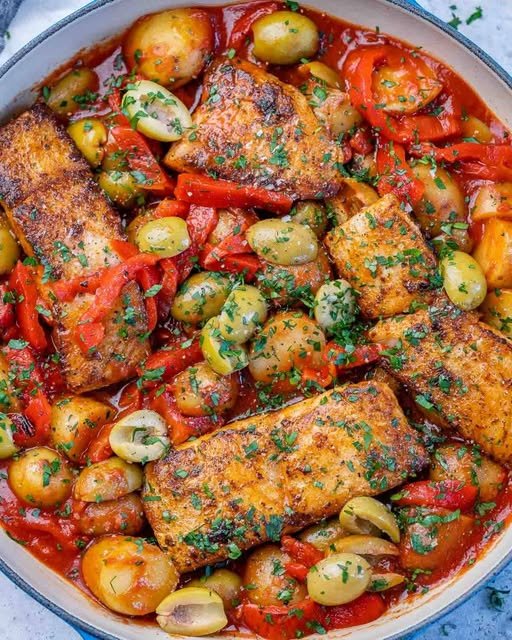
Mediterranean Skillet Fish with Roasted Red Peppers, Baby Potatoes, and Green Olives
Recipe Description
Mediterranean Skillet Fish with Roasted Red Peppers, Baby Potatoes, and Green Olives is a colorful, flavorful one-pan meal inspired by the fresh ingredients of Mediterranean cooking. Tender white fish fillets are gently cooked with golden baby potatoes, sweet roasted red peppers, briny green olives, garlic, lemon, and aromatic herbs. Every bite combines delicate seafood with savory vegetables and a light, fragrant sauce that makes this dish feel both comforting and elegant.
The beauty of this recipe is its balance of flavors. Roasted red peppers add sweetness, green olives bring a pleasantly salty and tangy taste, and fresh lemon juice brightens the entire skillet. Baby potatoes make the meal hearty and satisfying, while olive oil, garlic, oregano, and parsley create a delicious Mediterranean-style sauce.
This recipe is ideal for busy weeknights, relaxed family dinners, or a special weekend meal. Most of the cooking happens in one skillet, making preparation straightforward and cleanup easier. You can use cod, haddock, sea bass, or another firm white fish that holds together during cooking.
Serve the fish directly from the skillet with fresh parsley, lemon wedges, and crusty bread to soak up the flavorful juices. It is a simple, beautiful meal that brings Mediterranean-inspired flavors to your table without requiring complicated techniques.
Recipe Information
- Preparation Time: 20 minutes
- Cooking Time: 35–40 minutes
- Total Time: Approximately 55–60 minutes
- Servings: 4
- Cuisine: Mediterranean-inspired
- Course: Main dish
- Cooking Method: Stovetop skillet
- Difficulty: Easy to moderate
- Main Ingredients: White fish, baby potatoes, roasted red peppers, and green olives
Ingredients
For the Fish
- 4 white fish fillets, approximately 5–6 ounces each
- 1 tablespoon olive oil
- ½ teaspoon paprika
- ½ teaspoon dried oregano
- ½ teaspoon garlic powder
- ½ teaspoon salt, or to taste
- ¼ teaspoon freshly ground black pepper
- 1 tablespoon fresh lemon juice
For the Vegetables
- 1 pound baby potatoes, halved or quartered
- 1 tablespoon olive oil
- 1 medium red onion, thinly sliced
- 3 garlic cloves, minced
- 1 cup roasted red peppers, sliced
- ¾ cup green olives, pitted
- 1 cup cherry tomatoes, halved
- ½ teaspoon dried thyme
- ½ teaspoon dried oregano
- ¼ teaspoon smoked paprika, optional
- ½ cup low-sodium vegetable or fish broth
- 1 tablespoon capers, optional
- 1 tablespoon fresh lemon juice
For Garnishing
- 2 tablespoons chopped fresh parsley
- 1 tablespoon chopped fresh dill, optional
- Lemon wedges, for serving
- Extra-virgin olive oil, for drizzling
- Freshly ground black pepper, to taste
Ingredient Notes and Substitutions
White Fish
Cod is an excellent option because its mild flavor complements the olives, peppers, and herbs. Haddock also works well and has a delicate texture. Sea bass offers a slightly richer flavor, while halibut provides firm, meaty pieces.
Choose fillets of similar thickness so they cook at approximately the same rate. If using frozen fish, thaw it safely in the refrigerator and pat it dry before seasoning.
Baby Potatoes
Baby potatoes provide a tender, creamy center and a lightly golden exterior. Red or yellow baby potatoes both work well. If you only have regular potatoes, cut them into 1-inch pieces so they cook evenly.
Roasted Red Peppers
Jarred roasted red peppers make this recipe convenient and add a smoky-sweet flavor. Drain them before slicing to prevent excess liquid from diluting the sauce. You can also roast fresh red peppers at home and peel away their skins.
Green Olives
Pitted green olives add saltiness and tang. Choose a variety you enjoy eating on its own. If the olives are particularly salty, rinse them briefly and reduce the added salt in the recipe.
Cherry Tomatoes
Cherry tomatoes release their juices as they cook, helping create a light sauce. Grape tomatoes are a good substitute. Chopped ripe tomatoes can also be used, although they may release more liquid.
Olive Oil
Extra-virgin olive oil brings fruity flavor and helps the vegetables develop a Mediterranean character. Use it to cook the potatoes and aromatics, then add a small drizzle before serving if desired.
Broth
Low-sodium fish or vegetable broth adds moisture and flavor. Chicken broth can also be used if preferred. Water works in an emergency, but broth generally creates a more flavorful sauce.
Step-by-Step Cooking Instructions
Step 1: Prepare the Ingredients
Wash the baby potatoes and dry them. Cut small potatoes in half and larger ones into quarters, aiming for evenly sized pieces.
Thinly slice the red onion, mince the garlic, and cut the roasted red peppers into strips. Halve the cherry tomatoes and drain the green olives if they are stored in brine.
Pat the fish fillets dry with paper towels. Removing excess moisture helps the fish develop a better surface texture and prevents unnecessary water from entering the skillet.
If your fillets are very large, cut them into individual serving portions. Keep them refrigerated while preparing the vegetables.
Step 2: Season the Fish
Place the fish on a clean plate or shallow dish. Drizzle with one tablespoon of olive oil and one tablespoon of lemon juice.
Sprinkle with paprika, oregano, garlic powder, salt, and black pepper. Rub the seasoning gently over both sides of the fillets.
Let the fish rest for about 5–10 minutes while you begin cooking the potatoes. Avoid leaving raw fish at room temperature for an extended period.
The seasoning adds flavor without overpowering the delicate fish. Lemon juice provides brightness, while paprika gives the fillets a subtle warm color.
Step 3: Start Cooking the Baby Potatoes
Heat one tablespoon of olive oil in a large, deep skillet over medium heat. A wide skillet with a lid is ideal because it provides enough space for the potatoes and fish.
Add the potatoes cut-side down where possible. Let them cook for 4–5 minutes without moving them too much so they can develop a golden surface.
Stir and cook for another 3 minutes. The potatoes should begin to brown but may not yet be tender in the center.
Add about ¼ cup of broth, cover the skillet, and reduce the heat to medium-low. Cook for approximately 8–12 minutes, stirring once or twice, until the potatoes are nearly tender when pierced with a fork.
Cooking time depends on the size of the pieces. If the liquid evaporates before the potatoes soften, add a small splash of broth or water.
Once nearly tender, transfer the potatoes to a plate temporarily if the skillet is crowded. This makes it easier to cook the aromatics without breaking the potatoes apart.
Step 4: Sauté the Red Onion and Garlic
Using the same skillet, add a small drizzle of olive oil if the pan looks dry.
Add the sliced red onion and cook for 3–4 minutes, stirring occasionally, until softened and lightly translucent.
Add the minced garlic and cook for about 30 seconds, stirring continuously. Garlic burns quickly, so keep the heat moderate and move to the next step as soon as it becomes fragrant.
Stir in the dried oregano, dried thyme, and optional smoked paprika. Let the herbs warm briefly in the oil to release their aroma.
These ingredients create the savory base for the sauce and complement the sweetness of the peppers and tomatoes.
Step 5: Add the Roasted Red Peppers and Tomatoes
Add the sliced roasted red peppers and halved cherry tomatoes to the skillet.
Stir gently to coat the vegetables with the garlic and herbs. Cook for 3–4 minutes, until the tomatoes begin to soften and release some of their juices.
Add the green olives and optional capers. Stir carefully, distributing them throughout the vegetables.
The peppers contribute sweetness, while the olives and capers provide a salty, tangy contrast. If you prefer a milder flavor, use fewer capers or omit them entirely.
Return the potatoes to the skillet and mix them gently with the vegetables.
Step 6: Create the Mediterranean Sauce
Pour in the remaining ¼ cup of broth, or a little more if needed. Stir in one tablespoon of fresh lemon juice.
Scrape the bottom of the skillet gently with a wooden spoon to release any flavorful browned bits. Allow the sauce to simmer for 2–3 minutes.
Taste a small amount of the liquid before adding more salt. Green olives, capers, and broth can all contain sodium, so additional seasoning may not be necessary.
The sauce should be light and fragrant rather than thick like gravy. The tomatoes release moisture as they cook, while the broth and lemon bring the ingredients together.
If the sauce looks too watery, simmer it uncovered for a few minutes before adding the fish. If it is too concentrated, add a splash of broth.
Step 7: Arrange the Fish in the Skillet
Reduce the heat to medium-low. Arrange the seasoned fish fillets over the vegetables and potatoes in a single layer.
Nestle the fillets gently into the sauce without pressing them down. Spoon a little of the tomato, pepper, and olive mixture over each piece.
Cover the skillet with a lid and cook for approximately 5–8 minutes, depending on the thickness of the fish. Thin fillets may cook more quickly, while thicker pieces will need additional time.
Avoid stirring vigorously once the fish is in the skillet. White fish can flake apart easily, especially when nearly cooked.
If your skillet is too small to fit the fish comfortably, cook the fillets in batches or use a wider pan.
Step 8: Check the Fish for Doneness
Carefully check the thickest part of each fillet. The fish should turn opaque and separate easily into flakes when gently tested with a fork.
For food safety, fish should reach an internal temperature of 145°F (63°C). A food thermometer is the most reliable way to check.
If the fish needs more time, cover the skillet and cook in short additional intervals. Avoid overcooking, as this can make the fish dry and cause it to break apart.
Once the fish is cooked, remove the skillet from the heat. Let it rest for 2 minutes so the juices settle.
Step 9: Finish with Fresh Herbs
Sprinkle the skillet with chopped parsley and optional fresh dill. The herbs provide a fresh, green aroma that contrasts with the savory olives and roasted peppers.
Taste the sauce and adjust with a little extra lemon juice or black pepper if needed. If the olives are mild and the dish needs more flavor, a small pinch of salt may help.
Drizzle with a little extra-virgin olive oil just before serving. This final touch adds a pleasant aroma and a glossy finish.
Step 10: Serve and Enjoy
Bring the skillet directly to the table if it is safe to do so, or carefully transfer the fish and vegetables to a large serving platter.
Place a fillet on each plate and spoon the potatoes, peppers, tomatoes, and olives alongside it. Add plenty of the light sauce so every portion receives the full flavor of the dish.
Serve with lemon wedges and crusty bread for soaking up the juices. The recipe is also delicious with couscous, rice, or a simple green salad.
Tips for the Best Mediterranean Skillet Fish
1. Choose Fish with Similar Thickness
Fillets of similar thickness cook more evenly. If one piece is much thinner than the others, add it to the skillet a little later or remove it as soon as it is cooked.
2. Partially Cook the Potatoes First
Potatoes take longer to become tender than fish. Cooking them almost completely before adding the fillets prevents the fish from overcooking while the potatoes finish.
3. Use a Large Skillet
A wide skillet helps distribute the ingredients evenly and gives the fish enough room. Overcrowding can make the vegetables steam excessively and complicate cooking.
4. Drain the Roasted Peppers
Jarred peppers can carry a considerable amount of liquid. Draining them helps keep the sauce flavorful rather than watery.
5. Watch the Salt
Olives and capers add plenty of savory flavor. Taste the sauce before adding extra salt, especially if using regular broth.
6. Add Fresh Herbs at the End
Parsley and dill taste fresher when added after cooking. Long cooking can dull their color and aroma.
7. Do Not Overcook the Fish
White fish cooks relatively quickly. Check it near the lower end of the suggested cooking time and continue only as needed to reach 145°F (63°C).
8. Adjust the Lemon to Your Taste
A little lemon brightens the entire dish, but too much can overwhelm the delicate fish. Add gradually and taste between additions.
Delicious Variations
Mediterranean Fish with Feta
Sprinkle crumbled feta over the cooked fish just before serving. The creamy, salty cheese complements the olives and roasted red peppers. Add the feta off the heat to preserve its texture.
Spicy Mediterranean Skillet Fish
Add ¼ teaspoon of red pepper flakes with the garlic and dried herbs. Increase slightly if you prefer more heat. The spice contrasts beautifully with the sweetness of the roasted peppers.
Mediterranean Fish with Chickpeas
Add one drained and rinsed can of chickpeas when returning the potatoes to the skillet. They absorb the sauce and make the dish more filling. You may need to add an extra splash of broth.
Lemon-Garlic Fish Skillet
Increase the garlic to four or five cloves and add extra lemon zest near the end. This version emphasizes the fresh, bright flavors of garlic and citrus.
Mediterranean Salmon Skillet
Replace the white fish with four salmon portions. Salmon has a richer flavor and a firmer texture. Adjust the cooking time according to the thickness of the pieces and check that the fish reaches 145°F (63°C).
Fish with Artichokes
Add ½ cup of drained artichoke hearts with the roasted red peppers. Their slightly tangy flavor works well with the olives, tomatoes, and herbs.
Herb and White Wine Sauce
Replace some of the broth with ¼ cup of dry white wine. Add it after sautéing the garlic and onions, allowing it to simmer briefly before adding the tomatoes and remaining broth.
Serving Suggestions
Crusty bread: A rustic loaf or toasted sourdough is perfect for soaking up the tomato, olive, and lemon sauce.
Fluffy rice: White or brown rice provides a simple base for the vegetables and broth.
Couscous: Light, fluffy couscous complements the Mediterranean flavors and cooks quickly.
Green salad: Serve with lettuce, cucumber, and a simple olive-oil dressing for a refreshing contrast.
Roasted asparagus: Tender asparagus with lemon and black pepper adds color and texture.
Steamed green beans: Lightly seasoned green beans are an easy vegetable side.
Quinoa: Quinoa adds a nutty flavor and makes the meal more substantial.
Grilled zucchini: Grilled or roasted zucchini pairs naturally with the olives, peppers, and herbs.
Storage and Reheating
Refrigeration
Allow leftovers to cool and refrigerate them in an airtight container within two hours of cooking. For best quality, consume within 1–2 days because cooked fish is delicate and can lose moisture during storage.
Store the fish with some of the vegetables and sauce to help prevent it from drying out.
Reheating on the Stovetop
Place the fish, potatoes, and vegetables in a skillet with a splash of broth or water. Cover and warm over low heat until hot throughout.
Handle the fish gently to avoid breaking the fillets. Avoid vigorous boiling, which can dry out the fish.
Reheating in the Microwave
Place an individual portion in a microwave-safe dish and add a spoonful of sauce. Cover loosely and heat at moderate power in short intervals until hot throughout.
Freezing
Freezing is possible, but the fish may become softer and the potatoes may change texture after thawing. For the best quality, enjoy this dish fresh.
Food Safety
Refrigerate leftovers promptly and reheat them to 165°F (74°C). Discard cooked fish that has been left at room temperature for more than two hours, or more than one hour when temperatures exceed 90°F (32°C).
Nutritional Information
The following figures are estimates for one serving when the recipe is divided into four portions. Actual nutrition depends on the fish variety, oil quantity, potato size, olives, and broth used.
- Calories: Approximately 350–450
- Protein: Approximately 30–38 g
- Carbohydrates: Approximately 25–35 g
- Fat: Approximately 12–20 g
- Saturated Fat: Approximately 2–4 g
- Fiber: Approximately 4–6 g
- Sodium: Varies considerably with the olives, broth, and added salt
These estimates do not include optional bread, rice, or other side dishes. Using a lean fish and measuring the olive oil can help keep portions consistent.
Benefits of the Main Ingredients
White Fish
White fish such as cod and haddock provides protein and is generally low in saturated fat. Protein contributes to normal muscle maintenance, tissue repair, and many essential body functions.
Baby Potatoes
Potatoes provide carbohydrates for energy and contain potassium and vitamin C. Leaving their skins on, when appropriate, can also contribute additional fiber.
Roasted Red Peppers
Red peppers provide vitamin C and carotenoids. Their natural sweetness adds flavor and color without requiring a heavy sauce.
Green Olives and Olive Oil
Olives provide a distinctive savory flavor, while olive oil supplies predominantly monounsaturated fat. Both are common ingredients in Mediterranean-style meals, though olives can contain substantial sodium.
Tomatoes
Tomatoes contribute moisture, flavor, and lycopene, a naturally occurring plant compound. As they soften, they help form the skillet sauce.
Garlic and Fresh Herbs
Garlic, parsley, oregano, and thyme add aroma and complexity. They help create a satisfying dish from simple ingredients.
The nutritional value of the complete meal depends on portion size, the type of fish, and the ingredients used. This recipe can fit into a balanced eating pattern alongside other vegetables, fruits, and varied protein sources.
Frequently Asked Questions
What fish works best for this recipe?
Cod, haddock, sea bass, and halibut are all good options. Choose fillets that are firm enough to hold together during cooking. Thicker pieces may need more time than thin fillets.
Can I use frozen fish?
Yes. Thaw it safely in the refrigerator, then pat it dry before seasoning. Removing excess moisture helps the fish cook properly and keeps the sauce from becoming diluted.
Can I use fresh red peppers instead of roasted peppers?
Yes. Slice fresh red peppers and sauté them with the onions until they begin to soften. They may need a few extra minutes of cooking compared with already roasted peppers.
How do I stop the fish from breaking apart?
Use a wide spatula, avoid excessive stirring, and turn the fish as little as possible. Nestling the fillets into the sauce and allowing them to cook undisturbed helps them remain intact.
Can I prepare the vegetables ahead of time?
Yes. Wash and cut the potatoes, slice the onion, mince the garlic, and prepare the peppers and tomatoes in advance. Store them separately in the refrigerator until you are ready to cook.
Is this recipe spicy?
Not particularly. The paprika and herbs provide flavor without much heat. Add red pepper flakes if you want a spicier version.
Can I make it without olives?
Absolutely. Leave them out or replace them with capers, artichoke hearts, or extra cherry tomatoes. The flavor will be less briny but still delicious.
Why are my potatoes still hard?
They may be cut too large or have not cooked long enough. Cover the skillet and simmer them with a little broth until nearly tender before adding the fish.
Can I make this recipe dairy-free?
Yes. The standard recipe contains no dairy. Check the broth and any optional additions if you have specific dietary requirements.
How do I know when the fish is cooked?
The flesh should be opaque and flake easily. For food safety, check the thickest part with a thermometer and ensure it reaches 145°F (63°C).
Can I make this recipe with salmon?
Yes. Salmon works well with roasted peppers, olives, potatoes, and herbs. Adjust the cooking time to the thickness of the salmon portions and avoid overcooking.