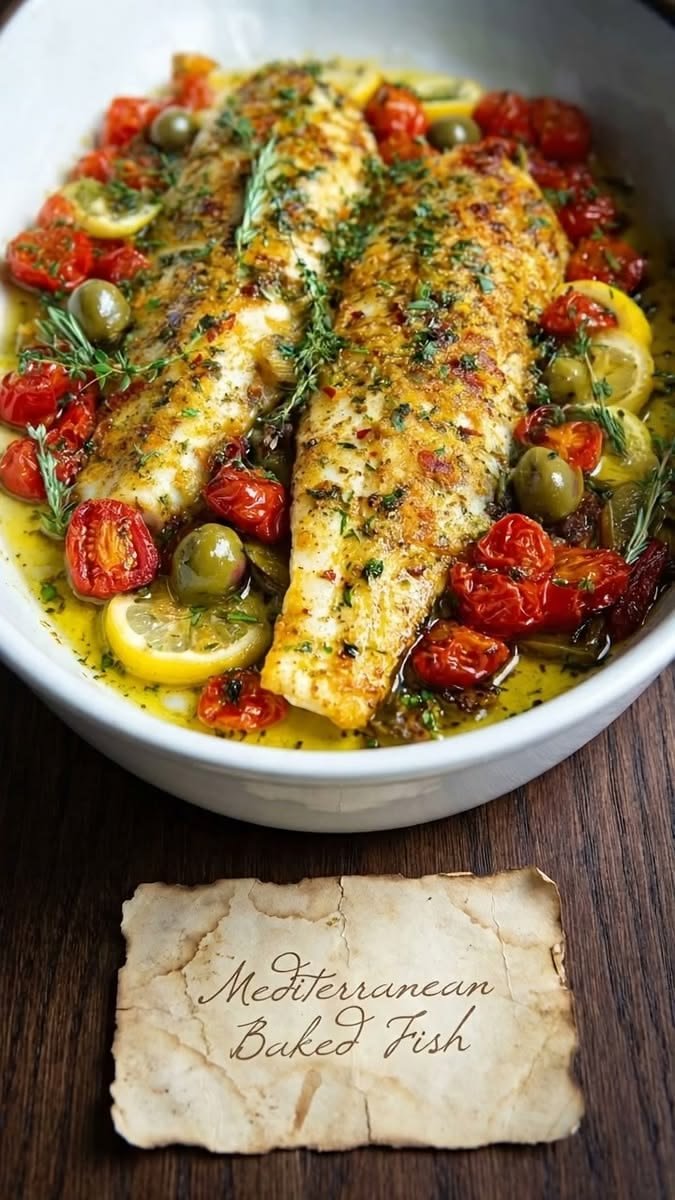
Mediterranean Baked Fish
1. Introduction
Mediterranean Baked Fish is a fresh, flavorful, and healthy-inspired dish made with tender white fish fillets, juicy cherry tomatoes, garlic, Kalamata olives, lemon, and extra-virgin olive oil. Baked in the oven with fragrant herbs and Mediterranean seasonings, this recipe delivers delicious flavor with minimal effort.
The fish becomes tender and flaky as it cooks, while the tomatoes soften into a juicy sauce that blends beautifully with the garlic, lemon, and olive oil. Kalamata olives add a slightly salty, savory taste, and fresh parsley provides a bright finishing touch.
This recipe is perfect for busy weeknight dinners, family meals, or special occasions when you want to serve something elegant without spending hours in the kitchen. It pairs wonderfully with roasted vegetables, rice, quinoa, couscous, or a crisp green salad.
One of the best features of Mediterranean Baked Fish is its simplicity. You do not need complicated ingredients or advanced cooking skills. With a few fresh ingredients and the right baking technique, you can create a delicious meal that feels restaurant-worthy.
2. Recipe Information
-
Preparation Time: 15 minutes
-
Cooking Time: 15–20 minutes
-
Total Time: Approximately 35 minutes
-
Servings: 4
-
Course: Lunch or dinner
-
Cuisine: Mediterranean-inspired
-
Cooking Method: Oven-baked
-
Difficulty: Easy
-
Dietary Style: Naturally gluten-free and low in carbohydrates when prepared with the ingredients listed
3. Ingredients
For the Baked Fish
-
4 white fish fillets, approximately 5–6 ounces each
-
2 tablespoons extra-virgin olive oil
-
3 garlic cloves, minced
-
1 cup cherry tomatoes, halved
-
1/2 cup pitted Kalamata olives, halved
-
1 small red onion, thinly sliced
-
1 lemon, thinly sliced
-
2 tablespoons fresh lemon juice
-
1 teaspoon dried oregano
-
1/2 teaspoon smoked paprika
-
1/2 teaspoon dried thyme
-
1/2 teaspoon salt, or to taste
-
1/4 teaspoon freshly ground black pepper
-
1/4 teaspoon red pepper flakes, optional
-
2 tablespoons fresh parsley, chopped
Optional Finishing Ingredients
-
1 tablespoon capers, rinsed
-
1/4 cup crumbled feta cheese
-
Fresh basil leaves
-
Additional lemon wedges
-
A small drizzle of extra-virgin olive oil
Recommended Fish Choices
You can use cod, haddock, halibut, pollock, or another firm white fish. Cod is especially suitable because it has a mild flavor and flaky texture that works beautifully with tomatoes, olives, and lemon.
Choose fillets of similar thickness so they cook evenly.
4. Instructions for Making Mediterranean Baked Fish
Step 1: Preheat the Oven
Preheat your oven to 400°F (200°C).
Lightly grease a medium baking dish with olive oil or use a suitable oven-safe dish. Arrange the dish so the fish fillets can sit in a single layer without being crowded.
A properly preheated oven helps the fish cook evenly while allowing the tomatoes and onions to soften and release their juices.
Step 2: Prepare the Fish
If using frozen fish, thaw it safely in the refrigerator before cooking. Pat the fillets dry with paper towels to remove excess surface moisture.
Place the fish in the prepared baking dish. Drying the surface helps the seasoning stick and prevents unnecessary liquid from collecting in the dish.
Inspect the fillets for any remaining bones and remove them carefully if necessary.
Step 3: Prepare the Mediterranean Vegetables
Wash the cherry tomatoes and cut them in half. Thinly slice the red onion, halve the pitted olives, and mince the garlic.
Arrange the tomatoes, onion, and olives around the fish fillets. Distribute the garlic evenly over the vegetables and fish.
The tomatoes release their natural juices during baking, creating a light, flavorful sauce. The onion becomes sweet and tender, while the olives contribute a rich, savory Mediterranean flavor.
If you enjoy a slightly briny taste, add the optional capers at this stage.
Step 4: Make the Lemon-Herb Seasoning
In a small bowl, whisk together the olive oil, lemon juice, dried oregano, thyme, smoked paprika, salt, black pepper, and optional red pepper flakes.
Stir until the ingredients are well combined.
Drizzle the mixture over the fish and vegetables, coating the fillets evenly. Place lemon slices around and on top of the fish for extra citrus aroma.
Be mindful of the salt because Kalamata olives and capers can already be salty. You can always adjust the seasoning after cooking.
Step 5: Bake the Fish
Place the baking dish in the preheated oven and bake for approximately 15–20 minutes, depending on the thickness of the fillets.
Thin fillets may finish sooner, while thicker pieces may need additional time. Avoid relying on time alone because different fish varieties and oven temperatures can affect cooking.
The fish should become opaque and separate easily into flakes with a fork. For food safety, check the thickest part with a food thermometer; fish should reach an internal temperature of 145°F (63°C).
Avoid overcooking, as fish can become dry and lose its delicate texture.
Step 6: Add the Optional Feta
If you enjoy a creamy, salty finishing touch, sprinkle crumbled feta over the fish during the final 3–5 minutes of baking.
Allow it to warm slightly without needing to melt completely.
Feta complements the lemon, tomatoes, and olives and makes the finished dish taste even more Mediterranean-inspired. If you prefer a dairy-free meal, simply leave it out.
Step 7: Finish with Fresh Herbs
Remove the baking dish from the oven once the fish is cooked through.
Sprinkle freshly chopped parsley over the top and add a little extra lemon juice if desired. A small drizzle of extra-virgin olive oil can enhance the flavor and aroma.
Allow the dish to rest for approximately 2 minutes before serving. Spoon some of the tomato, olive, and onion mixture over each fillet so every portion receives plenty of the flavorful juices.
5. Tips for Perfect Mediterranean Baked Fish
-
Choose fresh-quality fish: Look for fish with a clean smell and firm texture.
-
Pat the fish dry: This helps the seasoning adhere and improves the finished texture.
-
Use similar-sized fillets: Uniform thickness makes cooking more consistent.
-
Avoid overbaking: Check early and remove the fish as soon as it reaches a safe internal temperature.
-
Use ripe cherry tomatoes: They create a naturally sweet, juicy sauce.
-
Adjust the salt carefully: Olives, capers, and feta can add considerable saltiness.
-
Add herbs at the right time: Dried herbs work well during baking, while fresh parsley is best added at the end.
-
Use a shallow baking dish: This helps the fish and vegetables cook evenly.
-
Keep the fish in one layer: Crowding can cause uneven cooking.
-
Save the pan juices: Spoon the lemony tomato juices over the fish just before serving.
6. Delicious Recipe Variations
Mediterranean Garlic Butter Fish
Replace one tablespoon of olive oil with melted butter. Add extra garlic and a little lemon zest for a richer flavor. Keep the tomatoes and olives for a delicious combination of buttery and Mediterranean flavors.
Spicy Mediterranean Baked Fish
Increase the red pepper flakes or add a small amount of cayenne pepper to the seasoning. The heat pairs well with the sweetness of the tomatoes and the acidity of the lemon.
Mediterranean Fish with Feta
Add crumbled feta during the final minutes of baking and garnish with fresh basil. Serve with cucumber salad and warm pita bread for a Mediterranean-inspired dinner.
Lemon-Herb Baked Fish
Use extra lemon zest, parsley, oregano, and thyme. Reduce the olives if you prefer a lighter, more citrus-forward flavor.
Mediterranean Salmon
Substitute salmon fillets for white fish. Salmon has a richer texture and pairs beautifully with olives, tomatoes, garlic, and lemon. Adjust the cooking time according to fillet thickness and check the internal temperature.
One-Pan Fish and Vegetables
Add sliced zucchini, bell peppers, or thinly sliced fennel to the baking dish. Cut vegetables into small, even pieces so they have enough time to soften. Firmer vegetables may benefit from a short head start in the oven before adding the fish.
7. What to Serve with Mediterranean Baked Fish
This recipe pairs well with a variety of side dishes, allowing you to create a complete meal according to your preferences.
Lemon rice: Fluffy rice with lemon zest and parsley absorbs the flavorful tomato juices beautifully.
Roasted vegetables: Serve with zucchini, bell peppers, asparagus, or broccoli roasted with olive oil and herbs.
Mediterranean salad: Combine cucumber, tomatoes, red onion, olives, and feta with a light lemon dressing.
Quinoa: A bowl of fluffy quinoa adds texture and makes the meal more filling.
Couscous: Light, fluffy couscous works particularly well with the lemony sauce.
Cauliflower rice: For a lower-carbohydrate option, serve the fish over cauliflower rice with fresh herbs.
Warm crusty bread: Bread is useful for soaking up the flavorful olive oil, tomato, and lemon juices.
For an attractive presentation, place each fillet on a warm plate, arrange the roasted tomatoes and olives around it, and finish with parsley and a lemon wedge.
8. Nutritional Information
The following nutrition figures are approximate estimates per serving, assuming the recipe serves four people and excluding optional feta and side dishes.
-
Calories: 250–330
-
Protein: 30–38 g
-
Carbohydrates: 6–10 g
-
Fat: 11–18 g
-
Fiber: 2–3 g
-
Sodium: 450–800 mg
The actual nutritional values depend on the fish variety, fillet size, amount of olive oil, and type of olives used. Sodium can be reduced by using fewer olives, omitting capers, and adjusting the added salt.
9. Potential Benefits of the Ingredients
White fish: Provides protein and, depending on the variety, nutrients such as vitamin B12 and selenium. Some fish also provide omega-3 fatty acids, although amounts vary by species.
Olive oil: Contains predominantly monounsaturated fats and contributes to the characteristic flavor of Mediterranean-style cooking.
Tomatoes: Provide vitamin C and the antioxidant lycopene. Their natural juices also help create a flavorful sauce.
Garlic: Adds strong savory flavor without requiring large quantities of salt.
Olives: Contribute flavor and unsaturated fats, although they can be high in sodium.
Lemon: Adds freshness and acidity, balancing the rich olive oil and savory vegetables.
Red onion: Contributes flavor, fiber, and a variety of plant compounds.
This recipe can be part of a balanced eating pattern that includes vegetables, suitable carbohydrates, and other protein sources. Its nutritional benefits depend on portion sizes and the overall meal.
10. Storage and Reheating
Refrigeration: Allow leftover fish to cool promptly and place it in an airtight container in the refrigerator within two hours of cooking. Use within 3–4 days.
Reheating in the oven: Place the fish and vegetables in an oven-safe dish, cover loosely, and warm at 300°F (150°C) until heated through. Avoid prolonged heating, which can dry out the fish.
Microwave reheating: Heat in short intervals at moderate power, checking frequently to prevent overcooking.
Freezing: Cooked fish can be frozen, although its texture may become softer after thawing. Store in a freezer-safe container and use within approximately 2–3 months for best quality.
Meal preparation: You can wash and chop the vegetables and prepare the seasoning in advance. For the best texture, assemble the dish shortly before baking.
11. Frequently Asked Questions
What is the best fish for Mediterranean Baked Fish?
Cod, haddock, halibut, and pollock are excellent choices because their mild flavors pair well with lemon, tomatoes, and olives. Salmon is also a delicious alternative.
Can I use frozen fish?
Yes. Thaw it safely in the refrigerator, then pat it dry before seasoning. Removing excess moisture helps prevent the baking dish from becoming watery.
How do I know when the fish is done?
The flesh should be opaque and flake easily with a fork. The most reliable safety check is an internal temperature of 145°F (63°C) at the thickest part.
Can I prepare this recipe without olives?
Absolutely. Replace the olives with extra cherry tomatoes, sliced bell peppers, or zucchini. You can also add fresh herbs for extra flavor.
Is this recipe suitable for a low-carb meal?
Yes. The fish, olive oil, tomatoes, and herbs make a naturally lower-carbohydrate meal. The exact carbohydrate count depends on the ingredients and serving size.
Can I make this recipe dairy-free?
Yes. The basic recipe contains no dairy. Simply omit the optional feta cheese.
Why did my baked fish turn watery?
Fish naturally releases some moisture while cooking, and frozen fish may release more. Thaw and dry the fillets thoroughly, avoid overcrowding the dish, and use a shallow baking dish.