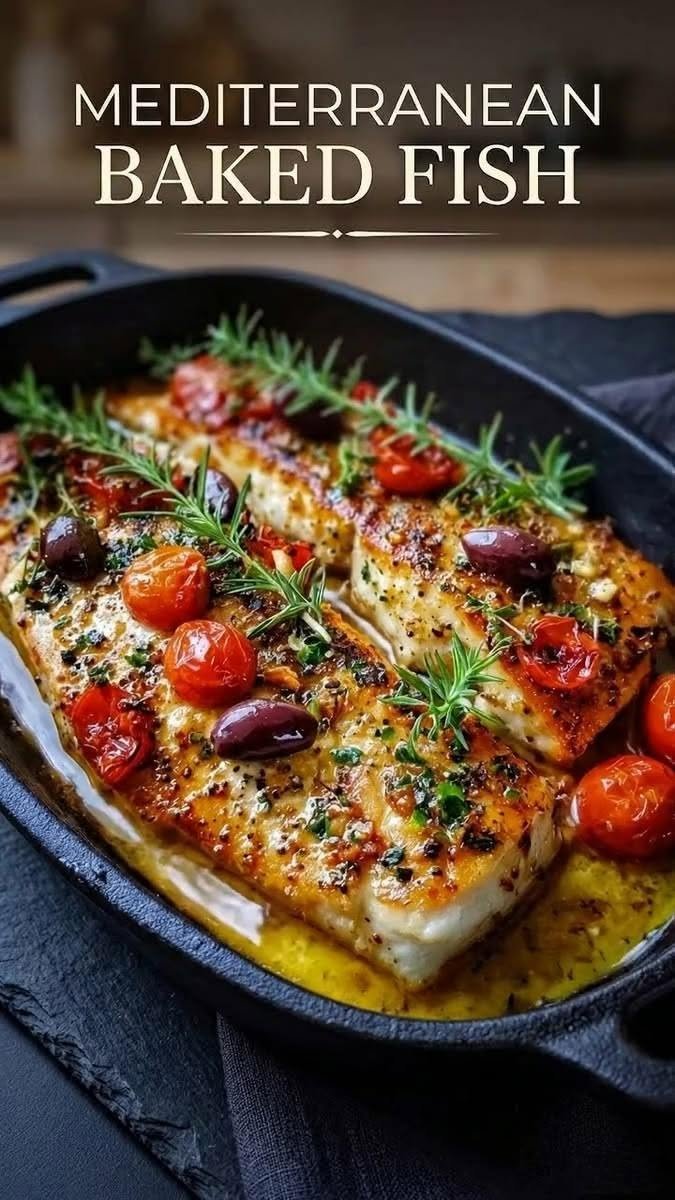
Mediterranean Baked Fish
Introduction
Mediterranean Baked Fish is a fresh, flavorful, and easy dinner that brings together tender white fish, juicy tomatoes, briny olives, fragrant garlic, fresh lemon, and aromatic herbs. Everything bakes together in one dish, allowing the fish to absorb the delicious Mediterranean flavors while remaining moist and flaky.
This recipe is inspired by the simple ingredients commonly used in Mediterranean cooking. Extra-virgin olive oil provides richness, tomatoes create a light sauce, olives add a savory touch, and lemon brightens every bite. A sprinkle of parsley and oregano completes the dish with a fresh, herbaceous aroma.
The best part is that this meal requires minimal preparation and very little cleanup. Serve it with roasted potatoes, steamed rice, couscous, or warm crusty bread to soak up the flavorful juices. It is ideal for busy weeknights, family dinners, or a special meal when you want something elegant without spending hours in the kitchen.
Recipe Details
-
Preparation time: 15 minutes
-
Cooking time: 20–25 minutes
-
Total time: Approximately 40 minutes
-
Servings: 4
-
Course: Lunch or dinner
-
Cuisine: Mediterranean-inspired
-
Cooking method: Oven-baked
-
Difficulty: Easy
Ingredients
For the baked fish
-
4 white fish fillets, approximately 5–6 ounces each
-
2 tablespoons extra-virgin olive oil
-
3 garlic cloves, finely minced
-
1 pint cherry tomatoes, halved
-
½ cup Kalamata olives, pitted and halved
-
1 small red onion, thinly sliced
-
1 lemon, thinly sliced
-
2 tablespoons fresh lemon juice
-
1 teaspoon dried oregano
-
½ teaspoon smoked paprika
-
½ teaspoon dried thyme
-
½ teaspoon salt, or to taste
-
¼ teaspoon freshly ground black pepper
-
¼ teaspoon red pepper flakes, optional
-
¼ cup chopped fresh parsley
-
2 tablespoons chopped fresh basil, optional
Optional ingredients
-
1 tablespoon capers
-
¼ cup crumbled feta cheese
-
1 small zucchini, thinly sliced
-
Extra lemon wedges for serving
Best fish choices: Cod, haddock, halibut, pollock, or another firm white fish works well. Choose fillets of similar thickness so they cook evenly.
Instructions
Step 1: Preheat the oven
Preheat your oven to 400°F (200°C). Lightly grease a baking dish with olive oil.
Choose a dish large enough to hold the fish fillets in a single layer. Avoid stacking the fish, as this can cause uneven cooking.
Pat the fish fillets dry with paper towels. Removing excess moisture helps the seasoning adhere and prevents the dish from becoming unnecessarily watery.
Step 2: Prepare the Mediterranean vegetables
Wash the cherry tomatoes and cut them in half. Thinly slice the red onion and lemon, pit the olives if necessary, and mince the garlic.
Place the tomatoes, onion, and olives in the prepared baking dish. Add the garlic, dried oregano, thyme, smoked paprika, black pepper, and a small amount of salt.
Drizzle with one tablespoon of olive oil and toss everything gently.
These ingredients create the flavorful base of the recipe. As they bake, the tomatoes release their juices, the onion softens, and the garlic infuses the olive oil with a rich aroma.
Step 3: Season the fish
Arrange the fish fillets over the vegetables in a single layer.
Drizzle the remaining tablespoon of olive oil over the fish. Add the fresh lemon juice and sprinkle lightly with salt, black pepper, and a little extra oregano if desired.
Place a few lemon slices around and on top of the fillets. If you enjoy a little heat, sprinkle over the optional red pepper flakes.
Make sure the seasoning is distributed evenly, but avoid adding too much salt because Kalamata olives can already be quite salty.
Step 4: Bake until tender
Place the baking dish in the preheated oven and bake for approximately 15–22 minutes, depending on the thickness and type of fish.
Thin fillets may cook sooner, while thicker pieces may require additional time. Begin checking for doneness after about 12–15 minutes.
The fish should turn opaque and separate easily into flakes when gently tested with a fork. For food safety, cook fish to an internal temperature of 145°F (63°C), measured at the thickest part.
Avoid overcooking, as this can make the fish dry. Once cooked, remove the dish from the oven and allow it to rest for approximately 2 minutes.
Step 5: Add the fresh herbs
Sprinkle the baked fish and vegetables with chopped fresh parsley and basil.
If using capers, scatter them over the dish at this stage. For a creamy, salty finish, add a little crumbled feta immediately before serving.
The fresh herbs brighten the roasted flavors and make the dish look colorful and inviting.
Step 6: Serve warm
Transfer each fish fillet to a plate and spoon the roasted tomatoes, olives, onion, and flavorful pan juices over the top.
Serve with lemon wedges so everyone can add extra citrus according to taste.
For a complete Mediterranean-inspired dinner, pair the fish with roasted potatoes, fluffy couscous, rice, steamed green beans, or a crisp cucumber salad.
Tips for Perfect Mediterranean Baked Fish
Choose evenly sized fillets. Similar thickness helps all the portions finish cooking at approximately the same time.
Dry the fish before seasoning. This small step improves the texture and helps prevent excess liquid.
Use fresh lemon. Fresh juice gives the dish a bright, clean flavor that bottled juice may not fully reproduce.
Do not overcrowd the baking dish. Give the vegetables enough space to roast and release their juices without becoming overly steamed.
Taste before adding salt. Olives, capers, and feta can all contribute significant saltiness.
Check the fish early. Fish cooks quickly, especially thinner fillets, so use the cooking time as a guide rather than a guarantee.
Add herbs at the end. Fresh parsley and basil retain their vibrant flavor when added after baking.
Serving Suggestions
Mediterranean Baked Fish is versatile and pairs well with a variety of side dishes.
-
Lemon rice: Serve over fluffy rice flavored with lemon zest and parsley.
-
Roasted potatoes: Crispy potatoes complement the tender fish and juicy tomatoes.
-
Couscous: A quick, light side that absorbs the olive oil and tomato juices.
-
Greek salad: Cucumber, tomatoes, red onion, olives, and feta create a refreshing accompaniment.
-
Steamed vegetables: Broccoli, asparagus, or green beans add color and extra nutrients.
-
Crusty bread: Use warm bread to soak up the delicious sauce from the baking dish.
For a lighter meal, serve the fish with a large green salad and roasted zucchini.
Recipe Variations
1. Mediterranean Baked Fish with Feta
Add ¼ cup of crumbled feta during the final 5 minutes of baking or sprinkle it over the cooked fish. The feta provides a creamy, tangy contrast to the tomatoes and olives.
2. Spicy Mediterranean Fish
Increase the red pepper flakes or add a little chopped fresh chili to the vegetables before baking. The gentle heat pairs especially well with lemon and garlic.
3. Mediterranean Fish with Zucchini
Add thinly sliced zucchini to the tomato and onion mixture. Cut the slices evenly and avoid making them too thick so they soften within the cooking time.
4. Mediterranean Fish with Capers
Add one tablespoon of drained capers to the vegetables before baking. Their sharp, salty flavor complements the olives and lemon beautifully.
5. Baked Fish with White Wine
For a more aromatic sauce, add a small splash of dry white wine to the vegetables before baking. Allow the liquid to cook with the tomatoes and herbs. This variation is optional; vegetable broth can be used instead.
6. Mediterranean Salmon
Replace the white fish with four salmon portions. Salmon has a richer flavor and higher fat content, so cooking time will depend on the thickness of the fillets. Check doneness carefully and avoid overcooking.
Storage and Reheating
Refrigeration: Store leftover fish and vegetables in an airtight container in the refrigerator within two hours of cooking. Use within 3–4 days.
Reheating: Place the fish and vegetables in an oven-safe dish, cover loosely, and warm at 300°F (150°C) until heated through. Add a small splash of broth or water if the vegetables seem dry. You can also use a microwave on medium power in short intervals.
Freezing: Cooked fish can be frozen, although its texture may become softer after thawing. If freezing, cool promptly, place in a freezer-safe airtight container, and use within approximately 2–3 months for best quality. Thaw in the refrigerator before reheating.
Meal preparation: You can chop the vegetables, prepare the seasoning, and slice the lemon in advance. For the freshest texture, assemble and bake the fish shortly before serving.
Nutritional Information
The following estimates are per serving, assuming four portions made with white fish, olive oil, tomatoes, and olives. Values vary depending on the fish species and exact quantities used.
| Nutrient | Approximate amount |
|---|---|
| Calories | 280–350 |
| Protein | 30–38 g |
| Carbohydrates | 8–12 g |
| Fat | 12–18 g |
| Fiber | 2–4 g |
| Sugar | 4–6 g |
| Sodium | Varies with olives and added salt |
Adding feta, serving the fish with rice, or using a fattier fish will change these estimates.
Benefits of the Ingredients
Fish: White fish provides protein, which supports muscle maintenance and normal body functions. Some varieties also provide vitamin B12, selenium, and other important nutrients.
Olive oil: Extra-virgin olive oil contains predominantly monounsaturated fats and contributes the characteristic flavor of Mediterranean cooking.
Tomatoes: Tomatoes provide vitamin C and lycopene, a naturally occurring plant compound.
Garlic: Garlic contributes a distinctive savory flavor and contains sulfur-containing compounds that have been studied for their potential health effects.
Lemon: Lemon juice adds freshness and provides vitamin C in modest amounts.
Fresh herbs: Parsley and basil add aroma, color, and small amounts of vitamins and plant compounds.
This recipe can fit into a balanced eating pattern, but individual nutritional needs vary. Its overall nutritional value also depends on portion size and the sides served with it.
Frequently Asked Questions
1. What is the best fish for this recipe?
Cod, haddock, halibut, and pollock are excellent choices because their mild flavors work well with garlic, lemon, tomatoes, and olives.
2. Can I use frozen fish?
Yes. Thaw it safely in the refrigerator and pat it dry before seasoning. Excess moisture can make the finished dish watery.
3. How do I know when the fish is done?
The flesh should be opaque and flake easily with a fork. For food safety, check that the thickest part reaches 145°F (63°C).
4. Can I prepare this dish without olives?
Yes. Omit the olives or replace them with extra tomatoes, capers, or artichoke hearts. The flavor will be slightly different but still delicious.
5. Is this recipe low-carb?
The fish itself is low in carbohydrates, and the vegetables contribute relatively modest amounts. The recipe can fit many low-carb meal plans, depending on portions and additions.
6. Can I make it dairy-free?
Yes. The basic recipe is dairy-free as long as you do not add feta cheese or other dairy toppings.
7. Why did my fish turn out dry?
It may have cooked too long or the fillets may have been very thin. Start checking early and remove the fish as soon as it reaches a safe internal temperature.
8. What can I use instead of Kalamata olives?
Black olives or green olives can be substituted. Choose according to your taste and remember to adjust the salt.