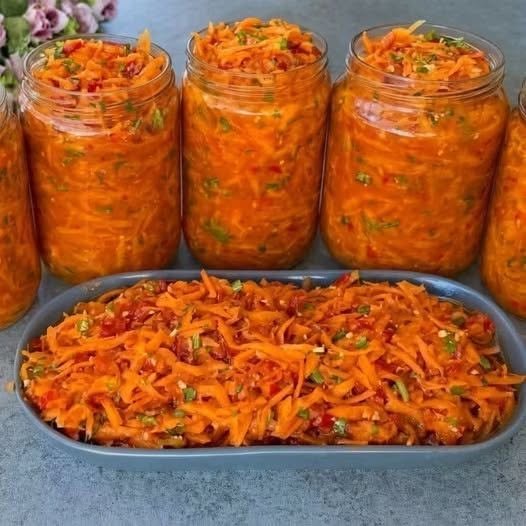
Korean-Style Spicy Fermented Shredded Carrot Salad
A bright, crunchy, spicy carrot salad inspired by Korean fermented and seasoned vegetable dishes. Finely shredded carrots are tossed with garlic, ginger, chili, sesame, and a lightly tangy fermentation brine. The result is crisp, aromatic, pleasantly sour, and spicy, making it excellent as a side dish, sandwich topping, rice-bowl accompaniment, or appetizer.
Fermentation note: This recipe uses lacto-fermentation, not vinegar pickling. The natural lactic-acid fermentation gives the carrots their characteristic tang while helping preserve them. Use clean equipment and follow the salt ratio carefully.
 Ingredients
Servings: 6
Prep: 20 minutes
Fermentation: 2–4 days
Total: About 2–4 days
Main ingredients
- 500 g (about 1 lb) fresh carrots, peeled
- 10 g (about 2 tsp) non-iodized salt, preferably sea salt or pickling salt
- 3 cloves garlic, finely minced
- 1 tbsp fresh ginger, finely grated
- 1–2 tbsp Korean red pepper flakes (gochugaru), to taste
- 1 tbsp toasted sesame seeds
- 1 tbsp thinly sliced green onion
- 1 tsp toasted sesame oil, added after fermentation
- 1–2 tsp sugar or honey, optional, for balance
Optional additions
- ½ tsp ground coriander
- ½ tsp Korean chili powder for extra heat
- 1 small red chili, thinly sliced
- 1 tbsp finely shredded daikon
- 1–2 tbsp chopped cilantro
Method
1. Prepare the carrots
Wash and peel the carrots. Shred them into thin matchsticks using a julienne peeler, mandoline, or grater.
Place the carrots in a large bowl.
2. Salt the carrots
Sprinkle the carrots with the 10 g salt and massage firmly for 2–3 minutes.
Let them stand for about 15–20 minutes. The carrots should begin releasing liquid and become slightly flexible.
3. Add the Korean-style seasoning
Add the garlic, ginger, gochugaru, sesame seeds, and green onion.
Mix thoroughly until the carrots are evenly coated.
Important: Don’t add sesame oil yet; adding oil after fermentation is preferable.
4. Pack into a fermentation jar
Transfer the mixture into a clean fermentation jar.
Press the carrots down firmly with a clean fermentation weight or utensil so that their liquid rises above the vegetables.
Leave at least 2–3 cm (about 1 inch) of headspace.
The carrots should remain submerged beneath the liquid.
5. Ferment
Cover with an appropriate fermentation lid or an airlock.
Leave at approximately 18–22°C (64–72°F) away from direct sunlight.
Begin tasting after about 48 hours.
Depending on temperature and your preferred sourness, fermentation may take approximately 2–4 days.
6. Refrigerate
When the carrots have developed a pleasantly sour, lightly fermented flavor, transfer them to the refrigerator.
Stir in the sesame oil just before serving.
Taste and adjust with a little sugar, additional gochugaru, or sesame seeds if desired.
 Serving Suggestions
Serve the fermented carrot salad:
- Alongside grilled chicken, beef, or fish
- With steamed rice
- In Korean-inspired rice bowls
- Inside wraps and sandwiches
- With noodles
- As part of a vegetable platter
- Alongside fried eggs or tofu
- As a topping for burgers or tacos
 Recipe Notes
- Carrot texture: Fresh, firm carrots produce the best crunch.
- Salt: Weighing the salt is more reliable than measuring by spoon because different salts have different densities.
- Spice: Start with 1 tablespoon gochugaru and increase if you prefer a hotter salad.
- Fermentation speed: Warmer temperatures generally accelerate fermentation; cooler temperatures slow it down.
- Liquid: The carrots should stay submerged. If they aren’t releasing enough liquid, press them down firmly and allow additional time.
- Flavor: The finished salad should taste pleasantly sour, savory, garlicky, spicy, and fresh—not rotten or unpleasant.
 Helpful Tips
- Use non-iodized salt for the most predictable fermentation.
- Don’t tightly seal a normal jar during active fermentation. Fermentation produces gas, so use an airlock or a suitable fermentation lid.
- Keep everything clean. Wash the jar, utensils, hands, and fermentation weight thoroughly.
- Don’t reduce the salt substantially. Salt helps create the appropriate environment for fermentation.
- Keep the carrots submerged. Vegetables exposed to air are more prone to mold and spoilage.
- Taste regularly after the second day. You can stop fermentation when the flavor reaches your preferred level of tanginess.
- Add sesame oil after fermentation for a fresher sesame aroma and better fermentation conditions.
- Refrigerate once the desired flavor is reached.
 When to discard it
Discard the batch if you see fuzzy mold, unusual colored mold, or if it develops a strongly putrid, rotten, or otherwise distinctly unpleasant smell. When in doubt, throw it out rather than tasting it.
 Approximate Nutritional Information
Per serving, assuming 6 servings and without optional ingredients:
| Nutrient | Approx. amount |
|---|---|
| Calories | 45–55 kcal |
| Carbohydrates | 9–10 g |
| Protein | 1 g |
| Fat | 1–2 g |
| Fiber | 2–3 g |
| Sugars | 4–5 g |
| Sodium | ~600–700 mg* |
*Most of the sodium comes from the fermentation salt, and the actual amount consumed can vary because some brine remains in the jar.
 Potential Benefits
- Carrots provide beta-carotene, which the body can convert to vitamin A.
- Carrots and ginger provide antioxidant compounds.
- Fermented vegetables can contain live microorganisms when they have been naturally fermented and have not subsequently been heat-treated.
- Garlic and ginger contribute flavorful plant compounds while allowing the salad to be made without a heavy sauce.
- The dish is low in calories while providing fiber, making it a flavorful vegetable side.
Fermented foods can be part of a varied diet, but the exact microbial content and potential health effects vary considerably between recipes and batches.
 Frequently Asked Questions
Q: Is this the same as Korean kimchi?
No. It is Korean-style rather than traditional kimchi. Kimchi has many regional recipes and commonly uses vegetables such as napa cabbage or radish. This recipe focuses specifically on shredded carrots.
Q: Can I make it without gochugaru?
Yes. You can use another chili flake, although gochugaru gives the most characteristic Korean-style flavor.
Q: Can I use vinegar instead of fermentation?
Yes, but that would make it a vinegar-pickled carrot salad, not a naturally fermented version. The flavor and preservation method are different.
Q: Why aren’t my carrots producing much liquid?
Carrots vary in moisture. Massage them thoroughly with the salt and press them firmly into the jar. A fermentation weight can help keep them submerged.
Q: How long should I ferment it?
Usually around 2–4 days at a moderate room temperature, but fermentation is influenced by temperature and the vegetables. Taste rather than relying only on the clock.
Q: Should I rinse the carrots after fermentation?
Generally, no. Rinsing removes salt and some of the developed flavor. If it tastes excessively salty, you can lightly rinse a serving immediately before eating.
Q: Can I make it less spicy?
Absolutely. Use ½–1 tablespoon gochugaru, or reduce it further for a mild version.
Q: Can I add sesame oil before fermentation?
It’s better to add it after fermentation. Keep the ferment primarily vegetables, salt, and their liquid.
Q: Is this salad served hot or cold?
Cold or chilled is best. It can be served straight from the refrigerator.
Q: How should I store it?
Once the desired sourness is reached, refrigerate it in a clean, covered container and keep the carrots submerged in their brine. Use clean utensils when serving.
Quick flavor formula
Crunchy carrots + garlic + ginger + gochugaru + salt fermentation + sesame = spicy, tangy Korean-style carrot salad.