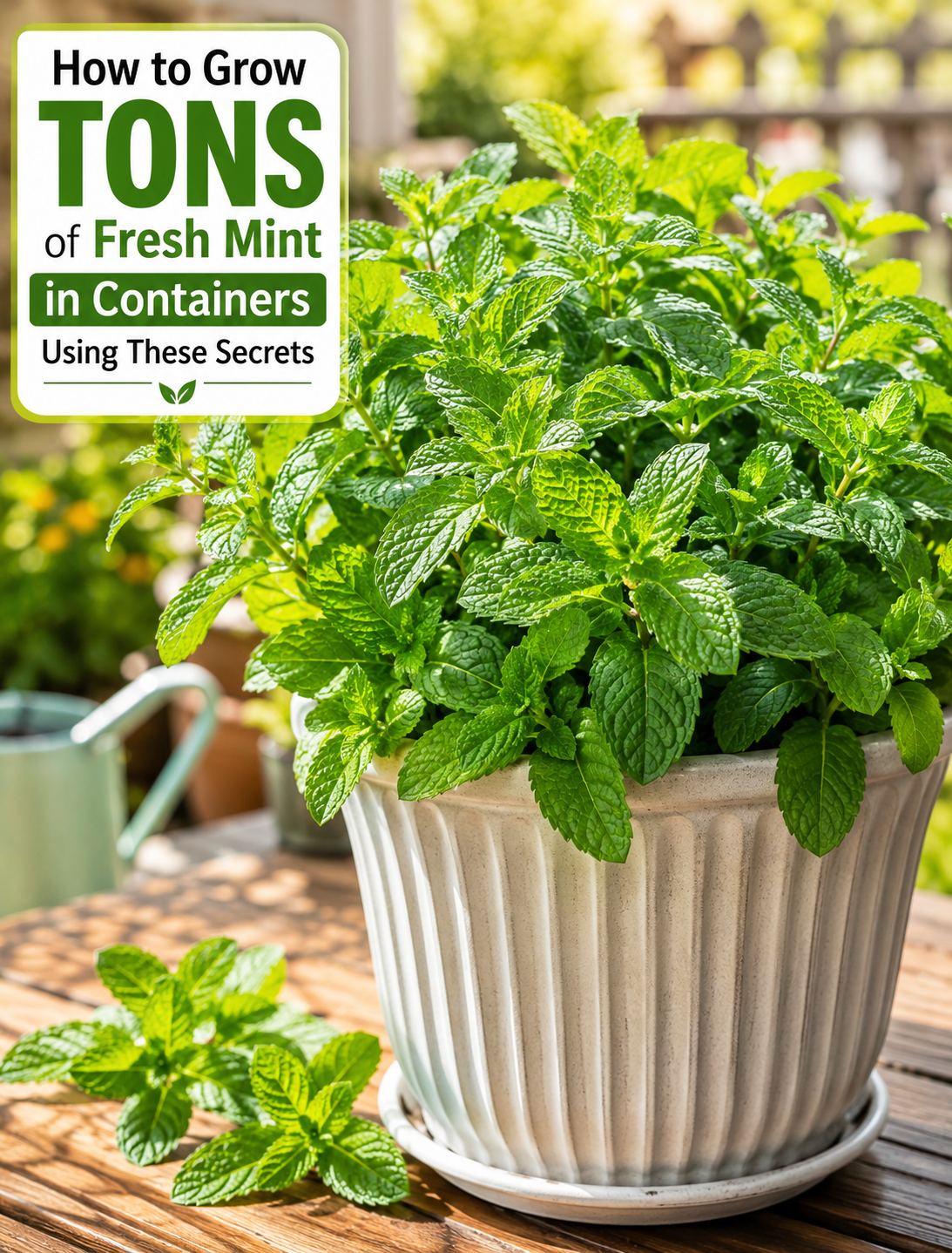
How to Grow TONS of Fresh Mint in Containers Using These Secrets
Growing fresh mint in containers is one of the easiest ways to keep a steady supply of this fragrant herb at home. Mint grows quickly, produces plenty of leaves, and does well on patios, balconies, porches, and sunny windowsills.
The biggest challenge is controlling its fast-growing roots. When planted in garden beds, mint can spread quickly and become difficult to remove. A container keeps the plant contained while giving you easy access to fresh leaves for tea, desserts, salads, sauces, and summer drinks.
With the right container, soil, light, water, and harvesting routine, you can grow a thick, healthy mint plant from a small starter plant.
Choosing the Right Container
Choose a container that is at least 12 inches deep and 12 inches wide for a healthy mint plant. A larger pot gives the roots enough room to develop while allowing the plant to produce more stems and leaves.
Drainage is just as important as container size. Select a pot with several drainage holes so excess water can escape after watering. Standing water can keep the roots too wet and increase the risk of root problems.
Clay, ceramic, plastic, and fabric containers can all work well. Plastic pots hold moisture longer, while unglazed clay pots dry out faster and may need more frequent watering.
If you want to grow several mint plants, use separate containers rather than placing many plants in one small pot. This gives each plant enough space and makes watering easier.
Selecting the Ideal Location
Mint grows best with 4 to 6 hours of sunlight each day. Morning sunlight is especially useful because it provides strong light without the intense afternoon heat found in many parts of the USA.
A patio, balcony, kitchen window, or porch can work well if it receives enough light. In very hot regions, give mint some afternoon shade to protect the leaves from heat stress.
Indoor mint should be placed near a bright window. A south- or east-facing window can provide useful natural light, but rotate the pot every few days so the plant grows evenly.
If the stems become long and weak or the leaves remain small, the plant may need more light.
Using Quality Soil Mix
Use a well-draining potting mix made for containers rather than ordinary garden soil. Garden soil can become dense inside a pot and may restrict root growth and drainage.
A quality container mix should hold enough moisture for mint while still allowing excess water to drain. Adding compost can improve the soil structure and provide a gentle source of nutrients.
Avoid filling the container with heavy soil that stays wet for long periods. Mint likes moisture, but its roots still need access to air.
Before planting, loosen the potting mix and leave about an inch of space below the container rim. This makes watering easier and reduces soil runoff.
Watering Wisely
Mint prefers soil that stays evenly moist but not soggy. Check the top inch of soil with your finger before watering.
If the surface feels dry, water slowly until a little water drains through the bottom holes. This helps moisten the entire root zone instead of only wetting the surface.
During hot summer weather, container mint may dry out faster than plants growing in the ground. Check the soil more often during heat waves, especially when the pot receives direct afternoon sunlight.
Avoid keeping the container sitting in a saucer full of water. Empty excess water after watering to reduce the chance of root problems.
Fertilizing Sparingly
Mint does not require heavy feeding to produce healthy leaves. Too much fertilizer can encourage rapid, soft growth and may reduce the herb’s strong flavor.
During active growth, apply a balanced liquid fertilizer according to the product label every 4 to 6 weeks. Reduce feeding when growth slows during cooler weather.
You can also add a thin layer of compost to the surface of the potting mix. Water afterward so nutrients can gradually move into the root zone.
Healthy soil and regular harvesting are often more important than frequent fertilizer applications.
Controlling Growth
Mint is known for spreading aggressively through underground stems called runners. This is why containers are especially useful for home gardeners.
Keep the entire plant inside its container and avoid letting stems root in nearby pots or garden beds. If mint runners reach the soil around the container, remove them before they become established.
When roots completely fill the pot, move the plant into a larger container or divide the root ball. Repotting every couple of years can help maintain vigorous growth.
Pruning also keeps the plant compact. Remove weak, damaged, or overly long stems to encourage fresh shoots from the center of the plant.
Harvesting for Abundance
Regular harvesting is one of the best ways to encourage a fuller mint plant. Begin harvesting when the plant is established and has several healthy stems.
Use clean scissors to cut stems just above a pair of leaves. Avoid removing more than about one-third of the plant at one time, especially if the plant is still small.
Frequent trimming encourages new branches and helps prevent the plant from becoming tall and sparse. Harvesting before flowering usually provides tender leaves with a strong, fresh flavor.
For the best flavor, pick mint in the morning after the leaves have dried from overnight moisture. Use fresh leaves immediately or store them in the refrigerator for later use.
You can also dry extra mint for tea, seasoning, or homemade herb blends. Harvesting regularly can turn one healthy container plant into a long-lasting source of fresh leaves.
Troubleshooting Common Issues
Yellow leaves often indicate excess moisture, poor drainage, or another root-related problem. Check the drainage holes and allow the surface soil to dry slightly before watering again.
Small leaves and stretched stems can indicate insufficient sunlight. Move the container to a brighter location and monitor new growth.
Aphids, spider mites, and whiteflies may occasionally attack mint. Check the undersides of leaves and young stems for insects or sticky residue.
For a mild infestation, wash the foliage with a gentle stream of water or use insecticidal soap according to its label. Test any treatment on a small area first and follow the product directions.
Powdery mildew can appear as a white coating on leaves, especially when plants have poor airflow. Give containers more space, remove badly affected leaves, and water the soil rather than repeatedly wetting the foliage.
Frequently Asked Questions
Can mint grow well in containers?
Yes. Mint grows very well in containers because pots provide good root control while giving the plant enough space to produce fresh stems and leaves.
How much sunlight does container mint need?
Mint generally performs well with 4 to 6 hours of sunlight daily, while afternoon shade can protect it from excessive heat in hot climates.
How often should I water mint in a pot?
Water when the top inch of potting mix feels dry, then water thoroughly until excess moisture drains from the bottom.
What size pot is best for mint?
A container at least 12 inches deep and wide provides useful space for roots and helps support strong, bushy growth.
Can I grow mint indoors?
Yes. Place mint near a bright window that receives several hours of sunlight and rotate the pot regularly for balanced growth.
How do I make my mint plant bushier?
Harvest the growing tips regularly by cutting stems just above a pair of leaves to encourage new side shoots.
Why is my container mint turning yellow?
Yellow leaves can result from overwatering, poor drainage, or stressed roots, so check soil moisture and make sure the pot drains freely.
Can mint survive winter in a container?
Mint can become dormant during cold weather, but winter survival depends on the variety, container exposure, and local climate; protect the roots from severe freezing.