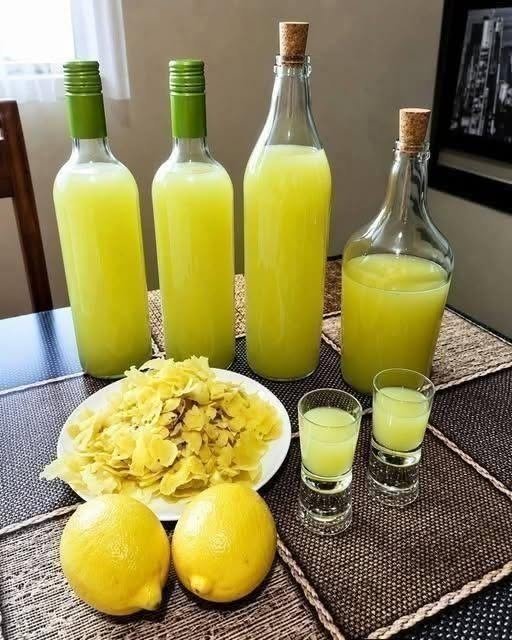
Homemade Italian Limoncello
Description
Homemade Italian Limoncello is a bright, intensely lemony liqueur made by infusing lemon zest in alcohol and blending the fragrant infusion with a smooth sugar syrup. Famous throughout southern Italy, particularly along the Amalfi Coast, Sorrento, and the island of Capri, limoncello is traditionally served very cold as an after-dinner digestif.
What makes homemade limoncello so special is its incredibly fresh citrus aroma. Unlike many commercial versions, homemade limoncello can be adjusted to your preferred sweetness and intensity. The key is using fresh, unwaxed lemons and removing only the yellow outer zest, because the white pith underneath can make the finished drink unpleasantly bitter.
The process requires patience rather than complicated cooking. The lemon zest is infused for several days or weeks, then strained and combined with cooled sugar syrup. After another short resting period, the flavors become beautifully balanced.
Serve homemade limoncello ice-cold in small chilled glasses, or use it to add a vibrant lemon flavor to desserts, cakes, cocktails, sorbets, and fruit salads.
Important: Alcohol strength varies depending on the alcohol used and the amount of syrup added. Drink responsibly and follow local laws regarding homemade alcohol. This recipe is intended for adults of legal drinking age.
Recipe Details
Recipe Name: Homemade Italian Limoncello
Cuisine: Italian
Category: Beverage / Liqueur
Prep Time: 20 minutes
Infusion Time: 7–21 days
Cooling Time: 1–2 hours
Resting Time: 3–7 days
Total Time: Approximately 1–3 weeks
Servings: About 12–16 small servings
Difficulty: Easy
Ingredients
For the Lemon Infusion
- 8–10 large organic or unwaxed lemons
- 750 ml high-proof neutral alcohol suitable for food use, such as grain spirit or vodka
- 1 clean glass jar with a tight-fitting lid
For the Sugar Syrup
- 3 cups granulated sugar
- 4 cups water
Optional
- 1 additional lemon, for serving
- Small lemon slices or twists for garnish
Choosing the Best Lemons
The lemons are the star of this recipe, so choosing good-quality fruit makes a noticeable difference.
Traditional Italian limoncello is often made with fragrant lemons that have thick, aromatic skins. If you can find organic or unwaxed lemons, they are ideal because the zest is infused directly into the alcohol.
Choose lemons that feel heavy for their size and have brightly colored, fragrant skins. Before zesting, wash them thoroughly under cool running water and dry them completely.
Avoid lemons with damaged or moldy skin.
The most important rule is to use only the yellow outer layer of the peel. The white layer underneath, known as the pith, contains compounds that can contribute significant bitterness.
Step 1: Prepare the Lemons
Wash and dry the lemons thoroughly.
Using a sharp vegetable peeler or citrus zester, carefully remove thin strips of yellow zest.
Try to leave as much of the white pith behind as possible.
You do not need the lemon juice for the traditional infusion, so save the peeled lemons for another recipe. Their juice is excellent in lemonade, salad dressings, marinades, cakes, or sauces.
Place the lemon zest into a large clean glass jar.
Step 2: Add the Alcohol
Pour the food-grade high-proof neutral alcohol or vodka over the lemon zest.
Make sure all the zest is submerged.
Seal the jar tightly.
Gently swirl the jar once or twice to distribute the lemon peel.
Place the jar in a cool, dark location away from direct sunlight and excessive heat.
Do not leave the jar uncovered.
Step 3: Infuse the Lemon Zest
Allow the lemon zest to infuse for approximately 7–21 days.
The exact time depends on the type of alcohol, the lemons, and how intense you want the citrus flavor to be.
During the infusion, the alcohol gradually takes on the natural oils and aromatic compounds from the lemon peel. The liquid should become noticeably yellow and intensely fragrant.
You can gently swirl the jar every few days.
There is no need to shake it vigorously.
How do you know it is ready?
The lemon zest should look pale and somewhat stripped of its color, while the liquid should have a strong lemon aroma.
For a lighter limoncello, a shorter infusion may be enough. For a deeper citrus character, allow the infusion to continue longer.
Step 4: Strain the Lemon Infusion
When the infusion has reached your preferred strength, place a fine-mesh strainer over a clean bowl or large measuring container.
Pour the lemon-infused alcohol through the strainer.
Discard the spent lemon zest.
For an exceptionally clear limoncello, strain the liquid again through a coffee filter or fine filtration material.
Avoid squeezing the zest aggressively, as this can introduce additional oils or sediment into the finished drink.
Step 5: Make the Sugar Syrup
Add the water and sugar to a saucepan.
Place over medium heat and stir until the sugar has completely dissolved.
There is no need to make a thick caramel-like syrup. You simply want the sugar to dissolve into the water.
Once dissolved, remove the saucepan from the heat.
Allow the syrup to cool completely.
Do not mix hot sugar syrup directly with the alcohol.
Letting the syrup cool first helps preserve the fresh lemon aroma and makes the mixing process safer.
Step 6: Combine the Infusion and Syrup
Once the sugar syrup is completely cool, gradually add it to the strained lemon-infused alcohol.
Stir gently.
The liquid may become cloudy or develop a beautiful opaque yellow appearance. This is normal and can happen because the lemon oils become suspended when diluted.
Taste a small amount and decide whether you prefer it sweeter or stronger.
If it is too strong for your preference, add a little more cooled syrup.
If it is too sweet, you can dilute it with a little additional alcohol, keeping in mind that changing the proportions also changes the final alcohol concentration.
Step 7: Bottle the Limoncello
Pour the finished limoncello into clean glass bottles with secure lids or caps.
Use a funnel to make bottling easier and prevent spills.
Seal the bottles tightly.
Label them with the preparation date if desired.
Store the bottles in the refrigerator or freezer.
Step 8: Let It Rest
Although you can technically taste the limoncello immediately, allowing it to rest for several days can improve the overall flavor.
A resting period of 3–7 days gives the lemon, sweetness, and alcohol time to harmonize.
Some homemade versions are rested even longer.
Before serving, chill the limoncello thoroughly.
How to Serve Homemade Limoncello
The classic way to serve limoncello is very cold.
Pour a small amount into a chilled liqueur glass and serve immediately.
You can also use homemade limoncello in:
- Lemon cocktails
- Spritz-style drinks
- Lemon desserts
- Cheesecakes
- Cakes
- Fruit salads
- Sorbets
- Lemon cream sauces
- Dessert glazes
- Italian-inspired pastries
A small pour is usually enough because limoncello has a concentrated citrus flavor and can be relatively strong.
Notes
1. Use unwaxed lemons whenever possible
Because the peel is infused, unwaxed or organic lemons are preferable.
2. Avoid the white pith
This is one of the most important steps. Too much pith can produce a bitter flavor.
3. Do not boil the alcohol
Alcohol is highly flammable. Never heat alcohol directly and keep it away from flames, sparks, and high heat.
4. Cool the syrup completely
Always allow the sugar syrup to cool before combining it with the alcohol.
5. Filter twice if necessary
If your limoncello contains visible particles, strain it again through a fine filter.
6. The color may vary
Homemade limoncello can range from pale yellow to vibrant golden yellow depending on the lemons and infusion time.
7. Cloudiness can be normal
A cloudy appearance can result from lemon oils becoming suspended in the diluted alcohol. It is not necessarily a sign that something has gone wrong.
Helpful Tips for Perfect Limoncello
Tip 1: Choose aromatic lemons
The more fragrant the lemon peel, the more aromatic your final limoncello will be.
Tip 2: Use a vegetable peeler
A vegetable peeler can make it easier to remove broad, thin strips of zest without collecting too much pith.
Tip 3: Keep the infusion away from sunlight
A dark cupboard or pantry is ideal.
Tip 4: Be patient
The infusion is the heart of the recipe. Rushing the process may produce a less developed citrus flavor.
Tip 5: Adjust the sweetness
The amount of syrup can be adjusted according to personal preference. Some people prefer intensely lemony and relatively dry limoncello, while others prefer a sweeter, smoother version.
Tip 6: Chill before serving
Cold temperatures make limoncello exceptionally refreshing.
Tip 7: Chill the glasses too
For a restaurant-style presentation, place small serving glasses in the refrigerator or freezer before serving.
Tip 8: Save the peeled lemons
Do not waste the fruit. Juice the peeled lemons and use them for lemonade, vinaigrettes, marinades, desserts, or sauces.
Storage
Store homemade limoncello in tightly sealed, clean glass bottles.
Refrigeration is recommended.
For an especially cold, traditional serving style, limoncello can be stored in the freezer if the formulation and alcohol concentration are appropriate. Homemade recipes vary considerably in final alcohol content, so freezing behavior can differ.
Always inspect the bottle before drinking. If you notice an unusual smell, visible contamination, mold, or other signs of spoilage, discard it.
Keep homemade alcoholic beverages away from children and anyone who should not consume alcohol.
Servings
This recipe makes approximately 1.5–2 liters of finished limoncello, depending on the exact alcohol and syrup proportions and how much evaporation occurs.
Because limoncello is typically served in small portions, this can provide approximately 12–16 small servings or more.
Serving size will vary considerably.
Approximate Nutritional Information
Nutritional values vary according to the alcohol used and the amount of sugar syrup added.
Estimated per small 2 oz / 60 ml serving:
- Calories: approximately 120–160
- Carbohydrates: approximately 15–20 g
- Sugars: approximately 15–20 g
- Protein: 0 g
- Fat: 0 g
- Fiber: 0 g
- Alcohol: varies depending on the final recipe concentration
These numbers are estimates rather than laboratory measurements.
Potential Benefits
Limoncello is an alcoholic beverage and should be enjoyed responsibly, so it should not be considered a health drink.
That said, the lemons used to make it contain naturally occurring vitamin C and aromatic citrus compounds. However, the amount of lemon juice in the final beverage is minimal because traditional limoncello is primarily flavored with lemon zest.
Lemon Aroma
The fragrant oils found in lemon peel give limoncello its characteristic citrus aroma and flavor.
Small Serving Size
Traditional limoncello is served in small portions, making it naturally suited to occasional sipping rather than large servings.
Homemade Control
Making limoncello at home allows you to control the sweetness and intensity of the lemon flavor.
Fresh Ingredients
Using fresh lemon zest gives the finished liqueur a vibrant citrus character that can be very different from heavily processed or artificially flavored drinks.
Important: These are culinary qualities, not medical benefits. Alcohol consumption carries health risks, and people who should avoid alcohol should not consume limoncello.
Frequently Asked Questions
1. What is limoncello?
Limoncello is a traditional Italian lemon liqueur made primarily by infusing lemon zest in alcohol and then sweetening the infusion with sugar syrup.
2. Where does limoncello come from?
Limoncello is strongly associated with southern Italy, especially areas around the Amalfi Coast, Sorrento, and Capri.
3. Can I use regular vodka?
Yes. A neutral vodka can be used for homemade limoncello. The cleaner the vodka, the more noticeable the lemon flavor will be.
4. Can I use lemon juice instead of lemon zest?
Traditional limoncello relies primarily on lemon zest rather than juice. The flavorful essential oils are concentrated in the outer peel.
5. Why did my limoncello turn cloudy?
Cloudiness can occur when lemon oils become suspended in the alcohol-water mixture. This can be completely normal.
6. Why is my limoncello bitter?
The most common reason is excessive white pith being included with the lemon zest. Carefully removing only the yellow peel helps prevent bitterness.
7. How long should I infuse the lemons?
A common range is approximately 7–21 days. Longer infusion does not automatically mean better limoncello, so taste and aroma are more useful guides than simply counting days.
8. Can I make it less sweet?
Absolutely. Reduce the amount of sugar syrup to create a sharper, more intensely lemony drink.
9. Can I make it sweeter?
Yes. Add additional cooled sugar syrup gradually until the flavor reaches your preferred sweetness.
10. Can I serve limoncello at room temperature?
You can, but it is traditionally enjoyed very cold. Chilling it makes the drink smoother and more refreshing.
11. Can I use Meyer lemons?
Yes. Meyer lemons can create a softer, sweeter, more floral variation. The flavor will be different from traditional Italian-style limoncello.
12. Can I use bottled lemon peel?
Fresh lemon zest is strongly recommended. Fresh lemons provide the aromatic oils that give limoncello its distinctive character.
13. Can I make limoncello without alcohol?
Traditional limoncello requires alcohol for the extraction process. A non-alcoholic lemon syrup or lemon cordial can be made instead, but it would not technically be limoncello.
14. How should I store limoncello?
Keep it tightly sealed in the refrigerator or, when the final formulation permits it, in the freezer for an extra-cold serving experience.
15. How long does homemade limoncello last?
Properly prepared and stored limoncello can keep for a long time, but quality can gradually change. Clean bottles, proper storage, and good hygiene are important.