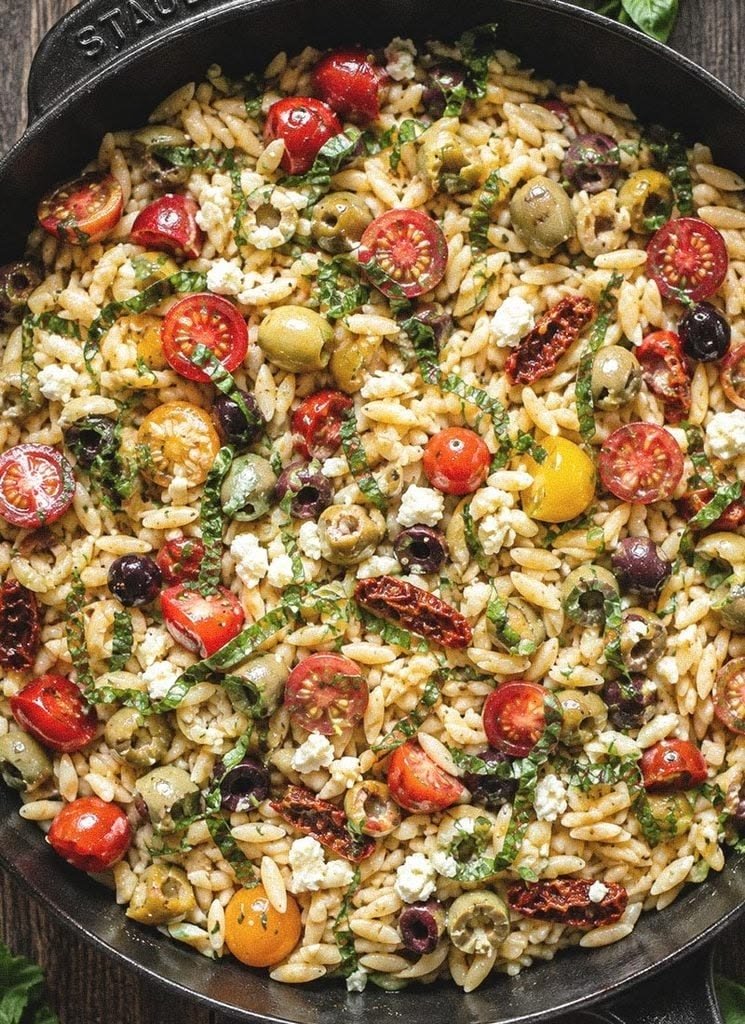
Greek Orzo Skillet with Olives, Tomatoes, and Feta
Introduction
Greek Orzo Skillet with Olives, Tomatoes, and Feta is a delicious Mediterranean-inspired dish that brings together tender orzo pasta, juicy cherry tomatoes, briny Kalamata olives, fragrant garlic, and creamy, tangy feta cheese. Everything cooks in one skillet, allowing the pasta to absorb the flavors of the vegetables, herbs, and broth.
This recipe is ideal for busy weeknights when you want something comforting, colorful, and easy to prepare without using several pots and pans. The tomatoes soften into a light, savory sauce, while the olives add a distinctive salty flavor and the feta provides a creamy finish. Fresh parsley and lemon juice brighten the entire dish.
Serve this orzo skillet as a satisfying vegetarian main course or pair it with grilled chicken, roasted fish, or warm pita bread. Its vibrant Mediterranean flavors make it suitable for family dinners, casual lunches, and meal preparation.
Recipe Information
- Prep Time: 10 minutes
- Cook Time: 20 minutes
- Total Time: 30 minutes
- Servings: 4
- Cuisine: Greek-inspired Mediterranean
- Course: Main dish or side dish
- Difficulty: Easy
- Cooking Method: One-skillet stovetop
Ingredients
For the Orzo Skillet
- 1 cup dry orzo pasta
- 2 tablespoons extra-virgin olive oil
- 1 small red onion, finely chopped
- 3 garlic cloves, minced
- 1 pint cherry tomatoes, halved
- ½ cup Kalamata olives, pitted and halved
- 2½ cups vegetable broth, preferably low-sodium
- ½ teaspoon dried oregano
- ½ teaspoon paprika
- ¼ teaspoon dried thyme
- ¼ teaspoon red pepper flakes, optional
- ½ teaspoon freshly ground black pepper
- Salt, to taste
- ½ cup crumbled feta cheese
- 2 tablespoons fresh parsley, chopped
- 1 tablespoon fresh lemon juice
- Lemon wedges, for serving
Optional Ingredients
- 2 cups fresh baby spinach
- ½ cup canned chickpeas, rinsed and drained
- ¼ cup sun-dried tomatoes, chopped
- 1 tablespoon capers, rinsed
- Extra crumbled feta for garnish
- Fresh dill or basil for additional flavor
Instructions
Step 1: Prepare the Ingredients
Begin by washing the cherry tomatoes and fresh parsley. Cut the tomatoes in half, finely chop the red onion, and mince the garlic. If the Kalamata olives are whole, remove the pits and slice them in half.
Measure the orzo, vegetable broth, olive oil, and seasonings before starting. Having everything ready makes the cooking process easier because orzo absorbs liquid quickly and needs occasional stirring.
If using canned chickpeas, rinse and drain them thoroughly. Crumble the feta into small pieces and set aside. Keep the lemon juice and fresh herbs ready for the finishing stage.
Step 2: Sauté the Red Onion
Heat the olive oil in a large, deep skillet over medium heat. Add the chopped red onion and cook for approximately 3–4 minutes, stirring occasionally, until it softens and becomes slightly translucent.
Avoid browning the onion too aggressively. The goal is to develop a sweet, savory base without burning it.
Add the minced garlic and cook for another 30–45 seconds until fragrant. Stir continuously because garlic can burn quickly and develop a bitter taste.
Step 3: Add the Cherry Tomatoes
Add the halved cherry tomatoes to the skillet. Stir them into the onion and garlic mixture and cook for approximately 3–4 minutes.
As the tomatoes heat, their skins begin to soften and their juices release into the pan. Gently press a few tomatoes with the back of a spoon to create a light, naturally sweet sauce while leaving the remaining pieces intact.
Add the Kalamata olives, dried oregano, paprika, thyme, black pepper, and optional red pepper flakes. Stir well to distribute the seasonings evenly.
Taste the mixture before adding salt. Kalamata olives, feta cheese, and vegetable broth can already contain substantial sodium.
Step 4: Toast the Orzo
Add the dry orzo directly to the skillet. Stir it through the tomato mixture for approximately 1–2 minutes.
Lightly toasting the pasta helps develop its flavor and allows it to become coated with the olive oil, garlic, herbs, and tomato juices.
Make sure the orzo is distributed evenly across the bottom of the skillet. This helps it cook more consistently once the broth is added.
Step 5: Add the Vegetable Broth
Pour the vegetable broth into the skillet and stir thoroughly, scraping the bottom gently to loosen any flavorful bits.
Increase the heat slightly and bring the liquid to a gentle boil. Once bubbling, reduce the heat to medium-low so the mixture simmers steadily rather than boiling aggressively.
Leave the skillet uncovered or partially covered according to your preferred texture and the manufacturer’s orzo cooking instructions. Stir frequently, particularly along the bottom and edges, because orzo can stick as the liquid reduces.
Step 6: Simmer Until Tender
Cook for approximately 10–12 minutes, or until the orzo is tender but still has a slight bite. Cooking time can vary depending on the pasta brand and skillet.
The broth should gradually be absorbed, while the tomato juices create a glossy sauce around the pasta. If the skillet becomes too dry before the orzo is tender, add a small splash of warm broth or water and continue cooking.
If the pasta is cooked but excess liquid remains, simmer for another minute or two while stirring gently. Remember that the mixture will thicken slightly as it rests.
Avoid cooking the orzo until it becomes mushy. A tender, slightly firm texture gives the finished dish the best result.
Step 7: Add Optional Vegetables
If you want extra vegetables, stir in the fresh baby spinach during the final 1–2 minutes of cooking. The residual heat will wilt it into the pasta.
For a more substantial vegetarian meal, add the rinsed chickpeas during the final 3–4 minutes so they heat through. Sun-dried tomatoes can also be stirred in at this stage for a deeper, more concentrated flavor.
These additions are optional, and the original combination of orzo, cherry tomatoes, Kalamata olives, and feta is delicious on its own.
Step 8: Finish With Lemon and Fresh Herbs
Once the orzo is tender, remove the skillet from the heat. Stir in the fresh lemon juice and chopped parsley.
The lemon brightens the rich, savory flavors and balances the salty olives and tangy feta. Taste the pasta and adjust the black pepper, lemon juice, or salt as needed.
If the skillet looks slightly thick, add one or two tablespoons of warm broth to loosen the sauce. If it seems too watery, let it stand for a couple of minutes before serving.
Step 9: Add the Feta Cheese
Sprinkle the crumbled feta evenly over the warm orzo. You can gently fold in a small portion for a creamier texture while leaving the rest on top for a beautiful presentation.
The feta softens slightly from the heat without needing to melt completely. Its tangy, salty flavor complements the sweet tomatoes, fragrant herbs, and briny olives.
Finish with additional chopped parsley, a little freshly ground black pepper, and lemon wedges.
Step 10: Serve and Enjoy
Allow the skillet to rest for approximately 2 minutes so the flavors settle and the sauce thickens slightly.
Serve the orzo directly from the skillet for a relaxed family-style meal, or transfer it to individual bowls. Garnish with extra feta and fresh herbs just before serving.
The finished dish should look glossy and colorful, with tender pasta, softened tomatoes, dark olives, and bright green herbs throughout.
Tips for the Best Greek Orzo Skillet
Use a large skillet. A wide skillet gives the pasta room to cook evenly and makes stirring easier.
Choose good-quality olives. Kalamata olives contribute the characteristic briny Mediterranean flavor. If they taste particularly salty, rinse them briefly before adding them.
Use fresh garlic. Freshly minced garlic creates a stronger, more aromatic flavor than garlic powder.
Control the heat. A gentle simmer helps the orzo absorb the broth without cooking too quickly on the outside.
Stir regularly. Orzo releases starch and can stick to the bottom of the pan. Frequent stirring helps prevent scorching and promotes an evenly creamy texture.
Add feta at the end. Adding feta after cooking preserves its tangy flavor and attractive texture.
Balance the seasoning. Taste before adding extra salt because olives, feta, and broth may already provide enough.
Finish with lemon. A little fresh lemon juice makes the dish taste brighter and balances the richness of the olive oil and cheese.
Recipe Variations
1. Greek Orzo With Spinach
Add two cups of fresh baby spinach during the final two minutes of cooking. Allow it to wilt into the warm pasta. Spinach adds color and complements the tomatoes and feta.
2. Chickpea and Orzo Skillet
Add half a cup to one cup of rinsed, drained chickpeas. They make the dish more substantial and provide additional plant-based protein and fiber.
3. Spicy Mediterranean Orzo
Increase the red pepper flakes or add a little chopped fresh chili. The gentle heat works well with the sweetness of the tomatoes and the salty feta.
4. Sun-Dried Tomato Orzo
Add chopped sun-dried tomatoes for a deeper, more concentrated tomato flavor. If they are packed in oil, drain them first and consider using a small amount of their oil in place of some olive oil.
5. Lemon Herb Chicken Orzo
Serve the orzo with sliced grilled chicken seasoned with garlic, oregano, olive oil, and lemon. This turns the vegetarian base into a hearty main course.
6. Mediterranean Seafood Orzo
Add cooked shrimp during the final few minutes, just long enough to heat through. Alternatively, cook the shrimp separately and arrange them on top when serving.
7. Fresh Herb Orzo
Replace some of the parsley with fresh dill or basil. Add delicate fresh herbs after cooking to preserve their aroma.
8. Dairy-Free Version
Omit the feta or replace it with a suitable dairy-free alternative. The olives, tomatoes, lemon, and herbs still provide plenty of flavor.
What to Serve With Greek Orzo
This skillet can be served as a complete vegetarian meal, but it also pairs well with several Mediterranean-inspired sides.
- Greek salad: Crisp cucumber, tomatoes, red onion, and a lemon-olive oil dressing complement the warm pasta.
- Warm pita bread: Useful for scooping up the tomato and herb sauce.
- Grilled chicken: Adds extra protein while maintaining the Mediterranean flavor profile.
- Roasted vegetables: Zucchini, eggplant, and bell peppers make excellent accompaniments.
- Grilled fish: Lemon-herb fish works especially well with the olives and feta.
- Hummus: A small serving adds a creamy contrast to the savory pasta.
For a simple dinner, serve the skillet with a fresh green salad and lemon wedges.
Storage and Reheating
Allow leftovers to cool slightly and refrigerate them in an airtight container within two hours of cooking. Properly refrigerated leftovers are generally best used within 3–4 days.
The orzo will absorb more liquid as it sits, so it may become thicker after refrigeration. To reheat, place a portion in a skillet over medium-low heat with one or two tablespoons of water or vegetable broth.
Stir gently until warmed through. You can also reheat it in the microwave in short intervals, stirring between each interval.
Add a little fresh lemon juice, parsley, or feta after reheating to refresh the flavors.
Freezing is possible, but the pasta and tomatoes may soften and change texture after thawing. For the best results, enjoy this dish fresh or refrigerated.
Make-Ahead Instructions
To prepare ahead, chop the onion, garlic, tomatoes, and parsley, and measure the seasonings. Store the prepared ingredients separately in the refrigerator.
You can also crumble the feta and prepare lemon wedges in advance. For the best pasta texture, cook the orzo shortly before serving because it continues absorbing liquid as it rests.
If you need to cook the entire dish ahead, reserve a little extra broth and stir it in during reheating. Add fresh herbs and a little feta just before serving.
Estimated Nutritional Information
The following figures are approximate for one serving when the recipe is divided into four portions. Actual values depend on the pasta brand, broth, feta, olives, and amount of olive oil used.
- Calories: 350–450
- Protein: 10–15 grams
- Carbohydrates: 45–55 grams
- Fat: 12–20 grams
- Fiber: 3–6 grams
- Sodium: Variable, especially depending on the olives, broth, and feta
For a more accurate estimate, calculate the nutrition using the specific products and quantities used in your kitchen.
Ingredient Benefits
Tomatoes: Cherry tomatoes provide vitamin C and lycopene, a naturally occurring antioxidant. Their juices also help form the sauce.
Olive oil: Extra-virgin olive oil contributes flavor and predominantly monounsaturated fats.
Garlic: Garlic adds a distinctive aroma and depth of flavor to the skillet.
Olives: Kalamata olives provide the briny, savory flavor characteristic of many Mediterranean dishes.
Feta cheese: Feta adds tanginess, protein, and calcium, although it can be high in sodium.
Parsley: Fresh parsley brings a clean, herbal flavor and provides small amounts of vitamins.
Lemon: Lemon juice adds freshness and balances the salty and savory ingredients.
Orzo: Orzo supplies carbohydrates that provide energy. Whole-grain alternatives, where available, may offer more fiber.
This dish can be enjoyed as part of a varied, balanced eating pattern. Its nutritional value depends on portion size and the ingredients selected.
Frequently Asked Questions
1. Is orzo rice or pasta?
Orzo is a small, rice-shaped pasta made from wheat. Although it looks like rice, it cooks like pasta and contains gluten unless a specifically gluten-free version is used.
2. Can I use a different type of olive?
Yes. Green olives or other pitted olives can be substituted, although Kalamata olives provide the most recognizable Greek-inspired flavor.
3. Can I make this recipe gluten-free?
Yes, if you use gluten-free orzo and confirm that your broth and other ingredients are gluten-free. Follow the package instructions because cooking time and liquid requirements may differ.
4. Why is my orzo too dry?
Orzo absorbs liquid as it cooks and continues thickening while resting. Add a little warm broth or water and stir until the desired consistency returns.
5. Why is my orzo mushy?
It may have cooked too long or absorbed too much liquid. Follow the package timing, simmer gently, and begin checking the pasta a little before the suggested cooking time ends.
6. Can I use chicken broth instead of vegetable broth?
Yes. Chicken broth adds a deeper savory flavor. Use vegetable broth if you want to keep the dish vegetarian.
7. Can I omit the feta?
Absolutely. The dish will still be flavorful from the tomatoes, garlic, olives, herbs, and lemon. You can replace it with a dairy-free alternative if desired.
8. How do I make it more filling?
Add chickpeas, white beans, grilled chicken, or cooked shrimp. You can also serve it with a side salad and warm pita bread.
9. Can I use canned tomatoes?
Yes. Use approximately one cup of drained diced canned tomatoes if fresh cherry tomatoes are unavailable. The flavor and texture will be slightly different.
10. Can I make the dish less salty?
Use low-sodium broth, rinse the olives if necessary, and choose a smaller amount of feta. Taste the skillet before adding extra salt.