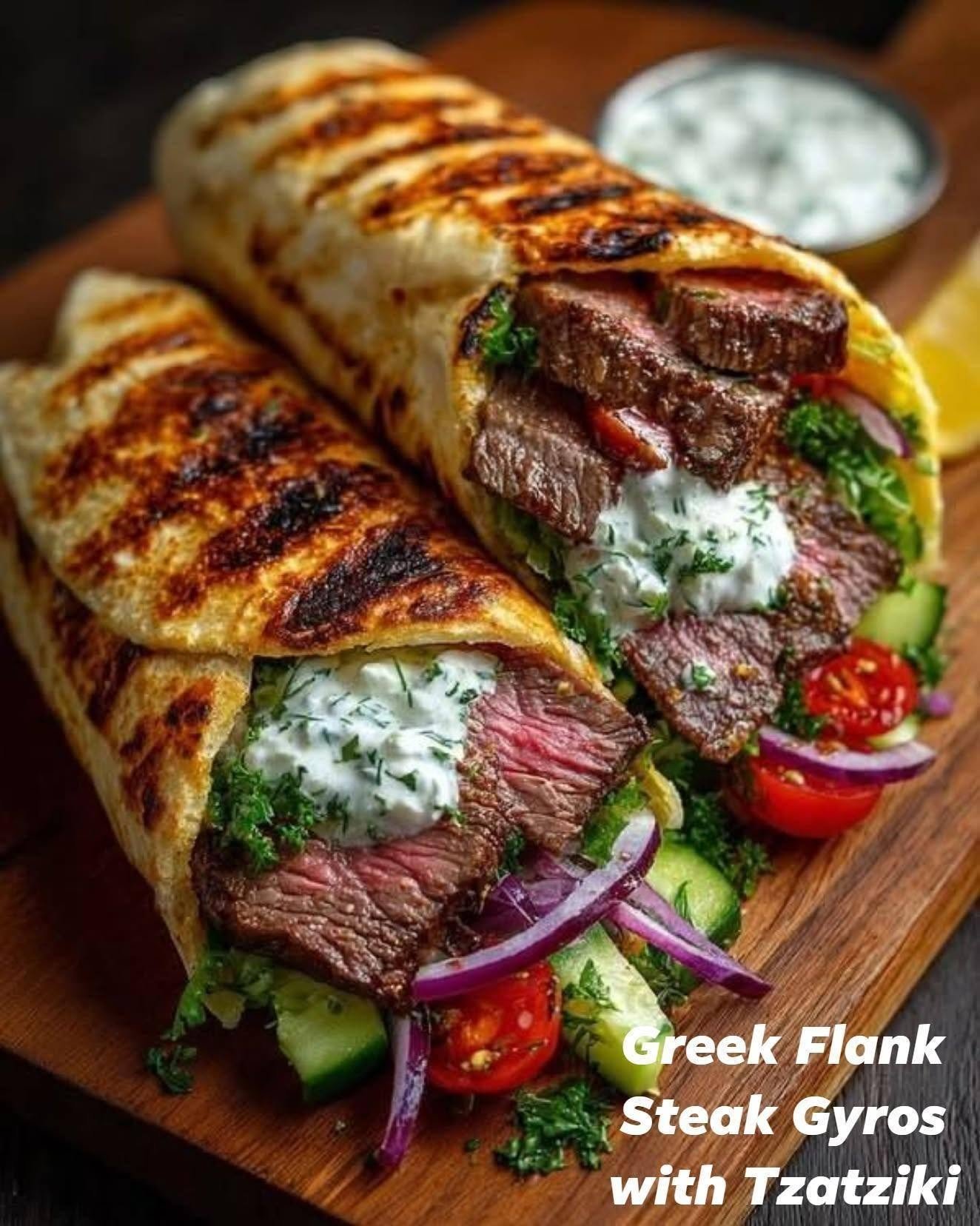
Greek Flank Steak Gyros with Tzatziki
Description
These Greek Flank Steak Gyros with Tzatziki are a delicious Mediterranean-inspired meal featuring juicy, flavorful strips of marinated flank steak wrapped in warm pita bread with cool, creamy tzatziki and fresh vegetables. The steak is marinated with olive oil, lemon juice, garlic, oregano, and classic Greek seasonings, then grilled or seared until beautifully browned on the outside while remaining tender and juicy inside.
The combination of hot, savory steak with crisp cucumber, juicy tomatoes, red onion, fresh herbs, and tangy tzatziki creates an irresistible balance of flavors and textures. A little feta cheese adds extra salty creaminess, while a sprinkle of oregano and a squeeze of lemon give the gyros a fresh Mediterranean finish.
This recipe is perfect for a quick family dinner, summer grilling, meal prep, lunch, or a casual gathering. Once the steak is marinated, the actual cooking takes only a few minutes, making these gyros much easier than they look.
Recipe Information
Recipe Name: Greek Flank Steak Gyros with Tzatziki
Prep Time: 25 minutes
Marinating Time: 1–4 hours
Cook Time: 8–12 minutes
Total Time: About 1 hour plus marinating
Servings: 4–6 gyros
Course: Main Course
Cuisine: Greek / Mediterranean-Inspired
Difficulty: Easy to Moderate
Ingredients
For the Greek Flank Steak
- 1½ pounds flank steak
- 3 tablespoons extra-virgin olive oil
- 2 tablespoons fresh lemon juice
- 4 garlic cloves, minced
- 1 tablespoon dried oregano
- 1 teaspoon smoked paprika
- 1 teaspoon ground cumin
- ½ teaspoon dried thyme
- 1 teaspoon salt
- ½ teaspoon black pepper
- 1 tablespoon chopped fresh parsley
- 1 teaspoon lemon zest
For the Tzatziki
- 1 cup Greek yogurt
- ½ large cucumber, finely grated
- 1 garlic clove, finely minced
- 1 tablespoon fresh lemon juice
- 1 tablespoon extra-virgin olive oil
- 1 tablespoon fresh dill, chopped
- 1 tablespoon fresh mint, chopped
- ¼ teaspoon salt
- Black pepper to taste
For the Gyros
- 4–6 warm pita breads
- 1 cup cherry tomatoes, halved
- ½ cucumber, sliced
- ½ small red onion, thinly sliced
- ½ cup crumbled feta cheese
- Fresh parsley or dill
- Lemon wedges
- Optional: Kalamata olives
- Optional: shredded lettuce
How to Make Greek Flank Steak Gyros
Step 1: Prepare the Marinade
In a medium bowl, combine olive oil, lemon juice, minced garlic, oregano, smoked paprika, cumin, thyme, salt, black pepper, parsley, and lemon zest.
Whisk until everything is well combined.
The olive oil helps coat the steak while the lemon juice and herbs provide bright Mediterranean flavor.
Step 2: Marinate the Steak
Place the flank steak in a large resealable bag or shallow dish.
Pour the marinade over the steak.
Turn the steak several times so it is evenly coated.
Cover and refrigerate for 1–4 hours.
For the best texture, avoid leaving the steak in a highly acidic marinade for an excessively long period because the surface can become soft.
Step 3: Make the Tzatziki
While the steak marinates, prepare the tzatziki.
Grate the cucumber.
Place it in a clean kitchen towel or paper towel and squeeze firmly to remove as much excess liquid as possible.
This step is important because watery cucumber can make the tzatziki thin.
Add the cucumber to Greek yogurt.
Stir in garlic, lemon juice, olive oil, dill, mint, salt, and black pepper.
Mix thoroughly.
Cover and refrigerate for at least 20–30 minutes.
Allowing the tzatziki to rest gives the flavors time to develop.
Step 4: Prepare the Vegetables
Slice the cucumber, tomatoes, and red onion.
Crumble the feta.
Prepare fresh herbs and lemon wedges.
Keep everything refrigerated until you’re ready to assemble the gyros.
Step 5: Bring the Steak Toward Room Temperature
Remove the steak from the refrigerator approximately 15–20 minutes before cooking.
Take it out of the marinade and gently pat the surface dry.
Discard the used marinade.
Patting the steak dry helps it develop a better seared crust.
Step 6: Cook the Flank Steak
Heat a grill, grill pan, or heavy skillet over medium-high to high heat.
Lightly oil the cooking surface if necessary.
Place the steak onto the hot surface.
Cook approximately 4–6 minutes per side, depending on thickness and desired doneness.
Avoid constantly moving the steak.
Let it develop a deep brown crust.
The exact cooking time varies, so an instant-read thermometer is the most reliable way to check doneness.
For food safety, whole cuts of beef should reach the appropriate safe internal temperature; if you prefer medium-rare, be aware that some food-safety guidance recommends cooking beef to higher temperatures.
Step 7: Rest the Steak
Transfer the cooked steak to a cutting board.
Allow it to rest for approximately 5–10 minutes.
This gives the juices time to redistribute.
Do not skip this step.
Step 8: Slice Against the Grain
Look carefully at the surface of the flank steak.
You’ll notice long muscle fibers running in one direction.
Cut across those fibers, not parallel to them.
Slice the steak into thin strips.
This is one of the most important tricks for tender flank steak.
Even perfectly cooked flank steak can seem chewy if sliced incorrectly.
Step 9: Warm the Pitas
Warm the pita breads briefly on a dry skillet, grill, or directly over gentle heat.
They should become soft and flexible without becoming crispy.
Warm pita makes the gyros much easier to fold.
Step 10: Assemble the Gyros
Place a warm pita on a plate.
Spread a generous layer of tzatziki down the center.
Add sliced Greek flank steak.
Top with cucumber, tomatoes, red onion, and feta.
Add fresh parsley or dill.
Finish with a squeeze of lemon.
Fold the bottom of the pita upward and wrap the sides around the filling.
For easier serving, wrap the bottom half in parchment paper or foil.
Why You’ll Love These Gyros
Juicy and Flavorful Steak
The garlic, lemon, olive oil, and oregano marinade gives the flank steak a bold Mediterranean flavor.
Creamy Tzatziki
Cool yogurt-based tzatziki balances the warm, savory steak.
Fresh Vegetables
Cucumber, tomato, and red onion add freshness and crunch.
Quick Cooking
Once marinated, flank steak cooks relatively quickly.
Customizable
You can add olives, lettuce, roasted vegetables, hummus, or extra feta.
Great for Gatherings
Set out all the ingredients and allow everyone to build their own gyro.
Recipe Notes
Choose Good Flank Steak
Look for a piece with consistent thickness and a healthy amount of marbling.
Don’t Over-Marinate
Because the marinade contains lemon juice, approximately 1–4 hours is plenty.
Pat the Steak Dry
A dry surface browns much better than a wet one.
Use High Heat
Flank steak benefits from a hot cooking surface.
Don’t Skip Resting
Resting helps maintain juicy slices.
Slice Against the Grain
This makes a major difference in tenderness.
Tips for Perfect Gyros
Tip 1: Make Tzatziki First
The flavor improves as it rests in the refrigerator.
Tip 2: Remove Cucumber Water
Squeeze grated cucumber very well.
Tip 3: Don’t Overcook the Steak
Flank steak is best when cooked according to your preferred level of doneness and sliced thinly.
Tip 4: Warm Your Pitas
Cold pita can crack when folded.
Tip 5: Don’t Overfill
Too much filling makes the gyro difficult to wrap.
Tip 6: Add Lemon at the End
Fresh lemon juice brightens all the flavors.
Tzatziki Tips
For thicker tzatziki, use full-fat or thick Greek yogurt.
You can also strain regular yogurt through cheesecloth if necessary.
Fresh dill makes the sauce especially fragrant.
If you love garlic, add another small clove.
For a milder sauce, use less garlic.
For extra brightness, add additional lemon juice.
Ingredient Substitutions
Flank Steak
You can substitute:
- Skirt steak
- Sirloin steak
- Flat iron steak
- Thinly sliced beef
Cooking times will vary depending on the cut and thickness.
Greek Yogurt
You can use:
- Full-fat Greek yogurt
- Low-fat Greek yogurt
- Plain strained yogurt
Feta
Try:
- Goat cheese
- Crumbled queso fresco
- Ricotta salata
Fresh Dill
If necessary, use a small amount of dried dill, although fresh provides better flavor.
Pita
You can use:
- Flatbread
- Naan
- Whole-wheat pita
- Gluten-free pita
Flavor Variations
Spicy Greek Gyros
Add crushed red pepper flakes or a pinch of cayenne to the steak marinade.
Feta-Lovers Gyros
Add extra feta and a little creamy feta sauce.
Greek Steak Salad
Skip the pita and serve the steak over lettuce, cucumber, tomato, olives, feta, and tzatziki.
Gyro Bowl
Serve the steak over rice, quinoa, or couscous with all the traditional toppings.
Hummus Gyros
Spread hummus over the pita before adding tzatziki and steak.
Mediterranean Loaded Gyro
Add Kalamata olives, roasted red peppers, lettuce, cucumber, tomato, onion, feta, tzatziki, and steak.
Serving Suggestions
These gyros are delicious on their own, but you can create a complete Mediterranean-style meal with:
- Greek salad
- Roasted potatoes
- Lemon potatoes
- Hummus
- Baba ganoush
- Grilled vegetables
- Couscous
- Rice pilaf
- Cucumber tomato salad
- Warm pita chips
For a lighter meal, serve the steak and tzatziki over a large salad.
Nutritional Information
Approximate nutrition per gyro, assuming 5 servings and including pita, steak, vegetables, feta, and tzatziki:
- Calories: 550–650 kcal
- Protein: 40–45 g
- Carbohydrates: 45–55 g
- Fat: 23–30 g
- Fiber: 4–6 g
- Sugar: 5–7 g
- Sodium: Approximately 900–1,200 mg
Nutrition varies depending on steak size, pita brand, feta, yogurt, and the amount of sauce used.
Benefits of the Ingredients
Flank Steak
Flank steak is a protein-rich beef cut that provides protein, iron, zinc, and vitamin B12.
Greek Yogurt
Greek yogurt contributes protein and calcium.
Cucumber
Cucumber adds water and fiber while keeping the gyro fresh and crunchy.
Tomatoes
Tomatoes contribute vitamin C, potassium, and carotenoid compounds.
Olive Oil
Extra-virgin olive oil provides predominantly unsaturated fats.
Garlic
Garlic contributes flavor and naturally occurring sulfur-containing compounds.
Lemon
Lemon provides bright acidity and vitamin C.
Fresh Herbs
Parsley, dill, and mint add freshness and flavor without requiring much additional salt.
These benefits are general nutritional information and are not intended as medical advice.
Storage Instructions
Store leftover steak separately from the pita and fresh vegetables when possible.
Place cooked steak in an airtight container and refrigerate.
Store tzatziki in a separate covered container.
For best quality, consume cooked leftovers within 3–4 days and follow standard food-safety practices.
Keep assembled gyros refrigerated if they contain meat and dairy.
Reheating Instructions
Reheat steak gently in a skillet over medium heat.
Avoid overcooking because reheated flank steak can become chewy.
Warm pita separately.
Add cold tzatziki and fresh vegetables only after the steak has been reheated.
This gives you a much better texture than reheating the entire assembled gyro.
Can These Gyros Be Made Ahead?
Yes.
Prepare the tzatziki one day ahead.
The steak can be marinated several hours before cooking.
Vegetables can be sliced earlier in the day.
For the best result, cook the steak shortly before serving.
Keep the components separate until assembly.
This is also a great option for meal preparation because everyone can assemble their own gyro when ready to eat.
Frequently Asked Questions
1. What cut of beef is best for gyros?
Flank steak works particularly well because it is flavorful and cooks quickly. Skirt steak or sirloin can also be used.
2. How long should flank steak marinate?
About 1–4 hours is ideal for this lemon-based marinade.
3. Can I marinate the steak overnight?
It’s better not to leave this particular lemon-based marinade on the steak overnight because the acidic ingredients can negatively affect the surface texture.
4. How do I make flank steak tender?
Cook it properly, allow it to rest, and most importantly, slice it thinly against the grain.
5. Can I cook the steak in a skillet?
Yes. A heavy skillet or cast-iron pan works very well.
6. Can I grill the steak?
Absolutely. Grilling gives the steak delicious charred edges.
7. Can I use chicken instead?
Yes. Chicken breast or boneless chicken thighs make excellent Greek gyros. Make sure chicken reaches a safe internal temperature.
8. Can I make these gyros gluten-free?
Yes. Use certified gluten-free pita or gluten-free flatbread.
9. Can I make them low-carb?
Serve the Greek steak over salad instead of pita.
10. Can I make them dairy-free?
Use a dairy-free yogurt for tzatziki and omit feta or use a suitable dairy-free alternative.
11. Can I make them spicy?
Add red pepper flakes to the marinade or a spicy sauce to the finished gyro.
12. Can I use store-bought tzatziki?
Yes. Homemade tastes fresh, but quality store-bought tzatziki is a convenient shortcut.
13. Why is my tzatziki watery?
The cucumber probably wasn’t squeezed enough. Remove as much cucumber liquid as possible before mixing.
14. Why is my steak tough?
Possible causes include overcooking, slicing with the grain, cutting too thickly, or using an insufficiently hot cooking surface.
15. Why should I slice against the grain?
Cutting across the muscle fibers shortens them, making each bite easier to chew.
16. Can I add lettuce?
Yes. Shredded lettuce provides extra crunch.
17. Can I add olives?
Definitely. Kalamata olives are especially good.
18. Can I add hummus?
Yes. Hummus and tzatziki together create a rich and flavorful gyro.
19. Can I freeze the cooked steak?
Cooked steak can be frozen, although the texture may change slightly. Freeze it separately from tzatziki and fresh vegetables.
20. Can I make a gyro bowl instead?
Yes. Serve the steak over rice or quinoa with cucumber, tomato, onion, feta, tzatziki, and herbs.