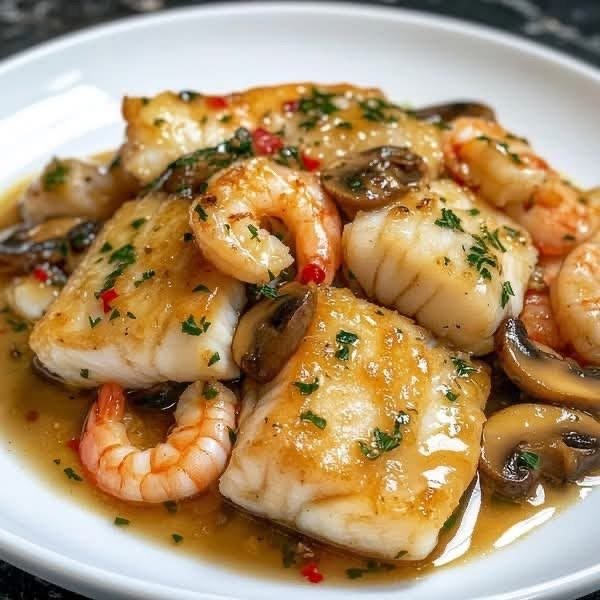
Garlic Butter Seafood Skillet with Shrimp, Scallops, Fish & Mushrooms
Recipe Description
This Garlic Butter Seafood Skillet is a delicious, restaurant-style meal featuring tender white fish, juicy shrimp, buttery scallops, and savory mushrooms simmered in a rich garlic butter sauce. Fresh parsley, a touch of red pepper, and a squeeze of lemon brighten the dish, creating a wonderful balance of buttery richness, fresh seafood flavor, and subtle spice.
Every bite combines flaky fish, plump shrimp, tender scallops, and golden mushrooms coated in a silky sauce that is perfect for spooning over rice, pasta, or crusty bread. The recipe looks elegant enough for a special dinner but is simple enough to prepare on a busy weeknight.
The secret to this dish is cooking each seafood ingredient carefully so everything remains tender and flavorful. Garlic and butter form the base of the sauce, while seafood juices, lemon juice, and a little broth bring all the ingredients together.
Whether you are planning a family dinner, a romantic meal, or a seafood-inspired weekend feast, this garlic butter seafood skillet is a satisfying choice for seafood lovers.
Preparation Time: 15 minutes
Cooking Time: 20 minutes
Total Time: 35 minutes
Servings: 4
Cuisine: American-inspired seafood
Course: Main course
Difficulty: Easy to moderate
Ingredients
For the Seafood
1 pound white fish fillets, such as cod, haddock, or halibut, cut into large pieces
12 ounces large shrimp, peeled and deveined
8 ounces sea scallops, side muscles removed
8 ounces cremini or button mushrooms, sliced
2 tablespoons olive oil
Salt, to taste
½ teaspoon freshly ground black pepper
½ teaspoon paprika
¼ teaspoon garlic powder
For the Garlic Butter Sauce
5 tablespoons unsalted butter
5 cloves garlic, finely minced
½ cup low-sodium chicken or seafood broth
2 tablespoons fresh lemon juice
1 teaspoon lemon zest
½ teaspoon red pepper flakes, or to taste
½ teaspoon Italian seasoning
2 tablespoons fresh parsley, finely chopped
1 tablespoon extra-virgin olive oil, if needed
Salt and black pepper, to taste
Optional Ingredients
¼ cup dry white wine, replacing part of the broth
2 tablespoons grated Parmesan cheese
1 tablespoon capers
Extra lemon wedges for serving
A small pinch of smoked paprika for additional depth
Instructions
Step 1: Prepare the Seafood
Begin by preparing all the seafood before heating the skillet. Pat the fish, shrimp, and scallops dry with paper towels. Removing excess moisture helps the seafood develop a beautiful golden surface instead of steaming in the pan.
Cut the fish into generous, evenly sized pieces so it cooks at a similar rate. Season the fish lightly with salt, black pepper, paprika, and garlic powder.
Season the shrimp and scallops with a little salt and black pepper as well. Keep the ingredients separate because they will be added to the skillet at different stages.
If the scallops are particularly wet, pat them dry once more immediately before cooking. Dry scallops are much easier to sear and develop a delicious golden crust.
Step 2: Sear the Fish
Heat a large, heavy skillet over medium-high heat. Add 2 tablespoons of olive oil and allow it to become hot but not smoking.
Carefully place the fish pieces in the skillet in a single layer. Avoid overcrowding the pan, as this can cause the fish to release moisture and cook unevenly.
Cook the fish for approximately 2–4 minutes on the first side, depending on thickness, until the surface turns golden. Gently turn each piece and cook for another 1–3 minutes, or until nearly cooked through.
The exact cooking time depends on the type and thickness of the fish. It should begin to flake easily but still hold its shape.
Transfer the fish to a clean plate and set it aside. It will finish cooking when returned to the sauce later.
Step 3: Cook the Scallops
If the skillet looks dry, add a small amount of olive oil. Arrange the scallops in the hot pan, leaving space between them.
Let them sear undisturbed for approximately 2 minutes, or until a golden crust forms. Turn them carefully and cook for another 1–2 minutes, depending on their size.
Scallops cook quickly, so avoid leaving them in the pan too long. Properly cooked scallops should be tender and moist rather than rubbery.
Transfer them to the plate with the fish.
Step 4: Sauté the Shrimp
Add the shrimp to the same skillet. Cook for approximately 1–2 minutes on the first side, then turn and cook for another 1–2 minutes.
The shrimp should turn pink and opaque and curl into a loose C shape. Remove them promptly once cooked.
If the shrimp are very large, they may require slightly longer. Avoid cooking them until they curl tightly into an O shape, as this can indicate overcooking.
Set the shrimp aside with the other seafood.
Step 5: Brown the Mushrooms
Reduce the heat to medium and add a small amount of olive oil if necessary. Add the sliced mushrooms in a single layer.
Cook for 5–7 minutes, stirring occasionally, until the mushrooms release their moisture and develop golden-brown edges.
Allowing the mushrooms to brown adds an earthy, savory flavor that complements the sweetness of the shrimp and scallops.
If the mushrooms release a lot of liquid, continue cooking until most of the moisture evaporates. This helps prevent the finished sauce from becoming watery.
Step 6: Make the Garlic Butter Sauce
Add the butter to the skillet with the mushrooms. Once it melts, stir in the minced garlic.
Cook for approximately 30–60 seconds, stirring frequently, until the garlic becomes fragrant. Do not let it brown too much, because burnt garlic can make the sauce bitter.
Add the red pepper flakes, Italian seasoning, lemon zest, and a little black pepper. Stir to distribute the seasonings evenly.
Pour in the broth and scrape the bottom of the skillet with a wooden spoon to release the flavorful browned bits left behind by the seafood and mushrooms.
If you are using white wine, add it before the broth and let it simmer briefly to reduce. Then add the broth.
Allow the sauce to simmer gently for 3–5 minutes, until it reduces slightly. Stir in the lemon juice and taste the sauce. Add salt only as needed, since the broth and seafood may already contribute enough seasoning.
For a richer finish, swirl in an additional tablespoon of butter.
Step 7: Return the Seafood to the Skillet
Reduce the heat to low. Carefully return the fish, scallops, and shrimp to the skillet, arranging them among the mushrooms.
Spoon the garlic butter sauce over the seafood so each piece is coated. Let everything warm together for approximately 2–3 minutes, or just until the seafood is fully cooked and heated through.
Avoid stirring aggressively, as the fish can break apart. Instead, gently tilt the pan and spoon the sauce over the ingredients.
For food safety, fish should reach an internal temperature of 145°F (63°C). Shrimp and scallops should be opaque and firm, without a raw or translucent center.
Step 8: Finish with Fresh Herbs
Remove the skillet from the heat. Sprinkle the chopped parsley over the seafood and add a little extra lemon juice if desired.
The fresh parsley adds color and a clean herbal flavor, while the lemon cuts through the richness of the butter.
Taste the sauce one final time and adjust the seasoning with salt, pepper, or red pepper flakes.
Serve immediately while the sauce is warm and glossy.
Tips for the Best Garlic Butter Seafood Skillet
1. Choose fresh or properly thawed seafood. Fresh seafood or frozen seafood that has been thawed safely in the refrigerator will work well. Pat everything dry before cooking.
2. Avoid overcrowding the skillet. Cook the seafood in batches if necessary. Giving each ingredient enough space helps create a golden surface and prevents excess moisture from accumulating.
3. Cook each seafood ingredient separately. Fish, shrimp, and scallops have different cooking times. Searing them individually helps keep everything tender.
4. Use fresh garlic. Freshly minced garlic gives the butter sauce a stronger aroma and more appealing flavor than garlic powder alone.
5. Do not burn the garlic. Garlic cooks quickly. Add the broth as soon as it becomes fragrant to prevent it from turning bitter.
6. Balance the butter with lemon. Lemon juice adds brightness and keeps the sauce from tasting too heavy. Start with the suggested amount and add more according to your preference.
7. Keep the sauce at a gentle simmer. Boiling the sauce vigorously after adding the seafood can cause the fish to break apart and the shrimp to become tough.
8. Serve the dish immediately. Seafood is at its best when freshly cooked. The sauce may thicken as it cools, so serve it while warm.
What to Serve with Garlic Butter Seafood
This seafood skillet pairs beautifully with several simple side dishes.
Steamed rice: White rice, brown rice, or lemon rice absorbs the flavorful garlic butter sauce.
Pasta: Linguine, spaghetti, or angel hair pasta turns the seafood into a satisfying pasta dinner.
Crusty bread: Warm sourdough or French bread is perfect for soaking up the sauce.
Roasted vegetables: Asparagus, broccoli, green beans, or zucchini add freshness and texture.
Mashed potatoes: Creamy potatoes complement the rich seafood sauce.
Fresh salad: A cucumber, tomato, and mixed-green salad with lemon dressing provides a refreshing contrast.
Cauliflower rice: A lighter, lower-carbohydrate option that allows the seafood to remain the star of the meal.
For an elegant presentation, spoon the seafood and mushrooms into a shallow white serving bowl, drizzle the sauce over the top, and finish with chopped parsley and lemon wedges.
Variations to Try
Creamy Garlic Butter Seafood
For a creamier sauce, add ¼ cup of heavy cream after the broth has reduced. Simmer gently until slightly thickened. Avoid boiling vigorously, and return the seafood to the skillet only when the sauce is ready.
Spicy Cajun Seafood Skillet
Replace the paprika and Italian seasoning with Cajun seasoning. Add a little extra cayenne pepper for more heat. Taste before adding salt because many Cajun blends already contain it.
Mediterranean Seafood Skillet
Add halved cherry tomatoes, sliced black olives, and a handful of baby spinach. Finish with lemon juice, parsley, and a little crumbled feta if desired.
Lemon Parmesan Seafood
Stir 2 tablespoons of finely grated Parmesan into the finished sauce off the heat. Add extra lemon zest and parsley for a bright, savory finish.
Seafood and Spinach Skillet
Add two handfuls of fresh spinach to the mushroom sauce and cook until wilted before returning the seafood to the pan. This adds color and makes the dish more vegetable-rich.
Storage and Reheating
Store leftover seafood in an airtight container in the refrigerator within two hours of cooking. For the best quality and food safety, consume within 1–2 days.
To reheat, place the seafood and sauce in a covered skillet over low heat. Add a tablespoon or two of broth or water if the sauce has thickened. Warm gently until heated through, avoiding prolonged cooking.
Microwave reheating is also possible. Use a microwave-safe dish, cover loosely, and heat in short intervals, checking frequently to prevent the seafood from becoming rubbery.
Freezing is possible, but the texture of cooked shrimp, scallops, and fish may deteriorate after thawing. For the best results, prepare this dish fresh.
Nutritional Information
The following figures are estimates for one serving when the recipe is divided into four portions. Actual values will vary according to the seafood, butter, broth, and portion sizes used.
Calories: 430–520
Protein: 38–48 g
Carbohydrates: 8–12 g
Fat: 25–32 g
Saturated fat: 12–17 g
Fiber: 1–2 g
Sodium: 500–850 mg
These estimates do not include rice, pasta, bread, or other side dishes. Using less butter can reduce the calories and saturated fat, while low-sodium broth can help lower the sodium content.
Benefits of This Recipe
High in protein: Fish, shrimp, and scallops provide protein that helps support muscle maintenance and normal body functions.
Provides important nutrients: Seafood can contribute nutrients such as vitamin B12, selenium, and iodine, depending on the varieties used.
Includes vegetables: Mushrooms contribute fiber and several micronutrients while adding savory flavor and texture.
Easy to customize: You can adjust the amount of butter, spice, and lemon or serve the seafood with vegetables instead of pasta or rice.
Suitable for a special dinner: The colorful combination of seafood, mushrooms, fresh herbs, and glossy sauce creates a restaurant-style presentation without requiring complicated cooking techniques.
This recipe is not automatically low in calories or saturated fat because it contains butter. Portion size and the choice of side dishes can help you adapt it to your dietary preferences.
Frequently Asked Questions
1. Can I use frozen seafood?
Yes. Thaw it in the refrigerator according to the package instructions and pat it dry before cooking. Do not cook frozen seafood directly in the skillet unless the product specifically recommends that method.
2. What fish works best for this recipe?
Cod, haddock, halibut, and other firm white fish are excellent choices because they have a mild flavor and hold their shape when cooked.
3. Can I make this recipe without scallops?
Absolutely. Increase the amount of shrimp or fish, or substitute another seafood you enjoy. Adjust the cooking time according to the ingredient.
4. How do I keep the fish from falling apart?
Cut the fish into large pieces, turn it gently, and avoid stirring the skillet after adding it to the sauce. Searing the fish first also helps it hold together.
5. Can I make the garlic butter sauce ahead of time?
You can prepare the sauce and sauté the mushrooms in advance, then refrigerate them separately. For the best seafood texture, cook the shrimp, scallops, and fish shortly before serving.
6. Is this recipe spicy?
It has only mild heat when prepared with the suggested amount of red pepper flakes. Omit them for a milder dish or increase them for a spicier version.
7. Can I make it dairy-free?
Yes. Replace the butter with a suitable dairy-free butter alternative or use olive oil. The flavor will be slightly different, but the garlic, lemon, mushrooms, and seafood will still make a delicious combination.
8. Why is my sauce watery?
Excess moisture from the seafood or mushrooms is usually the reason. Pat the seafood dry, brown the mushrooms properly, and let the broth simmer until slightly reduced before returning the seafood to the skillet.
9. Can I add cream to the sauce?
Yes. Add a small amount of heavy cream after reducing the broth and simmer gently until the sauce reaches your preferred consistency.
10. How can I tell when the seafood is cooked?
Shrimp should be pink and opaque, scallops should be opaque and firm, and fish should flake easily. Use a food thermometer to confirm that the fish reaches 145°F (63°C).