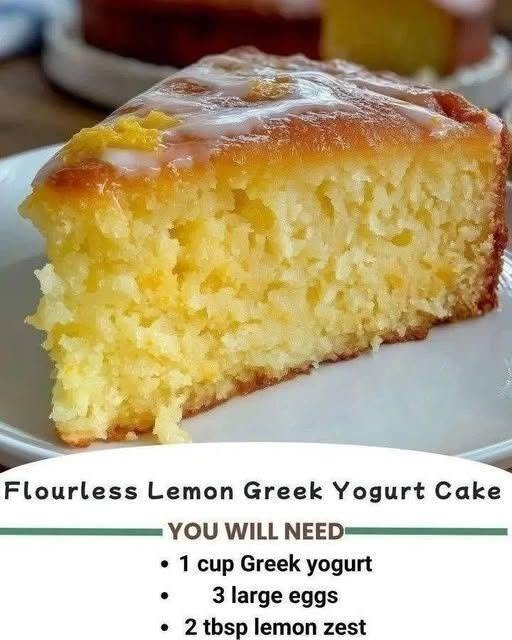
Flourless Lemon Greek Yogurt Cake
Moist, Tender, Bright & Naturally Gluten-Free
Description
Flourless Lemon Greek Yogurt Cake is a beautifully tender dessert made without traditional wheat flour. Instead, finely ground almond flour provides structure while creamy Greek yogurt keeps the cake moist, soft, and slightly tangy. Fresh lemon zest and juice give every bite a bright citrus flavor, making this cake feel refreshing rather than overly heavy.
The combination of almond flour, Greek yogurt, eggs, and lemon creates a delicate cake with lightly golden edges and a soft center. A simple lemon glaze can be drizzled over the cooled cake for an extra sweet-tart finish. Similar versions use almond flour, Greek yogurt, eggs, lemon zest, lemon juice, vanilla, and baking powder, with variations in sweetener and glaze.
This cake is perfect for breakfast, brunch, afternoon tea, family gatherings, birthdays, or a simple homemade dessert. Serve it with fresh berries, a little powdered sugar, Greek yogurt, or whipped cream for an elegant presentation.
Important: “Flourless” here means it contains no traditional wheat flour; this version uses almond flour. If you need the cake to be strictly gluten-free, check that packaged ingredients such as almond flour, baking powder, and powdered sugar are certified gluten-free.
Ingredients
For the Cake
- 1½ cups (150 g) finely ground almond flour
- 1 cup (240 g) full-fat plain Greek yogurt
- 3 large eggs, preferably room temperature
- ½–¾ cup granulated sugar, depending on desired sweetness
- 2 tablespoons finely grated lemon zest
- ¼ cup (60 ml) fresh lemon juice
- 1 teaspoon vanilla extract
- 1 teaspoon baking powder
- ¼ teaspoon fine salt
- 2 tablespoons melted unsalted butter or mild olive oil, optional
For the Lemon Glaze
- ½ cup powdered sugar
- 1–2 tablespoons fresh lemon juice
- ½ teaspoon lemon zest
Optional Garnishes
- Fresh blueberries
- Fresh raspberries
- Thin lemon slices
- Powdered sugar
- Toasted sliced almonds
- Fresh mint
- A spoonful of Greek yogurt
- Lightly whipped cream
The exact proportions vary among flourless lemon-yogurt cakes, but almond flour, Greek yogurt, eggs, fresh lemon, and baking powder are common foundations.
Instructions
1. Prepare the Oven and Pan
Preheat your oven to 350°F (175°C).
Grease an 8-inch round cake pan or springform pan. Line the bottom with parchment paper and lightly grease the parchment.
Using parchment is especially helpful because this cake has a tender texture and can be delicate while warm.
2. Prepare the Lemons
Wash and dry two fresh lemons.
Finely grate the yellow outer skin until you have about 2 tablespoons of zest. Avoid grating too deeply into the white portion underneath because the white pith can taste bitter.
Juice the lemons and measure approximately ¼ cup of fresh lemon juice.
Fresh lemon juice and zest give the cake a much brighter flavor than bottled lemon juice. The zest is particularly useful because it contributes concentrated citrus aroma.
3. Mix the Wet Ingredients
Add the Greek yogurt, eggs, sugar, lemon zest, lemon juice, and vanilla extract to a large mixing bowl.
Whisk until the mixture becomes smooth and creamy.
If you are using melted butter or olive oil, whisk it in at this stage.
Do not worry if the batter looks fairly loose. Almond flour will absorb some of the moisture as the cake bakes.
4. Combine the Dry Ingredients
In a separate bowl, whisk together:
- Almond flour
- Baking powder
- Salt
Make sure the baking powder is evenly distributed throughout the almond flour.
If your almond flour contains larger pieces or clumps, gently break them up before combining.
5. Make the Batter
Gradually add the almond-flour mixture to the wet ingredients.
Use a rubber spatula to gently fold everything together until no dry pockets remain.
Do not overmix.
Once the batter is smooth and evenly combined, stop mixing.
Overmixing isn’t necessary and can make it more difficult to maintain the cake’s delicate texture.
6. Fill the Pan
Pour the batter into the prepared cake pan.
Use a spatula to smooth the surface.
Gently tap the pan against the counter once or twice to release any large air bubbles.
Do not repeatedly bang the pan, as this can unnecessarily deflate the batter.
7. Bake
Place the pan on the center rack of the preheated oven.
Bake for approximately 35–40 minutes, depending on your oven and pan size.
The cake should develop a lightly golden top and the center should look set.
Insert a toothpick into the center. It should come out clean or with a few moist crumbs, but not wet batter.
Several versions of this cake use a baking range around 32–45 minutes at 350°F, depending on ingredient proportions and pan size.
If the top begins browning too quickly, loosely cover it with foil during the final portion of baking.
8. Cool Completely
Remove the cake from the oven and allow it to cool in the pan for approximately 15–20 minutes.
Carefully loosen the edges with a thin knife.
Transfer the cake to a cooling rack and allow it to cool completely before glazing.
This step is important because flourless cakes become firmer as they cool. Cutting the cake while it is very hot can result in a fragile or crumbly center.
How to Make the Lemon Glaze
Place powdered sugar in a small bowl.
Add 1 tablespoon of fresh lemon juice and whisk.
Add additional lemon juice a little at a time until the glaze reaches your preferred consistency.
For a thicker drizzle, use less juice.
For a thinner glaze, add a few extra drops.
Stir in the lemon zest for additional citrus flavor.
Once the cake is completely cool, drizzle the glaze over the top.
Allow it to sit for several minutes before slicing.
Servings & Recipe Details
Recipe Name: Flourless Lemon Greek Yogurt Cake
Category: Dessert
Cuisine: Mediterranean-inspired / American
Prep Time: 15–20 minutes
Bake Time: 35–40 minutes
Cooling Time: 30 minutes
Total Time: Approximately 1 hour 15 minutes
Servings: 8–10 slices
Difficulty: Easy
Best Pan: 8-inch round cake pan or springform pan
Oven Temperature: 350°F / 175°C
Why You’ll Love This Cake
Bright Lemon Flavor
Using both lemon zest and fresh lemon juice creates a more complete citrus flavor. The zest provides fragrant lemon oils, while the juice contributes the characteristic tartness.
Greek Yogurt Keeps It Moist
Greek yogurt adds moisture and a pleasant tang. It also gives the cake a soft, rich texture without requiring a large amount of butter.
Almond Flour Creates a Tender Crumb
Almond flour gives this cake its structure while adding a subtle nutty flavor.
No Traditional Wheat Flour
There is no all-purpose flour in this recipe. That makes it a convenient option for people looking for a flourless-style cake, although anyone with celiac disease or a strict gluten-free requirement should verify that all packaged ingredients are certified gluten-free.
Perfect With Coffee or Tea
The bright lemon flavor pairs beautifully with coffee, black tea, green tea, or herbal tea.
Important Tips for the Best Results
1. Use Thick Greek Yogurt
Full-fat Greek yogurt gives the cake a particularly rich and moist texture. Very thin yogurt can introduce additional moisture and change the consistency of the batter.
2. Choose Fine Almond Flour
Finely ground almond flour creates a more delicate crumb.
Avoid using coarse almond meal if you want a smooth cake texture.
3. Don’t Pack Almond Flour
If measuring by cups, spoon almond flour into the measuring cup and level it rather than compressing it tightly.
For the most consistent results, weighing it in grams is even better.
4. Use Fresh Lemons
Fresh zest makes a noticeable difference.
Always zest the lemon before squeezing it because whole lemons are much easier to zest.
5. Don’t Overbake
The cake should be set but still moist.
A toothpick with a few moist crumbs is ideal. Completely dry crumbs may indicate that the cake has baked longer than necessary.
6. Let It Cool
Don’t rush the cooling process.
The cake becomes more stable as it cools, making it easier to remove from the pan and slice neatly.
7. Add the Glaze Only When Cool
If the cake is still warm, the glaze can melt and disappear into the surface instead of creating a beautiful drizzle.
Serving Ideas
For a beautiful dessert plate, place one slice of lemon cake in the center and garnish with:
- Fresh blueberries
- Raspberries
- Lemon zest
- Powdered sugar
- Toasted almonds
- A small spoonful of Greek yogurt
- Fresh mint
For brunch, serve it alongside fresh fruit and coffee.
For dessert, add a little whipped cream or vanilla yogurt.
For an elegant dinner presentation, arrange thin lemon slices around the plate and add a few berries.
Delicious Variations
Blueberry Lemon Cake
Fold ½ cup fresh blueberries gently into the batter before baking.
Blueberries add natural sweetness and beautiful color.
Raspberry Lemon Cake
Add fresh raspberries to the batter or serve them alongside each slice.
The tart raspberry flavor pairs exceptionally well with lemon.
Honey Lemon Cake
Replace part or all of the granulated sugar with honey.
Because honey changes the liquid content, the texture may be slightly different.
Lemon Almond Cake
Add ½ teaspoon almond extract along with the vanilla for a stronger almond flavor.
Coconut Lemon Cake
Add a small amount of unsweetened shredded coconut to the batter for a tropical twist.
Lemon Poppy Seed Cake
Add 1–2 tablespoons of poppy seeds to the batter.
The tiny seeds provide a pleasant texture and classic lemon-poppy-seed flavor.
Storage
Once completely cooled, store the cake in an airtight container.
At room temperature, it can be kept for approximately 1–2 days depending on your kitchen temperature and humidity.
For longer storage, refrigerate it in an airtight container for up to approximately 5 days. Several similar recipes recommend refrigerated storage for this timeframe.
Allow refrigerated slices to sit at room temperature for a short time before serving for a softer texture.
Can You Freeze It?
Yes.
Cut the cooled cake into individual portions and wrap each piece tightly in plastic wrap or place slices into a freezer-safe airtight container.
Freeze for up to approximately 2 months.
Thaw overnight in the refrigerator and bring to room temperature before serving.
For the best appearance, add fresh glaze after thawing rather than freezing the cake with a heavy glaze.
Approximate Nutritional Information
Nutrition varies considerably depending on the amount of sugar, almond flour, yogurt, oil, and glaze used.
Approximate per slice, assuming 10 servings:
- Calories: 200–280
- Protein: 7–9 g
- Carbohydrates: 15–25 g
- Fat: 13–18 g
- Fiber: 2–3 g
- Sugar: 10–17 g
- Sodium: Approximately 80–150 mg
Some published versions report around 190 calories per slice, while richer versions with more almond flour and sugar can exceed 300 calories.
For the most accurate nutritional information, calculate the recipe using the exact brands and quantities you use.
Potential Benefits
This cake can offer some nutritional advantages compared with a traditional cake, although it is still a dessert and should be enjoyed as part of a balanced diet.
Greek Yogurt
Greek yogurt contributes protein and calcium, depending on the variety used.
Almond Flour
Almond flour contributes protein, fiber, vitamin E, and unsaturated fats. It also gives the cake a naturally rich texture.
Fresh Lemon
Lemons provide vitamin C and add strong flavor without requiring large amounts of ingredients.
No Wheat Flour
Replacing traditional wheat flour with almond flour makes this recipe suitable for a flourless-style baking approach.
Satisfying Dessert
The combination of Greek yogurt, eggs, and almond flour creates a richer, more substantial texture than a very light sponge cake.
However: this should not be considered a “weight-loss cake,” “detox cake,” or medical food. Almond flour, sugar, and other ingredients still contribute calories.
Frequently Asked Questions
1. Is this cake completely flour-free?
It contains no traditional wheat flour, but it does contain almond flour. Therefore, “flourless” means flourless in the traditional wheat-flour sense.
2. Is it gluten-free?
The ingredients themselves can be gluten-free, but if you have celiac disease or a serious gluten sensitivity, check the labels of almond flour, baking powder, powdered sugar, and other packaged ingredients for gluten-free certification.
3. Can I use regular yogurt?
Greek yogurt is preferred because it is thicker. Regular yogurt contains more liquid and may produce a softer or wetter cake.
4. Can I substitute coconut flour?
Not directly. Coconut flour absorbs significantly more liquid than almond flour, so replacing almond flour cup-for-cup would change the recipe dramatically.
5. Can I use almond meal?
You can, but the cake may have a more rustic texture. Finely ground almond flour gives a smoother crumb.
6. Can I reduce the sugar?
Yes. You can reduce the sugar moderately, but remember that sugar contributes sweetness as well as texture and moisture.
7. Can I skip the lemon glaze?
Absolutely.
The cake already has plenty of lemon flavor. The glaze simply adds additional sweetness and a beautiful glossy finish.
8. Why did my cake sink slightly?
A slight dip can happen with moist, flourless cakes. Make sure the center is adequately baked and allow the cake to cool gradually.
9. Why is my cake dense?
Possible reasons include too much almond flour, excess moisture from thin yogurt, underbaking, or inaccurate measurements.
Use finely ground almond flour, thick Greek yogurt, and bake until the center is properly set.
10. Can I make it ahead?
Yes. In fact, the lemon flavor can become even more pronounced after resting. Store it covered and refrigerate if keeping it for several days.
11. Can I make this dairy-free?
You can experiment with a thick dairy-free yogurt, but the texture may differ from the original recipe. A thick, unsweetened dairy-free yogurt would be the closest option.
12. What can I serve with it?
Fresh berries, Greek yogurt, whipped cream, powdered sugar, toasted almonds, or a cup of tea are all excellent choices.