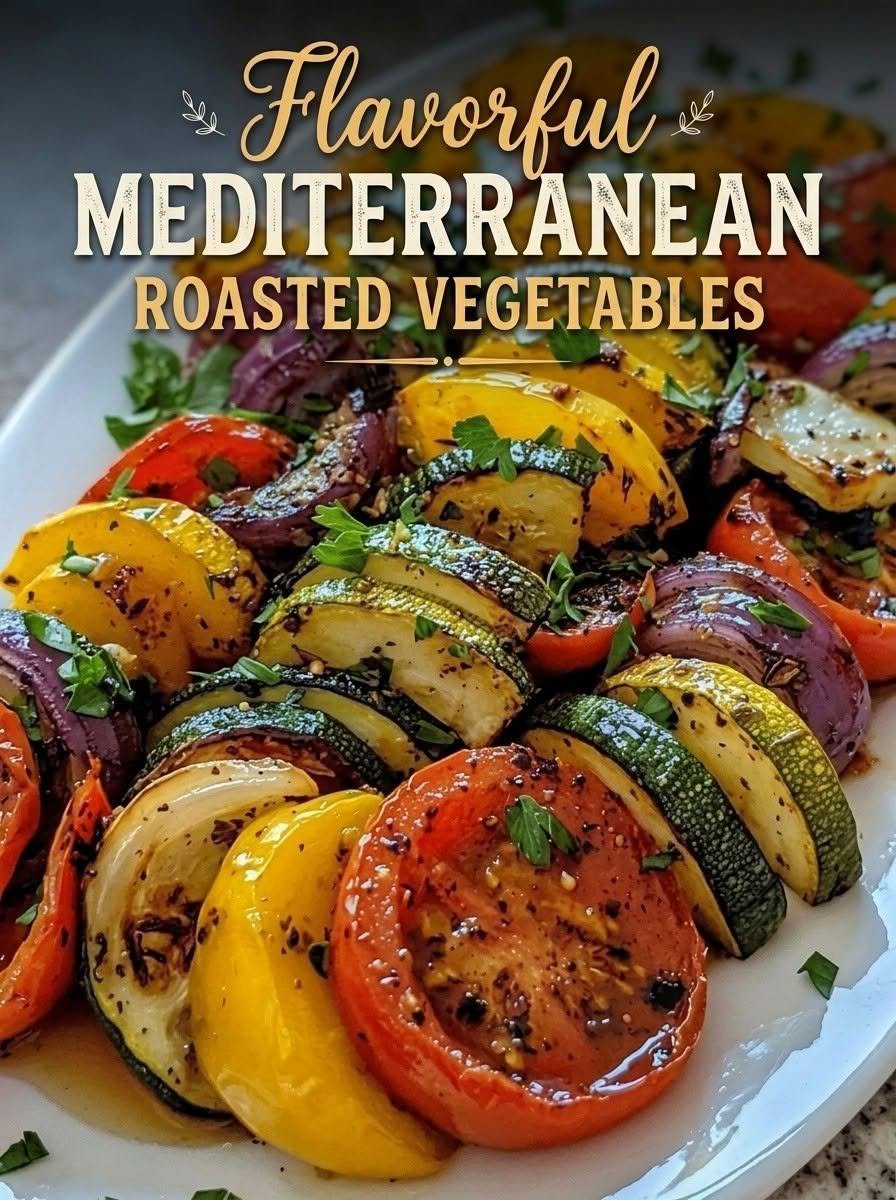
Flavorful Mediterranean Roasted Vegetables
1. Recipe Description
Flavorful Mediterranean Roasted Vegetables are a colorful, delicious, and healthy side dish made with fresh zucchini, bell peppers, red onions, cherry tomatoes, eggplant, and garlic, all tossed in extra-virgin olive oil and seasoned with aromatic Mediterranean herbs. Roasting brings out the natural sweetness of the vegetables while creating beautifully caramelized edges and tender centers.
This easy oven-roasted vegetable recipe is perfect for busy weeknight dinners, weekend family meals, meal preparation, or special gatherings. The combination of oregano, thyme, paprika, garlic, and lemon creates a wonderful balance of savory, smoky, and fresh flavors.
These roasted vegetables are naturally vegetarian, vegan, and gluten-free. They pair beautifully with grilled chicken, baked fish, roasted salmon, rice bowls, couscous, pasta, or warm pita bread. You can also serve them as a main meal with chickpeas, white beans, or crumbled feta cheese.
The best part is that this recipe requires minimal preparation. Simply chop the vegetables, season them, spread them on a baking sheet, and let the oven do the work. The result is a satisfying Mediterranean-inspired dish packed with color, flavor, and wholesome ingredients.
2. Recipe Information
-
Preparation time: 20 minutes
-
Cooking time: 35–45 minutes
-
Total time: Approximately 55–65 minutes
-
Servings: 6 people
-
Cuisine: Mediterranean-inspired
-
Course: Side dish or vegetarian main
-
Cooking method: Oven roasting
-
Difficulty: Easy
-
Dietary options: Vegan, vegetarian, and gluten-free when prepared with suitable ingredients
3. Ingredients
For the roasted vegetables
-
2 medium zucchini, sliced into thick half-moons
-
1 medium eggplant, cut into bite-sized cubes
-
2 red bell peppers, cut into chunks
-
1 yellow bell pepper, cut into chunks
-
1 large red onion, cut into wedges
-
2 cups cherry tomatoes
-
1 medium red onion, if you prefer extra onion, cut into wedges
-
4 garlic cloves, finely minced
-
3 tablespoons extra-virgin olive oil
-
1 teaspoon dried oregano
-
1 teaspoon dried thyme
-
1 teaspoon paprika
-
½ teaspoon garlic powder
-
½ teaspoon onion powder
-
¾ teaspoon salt, or to taste
-
½ teaspoon freshly ground black pepper
-
¼ teaspoon red pepper flakes, optional
-
1 tablespoon fresh lemon juice
-
1 teaspoon lemon zest
-
2 tablespoons fresh parsley, chopped
Optional ingredients
-
½ cup Kalamata olives, pitted
-
½ cup crumbled feta cheese
-
1 tablespoon balsamic vinegar
-
1 tablespoon fresh basil, chopped
-
1 can chickpeas, drained and rinsed
-
2 tablespoons grated Parmesan cheese
-
1 tablespoon toasted pine nuts
Note: The ingredient list includes one large red onion as the standard amount. Use only one unless you particularly enjoy extra onion.
4. Choosing the Best Vegetables
The quality and freshness of your vegetables make a significant difference to the final dish.
Zucchini: Choose firm zucchini with smooth, shiny skin. It becomes tender and lightly caramelized during roasting.
Eggplant: Look for eggplant with glossy skin and a firm texture. It absorbs olive oil and seasonings well, developing a soft, creamy interior.
Bell peppers: Red and yellow peppers add sweetness, while green peppers provide a slightly more earthy flavor. Using several colors makes the finished dish especially attractive.
Cherry tomatoes: These become juicy and sweet when roasted, creating a natural sauce that coats the other vegetables.
Red onion: Red onion adds a mild sweetness and develops delicious caramelized edges as it cooks.
Garlic: Fresh garlic provides a distinctive Mediterranean aroma. Minced garlic can brown quickly, so toss it evenly with the vegetables and avoid exposing large pieces directly to excessive heat.
You can also include mushrooms, asparagus, cauliflower, broccoli, or carrots. Keep in mind that firmer vegetables may need a head start in the oven.
5. Step-by-Step Instructions
Step 1: Preheat the oven
Preheat your oven to 425°F (220°C). Line a large rimmed baking sheet with parchment paper if desired.
A hot oven is essential for roasting vegetables properly. The high temperature helps evaporate surface moisture, producing golden edges rather than soft, steamed vegetables.
If your baking sheet is small, prepare two trays. Overcrowding vegetables causes them to release moisture and prevents proper caramelization.
Step 2: Wash and prepare the vegetables
Wash all vegetables under cool running water and dry them thoroughly with a clean kitchen towel.
Cut the zucchini into thick half-moons, the eggplant into bite-sized cubes, and the bell peppers into similarly sized chunks. Cut the red onion into wedges and leave the cherry tomatoes whole.
Try to keep the pieces reasonably uniform so they cook at a similar rate.
If the zucchini or eggplant is particularly watery, drying the cut pieces carefully helps improve the roasted texture.
Place all the prepared vegetables in a large mixing bowl.
Step 3: Prepare the Mediterranean seasoning
In a small bowl, combine the olive oil, dried oregano, dried thyme, paprika, garlic powder, onion powder, salt, black pepper, and optional red pepper flakes.
Stir well to distribute the seasonings evenly through the oil.
Pour the mixture over the vegetables. Add the minced garlic and toss thoroughly with a large spoon or clean hands until every piece is lightly coated.
The olive oil helps the vegetables brown while carrying the flavor of the herbs and spices.
Avoid adding too much oil. A light, even coating is sufficient.
Step 4: Arrange the vegetables on the baking sheet
Spread the seasoned vegetables in a single layer on the prepared baking sheet.
Keep some space between the pieces wherever possible. The vegetables should not be piled on top of one another.
Arrange the eggplant and peppers across the tray, distribute the zucchini and onion wedges, and leave the cherry tomatoes scattered throughout.
If you have a large quantity of vegetables, divide them between two baking sheets rather than crowding one.
This simple step is one of the most important secrets to achieving flavorful roasted vegetables with golden edges.
Step 5: Begin roasting
Place the baking sheet in the preheated oven and roast for approximately 20 minutes.
During this stage, the vegetables begin to soften, and their natural sugars develop a deeper flavor.
The zucchini becomes tender, the peppers begin to brown, and the eggplant absorbs the seasoning while developing a creamy interior.
After 20 minutes, remove the tray carefully and turn the vegetables with a spatula.
Rotate the baking sheet if your oven has hot spots.
Step 6: Continue roasting until golden
Return the baking sheet to the oven and roast for another 15–25 minutes.
The exact cooking time depends on the size of the vegetable pieces and your oven.
Look for softened vegetables with lightly browned edges, tender eggplant, and tomatoes that have started to blister and release their juices.
If you prefer firmer vegetables, check them after an additional 10–15 minutes. If you enjoy deeper caramelization, allow them to roast a little longer while watching carefully to prevent burning.
The vegetables should be tender but not completely mushy.
Step 7: Add lemon and fresh herbs
Remove the tray from the oven when the vegetables are cooked to your liking.
Drizzle the fresh lemon juice over the warm vegetables and sprinkle with lemon zest and chopped parsley.
Toss gently to distribute the fresh flavors without crushing the softened tomatoes.
Lemon juice adds brightness and balances the sweetness created during roasting. Fresh parsley brings a clean, herbal finish.
For extra Mediterranean character, add fresh basil or a small handful of pitted Kalamata olives.
Step 8: Add optional toppings
If you enjoy a creamy, salty contrast, sprinkle crumbled feta cheese over the warm vegetables.
For a dairy-free version, use toasted pine nuts or a handful of chopped fresh herbs instead.
A small drizzle of balsamic vinegar also works well, especially if you prefer a slightly sweet and tangy finish.
If adding Parmesan, use it sparingly so that it enhances rather than overwhelms the natural vegetable flavors.
Step 9: Serve immediately
Transfer the roasted vegetables to a serving platter or serve directly from the baking sheet.
Arrange the colorful peppers, zucchini, eggplant, tomatoes, and onion wedges evenly. Spoon the flavorful juices from the tray over the vegetables.
Finish with another small drizzle of olive oil and fresh parsley if desired.
Serve while warm for the best texture and flavor.
6. Tips for Perfect Mediterranean Roasted Vegetables
Use a high oven temperature. Roasting at 425°F (220°C) encourages browning and caramelization.
Dry vegetables thoroughly. Excess water can prevent the vegetables from browning properly.
Avoid overcrowding. Use two baking sheets if necessary to ensure that the vegetables roast instead of steam.
Cut vegetables evenly. Similar-sized pieces cook more consistently.
Add delicate ingredients at the right time. Cherry tomatoes can roast with the other vegetables, but fresh herbs and lemon juice are best added at the end.
Turn the vegetables once. Turning them halfway through cooking encourages more even browning.
Adjust the seasoning. Add salt gradually, especially if you plan to use feta, olives, or Parmesan.
Use good olive oil. Extra-virgin olive oil adds rich flavor and complements the Mediterranean herbs.
Choose vegetables according to the season. Summer zucchini and tomatoes work beautifully, while cauliflower, carrots, and Brussels sprouts are excellent alternatives during cooler months.
7. Delicious Recipe Variations
Mediterranean roasted vegetables with chickpeas
Add one drained and rinsed can of chickpeas to the vegetables before roasting. Toss everything with the olive oil and seasonings.
The chickpeas provide additional plant-based protein and fiber, making the dish more substantial as a vegetarian main course.
Roasted vegetables with feta
Add crumbled feta after the vegetables finish roasting. Its salty, creamy flavor complements the sweet tomatoes and caramelized peppers.
For a warmer cheese topping, add the feta during the final 5 minutes of cooking.
Garlic and herb roasted vegetables
Increase the oregano and thyme slightly, then finish with freshly chopped parsley and basil.
For the best garlic flavor, avoid letting minced garlic burn on the baking sheet.
Spicy Mediterranean vegetables
Add extra red pepper flakes or a small amount of cayenne pepper to the olive oil seasoning.
This version pairs especially well with grilled chicken, fish, couscous, or rice bowls.
Balsamic roasted vegetables
Drizzle one tablespoon of balsamic vinegar over the vegetables during the final 5–10 minutes of roasting.
The vinegar adds sweetness and acidity, making the vegetables especially delicious with roasted meats or lentils.
Lemon herb vegetable bowls
Serve the roasted vegetables over brown rice, quinoa, or couscous. Add chickpeas, fresh parsley, and a lemon-tahini dressing for a satisfying bowl.
8. Serving Suggestions
Flavorful Mediterranean Roasted Vegetables are versatile enough to accompany many meals.
-
With grilled chicken: Serve alongside lemon-herb chicken breast or grilled chicken thighs.
-
With fish: Pair with baked cod, salmon, or sea bass.
-
With grains: Spoon over brown rice, quinoa, or couscous.
-
With pasta: Toss the vegetables with cooked fusilli, penne, olive oil, and Parmesan or feta.
-
With pita bread: Serve with warm pita, hummus, and a cucumber salad.
-
As a vegetarian meal: Combine with chickpeas or white beans and finish with a lemon dressing.
-
As a salad topping: Allow the vegetables to cool slightly and add them to leafy greens with a light vinaigrette.
For a Mediterranean-inspired platter, arrange the vegetables alongside hummus, olives, whole-grain pita, and a small bowl of yogurt sauce.
9. Storage and Reheating
Refrigeration
Allow the vegetables to cool slightly before placing them in an airtight container. Refrigerate within two hours of cooking and consume within 3–4 days.
Reheating in the oven
Spread the vegetables on a baking sheet and heat at 375°F (190°C) for approximately 8–12 minutes, or until thoroughly warmed.
The oven helps restore some of the roasted texture.
Reheating in a skillet
Heat a nonstick skillet over medium heat with a small drizzle of olive oil. Add the vegetables and cook for 4–6 minutes, stirring occasionally.
This method works well for small portions.
Microwave reheating
Place the vegetables in a microwave-safe dish and heat in short intervals until warm. They may become softer than when freshly roasted.
Freezing
Roasted vegetables can be frozen in airtight containers for approximately 2–3 months for best quality. However, zucchini, eggplant, and tomatoes may become softer after thawing.
For better texture, use thawed vegetables in soups, pasta sauces, grain bowls, or casseroles.
10. Nutritional Information
The following values are estimates for one serving, assuming six servings and the basic recipe with three tablespoons of olive oil, without optional cheese or chickpeas.
| Nutrient | Approximate amount per serving |
|---|---|
| Calories | 140–180 kcal |
| Protein | 3–4 g |
| Carbohydrates | 15–20 g |
| Total fat | 8–10 g |
| Saturated fat | 1–2 g |
| Fiber | 5–7 g |
| Sugar | 7–10 g |
| Sodium | 300–450 mg |
Actual nutrition will vary according to the size of the vegetables, amount of oil, salt, and optional toppings.
Adding feta, Parmesan, or chickpeas will change the nutritional values.
11. Health Benefits
Rich in vitamins and minerals
Bell peppers and tomatoes provide vitamin C, while zucchini and eggplant contribute a range of vitamins, minerals, and plant compounds.
Eating a variety of colorful vegetables helps supply a broad range of nutrients.
Provides dietary fiber
Eggplant, zucchini, peppers, onions, and tomatoes contribute fiber, which supports normal digestion and can help meals feel more satisfying.
Contains beneficial plant compounds
Tomatoes contain lycopene, while colorful peppers provide carotenoids and other antioxidant compounds. The amounts available to the body vary with preparation and the overall meal.
Includes unsaturated fats
Extra-virgin olive oil is rich in monounsaturated fats. Using moderate amounts of olive oil is consistent with a Mediterranean-style eating pattern.
Supports balanced eating
These vegetables can help add variety, color, and nutrients to everyday meals. Pairing them with beans, lentils, fish, chicken, or another protein source creates a more complete meal.
Although this recipe can fit into many healthy eating patterns, no single food guarantees weight loss or prevents illness. Overall dietary habits and portion sizes matter most.
12. Frequently Asked Questions
Q1. Can I use frozen vegetables?
Yes, but frozen vegetables generally release more moisture. Roast them directly from frozen when appropriate, spread them out well, and expect a softer texture. Fresh vegetables usually give the best caramelization.
Q2. Do I need to peel the eggplant?
No. The skin helps the eggplant maintain its shape and contains fiber. Simply wash it and remove the stem before cutting.
Q3. Why are my vegetables soggy?
The most common reasons are overcrowding, excess moisture, too much oil, or an oven temperature that is too low. Dry the vegetables well, spread them in a single layer, and roast at a sufficiently high temperature.
Q4. Can I prepare the vegetables ahead of time?
Yes. Wash and chop the vegetables up to a day ahead and refrigerate them in covered containers. For the freshest roasted texture, toss them with the seasoning and roast shortly before serving.
Q5. Can I make this recipe without olive oil?
Yes. You can use another suitable cooking oil, although the flavor will differ. A small amount of oil generally helps with browning and seasoning distribution.
Q6. Is this recipe vegan?
Yes. The basic recipe is vegan. Simply omit feta and Parmesan, and check any packaged seasonings or optional ingredients to ensure they are suitable.
Q7. Can I add potatoes?
Absolutely. Cut the potatoes into small, evenly sized pieces and roast them for about 15–20 minutes before adding the quicker-cooking vegetables.
Q8. What herbs work best?
Oregano and thyme are excellent dried herbs for roasting. Fresh parsley and basil are ideal finishing herbs. Rosemary also works well with potatoes, eggplant, and peppers.
Q9. How can I make this a complete meal?
Add chickpeas, white beans, or lentils for a plant-based meal, or serve the vegetables with chicken, fish, or another protein source. Grain bowls are another easy option.
Q10. Can I serve the vegetables cold?
Yes. Allow them to cool and toss them with fresh lemon juice and herbs. They make a delicious addition to pasta salads, grain salads, and Mediterranean lunch bowls.