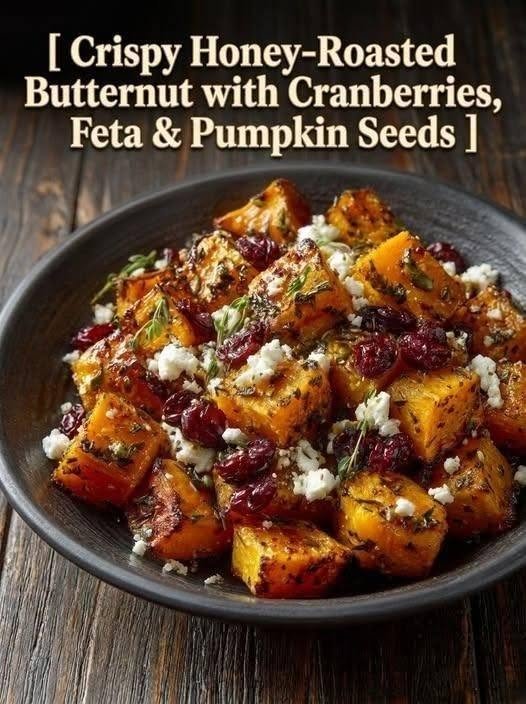
Crispy Honey-Roasted Butternut with Cranberries, Feta & Pumpkin Seeds
Full Recipe
Description
Crispy Honey-Roasted Butternut with Cranberries, Feta & Pumpkin Seeds is a colorful, cozy, and flavorful side dish that combines sweet roasted butternut squash with tangy feta, tart dried cranberries, crunchy pumpkin seeds, and a glossy honey glaze.
The butternut squash becomes beautifully caramelized around the edges while staying tender and creamy inside. Honey enhances the natural sweetness of the squash, while savory spices and olive oil keep the dish balanced rather than overly sweet. Crumbled feta adds a salty, creamy contrast, dried cranberries provide little bursts of tartness, and toasted pumpkin seeds finish everything with a satisfying crunch.
This recipe is ideal for fall and winter dinners, holiday tables, Thanksgiving-inspired menus, Mediterranean-style meals, or simply as a delicious vegetable side for an ordinary weeknight.
It is also incredibly easy to customize. You can add fresh herbs, walnuts, pecans, goat cheese, chili flakes, or a splash of lemon juice depending on the flavor profile you prefer.
Recipe Information
Recipe Name: Crispy Honey-Roasted Butternut with Cranberries, Feta & Pumpkin Seeds
Category: Side Dish
Cuisine: Mediterranean-inspired / American
Preparation Time: 15 minutes
Roasting Time: 30–40 minutes
Total Time: Approximately 50–55 minutes
Servings: 6
Difficulty: Easy
Best Served: Warm or slightly warm
Ingredients
For the Roasted Butternut Squash
- 1 large butternut squash, approximately 2½–3 pounds
- 2 tablespoons extra-virgin olive oil
- 2 tablespoons honey
- 1 teaspoon garlic powder
- 1 teaspoon smoked paprika
- ½ teaspoon ground cinnamon
- ½ teaspoon dried thyme
- ½ teaspoon salt
- ¼ teaspoon freshly ground black pepper
- ¼ teaspoon chili flakes, optional
For the Toppings
- ½ cup dried cranberries
- ¾ cup crumbled feta cheese
- ⅓ cup pumpkin seeds
- 2 tablespoons chopped fresh parsley
- 1 tablespoon fresh thyme leaves, optional
Optional Finishing Glaze
- 1 tablespoon honey
- 1 teaspoon lemon juice
- 1 teaspoon olive oil
Step-by-Step Instructions
Step 1: Prepare the Oven
Preheat your oven to 425°F (220°C).
A hot oven is important because the squash needs enough heat to caramelize instead of simply steaming.
For particularly crispy edges, place your baking sheet in the oven while it preheats.
Step 2: Prepare the Butternut Squash
Peel the butternut squash using a sturdy vegetable peeler.
Cut it in half lengthwise and scoop out the seeds and stringy interior.
Cut the squash into approximately 1-inch cubes.
Try to keep the pieces relatively similar in size.
Uniform pieces cook at approximately the same rate, preventing some pieces from becoming mushy while others remain undercooked.
Time-Saving Option
You can purchase pre-cut butternut squash from the grocery store.
Just make sure the pieces are relatively dry before seasoning.
Step 3: Make the Honey Seasoning
In a small bowl, whisk together:
- Olive oil
- Honey
- Garlic powder
- Smoked paprika
- Cinnamon
- Thyme
- Salt
- Black pepper
- Chili flakes, if using
The combination of honey and spices creates a flavorful coating that caramelizes beautifully in the oven.
Step 4: Coat the Squash
Place the cubed butternut squash into a large mixing bowl.
Pour the honey mixture over the squash.
Toss thoroughly until every piece is lightly coated.
Avoid adding too much oil or honey because excessive moisture can prevent the squash from becoming crispy.
Step 5: Arrange on the Baking Sheet
Spread the squash pieces across a large baking sheet.
Arrange them in one single layer.
Leave a little space between the pieces whenever possible.
This is one of the most important steps for achieving caramelized edges.
If the squash is packed tightly together, moisture gets trapped between the pieces and the squash will steam instead of roast.
Step 6: Roast
Place the baking sheet in the preheated oven.
Roast for approximately 30–40 minutes.
After about 20 minutes, carefully flip or turn the squash pieces.
Continue roasting until:
- The centers are fork-tender.
- The edges are golden brown.
- Some pieces have deep caramelized spots.
- The surface looks slightly crisp.
Cooking time will vary depending on the size of your cubes.
Step 7: Toast the Pumpkin Seeds
While the squash is roasting, prepare the pumpkin seeds.
Place them in a dry skillet over medium heat.
Toast for approximately 3–5 minutes, stirring frequently.
They should become fragrant and lightly golden.
Watch carefully because pumpkin seeds can burn quickly.
Remove from the heat and set aside.
You can also roast the pumpkin seeds in the oven for a few minutes, but skillet-toasting gives you more control.
Step 8: Add the Cranberries
Once the squash has finished roasting, remove it from the oven.
Immediately sprinkle the dried cranberries over the warm squash.
The heat will slightly soften the cranberries, making them pleasantly chewy.
If your cranberries are very dry, you can soak them in warm water for approximately 5 minutes, then drain and pat them dry before adding them.
Step 9: Add the Feta
Sprinkle crumbled feta generously over the roasted squash.
Don’t mix too aggressively.
You want visible pieces of white feta throughout the dish.
The salty feta creates an excellent contrast with the naturally sweet squash and honey.
Step 10: Add Pumpkin Seeds
Scatter the toasted pumpkin seeds over everything.
The seeds add a delicious crunch and make the dish more visually appealing.
Finish with chopped fresh parsley and thyme.
Step 11: Add the Finishing Glaze
For an extra-bright finish, whisk together:
- 1 tablespoon honey
- 1 teaspoon lemon juice
- 1 teaspoon olive oil
Drizzle a small amount over the finished squash.
You don’t need much.
The purpose is to add a fresh final layer of flavor rather than make the dish overly sweet.
Step 12: Serve
Serve the dish warm or slightly warm.
It works beautifully as a side dish alongside roasted chicken, grilled fish, turkey, steak, or a vegetarian main course.
For a Mediterranean-inspired presentation, transfer the squash to a large serving platter and garnish with additional feta, parsley, pumpkin seeds, and a few dried cranberries.
Why You’ll Love This Recipe
Crispy and Caramelized
Roasting at high heat gives the squash delicious browned edges.
Sweet and Savory
Honey and squash provide natural sweetness while feta and spices add savory depth.
Great Texture
The dish combines tender squash, creamy feta, chewy cranberries, and crunchy pumpkin seeds.
Beautiful Presentation
The orange squash, white feta, red cranberries, and green herbs create a colorful holiday-worthy dish.
Easy to Prepare
Most of the cooking is hands-off while the squash roasts.
Versatile
It can be served with everyday dinners or special holiday meals.
Important Recipe Notes
Choose a Firm Squash
Select a butternut squash that feels firm and heavy for its size.
Cut Evenly
Consistent cubes roast more evenly.
Don’t Overcrowd the Pan
Give the squash room to brown.
Use a Large Baking Sheet
A larger surface area makes it easier to spread the squash into a single layer.
Watch the Honey
Honey caramelizes quickly. If your squash begins browning too rapidly before becoming tender, reduce the oven temperature slightly or loosely cover it near the end.
Add Feta After Roasting
Adding feta at the end preserves its fresh, creamy texture.
Toast Pumpkin Seeds Separately
This keeps them crunchy rather than soft.
Tips for Extra Crispy Butternut Squash
1. Dry the Squash
If you wash freshly cut squash, pat it very dry before seasoning.
2. Don’t Use Too Much Honey
A heavy coating can make the surface sticky rather than crisp.
3. Roast at High Heat
A hot oven encourages browning and caramelization.
4. Don’t Stir Constantly
Let the squash remain against the hot baking surface long enough to develop color.
5. Use a Metal Baking Sheet
Metal conducts heat effectively and is excellent for roasting vegetables.
6. Roast in Batches if Necessary
If you have a huge amount of squash, use two baking sheets rather than overcrowding one.
How to Customize the Flavor
Make It Spicy
Add ½–1 teaspoon chili flakes or a pinch of cayenne.
Make It More Mediterranean
Add oregano, parsley, lemon zest, and extra-virgin olive oil.
Make It More Festive
Add toasted pecans or walnuts along with the cranberries.
Make It Creamier
Replace half of the feta with soft goat cheese.
Make It Citrus-Forward
Add orange zest and a small splash of fresh orange juice.
Make It More Savory
Reduce the honey slightly and add minced garlic and rosemary.
Serving Suggestions
This roasted butternut dish pairs especially well with:
- Herb-roasted chicken
- Grilled chicken breast
- Roasted turkey
- Baked salmon
- Lemon garlic fish
- Grilled steak
- Lentil patties
- Chickpea bowls
- Quinoa
- Couscous
- Orzo
- Wild rice
- Green salads
For a complete vegetarian meal, serve it over quinoa or farro with chickpeas, greens, feta, and a lemon dressing.
Perfect Holiday Side Dish
This recipe is particularly beautiful on a holiday table.
Instead of serving plain roasted squash, the combination of honey, cranberries, feta, and pumpkin seeds creates multiple layers of flavor and texture.
It can be prepared alongside turkey, roasted chicken, mashed potatoes, green beans, or stuffing.
For entertaining, transfer it to a large platter and garnish immediately before serving.
Make It a Mediterranean Bowl
Turn leftovers into a complete lunch bowl.
Add:
- Roasted butternut squash
- Chickpeas
- Baby spinach
- Cucumber
- Cherry tomatoes
- Feta
- Pumpkin seeds
Finish with lemon juice and olive oil.
You can also add cooked quinoa, couscous, or brown rice to make the bowl more filling.
Cheese Substitutions
If you don’t have feta, try:
Goat Cheese
Creamier and slightly tangier.
Ricotta Salata
Firm and salty with a mild flavor.
Parmesan
Adds a nutty savory note.
Blue Cheese
For a stronger flavor.
Cotija
Works well if you want a salty, crumbly texture.
Nut and Seed Alternatives
Pumpkin seeds can be replaced with:
- Chopped walnuts
- Pecans
- Almonds
- Sunflower seeds
- Hazelnuts
- Pistachios
Toast whichever option you choose before serving for the best flavor.
Cranberry Alternatives
If you don’t have dried cranberries, try:
- Dried cherries
- Golden raisins
- Raisins
- Chopped dates
- Dried apricots
Each option changes the flavor slightly but works beautifully with roasted squash.
Storage Instructions
Allow leftovers to cool before transferring them to an airtight container.
Refrigerate for approximately 3–4 days.
Keep the pumpkin seeds separate if possible so they remain crunchy.
The feta can remain mixed into the squash, although adding fresh feta after reheating gives the best texture.
Reheating Instructions
For the best texture, reheat the squash in an oven or air fryer.
Oven
Heat at approximately 400°F (200°C) for 8–12 minutes.
Air Fryer
Heat at approximately 375°F (190°C) for 4–7 minutes.
Add fresh pumpkin seeds and feta after reheating.
Avoid microwaving if you want to preserve the crispy edges.
Can You Freeze It?
Roasted butternut squash can be frozen, although the texture may become softer after thawing.
For best results, freeze the roasted squash separately without the feta, cranberries, and pumpkin seeds.
When ready to serve, reheat the squash in the oven and add fresh toppings.
Approximate Nutritional Information
Per serving, based on 6 servings:
- Calories: Approximately 280–330 kcal
- Protein: 6–7 g
- Carbohydrates: 40–45 g
- Fat: 12–15 g
- Fiber: 6–7 g
- Sugar: 17–21 g
- Sodium: Approximately 350–500 mg
- Calcium: Approximately 120–160 mg
These values are estimates and will vary depending on the size of the squash, amount of honey, feta, pumpkin seeds, and specific brands used.
Potential Benefits
Butternut Squash
Butternut squash provides dietary fiber and naturally occurring carotenoids, as well as several vitamins and minerals.
Pumpkin Seeds
Pumpkin seeds contribute protein, healthy fats, magnesium, zinc, and other nutrients.
Feta
Feta contributes protein and calcium while providing a salty flavor that allows you to use a relatively small amount for a noticeable taste.
Cranberries
Dried cranberries add fruit flavor and carbohydrates. Keep in mind that many commercial dried cranberries contain added sugar.
Olive Oil
Extra-virgin olive oil provides monounsaturated fat and plant compounds.
Herbs and Spices
Parsley, thyme, paprika, cinnamon, and garlic powder provide flavor without requiring large quantities of additional ingredients.
For a balanced meal, pair this dish with a protein source and additional vegetables.
Frequently Asked Questions
1. Can I use frozen butternut squash?
Yes. Frozen squash works, although it may not become quite as crispy as fresh squash because of its higher moisture content.
Roast it from frozen and avoid overcrowding the baking sheet.
2. Can I prepare the squash ahead of time?
Yes. You can peel and cube the squash up to a day ahead and store it covered in the refrigerator.
3. Can I use maple syrup instead of honey?
Absolutely. Maple syrup makes an excellent substitute and gives the dish a slightly deeper flavor.
4. Is this recipe vegetarian?
Yes, provided the feta you use is suitable for your dietary requirements.
5. Can I make it vegan?
Yes. Replace honey with maple syrup and use a plant-based feta alternative.
6. Can I use pre-cut squash?
Definitely. Pre-cut squash is a convenient time-saving option.
7. Why did my squash become soggy?
The most common causes are overcrowding, excessive moisture, or too much oil.
8. Can I add onions?
Yes. Red onion or shallots are excellent additions.
9. Can I add garlic?
Absolutely. Fresh minced garlic can be added, but watch it carefully because garlic can brown quickly at high temperatures.
10. Can I use goat cheese instead of feta?
Yes. Goat cheese creates a creamier and slightly tangier result.
11. Can I make this less sweet?
Yes. Reduce the honey to 1 tablespoon and let the natural sweetness of the squash shine.
12. Can children eat this?
Yes, provided the ingredients fit their dietary needs. Omit chili flakes if you prefer a mild version.
13. Can I serve it cold?
Yes. It can be served warm, room temperature, or chilled and makes a delicious salad topping.
14. What herbs work best?
Parsley, thyme, rosemary, and sage all pair beautifully with butternut squash.
15. Can I turn this into a main course?
Yes. Add chickpeas, lentils, quinoa, farro, or another protein source to make it more substantial.