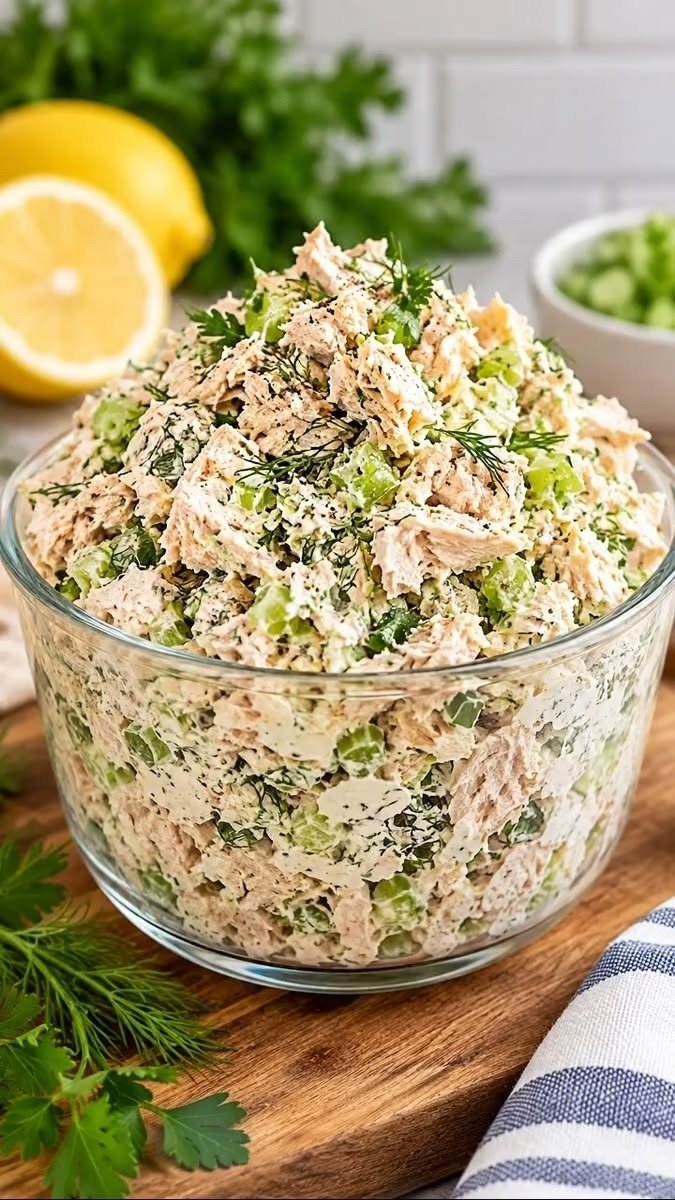
Creamy Dill Tuna Salad
Introduction
Creamy Dill Tuna Salad is a refreshing, flavorful, and easy-to-prepare dish that combines tender tuna with a creamy dressing, crisp vegetables, fresh dill, and a bright touch of lemon. It is perfect for quick lunches, light dinners, sandwiches, wraps, or a protein-rich snack.
The combination of tuna, mayonnaise, Dijon mustard, lemon juice, and fresh dill creates a delicious balance of creamy, tangy, and herbaceous flavors. Finely chopped celery adds crunch, while red onion provides a mild sharpness that complements the tuna beautifully.
One of the best things about this recipe is its versatility. You can serve it over fresh lettuce, spoon it into whole-grain bread, wrap it in tortillas, or enjoy it with crackers and cucumber slices. It requires minimal cooking, making it ideal for busy weekdays and meal preparation.
Whether you are looking for a classic tuna salad with a fresh twist or a convenient meal made from pantry ingredients, this creamy dill version is simple, satisfying, and easy to customize.
Recipe Information
- Preparation Time: 15 minutes
- Cooking Time: None, when using canned tuna
- Chilling Time: 20–30 minutes, optional
- Total Time: Approximately 15–45 minutes
- Servings: 4
- Course: Lunch, light dinner, or snack
- Cuisine: American-inspired
- Difficulty: Easy
Ingredients
For the Tuna Salad
- 2 cans tuna, approximately 5 ounces each, drained
- ⅓ cup mayonnaise
- 2 tablespoons plain Greek yogurt, optional
- 2 celery stalks, finely chopped
- ¼ cup finely diced red onion
- 2 tablespoons fresh dill, finely chopped
- 1 tablespoon fresh lemon juice
- 1 teaspoon Dijon mustard
- ¼ teaspoon garlic powder
- ¼ teaspoon black pepper
- Salt, to taste
- 1 tablespoon chopped fresh parsley, optional
Optional Add-Ins
- ¼ cup diced cucumber, patted dry
- 2 tablespoons chopped dill pickles
- 1 tablespoon capers, rinsed and chopped
- 2 tablespoons sweet corn, drained
- ¼ teaspoon paprika
- 1 tablespoon finely chopped green onion
For Serving
- Lettuce leaves
- Whole-grain bread or sandwich rolls
- Tortillas or wraps
- Cucumber slices
- Crackers
- Lemon wedges
Instructions
Step 1: Drain the Tuna
Open the tuna cans and drain the liquid thoroughly. If the tuna is packed in water, press it gently with a fork to remove excess moisture. If it is packed in oil, drain it well according to your preference.
Transfer the tuna to a medium mixing bowl. Use a fork to break it into smaller flakes.
Avoid mashing it completely into a paste. Leaving some larger pieces creates a better texture and makes the salad more satisfying.
For the best flavor, choose tuna packed in water for a lighter result or tuna packed in olive oil for a richer taste.
Step 2: Prepare the Vegetables
Wash the celery and cut it into small, even pieces. Finely dice the red onion and chop the fresh dill.
If you are using cucumber, remove excess seeds if it is particularly watery, then dice it into small cubes and pat it dry.
Add the celery, red onion, and dill to the bowl containing the tuna.
Celery provides a pleasant crunch, while red onion adds a little sharpness. Fresh dill gives the salad its distinctive herbal flavor and pairs especially well with lemon and tuna.
If raw red onion tastes too strong, soak it in cold water for five minutes and drain it before adding it to the mixture.
Step 3: Prepare the Creamy Dressing
In a small bowl, combine the mayonnaise, optional Greek yogurt, lemon juice, Dijon mustard, garlic powder, and black pepper.
Whisk until the dressing is smooth and creamy.
Taste it before adding it to the tuna. If you prefer a tangier salad, add a little more lemon juice. For extra creaminess, add another spoonful of mayonnaise or yogurt.
Greek yogurt creates a lighter, slightly tangy dressing, while mayonnaise provides the traditional rich texture.
Step 4: Combine the Ingredients
Pour the dressing over the tuna, celery, red onion, and dill.
Use a fork or spatula to fold everything together gently until the tuna is evenly coated.
Add the optional chopped pickles, capers, corn, or parsley if desired. These ingredients can add extra texture and flavor, but the basic recipe is delicious without them.
Taste the mixture and add salt only if needed. Canned tuna and pickles can already contain significant amounts of sodium.
Avoid overmixing because the tuna can become mushy.
Step 5: Chill for Better Flavor
Cover the bowl and refrigerate the tuna salad for 20–30 minutes if time allows.
Chilling helps the dill, lemon, and mustard flavors blend with the creamy dressing. It also keeps the salad cool and refreshing.
If you are preparing the recipe ahead of time, keep it refrigerated in an airtight container until you are ready to serve.
Before serving, stir gently and check the consistency. If the mixture seems dry, add a small spoonful of mayonnaise or Greek yogurt and mix again.
Step 6: Serve and Garnish
Transfer the creamy dill tuna salad to a serving bowl. Garnish with a little extra fresh dill, chopped parsley, or a light sprinkle of paprika.
Serve it on lettuce leaves for a lighter meal, spoon it into whole-grain bread for a classic sandwich, or wrap it in a tortilla with lettuce and cucumber.
You can also serve it with crackers, cucumber rounds, or sliced bell peppers for a quick snack.
For a more substantial meal, pair the tuna salad with vegetable soup, roasted potatoes, or a fresh tomato salad.
Tips for the Best Creamy Dill Tuna Salad
Drain the tuna well. Excess liquid can make the dressing watery and dilute the flavor.
Use fresh dill when possible. Fresh dill provides a brighter, more delicate flavor. If using dried dill, start with about one teaspoon and adjust to taste.
Chop vegetables finely. Smaller pieces distribute more evenly throughout the salad and make sandwiches easier to assemble.
Balance the dressing. Lemon juice adds brightness, Dijon mustard provides gentle sharpness, and mayonnaise creates richness.
Add salt gradually. Taste the salad before seasoning because canned tuna and optional pickles may already be salty.
Keep the texture chunky. Fold the ingredients together gently instead of crushing the tuna into a paste.
Chill before serving. A short rest in the refrigerator helps the flavors develop and improves the overall taste.
Delicious Variations
1. Greek Yogurt Tuna Salad
Replace half or all of the mayonnaise with plain Greek yogurt. This creates a tangier dressing and changes the fat and protein content depending on the products used.
2. Pickle and Dill Tuna Salad
Add chopped dill pickles and a small splash of pickle juice. This variation has a sharper, tangier flavor that works especially well in sandwiches.
3. Mediterranean Tuna Salad
Add chopped Kalamata olives, diced tomatoes, parsley, and a little crumbled feta. Reduce the added salt because olives and feta can be salty.
4. Avocado Tuna Salad
Replace some of the mayonnaise with mashed ripe avocado. Add lemon juice to help maintain freshness and serve immediately for the best color and texture.
5. Spicy Tuna Salad
Mix in a pinch of cayenne pepper, red pepper flakes, or a little hot sauce. Start with a small amount so the spice does not overpower the dill.
6. Crunchy Apple Tuna Salad
Add a small amount of finely diced apple for a sweet, crisp contrast. This variation is particularly good in lettuce cups or whole-grain sandwiches.
7. High-Protein Tuna Bowl
Serve the tuna salad over leafy greens with boiled eggs, chickpeas, cucumber, and tomatoes. This creates a more substantial meal with a wider variety of nutrients.
Serving Suggestions
Creamy Dill Tuna Salad is ideal for a quick lunch or easy meal preparation.
For sandwiches, spread the mixture between slices of whole-grain bread with lettuce and tomato. For wraps, add shredded cabbage, cucumber, and greens before rolling everything tightly.
For a lighter option, spoon the salad into lettuce cups or serve it over a bed of mixed greens. Crackers and raw vegetables make convenient accompaniments for snacks and picnics.
You can also create a tuna bowl with brown rice, quinoa, cucumber, cherry tomatoes, and lemon wedges.
For entertaining, serve small portions on cucumber rounds or toasted bread slices as simple appetizers.
Storage and Meal Preparation
Store the tuna salad in an airtight container in the refrigerator at 40°F (4°C) or below. For best quality, consume it within 3–4 days, provided the ingredients were fresh and it was handled safely.
Do not leave tuna salad at room temperature for more than two hours, or more than one hour when the temperature is above 90°F (32°C).
If preparing it for lunches, keep the salad refrigerated until serving. Use an insulated lunch bag with an ice pack when refrigeration is unavailable.
Freezing is not recommended because mayonnaise-based dressings can separate and the vegetables may lose their texture after thawing.
Nutritional Information
Approximate values per serving, assuming four servings and using tuna packed in water, mayonnaise, and the optional Greek yogurt:
- Calories: 220–290
- Protein: 22–28 g
- Carbohydrates: 2–5 g
- Fat: 12–19 g
- Fiber: 0–1 g
- Sodium: 350–600 mg
Actual values vary according to the tuna brand, mayonnaise, optional ingredients, and portion size. Serving the salad with bread, crackers, or rice will increase the total carbohydrates and calories.
Health Benefits
1. Provides protein: Tuna supplies protein that supports normal body functions and helps maintain body tissues.
2. Contains beneficial fats: Tuna may provide omega-3 fatty acids, with amounts varying by species and product. These fats can contribute to a balanced eating pattern.
3. Adds fresh herbs and vegetables: Celery, onion, and dill provide flavor and a variety of plant compounds while helping make the salad more interesting.
4. Offers convenient meal preparation: The recipe requires no cooking when canned tuna is used, making it useful for quick lunches and simple meals.
5. Can fit different eating preferences: The salad can be served with vegetables, whole grains, or bread depending on your dietary needs.
Tuna contains varying amounts of mercury depending on the species. For frequent consumption, choose lower-mercury options such as canned light tuna more often than albacore tuna, and follow current guidance for your age and circumstances.
Frequently Asked Questions
Can I use dried dill instead of fresh dill?
Yes. Start with approximately one teaspoon of dried dill for the two cans of tuna. Taste and adjust because dried herbs can vary in strength.
Can I make the salad without mayonnaise?
Yes. Use plain Greek yogurt, mashed avocado, or a combination of yogurt and a little olive oil. The texture and flavor will be different from the traditional version.
Which tuna is best for this recipe?
Canned light tuna and albacore both work. Canned light tuna generally contains less mercury than albacore, making it a useful choice for people who eat tuna regularly.
Why is my tuna salad watery?
The tuna may not have been drained thoroughly, or the vegetables may have released moisture. Drain the tuna well and pat cucumber dry before mixing.
Can I prepare it the night before?
Yes. Prepare the salad, transfer it to an airtight container, and refrigerate promptly. Stir gently before serving.
Is this recipe suitable for sandwiches?
Absolutely. Its creamy texture and fresh dill flavor work beautifully in sandwiches, wraps, pita pockets, and lettuce cups.
Can I add boiled eggs?
Yes. Chop one or two cooled hard-boiled eggs and fold them into the salad for additional protein and a creamier texture.