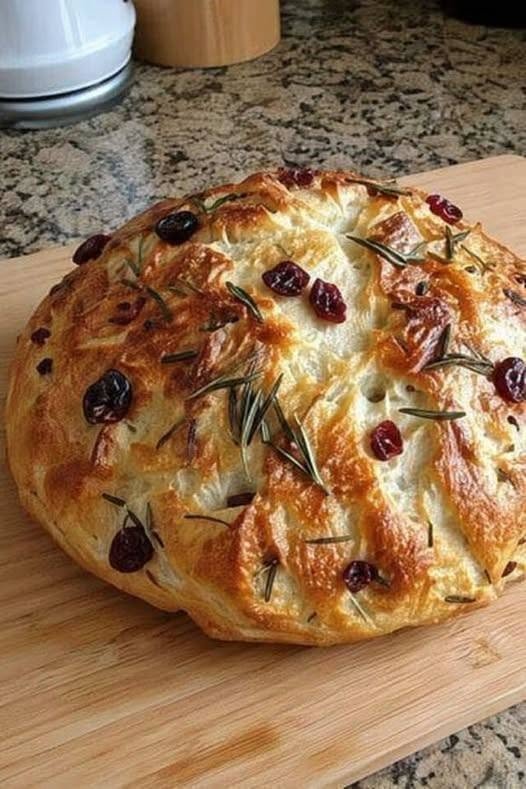
Cranberry Rosemary Focaccia Bread
Description
Cranberry Rosemary Focaccia Bread is a beautiful, golden Italian-inspired bread with a crisp, olive-oil-rich exterior and a soft, airy center. Fresh rosemary adds an earthy herbal aroma, while dried cranberries bring little bursts of sweet-tart flavor to every bite. A sprinkle of flaky sea salt balances the sweetness and gives the focaccia its classic savory finish.
This focaccia is wonderfully versatile. Serve it warm as an appetizer, alongside soups and salads, or as a special side dish for holiday dinners. It can also be sliced horizontally and used to make delicious sandwiches.
The dough is simple, but focaccia rewards patience. Giving the dough enough time to rise creates those characteristic airy pockets and light texture. Generously coating the pan and dough with extra-virgin olive oil helps produce the crisp bottom and beautifully golden crust.
The combination of rosemary and cranberries makes this focaccia especially suitable for autumn and holiday gatherings. You can also add walnuts, pecans, orange zest, caramelized onions, or a little Parmesan for your own variation.
Recipe Details
Recipe Name: Cranberry Rosemary Focaccia Bread
Cuisine: Italian-inspired
Category: Bread / Side Dish / Appetizer
Prep Time: 20 minutes
Rise Time: 1½–2 hours
Bake Time: 25–30 minutes
Total Time: Approximately 2½ hours
Servings: 12 pieces
Difficulty: Easy to Moderate
Ingredients
For the Dough
- 4 cups all-purpose flour
- 2 teaspoons instant or active dry yeast
- 1½ teaspoons fine sea salt
- 1 tablespoon honey or granulated sugar
- 1¾ cups warm water
- ¼ cup extra-virgin olive oil, plus more for the pan and topping
- 1 tablespoon fresh rosemary, finely chopped
For the Topping
- ¾ cup dried cranberries
- 2 tablespoons fresh rosemary leaves
- 2–3 tablespoons extra-virgin olive oil
- 1 teaspoon flaky sea salt
- ½ teaspoon freshly ground black pepper, optional
Optional Additions
- ¼ cup chopped walnuts or pecans
- 1 teaspoon finely grated orange zest
- 2 tablespoons grated Parmesan
- Thinly sliced red onion
- A small drizzle of honey after baking
Step-by-Step Instructions
Step 1: Activate the Yeast
If using active dry yeast, combine the warm water, honey, and yeast in a large mixing bowl.
The water should be warm rather than hot. Extremely hot water can damage the yeast.
Allow the mixture to sit for approximately 5–10 minutes until slightly foamy.
If using instant yeast, you can mix it directly with the flour, although blooming it in the water is also fine.
Step 2: Make the Dough
Add the flour, salt, and chopped rosemary to the yeast mixture.
Pour in the olive oil.
Mix with a wooden spoon or sturdy spatula until a shaggy dough forms.
The dough should be soft and somewhat sticky. Don’t add excessive flour just because the dough feels sticky. Focaccia dough is naturally wetter than many traditional bread doughs.
Step 3: Knead the Dough
Transfer the dough to a lightly floured surface or keep it in the mixing bowl.
Knead gently for approximately 5–7 minutes, or until the dough becomes smoother and more elastic.
You can also use a stand mixer fitted with a dough hook and mix on low to medium speed until the dough becomes elastic.
The dough does not need to become perfectly smooth.
A slightly sticky dough is desirable because it helps create a light and airy focaccia.
Step 4: First Rise
Place the dough in a lightly oiled bowl.
Turn the dough once so the surface is coated with olive oil.
Cover the bowl with plastic wrap or a clean kitchen towel.
Place it in a warm, draft-free location.
Allow it to rise for approximately 60–90 minutes, or until it has roughly doubled in size.
The exact rising time depends on room temperature and yeast activity.
Step 5: Prepare the Baking Pan
Generously coat a 9 × 13-inch baking pan with extra-virgin olive oil.
Don’t be shy with the oil. Focaccia traditionally benefits from plenty of olive oil, which helps create its characteristic crispy bottom.
You can also line the pan with parchment paper before adding the oil if desired.
Step 6: Transfer the Dough
Once the dough has risen, gently transfer it into the prepared pan.
Use your hands to carefully stretch the dough toward the corners.
If the dough resists stretching, let it rest for approximately 10 minutes and then try again.
Don’t force it.
Cover the pan loosely and allow the dough to rest for another 20–30 minutes.
Step 7: Add the Cranberries
Scatter the dried cranberries over the surface.
Gently press some of them into the dough.
Try not to push them too deeply because you want plenty of cranberries visible on the finished focaccia.
If your cranberries are particularly large, you can roughly chop them before adding them.
Step 8: Create the Focaccia Dimples
Drizzle the surface generously with olive oil.
Lightly oil your fingertips.
Press your fingertips straight down into the dough to create deep dimples across the entire surface.
This is one of the defining characteristics of focaccia.
Don’t be afraid to press firmly enough to create visible pockets, but avoid completely flattening the dough.
Step 9: Add Rosemary and Seasoning
Scatter the fresh rosemary leaves evenly across the dough.
Sprinkle with flaky sea salt.
Add freshly ground black pepper if desired.
If you’re using walnuts, pecans, orange zest, or thinly sliced red onion, distribute them evenly over the surface.
Finish with another light drizzle of olive oil.
Step 10: Final Rest
Allow the prepared focaccia to rest for another 15–20 minutes.
This short final rise helps create a lighter texture.
Meanwhile, preheat the oven to 425°F (220°C).
Step 11: Bake
Place the focaccia in the preheated oven.
Bake for approximately 25–30 minutes, or until the surface is deeply golden brown and the edges look crisp.
The exact baking time will depend on the thickness of the dough and your oven.
If the top is browning too quickly, loosely cover it with foil during the final portion of baking.
Step 12: Finish the Focaccia
Remove the focaccia from the oven.
Immediately brush or drizzle the surface with a little extra-virgin olive oil.
Allow it to cool in the pan for approximately 10–15 minutes.
Transfer it to a wire rack if you want the bottom to remain crisp.
Sprinkle with a little additional rosemary or flaky sea salt if desired.
For a sweet-savory finish, drizzle a very small amount of honey over the warm bread.
Notes
Use Fresh Rosemary
Fresh rosemary provides a stronger aroma and more vibrant flavor than dried rosemary.
Don’t Use Cold Water
Warm water helps activate the yeast and encourages proper fermentation.
Keep the Dough Moist
Avoid adding too much flour. A wetter dough generally creates a softer, airier focaccia.
Use Plenty of Olive Oil
Olive oil is essential for achieving the classic focaccia texture and flavor.
Don’t Skip the Dimples
The dimples help distribute the olive oil and create the characteristic texture of the bread.
Watch the Cranberries
Dried cranberries can darken quickly if exposed directly to intense oven heat. If they begin browning too much, loosely cover the focaccia with foil.
Use Flaky Salt
Flaky sea salt gives the bread a wonderful texture and salty contrast.
Helpful Tips for Perfect Focaccia
1. Measure Flour Correctly
Too much flour can create a dense focaccia. For the most consistent results, weighing the flour is ideal.
2. Let the Dough Rise Properly
Don’t rely only on the clock. Look for the dough to become noticeably puffy and expanded.
3. Give the Dough Time to Relax
If the dough springs back when you stretch it, let it rest for 10 minutes before trying again.
4. Oil Your Hands
Because focaccia dough is sticky, lightly oiling your fingers is often easier than adding more flour.
5. Make Deep Dimples
Press your fingertips deeply into the dough while avoiding excessive flattening.
6. Don’t Overload the Topping
Too many toppings can prevent the bread from rising properly and may make the surface heavy.
7. Bake Until Golden
A pale focaccia may have a soft rather than crisp exterior. Look for deep golden edges.
8. Cool Slightly Before Cutting
Allowing the bread to rest for 10–15 minutes makes slicing easier.
9. Serve Warm
Focaccia is especially delicious while slightly warm.
10. Refresh Leftovers
Reheat leftover pieces in a 350°F oven for several minutes to restore some of the crispness.
Overnight Focaccia Option
For deeper flavor and an easier schedule, you can prepare the dough the night before.
After mixing and kneading, cover the dough tightly and refrigerate it overnight.
The slow fermentation develops additional flavor.
The next day, remove the dough from the refrigerator and allow it to come closer to room temperature.
Transfer it to a generously oiled baking pan, stretch it gently, and allow it to rise until puffy.
Add the cranberries, rosemary, olive oil, and flaky salt before baking.
This method can produce an especially flavorful focaccia.
Variations
Cranberry Orange Rosemary Focaccia
Add 1 teaspoon finely grated orange zest to the topping. Orange and cranberry make a wonderful combination.
Cranberry Walnut Focaccia
Add chopped walnuts for extra crunch and a nutty flavor.
Cranberry Pecan Focaccia
Use toasted pecans instead of walnuts for a slightly sweeter variation.
Sweet-Savory Focaccia
After baking, drizzle the warm focaccia lightly with honey and sprinkle with flaky salt.
Cranberry Parmesan Focaccia
Add a little grated Parmesan during the final minutes of baking.
Caramelized Onion Version
Top the dough with thinly sliced caramelized onions and rosemary before baking.
Mediterranean-Inspired Version
Add olives, rosemary, sun-dried tomatoes, and a little feta instead of cranberries.
Serving Suggestions
Cranberry Rosemary Focaccia can be enjoyed in many ways.
As an Appetizer
Cut into small squares and serve with olive oil for dipping.
With Soup
Serve warm pieces alongside tomato soup, lentil soup, white bean soup, or vegetable soup.
With Salad
The slightly sweet cranberry flavor pairs beautifully with green salads containing goat cheese, feta, walnuts, or apples.
With Cheese
Serve alongside a cheese board featuring soft cheeses, sharp cheddar, goat cheese, or Brie.
With Holiday Dinner
This focaccia makes an excellent bread option for Thanksgiving, Christmas, or other festive meals.
As a Sandwich
Slice the focaccia horizontally and fill with roasted vegetables, turkey, chicken, cheese, greens, or grilled vegetables.
Storage
Store cooled focaccia in an airtight container or tightly wrapped at room temperature for approximately 2 days.
For longer storage, refrigerate it, although refrigeration can make bread lose some of its softness.
Reheat in a 350°F (175°C) oven for several minutes before serving.
Avoid leaving the bread exposed to air because it can dry out quickly.
Freezing Instructions
Focaccia freezes very well.
Allow it to cool completely.
Cut it into individual portions and wrap each piece tightly in plastic wrap or freezer-safe material.
Place the wrapped pieces in a freezer-safe bag or container.
Freeze for up to approximately 2–3 months for best quality.
To serve, thaw at room temperature and reheat in a 350°F oven until warm.
Servings
This recipe makes approximately 12 pieces.
For an appetizer, cut the focaccia into smaller squares.
For sandwiches, cut larger rectangular portions.
If serving it as a dinner bread, approximately 1–2 pieces per person is generally appropriate depending on the size.
Approximate Nutritional Information
Nutritional values will vary according to the exact amount of olive oil, cranberries, flour, and toppings used.
Estimated per serving:
- Calories: approximately 230–260
- Protein: approximately 5–6 g
- Carbohydrates: approximately 38–42 g
- Fat: approximately 8–10 g
- Fiber: approximately 2 g
- Sugar: approximately 6–8 g
- Sodium: approximately 300–400 mg
These values are estimates and are not laboratory measurements.
Adding nuts, cheese, honey, or extra olive oil will increase the nutritional content.
Benefits of Cranberry Rosemary Focaccia
Provides Carbohydrates
Focaccia provides carbohydrates, making it a useful source of energy as part of a balanced meal.
Contains Olive Oil
Extra-virgin olive oil contributes unsaturated fats and is a flavorful part of Mediterranean-style cooking.
Includes Rosemary
Rosemary adds aromatic flavor without requiring large amounts of additional salt or sugar.
Cranberries Add Flavor
Dried cranberries provide a naturally sweet-tart element and make the bread especially appealing for festive meals.
Homemade Control
Making focaccia at home allows you to control the ingredients, toppings, salt, and amount of sweetener.
Versatile
It can be paired with vegetables, soups, salads, proteins, or cheese.
These are general nutritional qualities of the ingredients and are not medical claims.
Frequently Asked Questions
Q1: Can I use dried rosemary instead of fresh?
Yes. Dried rosemary can be used, but use less because its flavor is more concentrated.
Q2: Can I use fresh cranberries?
Dried cranberries are recommended because fresh cranberries are much more tart and contain more moisture. If using fresh cranberries, expect a noticeably different result.
Q3: Why is my focaccia dense?
Dense focaccia can result from too much flour, insufficient rising time, inactive yeast, or pressing too much air out of the dough.
Q4: Why is my dough so sticky?
Focaccia dough is naturally sticky because it has a relatively high hydration level. Avoid adding large amounts of flour.
Q5: Can I make this focaccia without honey?
Yes. Replace the honey with granulated sugar or omit it if your yeast and recipe method allow.
Q6: Can I use whole-wheat flour?
Yes, but using 100% whole-wheat flour can produce a denser bread. Try replacing approximately 25–50% of the all-purpose flour for a heartier version.
Q7: Can I use bread flour?
Yes. Bread flour can produce a pleasantly chewy focaccia with good structure.
Q8: Can I prepare the dough the night before?
Absolutely. Refrigerating the dough overnight can develop excellent flavor.
Q9: Why didn’t my dough rise?
Possible causes include inactive yeast, water that was too hot or cold, a cold environment, or insufficient rising time.
Q10: Can I add cheese?
Yes. Parmesan, mozzarella, goat cheese, feta, or Brie can complement the cranberry and rosemary flavors.
Q11: Can I add nuts?
Yes. Walnuts and pecans are especially delicious with cranberries.
Q12: Can I make it vegan?
Yes. Use olive oil and a plant-based sweetener such as sugar or maple syrup, and avoid dairy toppings.
Q13: Can I make gluten-free focaccia?
Yes, but you’ll need a gluten-free flour blend specifically formulated for yeast breads. Results may differ from traditional wheat-based focaccia.
Q14: How do I keep focaccia crispy?
Bake it until deeply golden, use enough olive oil, and cool it on a wire rack rather than leaving it in a hot pan for too long.
Q15: How do I know when focaccia is done?
The top and edges should be golden brown, and the bread should feel set and cooked through in the center.
Q16: Can I use other dried fruit?
Yes. Chopped dried cherries, raisins, apricots, or figs can create different sweet-savory variations.
Q17: What flavors pair well with cranberry and rosemary?
Orange, lemon, walnuts, pecans, goat cheese, Brie, Parmesan, caramelized onions, and balsamic vinegar all work beautifully.
Q18: Can I freeze the bread?
Yes. Cool completely, wrap well, and freeze individual pieces for convenient future servings.
Q19: How should I reheat frozen focaccia?
Thaw it and warm it in a 350°F oven until heated through. This helps restore its texture better than prolonged microwaving.
Q20: Can I make mini focaccia pieces?
Yes. Divide the dough among smaller well-oiled pans and adjust the baking time depending on thickness.