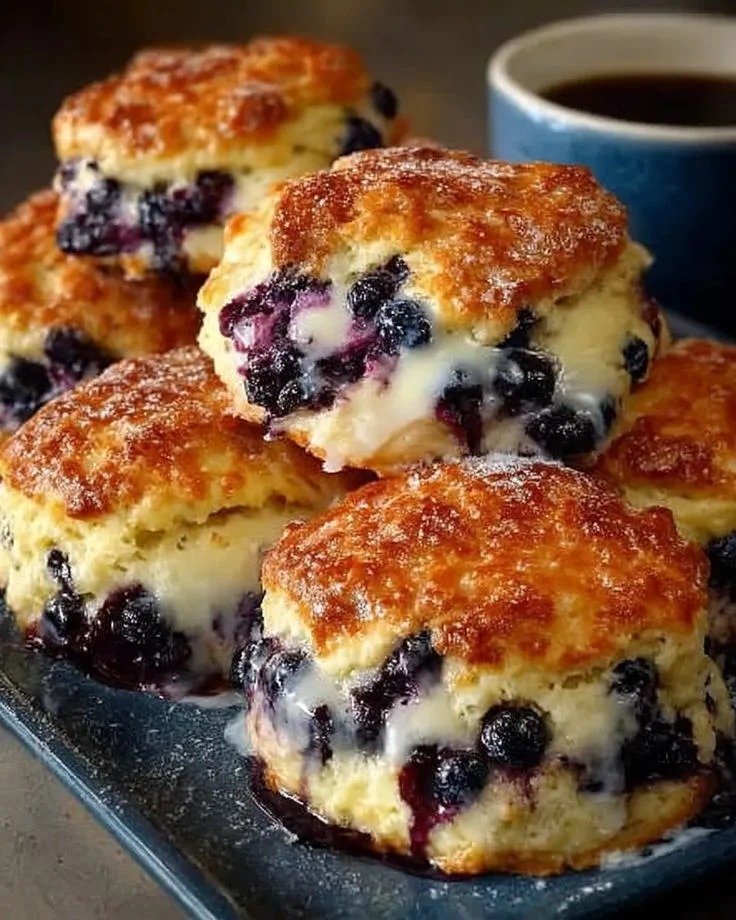
Buttery, Flaky & Bursting with Blueberries
These homemade Blueberry Biscuits are soft, flaky, buttery, and filled with juicy blueberries in every bite. The biscuit dough comes together with simple pantry ingredients, while very cold butter creates tender layers and a golden, lightly crisp exterior. Fresh blueberries add bright bursts of sweetness and tartness throughout the biscuits, and a simple vanilla glaze gives them a beautiful bakery-style finish. They are wonderful for breakfast, brunch, afternoon coffee, or a weekend baking project. The secret is keeping the butter and milk cold and handling the dough gently so the biscuits stay light rather than becoming dense.
Prep Time: 20 minutes
Chill Time: 10 minutes
Cook Time: 15–18 minutes
Total Time: 45–50 minutes
Servings: 8–10 biscuits
Ingredients
For the Biscuit Dough
2 cups all-purpose flour
1 tablespoon baking powder
¼ cup granulated sugar
½ teaspoon salt
½ cup unsalted butter, very cold or frozen, cubed or grated
¾ cup buttermilk or milk, very cold
1 cup fresh blueberries
For the Sweet Glaze
1 cup powdered sugar
2–3 tablespoons milk or heavy cream
½ teaspoon vanilla extract
Instructions
Prepare the Oven
Preheat your oven to 425°F (220°C). Line a baking sheet with parchment paper or lightly grease it with butter.
A hot oven is important for achieving a good rise. The cold butter in the dough needs to hit the high heat quickly so it creates steam and helps form flaky layers.
If your kitchen is particularly warm, place the baking sheet in the refrigerator while you prepare the biscuits.
Prepare the Dry Ingredients
Add the all-purpose flour, baking powder, granulated sugar, and salt to a large mixing bowl.
Whisk the ingredients together until evenly combined. This distributes the baking powder and salt throughout the flour so the biscuits rise and taste evenly seasoned.
Make sure your baking powder is fresh. Since it is responsible for much of the biscuit’s rise, old baking powder can result in flatter, heavier biscuits.
Add the Cold Butter
Take the very cold or frozen butter and either cut it into small cubes or grate it using the large holes of a box grater.
Add the butter to the flour mixture.
Use a pastry cutter, fork, or your fingertips to work the butter into the flour until you have a coarse, crumbly mixture with some pea-sized pieces of butter still visible.
Do not completely blend the butter into the flour. Those small pieces are important because they melt during baking and create pockets of steam that contribute to flaky layers.
If the butter begins to soften while you work, place the bowl in the refrigerator for several minutes before continuing.
Add the Cold Milk
Pour the cold buttermilk or milk into the flour and butter mixture.
Use a wooden spoon or rubber spatula to gently stir until the dough begins to come together.
Do not overmix. The dough should look somewhat shaggy rather than perfectly smooth. Overworking the dough can develop too much gluten and result in biscuits that are tough instead of tender.
If the mixture seems slightly dry, add another teaspoon of cold milk at a time. Avoid adding too much liquid because a wet dough can become difficult to shape and may spread during baking.
Fold in the Blueberries
Gently add the blueberries to the dough.
If using frozen blueberries, add them directly from the freezer without thawing. Frozen berries are less likely to release excessive juice into the dough while you work with them.
Fold the berries in carefully using a spatula. Try not to crush them because broken berries can release juice and turn the dough purple.
Fresh blueberries can be used directly, but make sure they are washed and thoroughly dried before adding them.
Shape the Biscuit Dough
Lightly flour your work surface.
Transfer the dough onto the surface and gently bring it together with your hands. Do not knead it like bread dough.
Pat the dough into a rectangle approximately ¾–1 inch thick.
For extra flaky layers, gently fold the dough in half and press it together. Repeat this process once or twice, working quickly so the butter stays cold.
Pat the dough back down to approximately 1 inch thick.
Using a floured biscuit cutter or round cookie cutter, cut the biscuits straight down without twisting.
Twisting the cutter can seal the edges of the dough and prevent the biscuits from rising as well.
Place the biscuits on the prepared baking sheet. You can place them slightly apart for crispier sides or close together for softer sides.
If there are scraps left after cutting, gently bring them together and cut additional biscuits. Avoid repeatedly reworking the scraps.
Chill Before Baking
Place the shaped biscuits in the refrigerator for about 10 minutes.
This short chilling period helps firm the butter again and can make a noticeable difference in the final texture.
While the biscuits chill, make sure your oven is fully preheated.
Bake the Biscuits
Bake the biscuits at 425°F (220°C) for approximately 15–18 minutes.
They should become puffed and golden around the edges and lightly golden on top.
The exact baking time depends on the thickness and size of your biscuits. Begin checking them around 14 minutes.
Once baked, remove the tray from the oven and let the biscuits cool for about 5–10 minutes.
Prepare the Glaze
While the biscuits cool, add the powdered sugar to a small bowl.
Add 2 tablespoons of milk or heavy cream and the vanilla extract.
Whisk until smooth.
If the glaze is too thick, add another teaspoon of milk at a time. If it becomes too thin, add a little more powdered sugar.
For a thicker bakery-style glaze, keep the consistency fairly dense. For a thinner drizzle, add slightly more milk.
Glaze and Serve
Drizzle the glaze over the warm or slightly cooled blueberry biscuits.
Allow the glaze to sit for a few minutes before serving.
Serve the biscuits with coffee, tea, milk, or fresh fruit.
They are especially delicious while still slightly warm.
Tips
The most important rule for flaky biscuits is to keep the butter cold. If the butter becomes warm before the biscuits reach the oven, it can blend too thoroughly into the flour and reduce the flaky texture.
Frozen grated butter is particularly effective because the small pieces distribute easily throughout the flour while remaining very cold.
Keep the milk or buttermilk refrigerated until you are ready to use it.
Do not overwork the dough. A slightly rough-looking dough is perfectly fine and usually produces more tender biscuits than a smooth, heavily kneaded dough.
If using frozen blueberries, do not thaw them. Thawed blueberries release a lot of liquid and can make the dough sticky while also causing purple streaks.
If using fresh blueberries, dry them thoroughly after washing. Extra moisture can make the dough wetter than intended.
When cutting the biscuits, press the cutter straight down and lift it straight back up. Avoid twisting.
Use a sharp biscuit cutter for clean edges. A dull cutter can compress the dough around the edges and interfere with the rise.
For taller biscuits, keep the dough around 1 inch thick before cutting.
If you want softer sides, place the biscuits close together on the baking sheet. For more golden, crisp sides, leave a little space between each biscuit.
The glaze should be added after baking rather than before. This keeps it smooth and prevents it from becoming overly dry in the oven.
If your biscuits brown too quickly, loosely cover them with foil during the final few minutes of baking.
Allow the biscuits to cool slightly before serving, but they are particularly delicious when enjoyed warm.
For the best flavor, use high-quality butter and ripe, flavorful blueberries.
Variations
For a lemon blueberry version, add 1 teaspoon of finely grated lemon zest to the biscuit dough and another ½ teaspoon to the glaze. Lemon complements the blueberries beautifully.
For a cream cheese glaze, replace the milk in the glaze with 2 tablespoons softened cream cheese, 1 cup powdered sugar, ½ teaspoon vanilla, and enough milk to reach your preferred consistency.
For a cinnamon blueberry biscuit, add ½ teaspoon ground cinnamon to the dry ingredients.
For an almond variation, add ½ teaspoon almond extract to the glaze and sprinkle sliced almonds over the finished biscuits.
For a mixed berry version, replace part of the blueberries with raspberries or blackberries. Keep the total amount of fruit close to 1 cup.
For a vanilla sugar topping, brush the baked biscuits lightly with melted butter and sprinkle them with a little granulated or coarse sugar before adding the glaze.
For a slightly richer dough, use buttermilk instead of regular milk. Buttermilk also provides a pleasant tang that balances the sweetness.
For a less sweet breakfast biscuit, reduce the granulated sugar slightly and use a thinner glaze.
For a more dessert-like version, serve the biscuits warm with vanilla ice cream and fresh blueberries.
Q&A
Can I use frozen blueberries?
Yes. Frozen blueberries work very well. Add them directly to the dough without thawing to reduce excess moisture and color bleeding.
Why do my blueberry biscuits turn purple?
This usually happens when blueberries are crushed or thawed before being mixed into the dough. Fold them in gently and keep frozen berries frozen until use.
Why are my biscuits not flaky?
The butter may have become too warm, or the dough may have been overworked. Keep the butter and milk cold and handle the dough as little as possible.
Can I use regular milk instead of buttermilk?
Yes. Regular cold milk works well. Buttermilk gives the biscuits a slightly tangier flavor and can contribute to a tender texture.
Can I make the dough ahead of time?
Yes. Shape the biscuits and refrigerate them until you are ready to bake. For longer storage, freeze the unbaked biscuits in a single layer and transfer them to a freezer-safe container.
Should I thaw frozen biscuit dough before baking?
You can bake frozen biscuits directly from frozen. They may need a few extra minutes in the oven.
Can I leave out the glaze?
Absolutely. The biscuits are delicious on their own, especially with butter, jam, or honey.
How should I store leftover biscuits?
Store cooled biscuits in an airtight container at room temperature for a short period or refrigerate them for longer freshness. Warm them gently before serving.
Can I use whole wheat flour?
You can replace part of the all-purpose flour with whole wheat flour, but using too much may produce denser biscuits. Start by replacing about ½ cup.
Can I add lemon zest?
Yes. Lemon zest is one of the best additions to blueberry biscuits and works particularly well in both the dough and glaze.
Nutrition
Approximate nutrition per biscuit with glaze:
Calories: 325
Protein: 4g
Carbohydrates: 45g
Fat: 14g
Fiber: 2g
Sugar: 21g
Sodium: 310mg
Nutrition values are estimates and vary depending on the size of the biscuits, type of milk used, amount of glaze, and exact ingredients.
Conclusion
Fresh blueberries, buttery layers, and a sweet vanilla glaze make these biscuits an irresistible homemade treat. They are simple enough for a relaxed weekend breakfast but special enough for brunch or entertaining. Keep the butter cold, handle the dough gently, and you will be rewarded with tender, flaky biscuits packed with blueberry flavor.
#BlueberryBiscuits #HomemadeBiscuits #BlueberryRecipes #EasyBaking #BreakfastRecipes