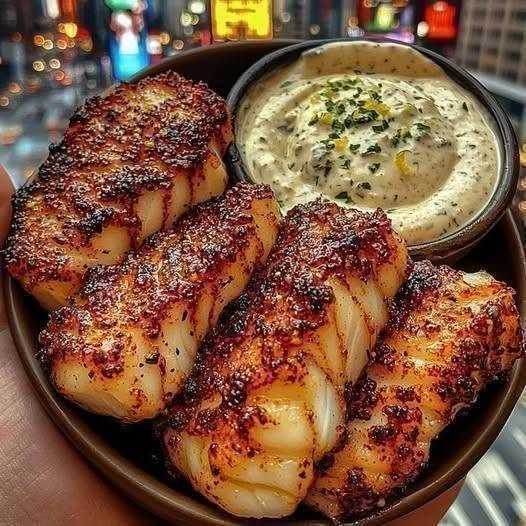
Blackened Fish Fillets with Creamy Lemon-Herb Sauce
Introduction
Blackened Fish Fillets with Creamy Lemon-Herb Sauce is a flavorful seafood dish that combines perfectly seasoned fish with a rich, tangy, and refreshing sauce. The fish is coated with a bold blend of paprika, garlic, onion, thyme, oregano, and black pepper, then pan-seared until the outside develops a beautifully dark, aromatic crust while the inside remains tender and flaky.
The creamy lemon-herb sauce brings everything together with its smooth texture, fresh citrus flavor, and fragrant herbs. Every bite offers a delicious balance of smoky spices, buttery richness, and bright lemon. This recipe is perfect for weeknight dinners, weekend gatherings, or whenever you want a restaurant-style seafood meal at home.
You can prepare this dish using cod, tilapia, haddock, or another firm white fish. Serve it with roasted vegetables, fluffy rice, mashed potatoes, or a fresh green salad for a satisfying meal.
Recipe Information
-
Prep Time: 15 minutes
-
Cook Time: 15 minutes
-
Total Time: 30 minutes
-
Servings: 4
-
Cuisine: American-inspired seafood
-
Course: Main Course
-
Cooking Method: Pan-seared
-
Difficulty: Easy
Ingredients
For the Blackened Fish
-
4 white fish fillets, approximately 5–6 ounces each
-
2 tablespoons olive oil or melted butter
-
1 teaspoon smoked paprika
-
1 teaspoon sweet paprika
-
½ teaspoon garlic powder
-
½ teaspoon onion powder
-
½ teaspoon dried thyme
-
½ teaspoon dried oregano
-
¼ teaspoon cayenne pepper, or to taste
-
½ teaspoon freshly ground black pepper
-
¾ teaspoon salt, or to taste
-
½ teaspoon lemon zest
-
1 tablespoon fresh lemon juice
For the Creamy Lemon-Herb Sauce
-
½ cup mayonnaise
-
¼ cup sour cream or plain Greek yogurt
-
1 tablespoon fresh lemon juice
-
1 teaspoon Dijon mustard
-
1 garlic clove, finely minced
-
1 tablespoon fresh parsley, chopped
-
1 tablespoon fresh dill, chopped
-
1 tablespoon fresh chives, chopped
-
1–2 tablespoons water or milk, as needed
-
¼ teaspoon black pepper
-
Salt, to taste
Optional Garnishes
-
Fresh parsley
-
Lemon wedges
-
Thinly sliced chives
-
A small drizzle of olive oil
-
A pinch of paprika
Instructions
Step 1: Prepare the Fish
Start by patting the fish fillets dry with paper towels. Removing excess moisture helps the seasoning stick and encourages a flavorful crust when the fish hits the hot pan.
Check each fillet for any remaining bones and remove them carefully if necessary. If the fillets vary significantly in thickness, consider cutting them into similar-sized portions so they cook more evenly.
Place the fish on a clean plate and brush both sides lightly with olive oil or melted butter. The fat helps the spices adhere and contributes to the fish’s rich flavor.
Step 2: Mix the Blackening Seasoning
In a small bowl, combine the smoked paprika, sweet paprika, garlic powder, onion powder, dried thyme, oregano, cayenne pepper, black pepper, salt, and lemon zest.
Stir thoroughly until the spices are evenly distributed. The paprika creates the characteristic deep color, while the herbs provide an earthy aroma. Cayenne adds a gentle kick, but you can reduce or omit it if you prefer a milder dish.
Sprinkle the seasoning mixture generously over both sides of each fish fillet. Gently press the spices into the surface to help them adhere.
For a stronger flavor, let the seasoned fish rest in the refrigerator for about 10 minutes while you prepare the sauce. Avoid leaving raw fish at room temperature for an extended period.
Step 3: Prepare the Creamy Lemon-Herb Sauce
In a medium bowl, combine the mayonnaise, sour cream or Greek yogurt, lemon juice, Dijon mustard, and minced garlic.
Whisk until the mixture becomes smooth and creamy. Add the chopped parsley, dill, chives, and black pepper. Stir again until the herbs are evenly distributed throughout the sauce.
Taste and adjust the seasoning. Add a little more lemon juice for extra brightness, or a small pinch of salt if needed.
If the sauce is too thick, stir in one teaspoon of water or milk at a time until it reaches your preferred consistency. It should be creamy enough to coat the back of a spoon but easy to drizzle over the fish.
Cover and refrigerate the sauce until serving. Chilling it briefly allows the garlic, lemon, and fresh herbs to blend together.
Helpful tip: If you prefer a lighter sauce, use plain Greek yogurt in place of the mayonnaise and sour cream. The result will be tangier and slightly less rich.
Step 4: Heat the Skillet
Choose a heavy skillet, preferably cast iron or stainless steel. Place it over medium-high heat and allow it to become hot before adding the fish.
Add the remaining olive oil or butter. Swirl the pan gently to coat the cooking surface.
Blackening seasoning can darken quickly, so avoid heating the pan until it is smoking excessively. The goal is a hot surface that creates a flavorful crust without burning the spices.
If using butter, watch it carefully because butter solids can burn at high temperatures. A combination of olive oil and a small amount of butter is another option for balancing flavor and heat tolerance.
Step 5: Cook the Fish Fillets
Carefully place the seasoned fillets in the hot skillet, leaving space between them. If your skillet is small, cook the fish in batches rather than overcrowding the pan.
Cook the first side for approximately 3–5 minutes, depending on the thickness of the fillets. Resist the urge to move the fish too soon. Allowing it to sear undisturbed helps develop a flavorful, dark crust.
When the underside is deeply golden-brown and the fish releases relatively easily from the pan, carefully flip each fillet using a thin spatula.
Cook the second side for another 3–5 minutes, or until the fish is opaque and flakes easily with a fork. Thick fillets may require additional time, while thinner pieces cook more quickly.
For food safety, check the thickest part of the fish with a food thermometer. Fish should reach an internal temperature of 145°F (63°C).
Avoid pressing down on the fillets while cooking, as this can squeeze out moisture and make the fish dry. Once cooked, transfer the fillets to a clean serving plate and let them rest for 1–2 minutes.
Step 6: Add Fresh Lemon Flavor
While the fish is still warm, drizzle the fresh lemon juice over the fillets. Use a light touch so the citrus enhances the blackened spices without overpowering them.
If desired, sprinkle a little additional chopped parsley over the fish. The fresh green herbs provide color and a pleasant contrast to the dark spice crust.
Be careful not to pour too much lemon juice directly onto the crust, as excess liquid can soften its texture.
Step 7: Serve with Creamy Lemon-Herb Sauce
Spoon the chilled lemon-herb sauce onto each plate or serve it in a small bowl on the side.
Place one blackened fish fillet on each plate and add a generous spoonful of sauce over the top or alongside the fish. Garnish with lemon wedges, parsley, and chopped chives.
For a beautiful presentation, serve the fish over a bed of rice or alongside colorful roasted vegetables. The contrast between the dark, seasoned fish and the pale, herb-speckled sauce makes the dish especially appealing.
Serve immediately while the fish is warm and tender.
Tips for Perfect Blackened Fish
Choose firm fish. Cod, tilapia, haddock, and pollock are suitable choices. Salmon can also work if you prefer a richer flavor.
Dry the fillets thoroughly. Excess moisture can prevent the seasoning from forming a good crust.
Adjust the heat. Paprika and garlic can burn if the skillet becomes too hot. Medium-high heat is a useful starting point, but reduce it if the spices darken too quickly.
Avoid overcrowding. Too many fillets in the skillet lower the temperature and can cause the fish to steam rather than sear.
Customize the spice level. Reduce the cayenne for a mild flavor or increase it slightly if you enjoy spicy seafood.
Make the sauce ahead. The creamy lemon-herb sauce can be prepared a day in advance and stored covered in the refrigerator.
Do not overcook the fish. Remove it from the heat once it reaches 145°F (63°C). Cooking beyond that point can make lean white fish dry.
What to Serve with Blackened Fish
This versatile recipe pairs well with simple sides that complement the smoky seasoning and creamy sauce.
-
Lemon rice: Fluffy rice with lemon zest and parsley absorbs the sauce beautifully.
-
Roasted potatoes: Crispy potatoes seasoned with garlic and herbs provide a satisfying texture.
-
Steamed broccoli: Fresh broccoli adds color and pairs well with the lemon flavor.
-
Roasted asparagus: Tender asparagus with a little olive oil and lemon makes an elegant side.
-
Creamy mashed potatoes: Their smooth texture balances the bold seasoning.
-
Fresh garden salad: Lettuce, cucumber, cherry tomatoes, and a light vinaigrette keep the meal refreshing.
-
Grilled vegetables: Zucchini, bell peppers, and red onions add sweetness and color.
-
Warm flatbread: Bread is useful for enjoying any extra sauce.
For a balanced dinner, serve one fish fillet with vegetables and a moderate portion of rice or potatoes.
Variations and Substitutions
Make It Dairy-Free
Use olive oil instead of butter when cooking the fish. For the sauce, choose a dairy-free mayonnaise and replace the sour cream or yogurt with an appropriate dairy-free alternative.
Make It Spicier
Increase the cayenne pepper slightly or add a pinch of chili powder to the seasoning. Taste the seasoning blend before applying it to the fish so you can control the heat.
Use a Different Fish
Salmon, haddock, tilapia, and cod can all work well. Cooking time depends on the thickness of the fillets, so use the internal temperature rather than time alone to judge doneness.
Add Capers to the Sauce
For a briny, Mediterranean-inspired twist, add one teaspoon of finely chopped capers to the lemon-herb sauce. They complement the citrus and fresh herbs beautifully.
Make the Sauce Lighter
Replace the mayonnaise and sour cream with plain Greek yogurt. Add a little water or lemon juice if needed to achieve a smooth consistency.
Storage and Reheating
Store leftover fish in an airtight container in the refrigerator within two hours of cooking. Properly refrigerated cooked fish is generally best consumed within 3–4 days.
Store the sauce separately so the fish’s crust does not become unnecessarily soggy. Keep the sauce refrigerated and use a clean spoon whenever serving it.
To reheat the fish, place it in an oven-safe dish and warm it in a 300°F (150°C) oven until heated through. Covering the dish loosely can help prevent the fish from drying out. You can also reheat it in a skillet over low heat with a small splash of water, although this may soften the crust.
Avoid repeatedly reheating the same portion. Discard fish or sauce that has been left at room temperature for more than two hours, or one hour in temperatures above 90°F (32°C).
For the best texture, prepare the sauce fresh or keep it chilled until the fish is ready to serve.
Nutritional Information
The following values are approximate per serving, assuming four servings and a moderate amount of sauce. Actual nutrition varies according to the type of fish, cooking fat, and sauce portions.
-
Calories: 320–420
-
Protein: 30–38 g
-
Carbohydrates: 3–6 g
-
Fat: 18–28 g
-
Fiber: 1–2 g
-
Sodium: 450–750 mg
Fish provides high-quality protein, while the herbs, lemon, and spices contribute flavor without requiring a heavy breading. The sauce contributes much of the fat and calories, so using Greek yogurt or serving a smaller portion can reduce the overall richness.
Frequently Asked Questions
1. What does blackened fish mean?
Blackened fish is coated in a bold seasoning blend and cooked in a hot skillet until the spices form a dark, flavorful crust. The dark appearance should come from the toasted seasoning, not from excessively burned fish.
2. Can I bake the fish instead of pan-searing it?
Yes. Arrange the seasoned fillets in a lightly oiled baking dish and bake at 400°F (200°C) until opaque and cooked through. The fish will still taste delicious, although it may have a less pronounced crust than skillet-cooked fish.
3. Can I prepare the sauce in advance?
Yes. Mix the sauce up to one day ahead and store it in a covered container in the refrigerator. Stir before serving and adjust the lemon juice or consistency if necessary.
4. Is the recipe very spicy?
The recipe has a mild-to-moderate kick from the cayenne pepper. Reduce or omit it for a milder dish, or adjust it according to your preference.
5. How can I prevent the fish from sticking?
Pat the fillets dry, preheat the skillet properly, add enough cooking fat, and allow the fish to develop a crust before attempting to flip it. A thin spatula can help lift delicate fillets without breaking them.
6. Can I use dried herbs in the sauce?
Fresh herbs provide the brightest flavor, but dried herbs can work in a pinch. Use smaller quantities because dried herbs are more concentrated, and allow the sauce to rest so their flavor can develop.