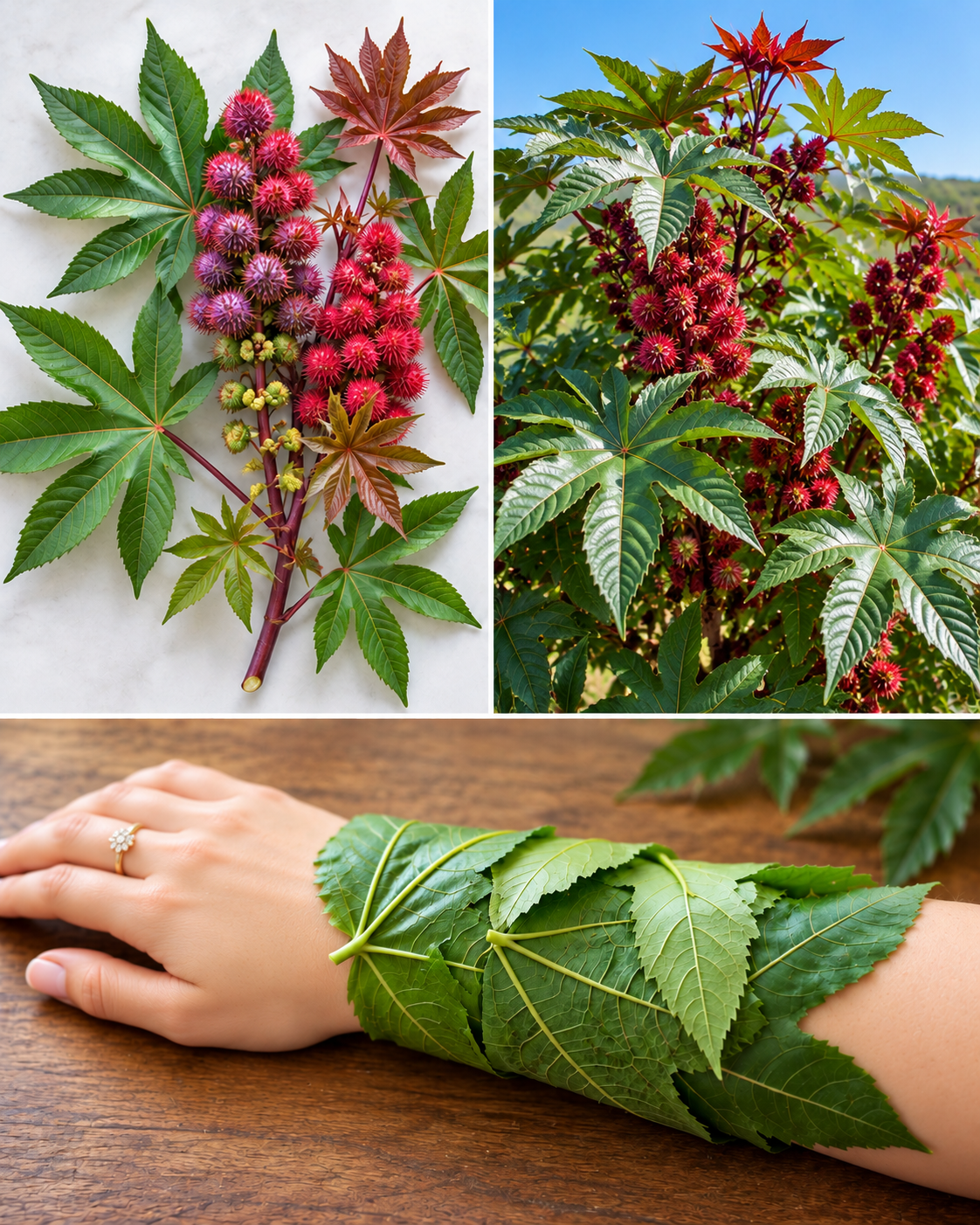
Benefits of Castor Leaves: Traditional Uses, Health Benefits, and Safety Precautions
Castor leaves have been used in traditional medicine for centuries, particularly in parts of Asia and Africa. These large, green leaves come from the castor plant, scientifically known as Ricinus communis. Although the plant is widely recognized for producing castor oil, its leaves have also attracted attention because of their natural compounds and possible medicinal properties.
The benefits of castor leaves are often associated with traditional remedies for inflammation, joint discomfort, skin problems, and muscle pain. Researchers have also investigated their antioxidant, antibacterial, and anti-inflammatory activities.
However, it is important to understand that many of these benefits are based on traditional knowledge or preliminary scientific studies. There is still limited clinical evidence confirming their effectiveness and safety in humans.
In this article, we explore the potential health benefits of castor leaves, their traditional uses, the compounds they contain, and the safety precautions everyone should know.
What Are Castor Leaves?
Castor leaves grow on the Ricinus communis plant, which belongs to the Euphorbiaceae family. The plant thrives in tropical and subtropical climates and is commonly found in countries such as India, Pakistan, and parts of Africa.
Its leaves are easily recognizable because of their broad, palm-like shape, pointed lobes, and prominent veins.
Depending on the plant variety, castor leaves may appear bright green, dark green, or reddish-purple.
In traditional medicine, these leaves have been used in various external preparations. Scientists are now studying their chemical composition to understand why they have attracted medicinal interest.
Castor leaves contain several natural plant compounds, including:
-
Flavonoids
-
Phenolic compounds
-
Tannins
-
Alkaloids
-
Terpenoids
-
Other naturally occurring phytochemicals
Some of these compounds demonstrate biological activity in laboratory experiments. However, their presence does not mean that consuming or applying raw castor leaves is safe or effective.
Potential Health Benefits of Castor Leaves
May Have Anti-Inflammatory Properties
One of the most frequently discussed benefits of castor leaves is their potential anti-inflammatory activity.
Inflammation is a natural defense mechanism that helps the body respond to injury, infection, and tissue damage.
However, excessive or prolonged inflammation can contribute to discomfort and various health conditions.
Castor leaves contain plant compounds that researchers have studied for their effects on inflammatory processes.
Laboratory and animal studies have reported anti-inflammatory activity in certain castor leaf extracts.
For example, researchers have investigated whether extracts influence inflammatory substances produced by cells.
These findings suggest that castor leaves may contain compounds worth exploring for future medical research.
Nevertheless, there is not enough clinical evidence to recommend castor leaves as a treatment for arthritis, swelling, or inflammatory disorders.
Contain Natural Antioxidant Compounds
Another potential benefit of castor leaves is their antioxidant activity.
Antioxidants help neutralize free radicals, which are unstable molecules capable of damaging cells.
Oxidative stress occurs when free radical activity exceeds the body’s antioxidant defenses.
Castor leaves contain flavonoids and phenolic compounds that have demonstrated antioxidant properties in laboratory studies.
A 2014 study investigated different castor leaf extracts and found measurable free-radical-scavenging activity.
A separate 2026 laboratory study also reported antioxidant effects in extracts prepared from castor leaves.
Although these results are scientifically interesting, they do not prove that consuming castor leaves provides antioxidant health benefits.
More research is needed to determine whether these compounds can be developed into safe and effective products.
Traditionally Used for Joint and Muscle Discomfort
Castor leaves have a long history of use in traditional practices for joint stiffness, muscle soreness, and general body discomfort.
In certain traditional healing systems, people have applied warmed leaves externally to painful areas.
These practices were often intended to provide comfort and relief from localized discomfort.
Some of this traditional interest may be connected to the plant’s experimentally observed anti-inflammatory properties.
However, scientific research has not established that placing raw castor leaves on joints can reliably reduce arthritis symptoms or muscle pain.
Furthermore, applying plant material to the skin may cause irritation or allergic reactions.
Individuals with persistent joint pain should seek medical advice to identify the underlying cause rather than relying on unproven home remedies.
May Have Antibacterial Properties
Scientists have also investigated castor leaves for possible antibacterial activity.
Bacteria are microorganisms that can cause infections when they enter the body or multiply in vulnerable tissues.
Some plants contain natural compounds capable of slowing bacterial growth under laboratory conditions.
Research involving castor leaf extracts has reported antibacterial effects against selected microorganisms.
A 2026 laboratory study found activity against certain bacteria, including Staphylococcus aureus and Pseudomonas aeruginosa.
These findings suggest that compounds found in castor leaves may deserve further study.
However, laboratory antibacterial activity does not mean that castor leaves can treat infections in humans.
Castor leaf extracts should not replace prescribed antibiotics, wound care, or other appropriate medical treatments.
Have a History of Use in Traditional Skin Care
Castor leaves have traditionally been associated with preparations intended for certain skin complaints.
Historical uses include external applications for sores, boils, and other localized skin concerns.
Researchers have studied castor leaf extracts to investigate their chemical properties and effects on skin-related cells.
Some studies have examined antioxidant activity, inflammation, and cellular toxicity.
These investigations offer useful information for scientific research, but they do not establish the safety of homemade castor leaf treatments.
In particular, raw leaves and untested extracts should not be applied to open wounds, burns, or infected areas.
Doing so may introduce contamination, worsen irritation, or delay appropriate treatment.
For healthy skin, established skincare products with tested ingredients are generally a more reliable choice.
May Have Potential for Future Wound-Healing Research
Wound healing involves several biological processes, including inflammation control, tissue repair, and protection against infection.
Because castor leaves contain plant compounds with interesting laboratory properties, researchers have investigated their potential relevance to wound care.
A review of the Ricinus communis plant describes traditional wound-related uses and various experimental biological activities.
However, the evidence is not strong enough to conclude that castor leaves accelerate wound healing in people.
Safe and effective wound treatment requires proper cleaning, appropriate dressings, and medical assessment when necessary.
Castor leaves should not be used as an alternative to professional wound care.
What Does Scientific Research Say About Castor Leaves?
The benefits of castor leaves have been investigated in several scientific studies, but much of the available research is preliminary.
Researchers have mainly focused on:
-
Identifying active plant compounds.
-
Measuring antioxidant activity in laboratories.
-
Investigating anti-inflammatory effects in cells and animals.
-
Testing antibacterial activity against selected microorganisms.
-
Evaluating the toxicity of different plant extracts.
A review published in 2026 concluded that Ricinus communis has promising biological properties, but well-controlled human clinical trials remain limited.
This is an important distinction because laboratory experiments often use concentrated extracts prepared under controlled conditions.
The results cannot automatically be applied to raw leaves, homemade teas, or traditional preparations.
Different extraction methods may produce products with very different chemical compositions and safety profiles.
More human research is necessary before castor leaves can be recommended for treating medical conditions.
Are Castor Leaves Safe to Use?
Although castor leaves have a history of traditional use, they should not automatically be considered safe.
The castor plant contains several biologically active substances, and their concentrations can vary depending on the plant part and growing conditions.
Some compounds may cause irritation or toxicity.
Important Safety Precautions
-
Avoid eating raw castor leaves.
-
Do not prepare homemade castor leaf tea for medicinal purposes.
-
Avoid using untested extracts on damaged or sensitive skin.
-
Keep the castor plant away from young children and pets.
-
Pregnant and breastfeeding individuals should avoid medicinal use without professional medical guidance.
-
Never substitute castor leaves for prescribed medicines.
The seeds of the castor plant are particularly dangerous because they contain ricin, a highly poisonous protein.
The CDC warns that chewing and swallowing castor seeds can release ricin and cause serious poisoning.
Although the leaves and seeds have different chemical compositions, this risk highlights why castor plants should be handled carefully.
Castor Leaves vs. Castor Oil: Understanding the Difference
Many people confuse the traditional benefits of castor leaves with the properties of castor oil.
However, they are not the same.
Castor leaves are the foliage of the plant, while castor oil is commercially extracted and processed from its seeds.
Castor oil contains ricinoleic acid and is commonly used in cosmetic products. Pharmaceutical-grade castor oil also has recognized laxative uses.
Castor leaves, on the other hand, are mainly being investigated for their phytochemical composition and potential biological activities.
| Castor Leaves | Castor Oil |
|---|---|
| Come from the foliage | Produced from the seeds |
| Contain flavonoids and phenolic compounds | Rich in ricinoleic acid |
| Used traditionally for external applications | Used in cosmetics and certain medicines |
| Clinical benefits remain unproven | Has some established applications |
| Homemade medicinal preparations are not recommended | Use only products intended for the specific purpose |
Understanding these differences helps prevent misunderstandings about the plant’s medicinal applications.
Frequently Asked Questions About Castor Leaves
What are the main benefits of castor leaves?
Castor leaves contain natural compounds with antioxidant, anti-inflammatory, and antibacterial activity in certain laboratory studies. However, their medical benefits have not been established through sufficient human clinical research.
Can castor leaves help relieve joint pain?
Castor leaves have traditionally been used for joint discomfort, but there is not enough scientific evidence to confirm that applying them relieves arthritis or other joint conditions.
Are castor leaves good for skin?
Castor leaves contain compounds of interest to skincare research. However, homemade castor leaf applications have not been proven safe or effective for treating skin problems.
Can castor leaves help with inflammation?
Some laboratory and animal studies suggest anti-inflammatory potential. More research is needed before these findings can be translated into safe medical treatments for humans.
Is it safe to drink castor leaf tea?
There is insufficient safety evidence to recommend drinking castor leaf tea. Homemade preparations may expose people to potentially harmful plant compounds.
Can castor leaves be used on open wounds?
Raw castor leaves should not be applied to open wounds because their safety and effectiveness have not been established.
Are castor leaves and castor seeds the same?
No. Castor leaves are the foliage, while castor seeds contain oil and the dangerous toxin ricin. The seeds must never be eaten.
Conclusion
The benefits of castor leaves have attracted attention in traditional medicine and modern scientific research. These leaves contain natural plant compounds that have shown antioxidant, anti-inflammatory, and antibacterial activity in laboratory investigations.
Traditional uses include applications for joint discomfort, muscle soreness, and certain skin concerns. However, these historical practices should not be confused with medically proven treatments.
Although scientific findings suggest that castor leaves may contain valuable bioactive substances, further studies are necessary to establish their effectiveness, appropriate formulations, and safety in humans.
Anyone interested in natural wellness should remember that plants can contain both beneficial and harmful compounds.
For this reason, castor leaves should be viewed as a subject of ongoing scientific research rather than a proven home remedy.