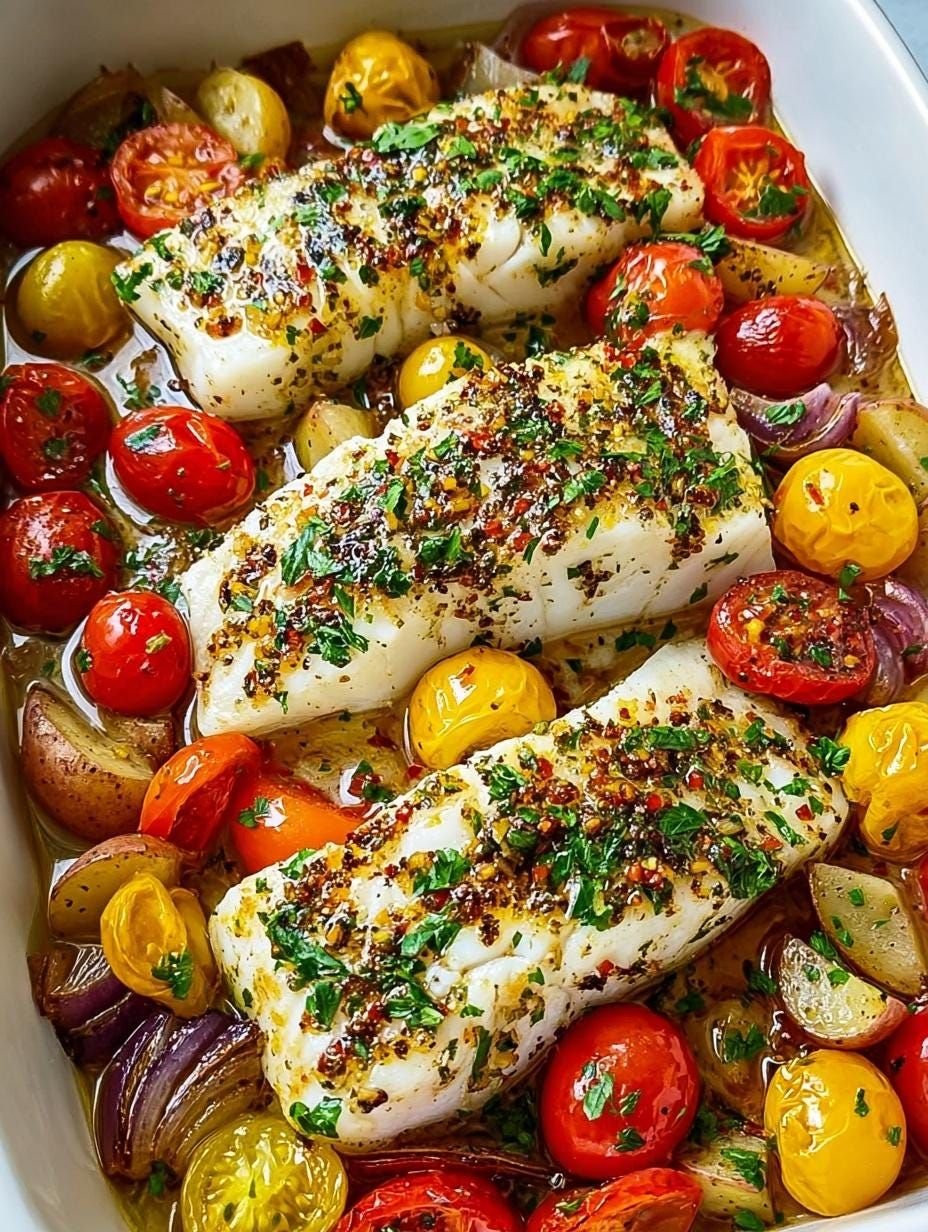
Baked Fish with Tomatoes and Potatoes
1. Recipe Description
Baked Fish with Tomatoes and Potatoes is a delicious, wholesome oven-baked meal made with tender fish fillets, golden potatoes, juicy tomatoes, fresh garlic, olive oil, and aromatic herbs. As the ingredients bake together, the tomatoes release their natural juices, creating a flavorful sauce that keeps the fish moist and gives the potatoes a wonderful Mediterranean-inspired taste.
This recipe is perfect for family dinners, healthy meal preparation, or a special weekend lunch. It requires simple ingredients, minimal preparation, and just one baking dish, making cleanup easy. The combination of flaky fish, soft potatoes, sweet tomatoes, and fragrant herbs creates a comforting meal that feels both rustic and elegant.
You can prepare this dish with cod, haddock, tilapia, sea bass, or another firm white fish. Salmon also works beautifully if you prefer a richer flavor. Serve it directly from the baking dish with lemon wedges, fresh parsley, and a crisp green salad for a satisfying meal.
2. Recipe Information
-
Preparation Time: 20 minutes
-
Cooking Time: 40–50 minutes
-
Total Time: Approximately 1 hour to 1 hour and 10 minutes
-
Servings: 4 people
-
Cuisine: Mediterranean-inspired
-
Course: Lunch or dinner
-
Cooking Method: Oven-baked
-
Difficulty: Easy
-
Dietary Style: Naturally gluten-free and high in protein
3. Ingredients
For the fish and vegetables
-
4 white fish fillets, approximately 5–6 ounces (140–170 g) each
-
1½ pounds (680 g) baby potatoes or regular potatoes
-
3 medium ripe tomatoes, sliced
-
1 small red onion, thinly sliced
-
4 garlic cloves, finely minced
-
3 tablespoons extra-virgin olive oil
-
1 tablespoon fresh lemon juice
-
½ cup (120 ml) vegetable or fish broth
-
1 teaspoon dried oregano
-
½ teaspoon dried thyme
-
½ teaspoon paprika
-
½ teaspoon salt, or to taste
-
¼ teaspoon freshly ground black pepper
-
½ teaspoon lemon zest
-
2 tablespoons chopped fresh parsley
-
Lemon wedges, for serving
Optional ingredients
-
½ cup pitted Kalamata olives
-
1 tablespoon capers
-
A pinch of red pepper flakes
-
A small handful of fresh basil leaves
-
¼ teaspoon ground cumin for additional warmth
These optional ingredients can add extra Mediterranean flavor, but the dish is delicious without them.
4. Choosing the Best Fish
The fish you choose makes a difference in the final texture and flavor.
Cod: Cod has a mild flavor and large, tender flakes. It pairs beautifully with tomatoes, potatoes, lemon, and herbs.
Tilapia: Tilapia is affordable, mild, and cooks relatively quickly. Use medium-thickness fillets and check them early to prevent overcooking.
Haddock: Haddock has a delicate sweetness that complements roasted vegetables.
Sea bass: Sea bass offers a slightly richer flavor and works well with olive oil, garlic, and fresh herbs.
Salmon: Salmon creates a richer dish with more natural oils. Because salmon can cook faster than thick potato slices, add it only after the potatoes have become nearly tender.
Choose fresh fish that smells clean and mild. If using frozen fillets, thaw them safely in the refrigerator and pat them dry before seasoning. Removing excess moisture helps the fish bake properly instead of releasing too much water into the dish.
5. Step-by-Step Instructions
Step 1: Preheat the oven
Preheat your oven to 400°F (200°C). Lightly grease a large baking dish with a little olive oil.
Choose a dish large enough to hold the potatoes, tomatoes, and fish in a mostly even layer. Avoid overcrowding because the vegetables roast better when they have enough space.
Step 2: Prepare the potatoes
Wash the potatoes thoroughly. If using baby potatoes, cut them in half. If using larger potatoes, peel them if desired and cut them into thin slices approximately ¼ inch thick.
Try to keep the slices similar in size so they cook evenly.
Place the potatoes in a large mixing bowl. Add one tablespoon of olive oil, half the salt, black pepper, dried thyme, and half the oregano. Toss everything together until the potatoes are evenly coated.
Spread the potatoes in the prepared baking dish. Add the sliced red onion between the potato pieces.
Bake for 20–25 minutes.
This initial baking step is important because potatoes take longer to cook than fish. Starting them first helps ensure that the final dish contains tender potatoes rather than undercooked centers.
Step 3: Prepare the tomatoes and garlic
While the potatoes bake, wash and slice the tomatoes into medium-thick rounds or wedges.
Place the tomatoes in a bowl and add the minced garlic, remaining oregano, paprika, lemon zest, and another tablespoon of olive oil.
Toss gently to coat the tomatoes without crushing them.
If you enjoy a briny Mediterranean flavor, add the Kalamata olives or capers at this stage. Their salty, tangy taste complements the sweetness of the tomatoes.
Step 4: Season the fish
Pat the fish fillets dry with paper towels.
Place them on a plate and drizzle with the remaining tablespoon of olive oil and the fresh lemon juice. Sprinkle with the remaining salt and a little black pepper.
Rub the seasoning gently over both sides of each fillet.
Do not add too much lemon juice at this stage. A small amount brightens the flavor without overpowering the delicate fish.
If your fillets are particularly thin, keep them aside until the potatoes are ready and monitor their cooking time carefully.
Step 5: Add the tomatoes
Remove the baking dish from the oven after the potatoes have baked for 20–25 minutes.
Carefully stir the potatoes and onions. Arrange the seasoned tomatoes over and between the potatoes.
Pour the vegetable or fish broth around the vegetables. Avoid pouring all the liquid directly over the potatoes, as this may wash away some of the seasoning.
Return the dish to the oven and bake for another 10 minutes.
During this time, the tomatoes begin to soften, the garlic becomes fragrant, and the broth combines with the vegetable juices to form a light, savory sauce.
Step 6: Add the fish fillets
Remove the baking dish from the oven again.
Make small spaces among the potatoes and tomatoes, then place the fish fillets in those spaces. Arrange some tomato slices around the fish and spoon a little of the cooking liquid over each fillet.
Cover the dish loosely with foil if you want a particularly moist result. Leave it uncovered if you prefer more roasted edges and slightly concentrated tomato juices.
Return the dish to the oven.
Bake for approximately 12–18 minutes, depending on the thickness and type of fish. Thin tilapia fillets may need less time, while thicker cod or sea bass portions may require more.
The fish is ready when it is opaque and flakes easily with a fork. For food safety, check the thickest part with a food thermometer and cook fish to 145°F (63°C).
Avoid overcooking, as fish can become dry and lose its delicate texture.
Step 7: Finish with fresh herbs
Remove the baking dish from the oven and allow it to rest for about 3–5 minutes.
Sprinkle the chopped fresh parsley over the fish and vegetables. Add a little extra lemon zest or a squeeze of fresh lemon juice if desired.
Taste the tomato juices and adjust the salt and pepper if necessary.
The final dish should have flaky, tender fish, soft golden potatoes, juicy tomatoes, and a fragrant garlic-herb sauce.
Step 8: Serve and enjoy
Serve the fish directly from the baking dish while warm.
Place one fish fillet on each plate alongside a generous portion of potatoes, roasted tomatoes, and onions. Spoon some of the flavorful cooking juices over the top.
Add lemon wedges and a sprinkle of parsley for a fresh finish.
For a complete dinner, serve with steamed green beans, a cucumber salad, or warm crusty bread to soak up the tomato and garlic sauce.
6. Tips for the Best Baked Fish
Cut the potatoes evenly. Thin, uniform slices cook more quickly and evenly than large, irregular chunks.
Bake the potatoes first. This prevents the fish from becoming overcooked while you wait for the potatoes to soften.
Dry the fish before seasoning. Removing excess surface moisture improves the texture and helps the seasonings adhere.
Use ripe tomatoes. Ripe tomatoes produce a sweeter, more flavorful sauce. Cherry tomatoes are also an excellent option; simply halve them before adding.
Do not use too much broth. The tomatoes release their own juices as they cook. Too much additional liquid can make the vegetables watery.
Choose herbs carefully. Oregano, thyme, parsley, and basil work particularly well. Fresh herbs added at the end preserve their bright flavor.
Check the fish early. Start checking thinner fillets after approximately 10 minutes in the final baking stage.
Avoid repeatedly opening the oven. Frequent opening releases heat and can increase cooking time.
Let the dish rest briefly. A short resting period allows the cooking juices to settle and makes serving easier.
7. Delicious Variations
Mediterranean baked fish
Add Kalamata olives, capers, red onion, oregano, and a handful of fresh basil. These ingredients create a bold, Mediterranean-style flavor.
Spicy tomato baked fish
Add red pepper flakes, a little cayenne pepper, and extra paprika to the seasoning. This version is ideal for anyone who enjoys a gentle kick of heat.
Garlic butter baked fish
Replace one tablespoon of olive oil with melted butter and add an extra garlic clove. Finish with parsley and lemon juice for a richer flavor.
Baked fish with cherry tomatoes
Replace the sliced tomatoes with 2 cups of halved cherry tomatoes. They become sweet and slightly caramelized as they bake.
Fish with potatoes and zucchini
Add one small zucchini cut into half-moons during the final 20–25 minutes of cooking. This adds color and another serving of vegetables.
Low-sodium version
Reduce the salt, choose a low-sodium broth, and use lemon juice, garlic, parsley, and black pepper to build flavor. If using olives or capers, remember that they contribute additional sodium.
8. Serving Suggestions
This baked fish dish is versatile enough for everyday meals and special occasions.
Serve it with a fresh Mediterranean salad made with cucumber, lettuce, red onion, and lemon dressing. Steamed broccoli or green beans provide a simple vegetable side.
For a more substantial meal, add whole-grain bread, brown rice, or a small serving of couscous. If you prefer a lighter plate, serve the fish and vegetables without additional starch because the potatoes already provide carbohydrates.
For entertaining, arrange the fish on a large serving platter with the roasted tomatoes and potatoes around it. Garnish with parsley, lemon wedges, and a drizzle of olive oil just before bringing it to the table.
9. Storage and Reheating
Refrigeration: Allow leftovers to cool and refrigerate them in an airtight container within two hours of cooking. Consume within 3–4 days.
Reheating in the oven: Place the fish and vegetables in an oven-safe dish with a spoonful of broth or water. Cover loosely with foil and heat at 325°F (165°C) until thoroughly warmed.
Reheating in the microwave: Use a microwave-safe container and heat in short intervals at medium power. Check frequently to avoid drying out the fish.
Freezing: Cooked fish and potatoes can be frozen, but the texture of the potatoes and tomatoes may soften after thawing. For best quality, freeze in an airtight container and use within approximately 2–3 months.
Thaw frozen leftovers in the refrigerator and reheat thoroughly. Avoid repeatedly cooling and reheating the same portion.
10. Nutritional Information
The following values are estimates for one serving, assuming the recipe serves four people and uses lean white fish, potatoes, tomatoes, and three tablespoons of olive oil.
| Nutrient | Approximate amount per serving |
|---|---|
| Calories | 380–430 kcal |
| Protein | 32–38 g |
| Carbohydrates | 32–38 g |
| Total fat | 10–14 g |
| Saturated fat | 2–3 g |
| Fiber | 5–7 g |
| Sugar | 4–6 g |
| Sodium | 400–650 mg |
Actual nutrition depends on the type and quantity of fish, potato variety, amount of oil, broth, and added salt. These figures are estimates rather than laboratory measurements.
11. Health Benefits
High-quality protein
Fish provides complete protein, which helps the body build and maintain muscles and repair tissues. Protein also contributes to fullness, making this meal a satisfying lunch or dinner.
Heart-friendly fats
Olive oil contains predominantly monounsaturated fats. Using it in place of large amounts of butter or other saturated fats can support a balanced eating pattern.
Oily fish such as salmon also supplies omega-3 fatty acids, while lean white fish generally contains less fat.
Vitamins and minerals
Tomatoes provide vitamin C and the antioxidant lycopene. Potatoes supply carbohydrates for energy and contribute potassium and vitamin C. Fish provides nutrients such as vitamin B12, selenium, and, depending on the variety, vitamin D.
Fiber from vegetables
Potatoes with their skins, tomatoes, and onions contribute dietary fiber. Fiber supports digestive health and can help make meals more satisfying.
A balanced meal
This recipe combines protein, vegetables, healthy fats, and carbohydrates in one dish. It can fit into many balanced eating patterns, with portion sizes adjusted to individual energy needs.
No single recipe guarantees weight loss or prevents disease. Overall dietary patterns, activity, and individual health needs matter most.
12. Frequently Asked Questions
Q1. Can I use frozen fish?
Yes. Thaw it in the refrigerator, drain any excess liquid, and pat it dry before seasoning. This helps prevent excess moisture from collecting in the baking dish.
Q2. Can I make this recipe without broth?
Yes. Replace the broth with water, or omit most of it and let the tomatoes release their natural juices. Check the dish during cooking to ensure it does not become too dry.
Q3. Should I cover the fish while baking?
Covering the dish loosely with foil helps retain moisture. Baking uncovered allows more moisture to evaporate and may produce more concentrated tomato juices. Either method works.
Q4. How do I know when the fish is done?
The flesh should turn opaque and separate easily into flakes. The most reliable method is checking the thickest part with a food thermometer; fish should reach 145°F (63°C).
Q5. Can I prepare this recipe ahead of time?
You can slice the potatoes, tomatoes, and onions and prepare the seasoning in advance. Store the prepared ingredients separately in the refrigerator. For the best texture, assemble and bake the fish shortly before serving.
Q6. Which potatoes work best?
Baby potatoes, Yukon Gold potatoes, and red potatoes work well. Russet potatoes can also be used, although they may become softer and more crumbly.
Q7. Can I add cheese?
Yes. A small amount of crumbled feta can add a salty, tangy Mediterranean flavor. Sprinkle it over the vegetables during the last few minutes of baking or just before serving.
Q8. Is this recipe gluten-free?
The basic recipe is naturally gluten-free when you use gluten-free broth and seasonings. Check packaged ingredients if you need to avoid gluten strictly.
Q9. Can I make it dairy-free?
Yes. The standard recipe contains no dairy. If you use optional feta or butter, leave them out or replace them with dairy-free alternatives.
Q10. What should I do if my potatoes are still firm?
If the potatoes are not tender when the fish is nearly done, carefully remove the fish and keep it covered in a warm place while the potatoes continue baking. Return the fish briefly if necessary, ensuring it remains at a safe serving temperature.
13. Final Recipe Notes
Baked Fish with Tomatoes and Potatoes is a simple, flavorful recipe that transforms everyday ingredients into a comforting, colorful meal. The secret is to give the potatoes a head start, season the fish with lemon and herbs, and allow the tomatoes to create a naturally delicious sauce.
For the best results, use fresh ingredients, choose fish fillets of similar thickness, and avoid baking the fish longer than necessary. Finish with fresh parsley and lemon juice to brighten every bite.