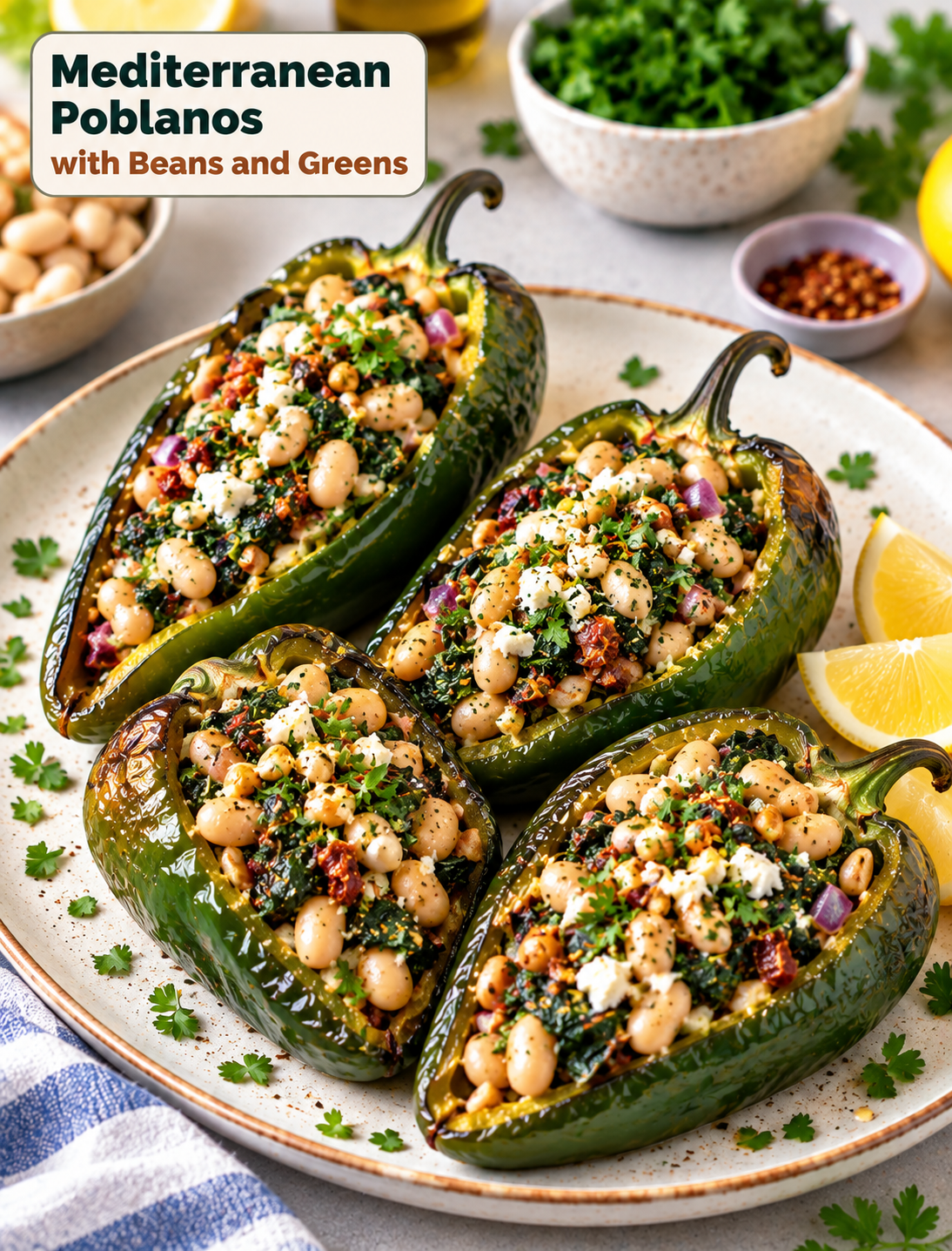
Mediterranean Poblanos with Beans and Greens
Mediterranean Poblanos with Beans and Greens are a flavorful plant-based meal made with roasted poblano peppers, creamy white beans, leafy greens, fresh herbs, garlic, and warm spices. The peppers become tender and slightly smoky while the filling stays hearty, bright, and satisfying.
This stuffed pepper recipe is naturally vegan and gluten-free, making it a simple choice for weeknight dinners, meal prep, or a light lunch. Lemon juice and fresh herbs add a fresh finish, while cumin, smoked paprika, and oregano give the bean filling a savory Mediterranean-style flavor.
Ingredients
For the Poblanos
- 4 large poblano peppers
- 1 tablespoon olive oil
- Salt to taste
For the Filling
- 1 ½ cups cooked cannellini or Great Northern beans
- 3 cups chopped spinach, kale, or Swiss chard
- 1 small red onion, finely chopped
- 2 garlic cloves, minced
- 2 tablespoons olive oil
- 1 tablespoon fresh lemon juice
- 1 teaspoon ground cumin
- ½ teaspoon smoked paprika
- ½ teaspoon dried oregano or za’atar
- Salt and black pepper to taste
- 2 tablespoons chopped fresh parsley or mint
- 2 tablespoons pine nuts or chopped walnuts, optional
For Serving
- Lemon wedges
- Tahini sauce
- Dairy-free yogurt
- Vegan feta
- Olives
How to Make Mediterranean Poblanos with Beans and Greens
Step 1: Roast the Poblanos
Preheat your oven to 400°F (200°C). Lightly coat the poblano peppers with olive oil and place them on a baking sheet.
- Roast for 15–20 minutes.
- Turn the peppers once during roasting.
- Cook until the skins are blistered and lightly charred.
- Transfer the hot peppers to a bowl.
- Cover and let them steam for about 10 minutes.
Steaming loosens the skins and makes the peppers easier to peel. Gently remove the skin, then make a slit down one side and remove the seeds.
Step 2: Cook the Aromatics
Heat 2 tablespoons of olive oil in a large skillet over medium heat. Add the chopped red onion and cook for 3–4 minutes until softened.
Add the minced garlic, cumin, and smoked paprika. Stir for about 1 minute until the garlic and spices become fragrant.
Step 3: Add the Greens
Add the chopped leafy greens to the skillet and stir well. Cook until the greens wilt and become tender.
If the greens release a lot of moisture, cook them uncovered for another minute. The filling should be moist but not watery.
Step 4: Add the Beans and Seasoning
Stir the cooked white beans into the skillet. Add lemon juice, oregano or za’atar, salt, and black pepper.
Cook for another 2–3 minutes, stirring gently, until the beans are heated through.
Remove the skillet from the heat and fold in the fresh parsley or mint. Add pine nuts or walnuts if you want extra crunch.
Step 5: Taste the Filling
Before stuffing the peppers, taste the mixture and adjust the seasoning.
- Add lemon juice for more brightness.
- Add black pepper for extra savory flavor.
- Add chili flakes for heat.
- Add a little salt if the beans taste flat.
This quick taste test helps balance the filling before it goes into the peppers.
Step 6: Stuff the Poblanos
Place the roasted peppers in a lightly oiled baking dish. Carefully spoon the bean and greens mixture into each pepper.
Do not pack the filling too tightly. Leave enough room for the mixture to sit naturally inside the softened peppers.
You can fold the peppers partly closed or leave them open for a colorful presentation.
Step 7: Bake and Finish
For a warmer, more blended dish, bake the stuffed poblanos at 375°F (190°C) for 10–12 minutes.
The short second bake allows the flavors to meld and heats the filling evenly. Serve the peppers warm with lemon wedges, tahini, dairy-free yogurt, or vegan feta.
Tips for the Best Results
- Choose large, firm poblanos that are easy to stuff.
- Roast the peppers until the skin is blistered but the flesh is not overly soft.
- Let the peppers steam before peeling to make the skin easier to remove.
- Drain canned beans well before adding them to the filling.
- Cook excess liquid from the greens so the stuffing does not become soggy.
- Taste the filling before stuffing to adjust the lemon, salt, and spices.
- Use fresh parsley or mint just before serving for a brighter flavor.
- Add toasted nuts or seeds if you want more texture.
Easy Variations
White beans give this recipe a creamy texture, but you can easily change the filling. Chickpeas provide a firmer bite, while cooked lentils create a softer and more earthy mixture.
Spinach works quickly for weeknight cooking, while kale and Swiss chard create a heartier filling. You can also add chopped dill, basil, or cilantro for a different herbal flavor.
For extra Mediterranean flavor, stir in chopped olives, roasted tomatoes, or artichoke hearts. Cooked quinoa or bulgur can also be added when you want a more substantial meal.
If you enjoy spicy food, add crushed red pepper flakes or finely chopped jalapeño. For a milder stuffed pepper, replace poblanos with bell peppers.
Serving Suggestions
Serve these stuffed peppers as a complete vegetarian dinner with a simple salad or roasted vegetables. A spoonful of tahini sauce adds creamy texture and a nutty flavor without dairy.
For a fresh finish, squeeze lemon juice over the peppers just before eating. Olives, vegan feta, toasted seeds, or fresh herbs also work well as toppings.
They are also useful for meal prep because the filling can be prepared ahead and the stuffed peppers can be reheated before serving.
Storage and Make-Ahead Instructions
Allow leftover peppers to cool before placing them in an airtight container. Refrigerate for up to 3–4 days.
To make them ahead, prepare the roasted peppers and filling separately, then refrigerate them until ready to assemble. Stuff the peppers and reheat them in a 375°F oven until hot throughout.
For freezing, place fully cooked stuffed peppers in a freezer-safe airtight container. Thaw them in the refrigerator before reheating for the best texture.
Frequently Asked Questions
Can I use bell peppers instead of poblanos?
Yes. Bell peppers are a good mild substitute and provide a sweeter flavor with little to no heat.
Are poblano peppers spicy?
Poblanos are usually mild to moderately spicy, but their heat can vary. Removing the seeds and membranes can make the finished dish milder.
What beans work best for this recipe?
Cannellini and Great Northern beans work especially well because they have a creamy texture, but chickpeas and cooked lentils are also good choices.
Can I use frozen spinach?
Yes. Thaw and drain frozen spinach well before adding it so the filling does not become watery.
Can I prepare these stuffed peppers ahead?
Yes. Roast the peppers and prepare the filling ahead, then assemble and bake them when you are ready to serve.
How should I reheat Mediterranean stuffed peppers?
Reheat them in a 375°F oven until the filling is hot. You can also microwave individual portions, although the peppers may be softer.
Can I make this recipe without nuts?
Yes. Simply leave out the pine nuts or walnuts. Toasted sunflower or pumpkin seeds can provide similar crunch.
What can I serve with these peppers?
Serve them with a green salad, roasted vegetables, quinoa, hummus, olives, or a simple tahini and lemon sauce.
Nutrition Information
Approximate nutrition per serving, based on four servings:
- Calories: 250
- Protein: 10g
- Fat: 12g
- Carbohydrates: 28g
- Fiber: 8g
- Sugar: 4g
- Sodium: 300mg
Nutrition values can vary depending on the beans, toppings, sauces, and other ingredients used.
Conclusion
Mediterranean Poblanos with Beans and Greens combine tender roasted peppers with a hearty filling of white beans, leafy greens, garlic, herbs, and Mediterranean-inspired spices. Lemon juice keeps the flavors bright, while tahini, vegan feta, or toasted nuts can add a creamy or crunchy finish.
This recipe is an easy way to build a satisfying plant-based dinner from simple ingredients. It works well for weeknight meals, vegetarian entertaining, and make-ahead meal prep while offering plenty of fiber, plant protein, and colorful vegetables.