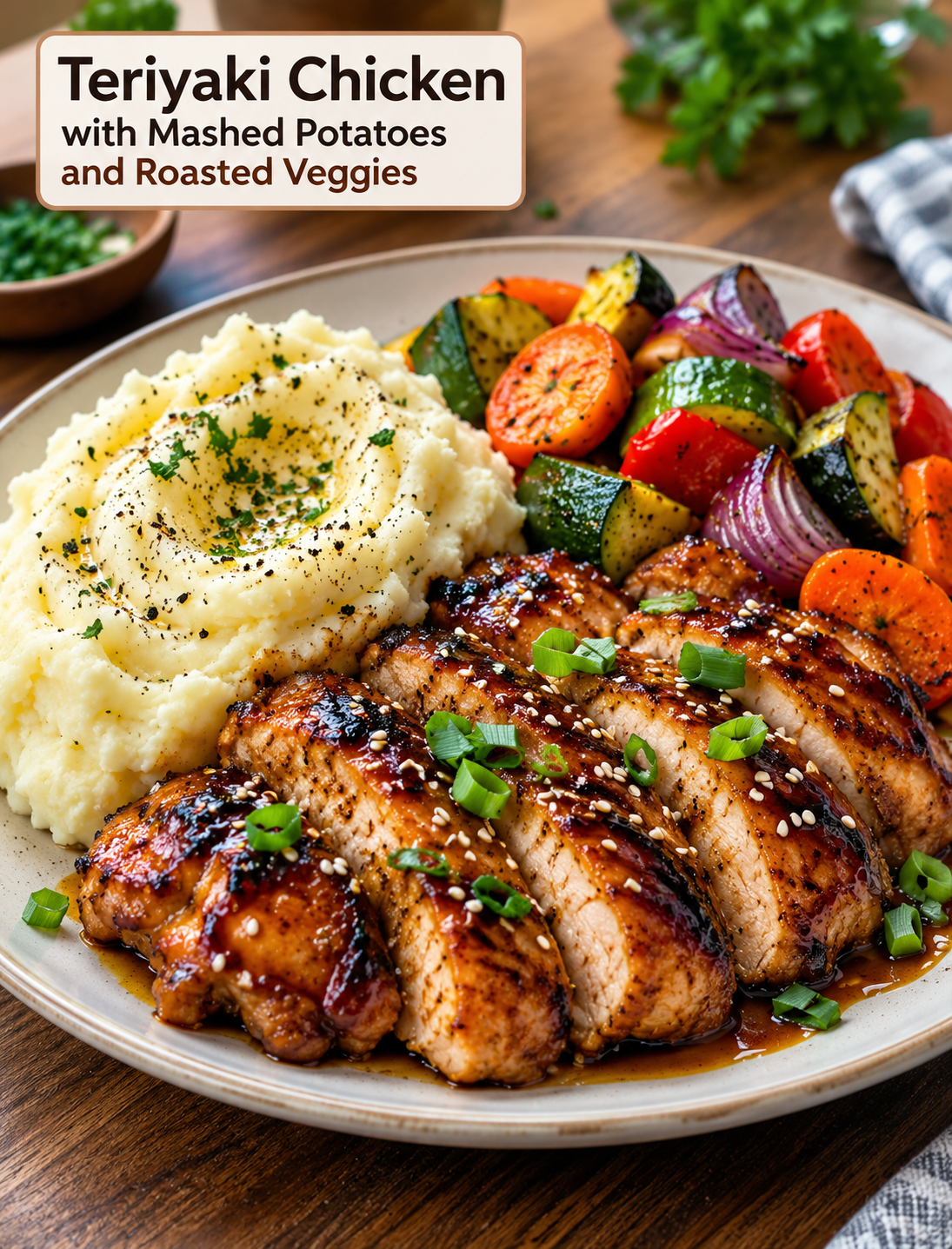
Teriyaki Chicken with Mashed Potatoes and Roasted Veggies
Teriyaki Chicken with Mashed Potatoes and Roasted Veggies is a comforting dinner that combines juicy chicken thighs, creamy mashed potatoes, and colorful oven-roasted vegetables on one plate. The chicken is coated in a savory-sweet teriyaki marinade made with soy sauce, honey, garlic, ginger, and sesame oil.
This easy family dinner brings together Japanese-inspired flavors and classic American comfort food. The tender chicken pairs well with smooth potatoes, while roasted carrots, zucchini, bell pepper, and red onion add color, texture, and a fresh vegetable side.
The recipe serves four and works well for a weeknight dinner, weekend meal, or simple family gathering. Most of the cooking can also be done at the same time, making the meal easier to prepare.
Why You’ll Love This Dinner
- Balanced plate: Chicken provides protein, potatoes add satisfying carbohydrates, and roasted vegetables bring fiber and nutrients.
- Big flavor: Garlic, ginger, honey, soy sauce, and sesame oil create a rich sweet-and-savory glaze.
- Family-friendly: The mild teriyaki flavor pairs easily with creamy potatoes and familiar vegetables.
- Easy preparation: The chicken, potatoes, and vegetables use simple cooking methods.
- Flexible ingredients: You can swap the vegetables or use chicken breast when needed.
- Great for leftovers: Store extra portions in the refrigerator for an easy lunch or dinner.
Ingredients You’ll Need
For the Teriyaki Chicken
- 4 boneless, skinless chicken thighs
- 1/4 cup soy sauce
- 2 tablespoons mirin or rice vinegar
- 2 tablespoons honey or brown sugar
- 1 tablespoon sesame oil
- 2 garlic cloves, minced
- 1 teaspoon fresh grated ginger
- 1 teaspoon cornstarch
- 2 tablespoons water
- 1 teaspoon sesame seeds, optional
- Sliced green onions for garnish
For the Mashed Potatoes
- 4 large Russet or Yukon Gold potatoes
- 1/2 cup whole milk or cream
- 4 tablespoons olive oil
- Salt and black pepper to taste
For the Roasted Vegetables
- 2 carrots, sliced
- 1 zucchini, chopped
- 1 bell pepper, chopped
- 1 red onion, quartered
- 2 tablespoons olive oil
- 1 teaspoon dried thyme or Italian seasoning
- Salt and black pepper to taste
How to Make Teriyaki Chicken with Mashed Potatoes and Roasted Veggies
Step 1: Marinate the Chicken
Add soy sauce, mirin or rice vinegar, honey, sesame oil, minced garlic, and grated ginger to a bowl. Whisk until the honey is well mixed into the marinade.
Place the chicken thighs in the bowl and turn them several times so every piece is coated. Cover and refrigerate for at least 30 minutes. For deeper flavor, marinate the chicken for up to 8 hours.
Helpful point: Keep the chicken refrigerated while it marinates, and do not reuse raw marinade as a sauce unless it is thoroughly cooked first.
Step 2: Prepare the Roasted Vegetables
Preheat your oven to 400°F (200°C).
Place the carrots, zucchini, bell pepper, and red onion on a large baking sheet. Add olive oil, dried thyme or Italian seasoning, salt, and black pepper.
Toss everything until the vegetables are evenly coated. Spread them into a single layer so they roast instead of steaming.
Roast for 25–30 minutes, turning the vegetables halfway through cooking.
Helpful point: Cut the vegetables into similar-sized pieces so they cook more evenly.
Step 3: Make the Mashed Potatoes
Peel the potatoes and cut them into evenly sized chunks. Place them in a large pot and cover with cold water.
Add a generous pinch of salt and bring the water to a boil. Cook for about 15–20 minutes, or until the potatoes are tender when pierced with a fork.
Drain the potatoes well. Return them to the warm pot and mash until smooth.
Warm the milk or cream separately, then gradually mix it into the potatoes with olive oil. Season with salt and black pepper.
Helpful point: Avoid overmixing the potatoes because too much stirring can make them sticky instead of fluffy.
Step 4: Cook the Teriyaki Chicken
Remove the chicken from the marinade and let excess liquid drip off.
Heat a large skillet over medium-high heat. Add the chicken thighs and cook for about 4–5 minutes per side, depending on their thickness.
Continue cooking until the chicken reaches a safe internal temperature of 165°F (74°C) in the thickest part.
Transfer the cooked chicken to a clean plate and let it rest for a few minutes before slicing.
Step 5: Make the Teriyaki Glaze
If you want a thicker sauce, combine 1 teaspoon cornstarch with 2 tablespoons water to make a smooth slurry.
Pour the remaining marinade into a small saucepan and bring it to a full boil. Continue cooking until it reaches a safe temperature, then stir in the cornstarch mixture.
Simmer briefly until the sauce thickens into a glossy glaze.
Important point: Never pour uncooked marinade directly over finished chicken. Raw chicken marinade must be thoroughly cooked before serving.
Step 6: Assemble the Plate
Spoon a generous portion of mashed potatoes onto each plate. Add the roasted vegetables beside the potatoes.
Slice the rested chicken into strips and place it over or beside the mashed potatoes.
Drizzle a small amount of warm teriyaki glaze over the chicken. Finish with sesame seeds and sliced green onions for extra flavor and texture.
Tips for the Best Results
- Use boneless chicken thighs for juicy, flavorful meat.
- Do not overcrowd the baking sheet because the vegetables need space to brown.
- Warm the milk before adding it to the potatoes for a smoother texture.
- Use Yukon Gold potatoes for naturally creamy mashed potatoes.
- Let the cooked chicken rest before slicing to help retain its juices.
- Add the teriyaki glaze just before serving for the best texture.
- Use low-sodium soy sauce if you want to reduce the saltiness.
- For a gluten-free meal, choose certified gluten-free soy sauce or tamari.
Easy Ingredient Swaps
You can replace chicken thighs with boneless chicken breasts, but watch the cooking time because lean breast meat can dry out more quickly.
For the vegetables, broccoli, mushrooms, Brussels sprouts, green beans, or sweet potatoes can work well. Choose vegetables that roast at a similar rate or add quicker-cooking vegetables later.
For dairy-free mashed potatoes, use plant-based milk and a dairy-free butter alternative instead of regular dairy ingredients.
Storage and Reheating
Store leftover chicken, mashed potatoes, and roasted vegetables in separate airtight containers in the refrigerator. For the best quality, enjoy leftovers within 3–4 days.
Reheat the chicken and vegetables until hot throughout. Add a splash of milk to the mashed potatoes before reheating if they have become dry.
Keep the teriyaki glaze refrigerated in a covered container and warm it gently before serving.
Frequently Asked Questions
Can I use chicken breast instead of thighs?
Yes. Chicken breast works well, but cook it carefully because it can become dry if overcooked.
What vegetables can I use instead?
Broccoli, mushrooms, Brussels sprouts, green beans, and sweet potatoes are good substitutes for the listed vegetables.
Can I make this meal ahead of time?
Yes. Prepare the chicken, potatoes, vegetables, and sauce ahead of time, then refrigerate and reheat before serving.
Is this recipe gluten-free?
It can be gluten-free when you use certified gluten-free soy sauce or tamari and check all packaged ingredients.
How can I make the mashed potatoes dairy-free?
Use unsweetened plant-based milk and a dairy-free butter or olive-oil spread instead of regular dairy products.
Can I make the teriyaki sauce thicker?
Yes. Mix cornstarch with water and stir it into the thoroughly cooked marinade while simmering until the sauce thickens.
How do I know when the chicken is done?
Check the thickest part with a food thermometer; chicken should reach 165°F (74°C) for safe consumption.
Can I freeze the leftovers?
The chicken and roasted vegetables can be frozen, although mashed potatoes may change texture slightly after thawing and reheating.