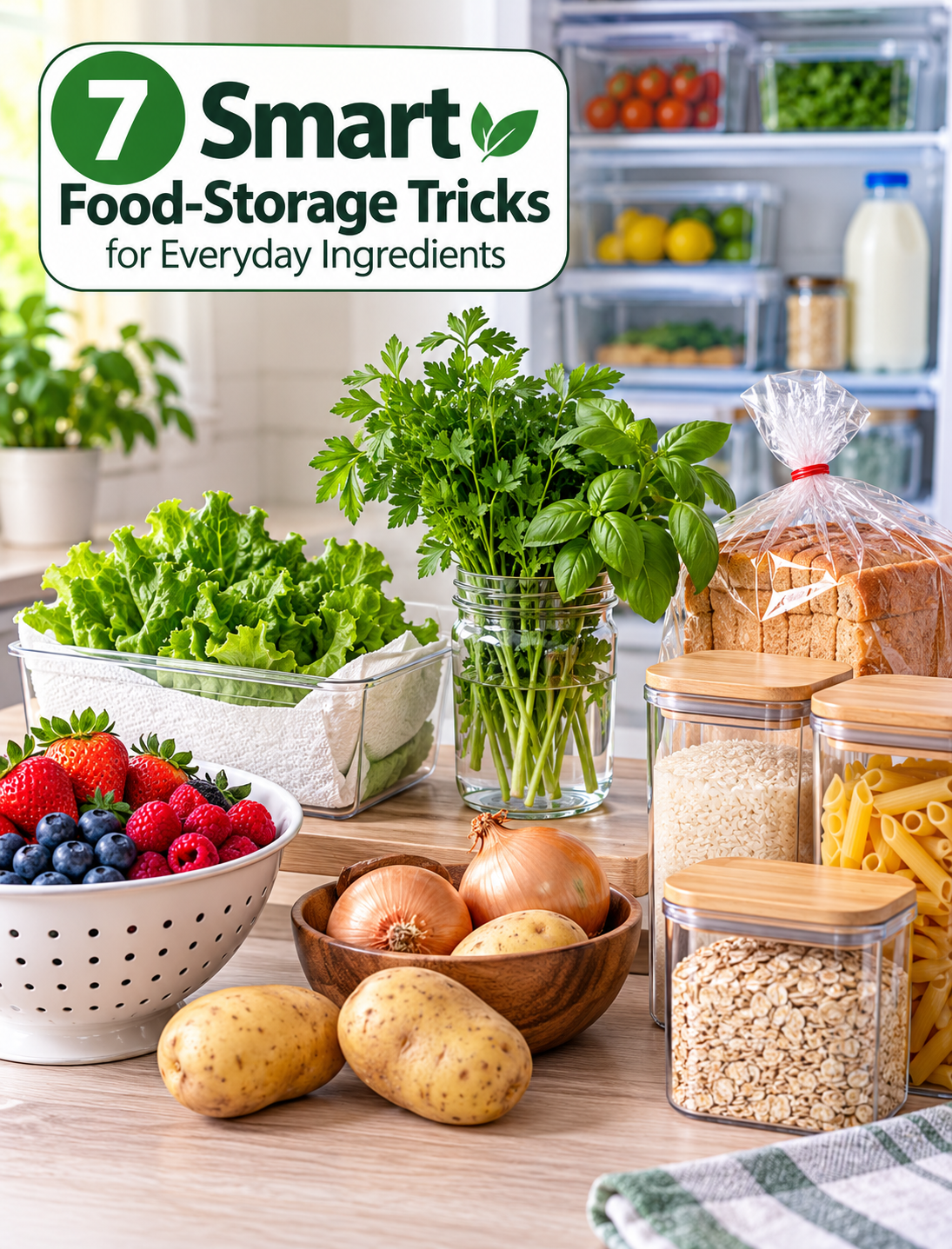
7 Smart Food-Storage Tricks for Everyday Ingredients Full Guide
Keeping everyday ingredients fresh does not have to be complicated. The right storage method can help reduce food waste, protect flavor, and make meal prep easier. Many foods spoil faster because they are stored at the wrong temperature, left uncovered, or placed in the wrong part of the refrigerator.
These simple food-storage tricks work well for common kitchen staples such as berries, leafy greens, bread, herbs, onions, potatoes, and dairy products. Each method uses basic items you may already have at home, including airtight containers, paper towels, storage bags, and clean jars.
Follow these seven practical steps to help your groceries stay fresh longer.
1. Keep Berries Dry Before Refrigerating
Fresh strawberries, blueberries, raspberries, and blackberries can spoil quickly when moisture remains on their surface. Washing berries too early can also shorten their shelf life.
Step-by-step:
- Check the berries and remove any soft, moldy, or damaged pieces.
- Do not wash the entire batch unless you plan to eat it soon.
- Place dry berries in a clean container lined with a paper towel.
- Leave a little space for air to move around the fruit.
- Refrigerate them promptly after bringing them home.
- Wash only the portion you are ready to eat.
The paper towel helps absorb excess moisture that can encourage mold. If berries become wet, gently dry them before returning them to the refrigerator.
2. Wrap Leafy Greens in Paper Towels
Lettuce, spinach, kale, and other leafy greens can become slimy when excess moisture collects inside a storage container. A simple layer of paper towel can help control that moisture.
Step-by-step:
- Remove damaged or wilted leaves.
- If you wash the greens, dry them thoroughly.
- Place a paper towel inside a food-storage container or reusable bag.
- Add the greens without tightly compressing them.
- Add another paper towel on top if the greens are very moist.
- Replace the towel when it becomes damp.
Store leafy vegetables in the refrigerator rather than leaving them on the counter. Keeping them cool and reasonably dry helps maintain their texture and freshness.
3. Store Fresh Herbs Like Flowers
Soft herbs such as cilantro, parsley, and mint often wilt before you have a chance to use them. Treating them more like flowers can help them stay crisp.
Step-by-step:
- Trim a small amount from the herb stems.
- Place the stems in a clean jar with a small amount of water.
- Keep the leaves above the water line.
- Loosely cover the herbs with a food-safe bag.
- Refrigerate herbs that benefit from cool storage.
- Change the water when it becomes cloudy.
For basil, room-temperature storage is often better because cold temperatures can cause the leaves to darken. Keep basil upright in a jar with water and away from direct sunlight.
4. Keep Bread Away From Refrigerator Moisture
The refrigerator may seem like the best place for bread, but cold storage can make bread stale faster. For most everyday bread, room-temperature storage is a better short-term option.
Step-by-step:
- Keep bread in its original packaging if it closes securely.
- Store it in a cool, dry area away from direct sunlight.
- Keep the package sealed to limit moisture loss.
- Avoid storing bread next to the stove or other heat sources.
- Freeze extra bread if you will not use it within several days.
- Remove only the amount you need from the freezer.
Freezing is especially useful for sliced bread because individual slices can be taken out as needed. This can prevent unnecessary waste when you buy larger packages.
5. Store Potatoes and Onions Separately
Potatoes and onions are common pantry staples, but storing them together can cause problems. Both need airflow, and onions can release gases that may affect nearby produce.
Step-by-step:
- Inspect potatoes and remove any damaged ones.
- Keep potatoes in a cool, dark, well-ventilated place.
- Store onions separately in a dry, ventilated area.
- Avoid sealed plastic bags for long-term storage.
- Keep both foods away from direct sunlight.
- Check them regularly and remove spoiled pieces.
Do not wash potatoes before long-term storage because added moisture can encourage spoilage. Wash them shortly before cooking instead.
6. Use Airtight Containers for Dry Ingredients
Flour, rice, pasta, cereal, oats, sugar, and other pantry staples can lose quality when exposed to moisture, air, or pests. Airtight containers provide a simple layer of protection.
Step-by-step:
- Check the package for signs of moisture or pests.
- Transfer dry ingredients into clean, dry containers when practical.
- Choose containers with tight-fitting lids.
- Label each container with the ingredient name and date.
- Store containers in a cool, dry pantry.
- Use older ingredients before opening newer packages.
Clear containers can also make it easier to see how much food you have. This simple system helps with grocery planning and reduces the chance of buying items you already have.
7. Organize Your Refrigerator by Food Type
A crowded refrigerator can make it difficult to find food and may lead to forgotten leftovers. Organizing food by type makes daily cooking easier and helps you use ingredients before they spoil.
Step-by-step:
- Keep ready-to-eat foods in clean, covered containers.
- Store raw meat and seafood securely to prevent leaks.
- Keep raw animal products separated from foods that will be eaten without cooking.
- Place foods that need to be used soon where you can see them.
- Label leftovers with the date.
- Clean spills as soon as possible.
- Check older foods before preparing a new meal.
Use the refrigerator door mainly for items that are less sensitive to temperature changes, such as many condiments. Keep foods that require consistent cold temperatures in the main refrigerator area.
A Simple Food-Storage Routine for Every Week
Good storage works best when it becomes part of your normal kitchen routine. You do not need a complicated system to keep groceries organized.
Try this weekly routine:
- Check the refrigerator before grocery shopping.
- Move older foods toward the front.
- Remove spoiled food promptly.
- Dry produce before storing it when appropriate.
- Check leftovers and use them before cooking new meals.
- Clean storage containers regularly.
- Freeze foods you will not use soon.
- Keep pantry staples sealed and labeled.
This routine can help you save money because fewer groceries end up in the trash. It can also make meal planning faster because you know what ingredients are available.
Final Tips for Safer Food Storage
Freshness and food safety are not the same thing. An ingredient can look normal but still require proper handling. Always follow the storage instructions on packaged foods and refrigerate foods that require refrigeration.
Keep your refrigerator at 40°F (4°C) or below and your freezer at 0°F (-18°C) for proper cold storage. Refrigerate perishable foods promptly instead of leaving them at room temperature for long periods.
When in doubt about a food’s safety, do not taste it to determine whether it is still good. When storing leftovers, use clean containers, label dates, and follow recommended storage times.
Small storage changes can make a big difference. Keeping berries dry, greens protected from excess moisture, herbs properly hydrated, and pantry foods sealed can help everyday ingredients stay useful for longer.
FAQs
How should fresh berries be stored?
Keep unwashed berries dry in the refrigerator and remove damaged fruit before storage. Wash only the portion you plan to eat soon.
Should leafy greens be washed before storage?
They can be washed first if they are dried thoroughly, but excess moisture should be removed before refrigeration to reduce spoilage.
What is the best way to store fresh herbs?
Store soft herbs upright in a jar with a small amount of water and loosely cover them. Basil is usually better kept at room temperature.
Should bread be stored in the refrigerator?
For most bread, room-temperature storage is better for short-term use, while freezing is useful for longer storage.
Can potatoes and onions be stored together?
It is better to store potatoes and onions separately in cool, dry, well-ventilated areas to help reduce premature spoilage.
Are airtight containers good for pantry foods?
Yes, airtight containers help protect dry ingredients from moisture, air, and pantry pests while keeping them easier to organize.
How can I reduce food waste at home?
Use older ingredients first, label leftovers, freeze extra food, and check your refrigerator before buying more groceries.
What temperature should a refrigerator be?
Keep your refrigerator at 40°F (4°C) or below to help keep perishable foods safely chilled.