Fresh Cucumber Lemonade

A light, cooling drink made with fresh cucumber, lemon juice, and water. It’s refreshing, hydrating, and great for hot days.

Ingredients

Servings: 4 glasses

  • 2 medium cucumbers, peeled and chopped
  • 1 cup fresh lemon juice (about 4–6 lemons)
  • 4 cups cold water
  • 3–4 tablespoons honey, sugar, or preferred sweetener
  • 1 cup ice cubes
  • Lemon slices and cucumber rounds for garnish
  • Optional: fresh mint leaves

Instructions

Step 1: Blend the Cucumbers

Add chopped cucumbers and 1 cup of water into a blender. Blend until smooth.

Step 2: Strain

Discover more
Fruits & Vegetables
Desserts
Meat & Seafood

Pour the cucumber mixture through a fine mesh strainer into a pitcher to remove pulp if you prefer a smoother drink.

Step 3: Add Lemon Juice

Mix in the fresh lemon juice.

Step 4: Sweeten

Add honey or sugar and stir until dissolved.

Step 5: Add Water & Ice

Pour in the remaining cold water and add ice cubes.

Step 6: Serve

Garnish with lemon slices, cucumber rounds, or mint leaves. Serve chilled.

Description Notes

  • Cucumbers add a clean, fresh flavor and natural hydration.
  • Lemon gives brightness and vitamin C.
  • The drink can be adjusted sweeter or more tart depending on preference.
  • Best enjoyed fresh within 24 hours.

Tips

  • Use chilled cucumbers for extra-refreshing lemonade.
  • Roll lemons on the counter before juicing to get more juice.
  • Add sparkling water instead of still water for a fizzy version.
  • Freeze cucumber slices as ice cubes to avoid dilution.
  • For stronger flavor, let the drink chill for 1 hour before serving.

Variations

  • Mint Cucumber Lemonade: Add fresh mint while blending.
  • Ginger Twist: Add 1 teaspoon grated ginger.
  • Low-Sugar Version: Use stevia or monk fruit sweetener.
  • Detox Style: Add sliced lime and fresh basil.

Nutritional Information

Discover more
bread
Cookies
cheesy

Approximate per serving (1 glass):

  • Calories: 45–70
  • Carbohydrates: 12–16g
  • Sugar: 10–14g
  • Vitamin C: 20–30% daily value
  • Fiber: 1g
  • Fat: 0g
  • Protein: 1g

Values vary depending on sweetener used.

Benefits

  • Helps with hydration
  • Refreshing during warm weather
  • Contains vitamin C from lemons
  • Cucumbers provide antioxidants and water content
  • Lower in calories than many sodas or sugary drinks

Important Note

Discover more
Cheese
Grains & Pasta
Cookware & Diningware

Drinking cucumber lemonade alone will not cause major weight loss in one week. Any temporary drop in weight is usually from reduced calorie intake or water loss, not rapid fat loss. Healthy, sustainable weight loss comes from balanced eating, activity, sleep, and consistency.

Storage

  • Refrigerate in a covered pitcher for up to 2 days.
  • Stir before serving since ingredients may settle.

Frequently Asked Questions

1. Can I make it ahead of time?

Yes. Prepare it a few hours early and keep refrigerated.

2. Do I need to peel the cucumbers?

No, but peeling gives a smoother and milder taste.

Discover more
Burgers
cookie
cheese

3. Can I use bottled lemon juice?

Fresh lemon juice tastes much better, but bottled can work in a pinch.

4. Is it good for weight loss?

It can support a lower-calorie diet if used instead of sugary beverages, but it is not a miracle fat-burning drink.

5. Can kids drink it?

Yes, it’s family-friendly and naturally refreshing.

6. Can I make it sugar-free?

Absolutely. Use a sugar substitute or skip sweetener entirely.

7. What cucumbers work best?

English cucumbers or seedless cucumbers are ideal because they are less bitter.

5 Powerful Seeds That Support Health Naturally

Seeds have become some of the most talked-about superfoods in modern nutrition. From smoothies to salads and healthy snacks, tiny seeds are packed with nutrients that can support overall wellness. However, many exaggerated claims online suggest that seeds can cure serious diseases. Science does not support those claims.

What research does confirm is that certain seeds can contribute to a healthy lifestyle and may help reduce the risk of chronic diseases when included as part of a balanced diet.

1. Chia Seeds: Tiny Seeds Packed with Nutrition

Chia seeds are among the most popular healthy foods today. Despite their small size, they contain an impressive amount of nutrients, including:

Plant-based omega-3 fatty acids
Soluble fiber
Plant protein
Antioxidants
Calcium and magnesium
Benefits of Chia Seeds

Supports Healthy Digestion
The high fiber content in chia seeds helps improve digestion and supports regular bowel movements.

Helps Control Blood Sugar Levels
Research suggests chia seeds may help support healthy blood sugar management.

May Support Heart Health
The fiber and healthy fats found in chia seeds may contribute to healthy cholesterol levels.

Provides Long-Lasting Energy
Chia seeds contain slow-digesting carbohydrates that can help provide steady energy throughout the day.

2. Flaxseed: A Rich Source of Lignans

Flaxseed is valued for its high concentration of lignans, natural compounds that act as antioxidants.

Benefits of Flaxseed

Supports Digestive Health
Flaxseed is rich in fiber, which helps promote healthy digestion.

Supports Hormonal Balance
Some studies suggest flaxseed may help support hormone balance, particularly in women.

May Help Reduce Inflammation
The omega-3 fats and antioxidants in flaxseed may support a healthy inflammatory response.

Supports Cardiovascular Health
Regular flaxseed consumption may contribute to heart health and healthy cholesterol levels.

While researchers continue to study flaxseed and cancer prevention, current evidence remains preliminary and flaxseed is not considered a cancer treatment.

3. Pumpkin Seeds: Nutrient-Dense and Heart Friendly

Pumpkin seeds are packed with important nutrients such as:

Zinc
Healthy fats
Antioxidants
Tryptophan
Benefits of Pumpkin Seeds

Supports Immune Function
Their zinc content helps support normal immune system function.

Supports Prostate Health
Research suggests pumpkin seeds may help support prostate wellness in men.

May Improve Sleep Quality
Tryptophan may help support healthy sleep patterns and mood.

Supports Healthy Cholesterol Levels
Their healthy fats and antioxidants may contribute to heart health.

4. Poppy Seeds: Small Seeds with Big Nutritional Value

Poppy seeds are rich in calcium, iron, B vitamins, and healthy fats.

Benefits of Poppy Seeds
Supports bone health
Contributes to healthy metabolism
Supports cardiovascular wellness
Adds valuable nutrients to a balanced diet

Because of their mineral content, poppy seeds can be a nutritious addition to meals and baked goods.

5. Sesame Seeds: Ancient Seeds with Modern Benefits

Sesame seeds have been consumed for thousands of years and remain highly valued for their nutritional profile.

Benefits of Sesame Seeds

Supports Bone Health
Sesame seeds contain calcium and magnesium, which are important for maintaining strong bones.

Supports Heart Health
Their healthy fats and antioxidants may help support cardiovascular function.

Supports Energy Production
B vitamins and healthy fats contribute to normal metabolism and energy production.

What Does Science Say About Seeds and Cancer?

It is important to be realistic about health claims.

No seed can cure, reverse, or eliminate cancer.

However, research shows that healthy dietary patterns may help reduce the risk of certain cancers. These habits include:

Eating fiber-rich foods
Consuming antioxidant-rich foods
Limiting ultra-processed foods
Choosing healthy plant-based fats
Maintaining a balanced diet

Seeds can contribute to these healthy habits because they provide fiber, minerals, antioxidants, and beneficial fats.

However, they do not replace:

Medical evaluations
Chemotherapy
Radiation therapy
Surgery
Immunotherapy
Approved medical treatments

The best approach is combining professional medical care with proper nutrition to support overall health.

Easy Ways to Add More Seeds to Your Diet
Add chia or flaxseed to smoothies and yogurt
Sprinkle sesame or pumpkin seeds over salads
Use poppy seeds in baking recipes
Mix seeds into oatmeal or homemade granola
Add ground flaxseed to soups or sauces

Moderation and variety are key. A balanced diet rich in vegetables, fruits, proteins, whole grains, and healthy fats remains the foundation of long-term health.

Final Thoughts

Chia, flaxseed, pumpkin, poppy, and sesame seeds are nutritional powerhouses that can support digestion, heart health, metabolism, and overall wellness. While they are not miracle cures, they are excellent additions to a healthy lifestyle.

Instead of believing exaggerated health claims, focus on evidence-based nutrition habits that truly support your health over time.

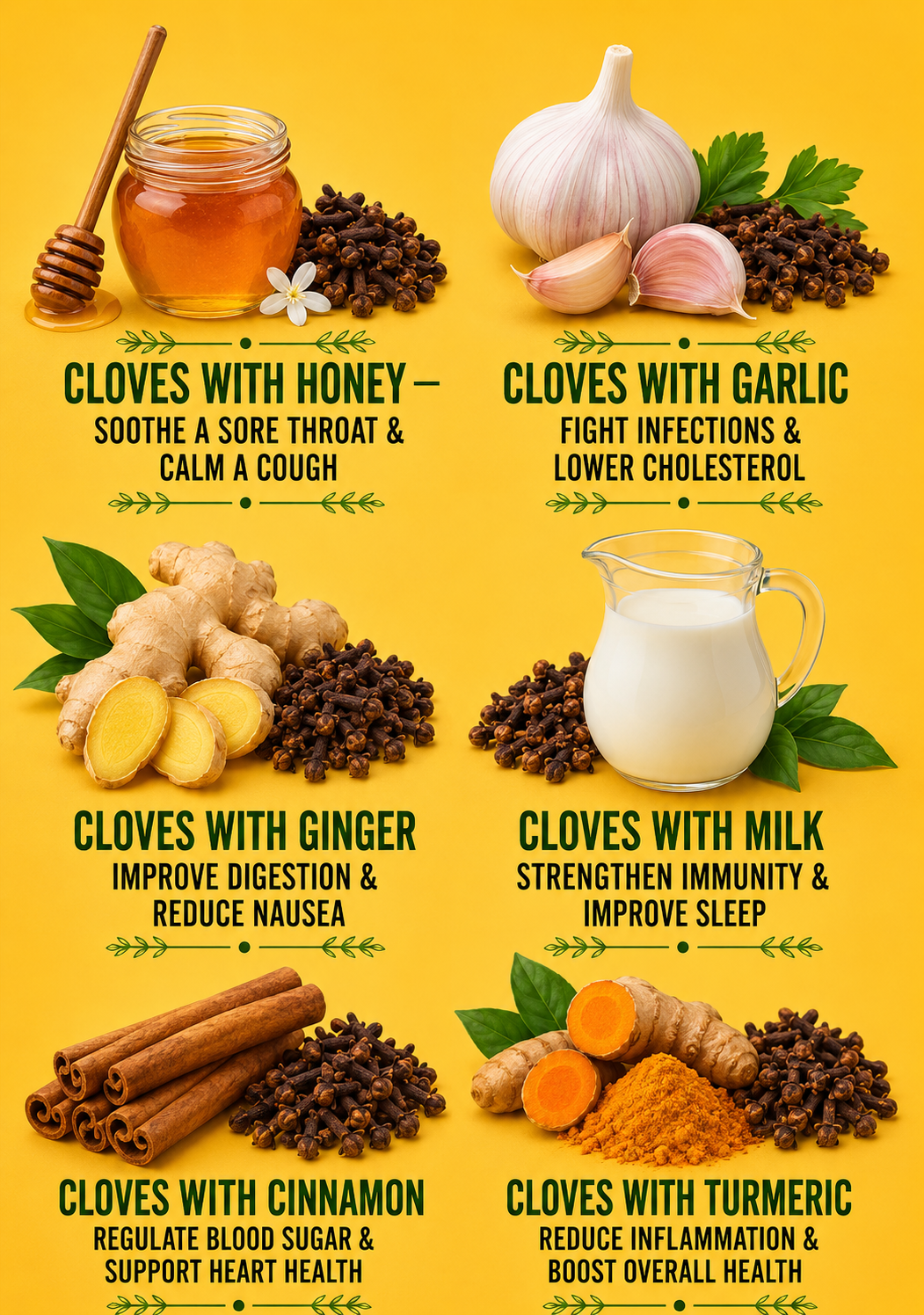
20 Genius Ways to Use Cloves for Your Health

1. Cloves + Honey 🍯

Benefits: Helps soothe a sore throat and calm coughing.

Remedy:

  • Mix ½ tsp ground cloves with 1 tbsp honey.
  • Take once or twice daily.

2. Cloves + Garlic 🧄

Benefits: Supports immunity and fights infections.

Remedy:

  • Crush 1 garlic clove.
  • Add a pinch of ground cloves.
  • Consume with food.

3. Cloves + Ginger 🌿

Benefits: Aids digestion and helps reduce nausea.

Remedy:

  • Boil 1 cup water with 3 cloves and a few ginger slices.
  • Strain and drink warm.

4. Cloves + Milk 🥛

Benefits: Promotes relaxation and better sleep.

Remedy:

  • Add 2 cloves to warm milk.
  • Steep for 5 minutes and drink before bed.

5. Clove Tea ☕

Benefits: Supports digestion and warms the body.

Remedy:

  • Boil 4–5 cloves in 1 cup water for 10 minutes.
  • Strain and enjoy.

6. Cloves + Cinnamon 🌰

Benefits: Supports healthy blood sugar levels.

Remedy:

  • Brew cloves and cinnamon in hot water.
  • Drink once daily.

7. Cloves + Turmeric 🧡

Benefits: Supports overall wellness and healthy inflammation response.

Remedy:

  • Mix a pinch of cloves and turmeric into warm water or milk.

8. Cloves for Toothache 😁

Benefits: Helps temporarily ease tooth discomfort.

Remedy:

  • Place a whole clove near the affected tooth.
  • Remove after 10–15 minutes.

9. Clove Mouth Rinse 💧

Benefits: Freshens breath naturally.

Remedy:

  • Boil 5 cloves in water.
  • Cool and use as a mouth rinse.

10. Cloves + Lemon 🍋

Benefits: Refreshing drink that supports digestion.

Remedy:

  • Add 2–3 cloves and lemon slices to warm water.

11. Cloves for Congestion 🌬️

Benefits: Helps open nasal passages.

Remedy:

  • Add cloves to a bowl of hot water.
  • Inhale the steam carefully.

12. Cloves + Basil 🌱

Benefits: Supports respiratory comfort.

Remedy:

  • Brew basil leaves and cloves together as tea.

13. Cloves + Green Tea 🍵

Benefits: Rich in antioxidants.

Remedy:

  • Add 2 cloves while steeping green tea.

14. Cloves + Orange Peel 🍊

Benefits: Refreshing digestive drink.

Remedy:

  • Simmer cloves and orange peel in water.

15. Clove Bath Soak 🛁

Benefits: Relaxing and soothing.

Remedy:

  • Add clove-infused water to a warm bath.

16. Cloves + Fennel Seeds 🌿

Benefits: Supports digestion after meals.

Remedy:

  • Chew a few fennel seeds with 1–2 cloves.

17. Cloves + Cardamom 🌰

Benefits: Aromatic tea for digestive comfort.

Remedy:

  • Brew cloves and cardamom in hot water.

18. Cloves + Apple Cider Vinegar 🍎

Benefits: Supports digestive wellness.

Remedy:

  • Add a pinch of cloves to diluted apple cider vinegar.

19. Cloves + Coconut Oil 🥥

Benefits: Helps maintain oral hygiene.

Remedy:

  • Mix a pinch of clove powder with coconut oil and swish gently.

20. Cloves + Peppermint 🌿

Benefits: Refreshes breath and supports digestion.

Remedy:

  • Brew peppermint leaves and cloves as tea.

Important Note

These remedies are traditional home uses and are not a substitute for medical treatment. If symptoms persist or you have a medical condition, consult a healthcare professional.

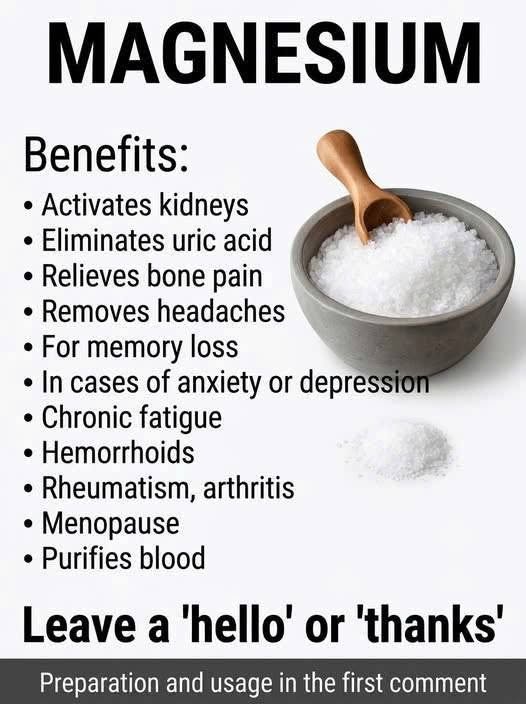
Magnesium Drink

Ingredients

  • 1 tsp magnesium chloride flakes (food grade)
  • 1 glass (250 ml) water
  • Lemon juice (optional)

Instructions

➡️ Pour 1 glass of water into a glass.

➡️ Add 1 teaspoon of food-grade magnesium chloride flakes.

➡️ Stir well until completely dissolved.

➡️ Add a little lemon juice if desired.

➡️ Drink once daily, preferably after a meal.

➡️ Store any remaining mixture in the refrigerator.

Important Note

⚠️ The health claims shown in the image (such as “purifies blood,” “eliminates uric acid,” “treats hemorrhoids,” “removes headaches,” or “cures arthritis”) are not all supported by strong scientific evidence.

Magnesium may help some people with:

  • Maintaining normal muscle and nerve function
  • Supporting bone health
  • Reducing magnesium deficiency
  • Helping with some migraine symptoms
  • Supporting normal energy production

If you have kidney disease, take medications, or are pregnant, consult a healthcare professional before using magnesium supplements.

Q&A

Q: Can I take magnesium every day?
A: Many people can, but follow the dosage on the product label or your healthcare provider’s advice.

Q: What is the best time to take magnesium?
A: Many people prefer taking it in the evening or after meals.

Q: Can magnesium cause side effects?
A: Yes. Too much magnesium may cause diarrhea, nausea, or stomach discomfort.

Mint & Lemon Tea Recipe – A Refreshing Homemade Drink That Instantly Brightens My Day

There are some recipes that become a part of your routine without you even realizing it, and for me, Mint & Lemon Tea is one of them. It isn’t a fancy drink, and it doesn’t require expensive ingredients, but somehow it always manages to make my day a little better.

I was first introduced to this tea by my aunt a few years ago. She was the kind of person who always seemed to have a natural remedy for everything. If someone had a cold, she had tea for it. If someone were stressed, she had another tea. One afternoon, after a particularly exhausting week, she handed me a warm cup of mint & lemon tea and said, “Just sit down and enjoy this for a few minutes.”

I still remember that first sip. The freshness of mint combined with the bright citrus flavor of lemon felt incredibly soothing. It was light, refreshing, and comforting all at once. Since then, this tea has become one of my favorite homemade drinks.

Last weekend, I decided to make a large pot for my family after dinner. The weather was pleasant, and we were all spending time together in the living room. As the mint leaves simmered on the stove, the entire kitchen filled with a fresh herbal aroma that immediately caught everyone’s attention.

My younger brother walked in and asked what I was making because the house smelled amazing. A few minutes later, everyone had a warm cup in their hands. We sat together talking, laughing, and enjoying the simple pleasure of homemade tea. It was one of those ordinary moments that somehow become special memories.

Whenever I’m feeling stressed, overwhelmed, or simply need a little break from a busy day, this mint & lemon tea is usually my first choice. On happy days, I make it as a treat. On quiet weekends, I enjoy it while reading a book. During colder months, I drink it warm, and during summer, I serve it chilled over ice.

That’s one of the reasons I love this recipe so much—it’s simple, versatile, and always satisfying.

Why You’ll Love This Mint & Lemon Tea
There are countless tea recipes available, but this one stands out because of its simplicity and freshness.

Refreshing Flavor
The coolness of fresh mint pairs beautifully with the tangy brightness of lemon. Together, they create a naturally refreshing drink that never feels heavy.

Quick and Easy
You only need a handful of ingredients and about 10 minutes of your time.

Naturally Low in Calories
Unlike many store-bought beverages that contain excessive sugar and artificial ingredients, this tea is naturally light and wholesome.

Perfect for Every Season
Serve it warm during chilly mornings or cold evenings, or enjoy it over ice on hot summer afternoons.

Family-Friendly
Everyone in my family enjoys it, from adults to teenagers. It’s one of those drinks that appeals to almost everyone.

Ingredients
This recipe serves 2 cups.

Ingredient Quantity
Water 2 cups
Fresh mint leaves 10–12 leaves
Fresh lemon juice 1 tablespoon
Honey (optional) 1 teaspoon
Lemon slices For garnish
Fresh mint sprigs For garnish,
Ingredient Notes: Fresh Mint Leaves
Fresh mint is the star of this recipe. The leaves provide a cooling and refreshing flavor that makes the tea feel incredibly uplifting.

If possible, use freshly picked mint leaves because they offer the strongest aroma and flavor.

Lemon Juice
Fresh lemon juice is always the best choice. Bottled lemon juice can work in a pinch, but fresh lemons provide a brighter and more natural citrus flavor.

Honey
Honey is completely optional. I often skip it when I want a lighter drink, but sometimes I add a small amount when I’m craving a hint of sweetness.

Water
Since tea is mostly water, using clean filtered water can noticeably improve the final taste.

How to Make Mint & Lemon Tea Step 1: Prepare the Ingredients
Wash the mint leaves thoroughly under running water to remove any dirt or debris.

Roll the lemon on the counter before cutting it. This helps release more juice.

Step 2: Boil the Water
Pour 2 cups of water into a saucepan and place it over medium-high heat.

Allow the water to come to a gentle boil.

Step 3: Add the Mint Leaves
Once the water reaches a boil, add the fresh mint leaves.

Reduce the heat slightly and allow the leaves to simmer for 4–5 minutes.

During this time, you’ll notice the water taking on a light green tint and the kitchen filling with a wonderful mint aroma.

Step 4: Steep for Extra Flavor
Turn off the heat and let the mint steep for another 2–3 minutes.

This extra steeping time allows more flavor to develop without making the tea too strong.

Step 5: Strain the Tea
Using a fine mesh strainer, pour the tea into serving cups or mugs.

Discard the used mint leaves.

Step 6: Add Fresh Lemon Juice
Stir in the lemon juice while the tea is still warm.

Adding lemon after cooking helps preserve its fresh taste and natural nutrients.

Step 7: Sweeten if Desired
Add honey and stir until fully dissolved.

Taste and adjust sweetness according to your preference.

Step 8: Garnish and Serve
Add a slice of lemon and a fresh mint sprig to each cup.

Serve immediately and enjoy.

Pro Tips for the Best Mint & Lemon Tea: Don’t Overboil the Mint
Overcooking mint can sometimes create a slightly bitter taste. Five minutes is usually enough.

Use Fresh Ingredients
Fresh mint and fresh lemon make a huge difference in flavor.

Add Ginger for extra warmth.
A few slices of fresh ginger create a comforting variation that’s especially enjoyable during cooler months.

Make an Iced Version
Allow the tea to cool completely, refrigerate it, and serve over ice for a refreshing summer beverage.

Adjust the lemon.
Some people prefer a stronger citrus flavor while others enjoy a milder taste. Feel free to customize it.

Variations You Can Try: Mint Lemon Ginger Tea
Add 1 teaspoon freshly grated ginger while simmering.

Mint Lemon Green Tea
Steep a green tea bag along with the mint leaves.

Mint Lemon Honey Tea
Increase honey slightly for a naturally sweet version.

Mint Lemon Cucumber Cooler
Chill the tea and add cucumber slices for an extra refreshing summer drink.

Health Benefits of Mint & Lemon Tea
Many people enjoy this tea not only because it tastes great but also because of the ingredients it contains.

Mint May Help You Feel Refreshed
Mint is known for its cooling sensation and pleasant aroma.

Lemons Provide Vitamin C
Fresh lemons naturally contain vitamin C and antioxidants.

Hydrating and Light
This tea is a flavorful way to increase your daily fluid intake.

Naturally Caffeine-Free
Unlike coffee or traditional black tea, this recipe contains no caffeine.

Nutrition InformationApproximate Nutrition Per Serving (1 Cup)
Nutrient Amount
Calories 12 kcal
Total Carbohydrates 3.2 g
Sugars 1.8 g
Protein 0.3 g
Total Fat 0 g
Saturated Fat 0 g
Fiber 0.4 g
Sodium 2 mg
Potassium 28 mg
Vitamin C: 12–15% Daily Value
Calcium 1% Daily Value
Iron 1% Daily Value
Nutrition With Honey Added
Nutrient Amount
Calories: 33 kcal
Carbohydrates 8.8 g
Sugars 7.4 g
Protein 0.3 g
Fat 0 g
Nutrition values are estimates and may vary depending on ingredient brands and serving sizes.

Frequently Asked Questions Can I prepare this tea in advance?
Yes. Store it in an airtight container in the refrigerator for up to 48 hours.

Can I drink it cold?
Absolutely. In fact, it’s one of my favorite summer drinks.

Can I use dried mint?
Yes. Replace fresh mint with approximately 1 teaspoon of dried mint.

Is this tea caffeine-free?
Yes, this recipe contains no caffeine.

Can children drink this tea?
Yes, the ingredients are simple and family-friendly.

Final Thoughts
Mint & lemon tea is proof that the simplest recipes are often the most enjoyable. Every time I make it, it reminds me of relaxing weekends, family conversations, and those small moments of peace that make life feel a little lighter.

Whether I’m celebrating a good day, dealing with a stressful one, or simply looking for something warm and refreshing to sip on, this tea never disappoints. The combination of fresh mint and bright lemon creates a drink that feels comforting, revitalizing, and homemade in the best possible way.


The Vitamin Your Body May Need When Legs and Bones Feel Weak or Uncomfortable

Many people experience occasional discomfort in their legs, joints, or bones, especially as they age or spend long hours sitting, standing, or engaging in physical activity. While many factors can contribute to these sensations, proper nutrition plays an important role in maintaining healthy bones, muscles, and overall mobility.

One nutrient that often receives attention for its connection to bone health is vitamin D. Known as the “sunshine vitamin,” vitamin D helps the body absorb calcium and supports normal muscle function. Maintaining adequate levels of this essential nutrient is an important part of a balanced and healthy lifestyle.

Why Vitamin D Is Important

Vitamin D is a fat-soluble vitamin that helps regulate calcium and phosphorus in the body. These minerals are essential for maintaining strong bones and teeth.

Without sufficient vitamin D, the body may struggle to absorb calcium effectively, which can affect bone strength over time.

Vitamin D also contributes to:

Normal muscle function
Bone maintenance
Immune system support
Healthy aging
Overall wellness
Common Sources of Vitamin D

Getting enough vitamin D can come from a combination of sunlight exposure, diet, and supplements when recommended by a healthcare professional.

Sunlight

The body naturally produces vitamin D when the skin is exposed to sunlight. Spending time outdoors can help support natural vitamin D production.

Fatty Fish

Certain fish are naturally rich in vitamin D, including:

Salmon
Sardines
Mackerel
Tuna
These foods can be excellent additions to a balanced diet.

Egg Yolks

Egg yolks contain small amounts of vitamin D and provide additional nutrients that support overall health.

Fortified Foods

Many foods are fortified with vitamin D, such as:

Milk
Plant-based milk alternatives
Breakfast cereals
Yogurts
Checking food labels can help identify fortified products.

Signs That May Be Associated With Low Vitamin D

Vitamin D deficiency can only be confirmed through appropriate medical testing. However, some people with low levels may experience symptoms such as:

Fatigue
Muscle weakness
Reduced physical performance
Bone discomfort
General feelings of low energy
Because these symptoms can have many different causes, it is important not to self-diagnose.

Supporting Bone Health Naturally

Maintaining strong bones involves more than a single nutrient. A healthy lifestyle often includes several important habits.

Eat Calcium-Rich Foods

Calcium works alongside vitamin D to support healthy bones.

Good sources include:

Dairy products
Leafy green vegetables
Almonds
Fortified foods
Stay Physically Active

Weight-bearing activities can help support bone strength and mobility.

Examples include:

Walking
Hiking
Dancing
Strength training
Maintain a Balanced Diet

A varied diet provides essential nutrients that contribute to overall wellness.

Stay Hydrated

Proper hydration supports many bodily functions and contributes to general health.

Foods That Pair Well With Vitamin D

Combining vitamin D-rich foods with nutritious meals can help create a balanced eating plan.

Salmon and Vegetables

A grilled salmon meal paired with vegetables provides protein, healthy fats, and vitamin D.

Eggs and Whole Grains

A breakfast containing eggs and whole-grain toast can be both satisfying and nutrient-rich.

Yogurt and Fruit

Fortified yogurt with fresh fruit offers a simple snack option.

Smoothies

Blending fortified milk with fruits can create a refreshing beverage that supports nutrient intake.

Lifestyle Habits That Support Healthy Bones

Get Regular Exercise

Physical activity encourages strength, flexibility, and mobility.

Spend Time Outdoors

Safe sunlight exposure can help the body naturally produce vitamin D.

Prioritize Sleep

Quality sleep supports recovery and overall wellness.

Avoid Excessive Smoking and Alcohol

Healthy lifestyle choices can contribute to long-term bone health.

Frequently Asked Questions

Is Vitamin D Important for Adults?

Yes. Vitamin D plays an important role throughout life and contributes to bone and muscle health in adults of all ages.

Can Food Alone Provide Enough Vitamin D?

Some people obtain sufficient vitamin D through food and sunlight, while others may need additional support. Individual needs vary.

Should Everyone Take Vitamin D Supplements?

Not necessarily. Supplement needs depend on factors such as diet, lifestyle, geographic location, and medical guidance.

How Can I Know My Vitamin D Level?

A healthcare professional can evaluate vitamin D status through appropriate testing.

Final Thoughts

Vitamin D is an essential nutrient that plays a key role in maintaining healthy bones and supporting normal muscle function. While occasional leg or bone discomfort can have many possible causes, ensuring adequate nutrition is an important part of overall wellness.

By focusing on a balanced diet, regular physical activity, healthy lifestyle habits, and appropriate vitamin D intake, you can support long-term bone health and maintain an active lifestyle. Understanding the importance of this vital nutrient is a positive step toward promoting strength, mobility, and overall well-being.