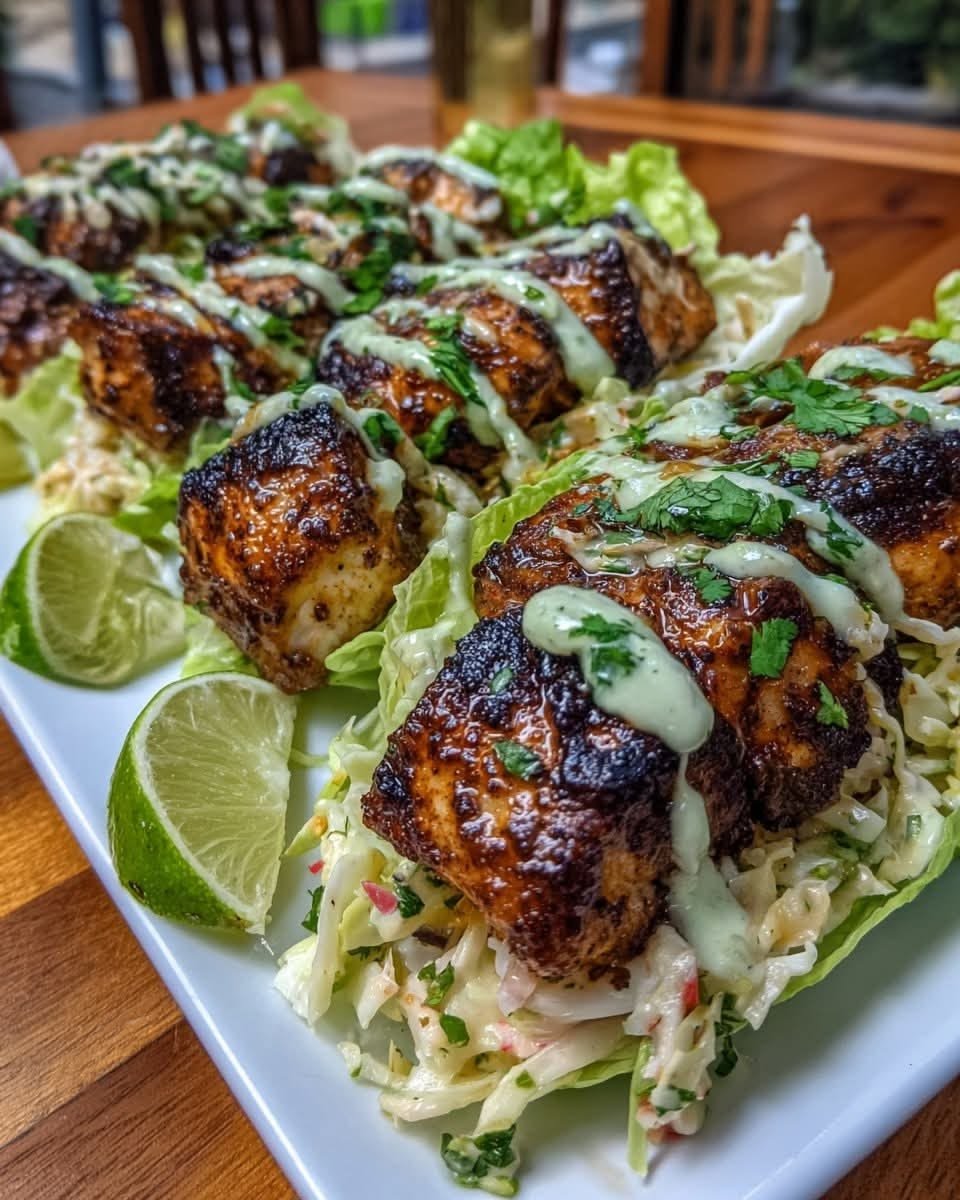
Blackened Fish Lettuce Wraps with Cilantro-Lime Sauce
Introduction
Blackened Fish Lettuce Wraps with Cilantro-Lime Sauce are a delicious combination of smoky, spicy fish, crisp lettuce leaves, fresh vegetables, and a creamy, tangy herb sauce. This recipe brings together bold Cajun-inspired seasoning and bright citrus flavors to create a meal that tastes fresh, satisfying, and wonderfully balanced.
Tender white fish fillets are coated in a flavorful blend of paprika, garlic powder, onion powder, cumin, and cayenne pepper before being pan-seared until beautifully browned on the outside and flaky inside. The fish is then tucked into crisp lettuce leaves with crunchy cabbage, juicy tomatoes, and creamy avocado. A homemade cilantro-lime sauce adds freshness and ties all the ingredients together.
These lettuce wraps are perfect for lunch, a quick weeknight dinner, summer gatherings, or meal preparation. Because lettuce replaces traditional tortillas, the recipe is naturally lower in carbohydrates and gluten-free when prepared with suitable ingredients. You can also customize the toppings and spice level to suit your taste.
The best part is that this recipe comes together in approximately 30 minutes, making it an excellent choice when you want a flavorful homemade meal without spending hours in the kitchen.
Recipe Details
-
Preparation time: 15 minutes
-
Cooking time: 10–12 minutes
-
Total time: Approximately 30 minutes
-
Servings: 4
-
Course: Lunch or dinner
-
Cuisine: Cajun-inspired, fresh and modern
-
Cooking method: Pan-seared
-
Difficulty: Easy
-
Dietary style: Low-carb and gluten-free, depending on ingredients
Ingredients
For the blackened fish
-
1½ pounds white fish fillets, such as cod, tilapia, haddock, or mahi-mahi
-
2 tablespoons olive oil
-
1 teaspoon smoked paprika
-
1 teaspoon regular paprika
-
1 teaspoon garlic powder
-
1 teaspoon onion powder
-
½ teaspoon ground cumin
-
½ teaspoon dried oregano
-
¼–½ teaspoon cayenne pepper, according to taste
-
½ teaspoon salt, or to taste
-
¼ teaspoon freshly ground black pepper
-
1 tablespoon fresh lime juice
For the cilantro-lime sauce
-
½ cup plain Greek yogurt
-
¼ cup mayonnaise
-
½ cup fresh cilantro leaves, loosely packed
-
1 small garlic clove
-
2 tablespoons fresh lime juice
-
1 teaspoon lime zest
-
1 tablespoon olive oil
-
1–2 tablespoons water, as needed
-
Salt and black pepper, to taste
For the lettuce wraps
-
12–16 large lettuce leaves, preferably butter lettuce or romaine
-
1 cup shredded purple or green cabbage
-
1 medium tomato, diced
-
1 ripe avocado, sliced
-
½ small red onion, thinly sliced
-
1 small cucumber, diced, optional
-
Fresh cilantro leaves for garnish
-
Lime wedges for serving
Instructions
Step 1: Prepare the fish
Begin by patting the fish fillets dry with paper towels. Removing excess moisture helps the seasoning adhere and encourages a flavorful browned crust during cooking.
Check the fillets for any remaining bones and remove them carefully. Cut larger fillets into manageable portions if necessary.
Cod, tilapia, haddock, and mahi-mahi are excellent choices because their mild flavors pair well with the smoky spices and bright cilantro-lime sauce. Choose fillets of similar thickness so they cook more evenly.
Drizzle the fish with lime juice and one tablespoon of olive oil. Set aside while preparing the spice mixture.
Step 2: Make the blackened seasoning
In a small bowl, combine the smoked paprika, regular paprika, garlic powder, onion powder, cumin, oregano, cayenne pepper, salt, and black pepper.
Mix thoroughly until the spices are evenly distributed.
Smoked paprika creates a deep, smoky flavor, while regular paprika adds color. Garlic and onion powders provide savory depth, cumin contributes warmth, and cayenne gives the fish a gentle kick.
If you prefer a milder dish, use just a pinch of cayenne or leave it out entirely. For a spicier version, increase the cayenne slightly.
Step 3: Season the fish
Sprinkle the spice mixture evenly over both sides of the fish fillets.
Press the seasoning gently into the surface so it adheres well. Allow the fish to rest for approximately 5–10 minutes while you prepare the remaining ingredients.
Avoid leaving the fish at room temperature for an extended period. If your preparation takes longer, return it to the refrigerator until ready to cook.
Step 4: Prepare the cilantro-lime sauce
Add the Greek yogurt, mayonnaise, cilantro leaves, garlic, lime juice, lime zest, olive oil, salt, and black pepper to a blender or food processor.
Blend until the mixture becomes smooth, creamy, and bright green.
If the sauce is too thick, add water one teaspoon at a time until it reaches a pourable consistency. Taste and adjust the lime juice, salt, or pepper as desired.
For a tangier sauce, add a little more lime juice. For a milder flavor, add another spoonful of Greek yogurt.
Transfer the sauce to a small bowl, cover, and refrigerate while preparing the fish. Chilling allows the flavors to blend together.
Tip: If you do not have a blender, finely chop the cilantro and garlic, then whisk everything together in a bowl. The texture will be slightly less smooth but equally flavorful.
Step 5: Prepare the fresh vegetables
Wash and thoroughly dry the lettuce leaves. Carefully separate them without tearing the edges, then place them on a clean kitchen towel.
Shred the cabbage into thin strips. Dice the tomato and cucumber, slice the avocado, and cut the red onion into thin pieces.
Arrange the vegetables on a plate or in separate bowls so they are ready when the fish finishes cooking.
Dry lettuce leaves help keep the wraps crisp. If the lettuce is wet, the sauce can become diluted and the wraps may be more difficult to handle.
For a milder onion flavor, soak the sliced red onion in cold water for five minutes, then drain and pat dry.
Step 6: Heat the skillet
Place a large heavy skillet over medium-high heat. Cast iron works particularly well because it retains heat and helps the fish develop a dark, flavorful crust.
Add the remaining tablespoon of olive oil and allow it to heat until shimmering but not smoking.
Arrange the seasoned fish in the skillet without overcrowding it. Cook in batches if necessary.
The spices should develop a rich, dark coating, but they should not burn. If the pan becomes excessively smoky or the spices begin turning black before the fish is cooked, lower the heat slightly.
Step 7: Cook the blackened fish
Cook the fish for approximately 3–5 minutes on the first side, depending on thickness. Carefully turn each piece with a fish spatula and cook for another 2–4 minutes.
The fish should develop a browned spice crust and become opaque throughout. It should separate easily into flakes when gently tested with a fork.
For food safety, cook fish to an internal temperature of 145°F (63°C), measured at its thickest part.
Avoid repeatedly flipping or pressing the fish, as this can break the fillets apart and release moisture.
Once cooked, transfer the fish to a clean plate and let it rest for approximately 2 minutes. Break it into large, bite-sized flakes using a fork.
Step 8: Assemble the lettuce wraps
Lay the clean lettuce leaves on a serving platter with the curved side facing upward to create small natural cups.
Add a small amount of shredded cabbage to each leaf. Top with the warm blackened fish, followed by diced tomato, sliced avocado, cucumber, and red onion.
Drizzle each wrap with cilantro-lime sauce. Add fresh cilantro leaves and a squeeze of lime juice for extra brightness.
Be careful not to overfill the leaves. Using a moderate amount of filling makes the wraps easier to pick up and eat.
Step 9: Serve immediately
Arrange the finished lettuce wraps on a large platter and serve while the fish is warm and the lettuce remains crisp.
Place any remaining cilantro-lime sauce in a small bowl on the side so everyone can add more as desired.
These wraps taste excellent on their own, but they can also be served with roasted vegetables, cauliflower rice, a fresh corn salad, or black beans if you prefer a more substantial meal.
Tips for Perfect Blackened Fish Lettuce Wraps
Choose firm fish. Cod, haddock, and mahi-mahi hold their shape well during cooking. Tilapia also works but requires gentle handling.
Dry the fish thoroughly. Excess moisture can interfere with browning and make the seasoning less effective.
Control the heat. A hot pan develops the blackened crust, but excessive heat can burn the spices before the fish is cooked.
Use fresh lime juice. Fresh citrus adds brightness to both the fish and sauce.
Keep the lettuce crisp. Wash and dry the leaves before assembling the wraps.
Prepare the sauce early. Making the cilantro-lime sauce ahead allows the garlic, herbs, and lime to develop a more balanced flavor.
Add avocado last. Cutting avocado shortly before serving helps reduce browning.
Serve promptly. Assembled wraps become softer as the sauce and vegetables release moisture.
Serving Suggestions
These wraps pair beautifully with a variety of side dishes.
-
Cauliflower rice: A light, low-carb side that absorbs the extra sauce.
-
Roasted sweet potatoes: Their natural sweetness balances the smoky spices.
-
Fresh cucumber salad: Cucumber, lime, and herbs create a refreshing accompaniment.
-
Black bean salad: Adds fiber and makes the meal more substantial.
-
Grilled corn: Provides sweetness and a slightly smoky flavor.
-
Avocado salad: Complements the creamy sauce and adds healthy fats.
For a casual gathering, serve the fish, lettuce leaves, vegetables, and sauce separately. Guests can assemble their own wraps according to their preferences.
Recipe Variations
1. Spicy Blackened Fish Wraps
Add extra cayenne pepper or a little hot sauce to the cilantro-lime dressing. You can also include sliced jalapeños for additional heat.
2. Creamy Avocado Cilantro Sauce
Replace the mayonnaise with half a ripe avocado. Blend it with Greek yogurt, cilantro, garlic, lime juice, and a little water until smooth.
This variation creates a thicker, avocado-rich dressing.
3. Mediterranean-Inspired Fish Wraps
Replace the Cajun seasoning with oregano, paprika, garlic, and lemon zest. Add diced cucumber, tomatoes, red onion, and crumbled feta for a Mediterranean-inspired version.
4. Blackened Salmon Lettuce Wraps
Use salmon fillets instead of white fish. Salmon has a richer flavor and naturally contains more fat. Adjust the cooking time according to the thickness and check the internal temperature.
5. Dairy-Free Cilantro-Lime Sauce
Use an unsweetened dairy-free yogurt and a suitable mayonnaise. Check the ingredient labels to ensure the products meet your dietary needs.
6. Extra-Crunchy Wraps
Add shredded carrots, thinly sliced radishes, or finely shredded cabbage. These vegetables provide additional texture and a refreshing contrast to the tender fish.
Storage and Meal Preparation
Fish: Refrigerate cooked fish in an airtight container within two hours of cooking. Use within 3–4 days.
Cilantro-lime sauce: Store separately in a covered container in the refrigerator and use within approximately 3–4 days, following the storage guidance for your dairy and mayonnaise products.
Vegetables: Keep the chopped vegetables in separate airtight containers. Store the avocado whole until serving if possible.
Lettuce: Wash and dry the leaves, then refrigerate them in a container lined with a clean paper towel.
Reheating: Warm the fish gently in a skillet over low heat or in a microwave in short intervals until heated through. Avoid overheating, which can dry it out.
For meal preparation, store the fish, vegetables, lettuce, and sauce separately. Assemble the wraps just before eating to preserve their texture.
Nutritional Information
The following figures are estimates per serving, assuming four servings and a moderate amount of sauce and toppings.
| Nutrient | Approximate amount |
|---|---|
| Calories | 350–450 |
| Protein | 30–38 g |
| Carbohydrates | 10–16 g |
| Fat | 18–27 g |
| Fiber | 4–7 g |
| Sugar | 3–6 g |
The exact values depend on the fish variety, amount of oil, dressing portions, and optional toppings. Using less mayonnaise or oil can reduce the calories and fat.
Benefits of the Main Ingredients
Fish: Provides high-quality protein that supports muscle maintenance and normal body functions. Depending on the species, it may also supply vitamin B12 and selenium.
Lettuce: Adds crunch, water, and small amounts of vitamins and minerals while keeping the wraps relatively low in carbohydrates.
Avocado: Provides fiber and predominantly unsaturated fats.
Cilantro: Contributes fresh flavor and small amounts of vitamins and plant compounds.
Lime: Adds a bright citrus flavor and vitamin C.
Greek yogurt: Provides protein and a creamy texture for the sauce, depending on the variety used.
Together, these ingredients create a flavorful meal that can fit into a balanced eating pattern. Individual nutritional needs vary, and no single recipe guarantees a particular health outcome.
Frequently Asked Questions
1. What is the best fish for lettuce wraps?
Cod, tilapia, haddock, and mahi-mahi are all good options. Choose fresh or properly thawed fillets with a mild flavor and a texture that holds together during cooking.
2. Can I make these wraps less spicy?
Yes. Reduce or omit the cayenne pepper and use mild paprika. The garlic, herbs, and lime will still provide plenty of flavor.
3. Can I prepare the sauce in advance?
Yes. Prepare it up to a day ahead and store it covered in the refrigerator. Stir before serving and adjust the consistency with a little water if necessary.
4. Which lettuce works best?
Butter lettuce creates soft, flexible cups, while romaine leaves are firmer and provide more crunch. Iceberg lettuce is another option if you prefer a crisp texture.
5. Can I bake the fish instead of pan-searing it?
Yes. Arrange the seasoned fish on a lightly greased baking sheet and bake at 400°F (200°C) until opaque and cooked to 145°F (63°C). The exact time depends on the thickness of the fillets.
6. Is this recipe suitable for a low-carb diet?
It can fit many low-carb meal plans because lettuce replaces tortillas and the fish provides protein. Check the dressing ingredients and adjust the toppings to suit your carbohydrate target.
7. How can I make the wraps more filling?
Add avocado, extra fish, or a side of beans, rice, or roasted sweet potatoes. The best option depends on your dietary preferences and appetite.
8. Why is my fish falling apart?
The fillets may be thin or delicate, or they may be turned too early. Use a wide spatula, avoid excessive handling, and let the fish develop a crust before flipping.