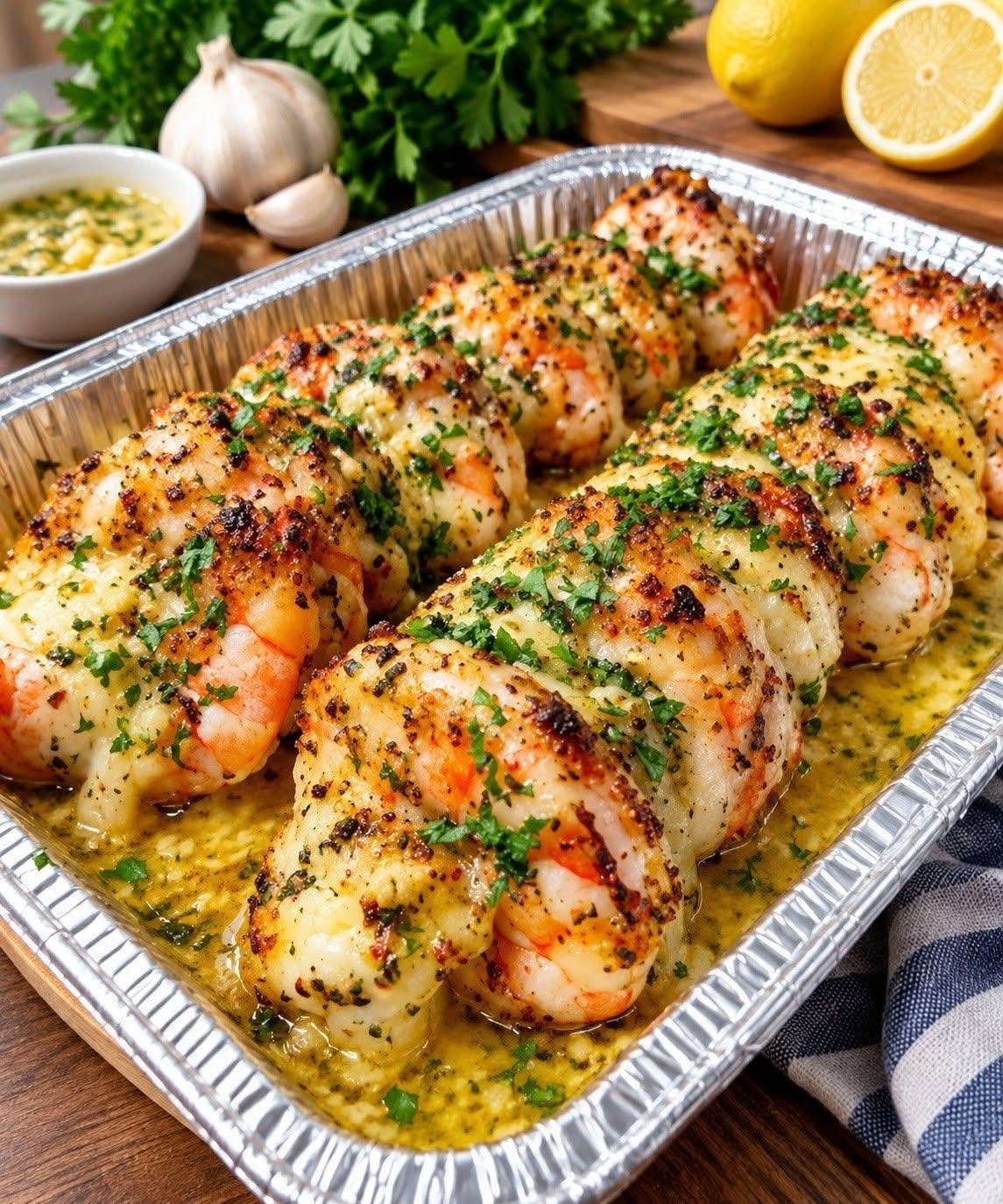
Baked Garlic Butter Butterflied Shrimp
Description
Baked Garlic Butter Butterflied Shrimp is an impressive yet surprisingly simple seafood dish that turns ordinary shrimp into a beautiful restaurant-style meal. The shrimp are carefully butterflied so they open slightly during baking, creating more surface area for a rich garlic butter sauce to coat every bite. They are seasoned with fresh garlic, lemon, herbs, paprika, and a touch of red pepper flakes before being baked until juicy, tender, and perfectly cooked.
The combination of sweet, succulent shrimp and fragrant garlic butter creates an irresistible aroma while the lemon adds brightness and freshness. Because the shrimp cook quickly, this recipe is ideal for busy weeknights, dinner parties, date-night meals, or whenever you want something special without spending hours in the kitchen.
The finished shrimp can be served with crusty bread for soaking up the buttery sauce, over fluffy rice, alongside pasta, or with roasted vegetables and a fresh salad. It is naturally low in carbohydrates and can easily be adapted to suit different dietary preferences.
Ingredients
For the Shrimp
- 2 pounds large or jumbo shrimp, shell removed
- 5 tablespoons unsalted butter, melted
- 6 cloves fresh garlic, finely minced
- 2 tablespoons extra-virgin olive oil
- 1 tablespoon fresh lemon juice
- 1 teaspoon lemon zest
- 1 teaspoon smoked paprika
- 1 teaspoon Italian seasoning
- ½ teaspoon dried oregano
- ½ teaspoon salt
- ¼ teaspoon freshly ground black pepper
- ¼ teaspoon red pepper flakes, optional
- ¼ cup fresh parsley, finely chopped
- 2 tablespoons grated Parmesan cheese, optional
- Lemon wedges, for serving
Optional Garnish
- Extra chopped parsley
- Thin lemon slices
- A sprinkle of Parmesan
- Crushed red pepper flakes
- Freshly cracked black pepper
Choosing the Best Shrimp
For this recipe, large or jumbo shrimp work particularly well because they remain juicy during baking and are large enough to butterfly easily. Fresh shrimp are excellent, but high-quality frozen shrimp can also produce wonderful results.
If using frozen shrimp, thaw them completely in the refrigerator or under cold running water. Drain them well and pat them thoroughly dry with paper towels. Removing excess moisture is important because wet shrimp can release water during baking and dilute the garlic butter sauce.
Look for shrimp that have a fresh, mild smell and firm texture. If buying peeled shrimp, make sure they are deveined. You can leave the tails attached for a more attractive presentation if desired.
How to Butterfly the Shrimp
Butterflying shrimp is simple and makes this dish especially attractive.
Start with peeled and deveined shrimp. Using a small sharp knife, carefully make a deeper cut along the back of each shrimp, following the natural curve. Do not cut completely through the shrimp. Instead, open it gently so the two sides spread apart slightly while remaining connected.
The shrimp should resemble a small butterfly when opened. This shape allows the garlic butter mixture to reach more of the shrimp and creates a beautiful presentation after baking.
Take your time when cutting the shrimp, especially if you are new to butterflying. Keeping the shrimp cold before preparation can make them easier to handle.
Step-by-Step Instructions
1. Preheat the Oven
Preheat your oven to 425°F (220°C).
Lightly grease a large baking dish or rimmed baking sheet with olive oil or nonstick cooking spray. Arrange the butterflied shrimp in a single layer with the cut side facing upward.
Avoid stacking or overcrowding the shrimp. Giving each shrimp some space helps the heat circulate evenly and allows the garlic butter to coat each piece properly.
2. Prepare the Garlic Butter Sauce
In a medium bowl, combine the melted butter, olive oil, minced garlic, lemon juice, and lemon zest.
Add the smoked paprika, Italian seasoning, oregano, salt, black pepper, and red pepper flakes if using. Stir thoroughly until all the ingredients are evenly combined.
The garlic should be finely minced so it distributes throughout the butter rather than forming large pieces on individual shrimp.
For an even richer flavor, you can prepare the garlic butter 10–15 minutes ahead of time and allow it to sit at room temperature. This gives the garlic and herbs a little extra time to infuse the butter.
3. Coat the Shrimp
Using a spoon or pastry brush, generously coat each butterflied shrimp with the garlic butter mixture.
Make sure the sauce gets into the butterfly cut. This is where the shrimp can absorb plenty of the delicious garlic, lemon, and herb flavor.
If you have a little sauce remaining, drizzle it evenly over the entire baking dish.
4. Add Parmesan
If using Parmesan cheese, sprinkle it lightly over the shrimp.
Parmesan is optional, but it adds a savory, slightly nutty flavor and creates a delicious golden finish. For a stronger cheese flavor, you can add a little more during the final few minutes of baking.
5. Bake the Shrimp
Place the baking dish in the preheated oven.
Bake for approximately 8–12 minutes, depending on the size of the shrimp.
Jumbo shrimp may need closer to 12 minutes, while smaller large shrimp may be finished sooner. The shrimp should become pink and opaque with a firm but tender texture.
Avoid baking them for too long. Overcooked shrimp can become tough, dry, and rubbery.
For an especially attractive golden top, you can switch the oven to broil for the final 1–2 minutes. Watch carefully because garlic and Parmesan can brown quickly.
6. Finish with Fresh Herbs
Remove the shrimp from the oven and immediately sprinkle fresh chopped parsley over the top.
Allow the shrimp to rest for about 2 minutes. Spoon some of the warm garlic butter from the bottom of the baking dish over the shrimp before serving.
Finish with fresh lemon wedges for squeezing over each portion.
Tips for Perfect Butterflied Shrimp
Use Large Shrimp
Large or jumbo shrimp are easier to butterfly and less likely to overcook. They also make the dish look more impressive when served.
Dry the Shrimp
Always pat shrimp dry before seasoning. Excess moisture can prevent the butter sauce from coating the shrimp properly.
Don’t Overcook
Shrimp cook very quickly. Start checking them around 8 minutes. They should be opaque and firm but still juicy.
Use Fresh Garlic
Freshly minced garlic provides a much stronger and more fragrant flavor than garlic powder. Six cloves may sound like a lot, but it creates the signature garlic-butter taste of this dish.
Balance the Richness
The butter provides richness while lemon juice adds acidity and freshness. Don’t skip the lemon—it helps balance the entire dish.
Add Heat
For spicy garlic butter shrimp, increase the red pepper flakes or add a small amount of cayenne pepper.
Make It Cheesy
Parmesan works beautifully with garlic butter. For a more indulgent version, sprinkle a combination of Parmesan and mozzarella over the shrimp during the final few minutes.
Serving Suggestions
Baked Garlic Butter Butterflied Shrimp can be served in many different ways.
For a simple dinner, serve it with warm crusty bread. The bread is perfect for soaking up the buttery garlic sauce left in the baking dish.
For a more substantial meal, serve the shrimp over steamed white rice, brown rice, quinoa, or couscous. The rice absorbs the lemon-garlic butter and turns the sauce into part of the meal.
Pasta is another excellent option. Toss cooked linguine or spaghetti with some of the leftover garlic butter and lemon sauce, then arrange the shrimp on top.
For a lighter meal, pair the shrimp with roasted asparagus, zucchini, broccoli, green beans, or a crisp Mediterranean salad.
You can also serve the shrimp with roasted baby potatoes and a simple cucumber-tomato salad for a complete family dinner.
Storage and Reheating
Leftover shrimp should be placed in an airtight container and refrigerated within two hours of cooking.
They can generally be refrigerated for up to 3 days.
To reheat, place the shrimp in a covered skillet over low to medium heat with a small splash of water or a little butter. Warm them gently until heated through.
Avoid prolonged reheating because shrimp can quickly become tough.
Microwaving is possible, but use short intervals and moderate power to help prevent overcooking.
Make-Ahead Tips
You can prepare the shrimp several hours ahead of time.
Butterfly and season the shrimp, prepare the garlic butter mixture, and refrigerate everything separately until you are ready to cook.
For best texture, don’t leave raw shrimp sitting in lemon juice for a long period because the acidity can begin changing the texture of the seafood.
When ready to cook, arrange the shrimp in the baking dish, coat them with the garlic butter, and bake immediately.
Nutritional Information
Approximate nutrition per serving will vary depending on shrimp size and the amount of butter and Parmesan used.
One serving may provide approximately:
- 330–380 calories
- 40–45g protein
- 3–5g carbohydrates
- 16–20g fat
- 2–3g saturated fat
Shrimp are naturally high in protein and provide nutrients such as selenium and vitamin B12. Butter and olive oil contribute fat and flavor, while garlic, lemon, parsley, and herbs add freshness.
Benefits
This recipe is particularly useful when you want a high-protein meal that cooks quickly. Shrimp provide substantial protein without requiring a long cooking time. They also contain selenium and vitamin B12.
Garlic contributes strong flavor, while lemon juice and fresh herbs brighten the dish. Using herbs, spices, garlic, and lemon allows the recipe to develop plenty of flavor without relying on a heavy sauce.
For a balanced meal, serve the shrimp with vegetables and a moderate portion of rice, potatoes, or whole grains.
Frequently Asked Questions
Can I use frozen shrimp?
Yes. Frozen shrimp work very well. Thaw them completely before cooking and pat them dry with paper towels.
Should I leave the tails on?
The tails can be left on for presentation, but removing them makes the shrimp easier to eat. Either option works.
Can I use smaller shrimp?
Yes, but reduce the cooking time. Smaller shrimp can become overcooked quickly, so start checking them after about 6–8 minutes.
Can I make this recipe spicy?
Absolutely. Add red pepper flakes, cayenne pepper, or a little hot sauce to the garlic butter mixture.
Can I use salted butter?
Yes, but reduce the added salt in the recipe. Taste the sauce before adding additional seasoning.
What can I serve with garlic butter shrimp?
Rice, pasta, couscous, quinoa, roasted vegetables, potatoes, crusty bread, or a fresh green salad all pair beautifully with the shrimp.
How do I know when shrimp are done?
Cooked shrimp should be opaque and pink with a firm, tender texture. Avoid cooking until they form a very tight circle, as this can indicate overcooking.
1 thought on “Baked Garlic Butter Butterflied Shrimp”