Taro Root: Nutrition, Traditional Uses & How to Prepare It Safely
Taro root looks a little like a potato, but this starchy root has its own texture, flavor, and cooking traditions. 🌿
Used in many Asian, Pacific Island, Caribbean, African, and Latin American cuisines, taro can be boiled, steamed, roasted, mashed, or added to soups and stews.
It also provides carbohydrates, fiber, potassium, vitamin B6, and manganese. But there is one important rule: taro should be properly cooked before eating because raw taro can irritate the mouth and throat.
This guide explains what taro is, how to prepare it, its nutritional value, traditional food uses, and simple ways to add it to meals.
What Is Taro Root?
Taro is the underground corm of the Colocasia esculenta plant.
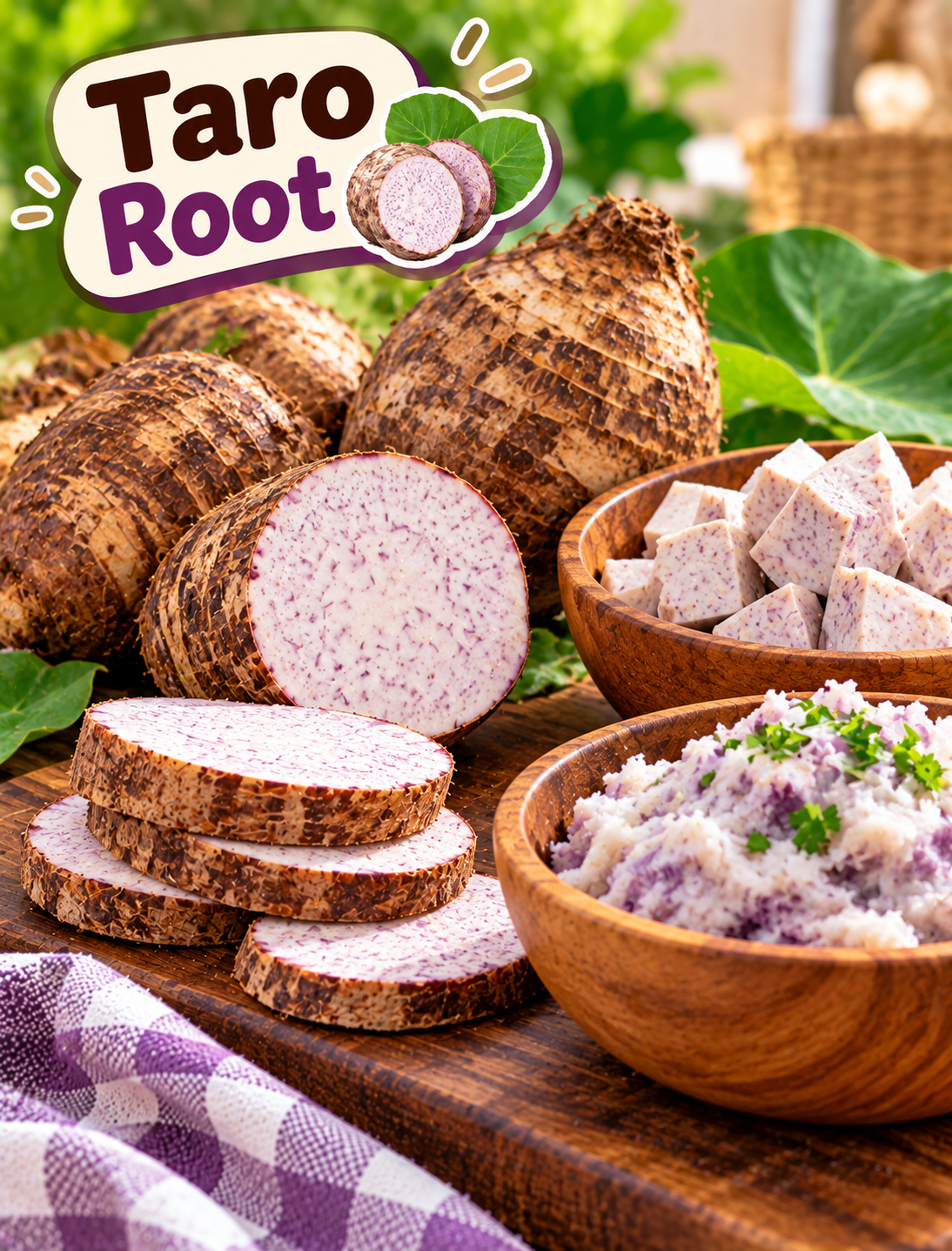
Although it is often called a root, botanically it is a corm. It usually has rough brown or gray skin with white, cream, or purple-flecked flesh inside.
Taro has a mild, nutty flavor and a soft, starchy texture when cooked.
You may find taro sold as:
- Fresh whole corms
- Peeled pieces
- Frozen chunks
- Taro flour
- Taro paste
- Taro-based snacks and desserts
Different varieties can vary in size, color, texture, and flavor.
Why Is Taro Popular?
Taro has been eaten for generations because it is versatile, filling, and easy to use in many traditional dishes.
Its mild flavor allows it to work with both savory and sweet ingredients.
Common preparations include:
- Boiled taro
- Steamed taro
- Roasted taro
- Mashed taro
- Taro soup
- Taro stew
- Taro chips
- Taro flour
- Taro-based desserts
In some cultures, taro leaves are also eaten, but they require proper preparation and cooking as well.
What Nutrients Does Taro Provide?
Taro is mainly a carbohydrate-rich food, making it a useful source of energy.
It also provides several nutrients, including:
- Dietary fiber for digestive health
- Potassium for normal muscle and nerve function
- Vitamin B6 for normal metabolism and nervous-system function
- Manganese for normal nutrient metabolism and antioxidant defenses
- Small amounts of other vitamins and minerals
The exact nutrition depends on the variety, serving size, and cooking method.
Plain boiled or steamed taro is different nutritionally from fried taro chips or heavily sweetened taro desserts.
What Are the Potential Benefits of Taro?
1. It Provides Energy
The starch in taro supplies carbohydrates that the body can use for energy.
This makes cooked taro useful as a meal carbohydrate alongside protein and vegetables.
2. It Provides Dietary Fiber
Taro contains dietary fiber, which contributes to a balanced eating pattern and normal digestive function.
Adding fiber-rich foods gradually can be helpful if your current diet is low in fiber.
3. It Provides Potassium
Potassium is an essential mineral involved in normal muscle contraction, nerve signaling, and fluid balance.
Taro can contribute to daily potassium intake when included as part of a varied diet.
4. It Adds Variety to Meals
Using different whole or minimally processed foods can make a balanced diet more enjoyable.
Taro can replace potatoes, rice, or other starchy foods in many meals.
5. It Works in Many Different Dishes
Its soft texture after cooking makes taro useful for soups, mashes, stews, side dishes, and other recipes.
Can You Eat Taro Raw?
No. Raw taro should not be eaten.
Raw taro contains microscopic calcium oxalate crystals that can cause intense irritation or a burning sensation in the mouth and throat.
Proper cooking helps reduce this problem and makes the corm suitable for eating.
Do not taste raw taro to check whether it is ready.
How to Prepare Taro Safely
Follow these simple steps when cooking fresh taro.
Step 1: Wash the Corm
Rinse the outside under clean running water to remove dirt and surface debris.
Step 2: Peel Carefully
Use a clean vegetable peeler or knife to remove the tough outer skin.
Some people prefer wearing gloves because raw taro can irritate sensitive skin.
Step 3: Cut Into Even Pieces
Cut the peeled corm into similarly sized pieces so they cook evenly.
Step 4: Cook Thoroughly
Boil, steam, or cook the pieces until they are completely tender.
A fork should pass easily through the center.
Step 5: Drain and Serve
Once fully cooked, drain excess water and use the taro in your chosen recipe.
Step 6: Never Serve It Undercooked
If the texture is still firm or the food causes mouth irritation, do not continue eating it.
Cook it thoroughly before serving.
How Can You Cook Taro?
There are several simple cooking methods.
Boiled Taro
Peel and cut the corm into chunks, then boil until fork-tender.
Serve it as a side dish with vegetables, beans, chicken, fish, or another protein.
Steamed Taro
Steaming gives taro a soft texture while keeping the preparation simple.
Season cooked pieces with herbs, spices, or a small amount of olive oil.
Roasted Taro
Cut cooked or properly prepared taro into chunks and roast until the outside becomes lightly crisp.
Pair it with vegetables and a protein for a complete meal.
Mashed Taro
Cook taro until soft, then mash it with a little milk or another suitable liquid.
Add herbs, garlic, or mild seasoning for a savory side dish.
Taro Soup
Cook cubed taro with vegetables, broth, and your choice of protein.
Its starch can give soup a naturally thicker texture.
When Is the Best Time to Eat Taro?
There is no special time of day when you must eat taro.
You can include properly cooked taro at:
- Breakfast
- Lunch
- Dinner
- As part of a snack or side dish
The more important factor is how much you eat and what you serve with it.
For a balanced meal, combine taro with a protein source, vegetables, and a healthy fat.
Taro Root and Weight Management
Taro can fit into a weight-conscious eating pattern, but it is not a weight-loss food by itself.
Because it is rich in carbohydrates, portion size matters.
A practical plate can include:
- A moderate portion of cooked taro
- A protein such as fish, chicken, eggs, beans, or tofu
- Plenty of non-starchy vegetables
- A small amount of healthy fat
This combination can make a meal more balanced and satisfying.
Avoid assuming that taro-based chips, fries, bubble tea, or sugary desserts have the same nutritional profile as plain cooked taro.
Taro vs. Potato
Taro and potatoes are both starchy foods, but they have different textures and nutritional profiles.
- Creamy texture when cooked
- Mild, slightly nutty flavor
- Contains dietary fiber
- Provides potassium and vitamin B6
- Must be thoroughly cooked
- Wider range of varieties
- Can be baked, boiled, roasted, or mashed
- Provides carbohydrates, potassium, and other nutrients
- Can also be part of a balanced meal
Neither food needs to be completely avoided.
The better choice depends on your meal, preparation method, portion, and personal dietary needs.
What About Taro Leaves?
Taro leaves are used as food in several traditional cuisines.
However, raw taro leaves should not be eaten because they can also contain calcium oxalate crystals.
They need appropriate preparation and thorough cooking before consumption.
If you are unfamiliar with preparing taro leaves, use a reliable recipe from a trusted culinary source rather than improvising.
Important Taro Safety Tips
Keep these points in mind when preparing taro at home:
- Never eat raw taro.
- Cook the corm thoroughly.
- Wash fresh taro before peeling.
- Wear gloves if your skin is sensitive.
- Avoid tasting it while raw or partially cooked.
- Use clean utensils and cookware.
- Follow reliable cooking instructions for taro leaves.
- Be cautious with packaged taro products containing added sugar, salt, or fat.
- If you experience significant irritation after eating taro, stop eating it and seek appropriate medical advice.
Best Ways to Add Taro to Your Diet
If you are trying taro for the first time, keep the preparation simple, Options
1: Simple Side Dish
- Peel the taro.
- Cut it into chunks.
- Boil until tender.
- Drain well.
- Add herbs and a small amount of olive oil.
- Serve with vegetables and protein.
2: Roasted Taro
- Peel and cut taro into cubes.
- Cook it thoroughly first if following a recipe that requires pre-cooking.
- Toss with a small amount of oil and seasoning.
- Roast until tender and lightly browned.
- Serve immediately.
3: Taro Mash
- Peel and cut the corm.
- Boil until very soft.
- Drain completely.
- Mash until smooth.
- Add a small amount of milk or another suitable liquid.
- Season with herbs or spices.
Common Mistakes to Avoid
Mistake 1: Eating It Raw
Raw taro can cause mouth and throat irritation.
Mistake 2: Undercooking It
Do not assume that lightly heated taro is ready.
Mistake 3: Focusing Only on “Taro Superfood” Claims
Taro is nutritious, but no single food provides everything your body needs.
Mistake 4: Ignoring the Preparation Method
Deep-fried taro and sugary taro desserts can be much higher in calories than plain cooked taro.
Mistake 5: Forgetting Portion Size
Even nutritious carbohydrate foods can contribute significant calories when eaten in very large portions.
The Bottom Line
Taro is a versatile traditional food that can add carbohydrates, fiber, potassium, vitamin B6, and variety to meals.
Its creamy texture makes it useful in soups, stews, mashed dishes, roasted sides, and many traditional recipes.
The most important safety rule is simple: never eat taro raw or undercooked.
Cook the corm thoroughly, choose simple preparations when possible, and pair it with vegetables and a protein source for a balanced meal.
Taro does not need exaggerated “superfood” claims to be useful. It is simply a versatile starchy food that can have a place in a varied diet when prepared properly.
Frequently Asked Questions
Is taro root healthy?
Taro can be part of a balanced diet because it provides carbohydrates, fiber, potassium, vitamin B6, and other nutrients.
Can you eat taro raw?
No. Raw taro can cause mouth and throat irritation from calcium oxalate crystals, so it should be thoroughly cooked.
Does taro help with digestion?
Taro provides dietary fiber, which supports normal digestive function as part of an overall fiber-rich diet.
Is taro better than potatoes?
Neither is automatically better; both can fit into a balanced diet depending on portion size and preparation.
Can you eat taro leaves?
Yes, taro leaves are eaten in some cuisines, but they must be properly prepared and thoroughly cooked.
Is taro good for weight loss?
Taro can fit into a weight-management diet, but it does not directly cause weight loss and portion size still matters.
What does cooked taro taste like?
Cooked taro has a mild, slightly nutty flavor with a soft, creamy, and starchy texture.
How do you know when taro is fully cooked?
Taro is ready when it is completely tender and a fork passes easily through the center without resistance.