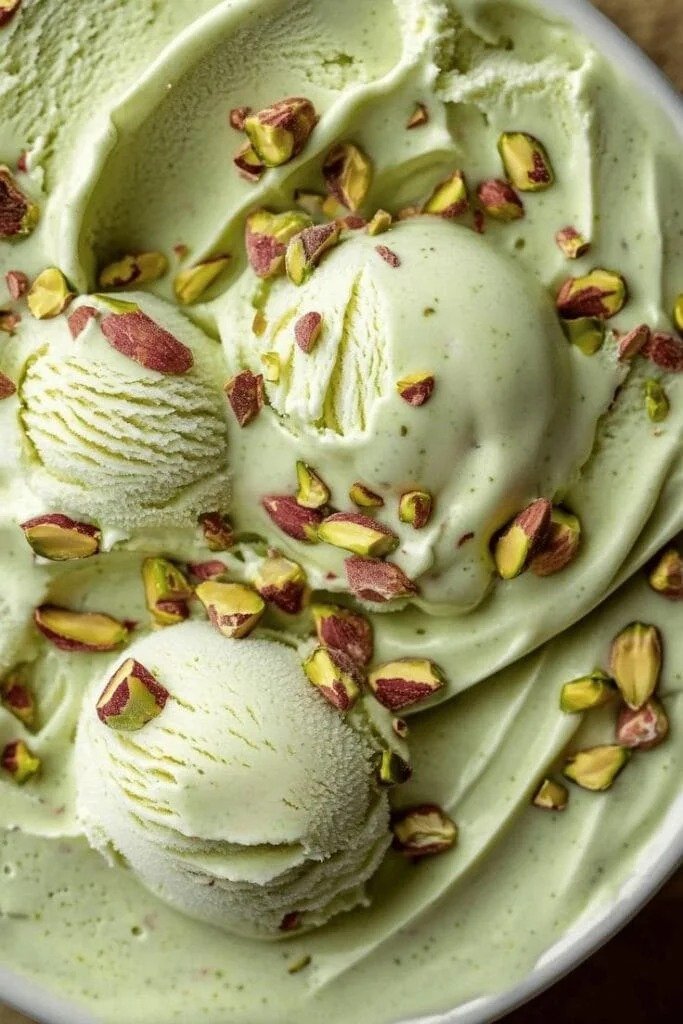
Olive Oil Ice Cream with Crushed Pistachios & Sea Salt
Olive Oil Ice Cream with Crushed Pistachios & Sea Salt is a luxurious homemade dessert with a smooth, creamy texture and a beautifully balanced flavor. High-quality extra virgin olive oil adds a subtle fruity richness to the ice cream, while crunchy pistachios bring nuttiness and texture.
A small finishing drizzle of olive oil and a sprinkle of flaky sea salt make every spoonful especially delicious. This elegant frozen dessert may sound unusual, but the combination of creamy dairy, fruity olive oil, salty pistachios, and sweet custard creates a sophisticated treat that is surprisingly easy to make at home.
Prep Time: 20 minutes
Chilling Time: 4–6 hours
Churning Time: 20–30 minutes
Total Time: 4 hours 40 minutes–6 hours 50 minutes
Servings: 6
Ingredients
For the Ice Cream Base
2 cups whole milk
1 cup heavy cream
¾ cup granulated sugar
4 large egg yolks
½ teaspoon fine sea salt
¼ cup high-quality extra virgin olive oil
For the Pistachio & Sea Salt Finish
½ cup pistachios, crushed
Flaky sea salt, for serving
Extra virgin olive oil, for drizzling
Instructions
Prepare the Dairy Base
Pour the whole milk and heavy cream into a medium saucepan. Place the saucepan over medium heat and warm the mixture gradually until it is hot and steamy, but do not allow it to reach a full boil.
Heating the dairy gently helps create a smooth ice cream base. Once small wisps of steam appear and the mixture is hot around the edges, remove the saucepan from the heat temporarily.
Whisk the Egg Yolks and Sugar
While the milk mixture is warming, place the egg yolks and granulated sugar in a medium heatproof bowl.
Whisk vigorously for several minutes until the yolks become lighter in color and the sugar begins to dissolve. The mixture should look smooth and slightly thickened.
Add the fine sea salt and whisk again.
Temper the Egg Mixture
Slowly pour a small amount of the hot milk and cream mixture into the egg yolks while whisking constantly.
Continue adding the warm dairy gradually, whisking the entire time. This process, known as tempering, gently raises the temperature of the egg yolks and helps prevent them from scrambling.
Once about half of the hot dairy has been incorporated, pour the egg mixture back into the saucepan with the remaining dairy.
Cook the Custard
Return the saucepan to low or medium-low heat.
Cook the mixture gently while stirring constantly with a wooden spoon or heatproof spatula. Pay particular attention to the bottom and corners of the saucepan.
Continue cooking until the custard thickens slightly and coats the back of the spoon. If you run a finger across the coated spoon, the line should remain visible.
Do not allow the mixture to boil. Excessive heat can scramble the egg yolks and create a grainy texture.
Add the Olive Oil
Remove the custard from the heat and allow it to cool slightly.
Slowly drizzle in the extra virgin olive oil while whisking continuously. Adding the oil gradually helps it blend smoothly into the custard instead of separating.
For the best flavor, choose a high-quality extra virgin olive oil with a pleasant fruity or slightly peppery character. Because olive oil is an important flavor in this dessert, its quality will be noticeable.
Whisk until the mixture is completely smooth and glossy.
Strain the Custard
Pour the custard through a fine-mesh strainer into a clean bowl or container.
This step removes any tiny pieces of cooked egg and ensures that the finished ice cream has an exceptionally smooth texture.
Cover the surface of the custard with plastic wrap or another suitable cover to help prevent a skin from forming.
Chill Thoroughly
Refrigerate the custard until it is completely cold, preferably for at least 4 hours.
For the best results, you can chill it overnight. A very cold ice cream base freezes more efficiently during churning and generally produces a smoother final texture.
Churn the Ice Cream
Pour the chilled custard into your ice cream maker and churn according to the manufacturer’s instructions.
The mixture should gradually become thicker and resemble soft-serve ice cream.
Near the end of the churning process, add most of the crushed pistachios and allow the machine to mix them evenly throughout the ice cream.
Reserve a small amount of pistachios for serving.
Freeze Until Firm
Transfer the churned ice cream to a freezer-safe container.
Smooth the top with a spatula and sprinkle some of the reserved crushed pistachios over the surface.
Cover tightly and freeze for approximately 2–4 hours, or until the ice cream reaches your preferred scoopable consistency.
If frozen overnight, allow it to sit at room temperature for several minutes before scooping.
Serve with Olive Oil & Sea Salt
Scoop the ice cream into chilled bowls or dessert glasses.
Drizzle a small amount of extra virgin olive oil over each serving. Add the remaining crushed pistachios and finish with a very light sprinkle of flaky sea salt.
The flaky salt provides little bursts of savory flavor that contrast beautifully with the sweet, creamy ice cream.
Serve immediately.
Tips
Choose a Good Olive Oil
Use an extra virgin olive oil that you genuinely enjoy the taste of. Fruity and mildly peppery oils work especially well. Avoid an olive oil with an unpleasantly bitter or stale flavor because its character will be noticeable in the finished dessert.
Temper the Eggs Slowly
Adding the hot dairy gradually to the egg yolks is essential. Pouring the hot mixture in too quickly can cook the yolks and create scrambled pieces.
Never Boil the Custard
Keep the heat gentle when cooking the custard. A low temperature gives the egg yolks time to thicken the mixture without scrambling.
Chill the Base Completely
Do not rush the chilling stage. The colder the custard is before churning, the easier it is for the ice cream maker to create a creamy consistency.
Use Fresh Pistachios
Fresh, good-quality pistachios provide a naturally sweet and nutty flavor. Crush them into a mixture of small pieces and slightly larger pieces for better texture.
Don’t Overdo the Sea Salt
Flaky sea salt is meant to highlight the sweetness and olive oil flavor, not make the dessert taste salty. Start with a small amount and add more only if needed.
Variations
Honey Olive Oil Ice Cream
Replace part of the granulated sugar with honey for a softer, floral sweetness that pairs naturally with olive oil and pistachios.
Lemon Olive Oil Ice Cream
Add a small amount of finely grated lemon zest to the chilled custard before churning. Lemon adds freshness and works beautifully with the fruity olive oil.
Orange Pistachio Version
Add finely grated orange zest to the custard for a fragrant citrus note. The orange flavor complements both pistachios and olive oil.
Chocolate Pistachio Version
Fold finely chopped dark chocolate into the ice cream during the final few minutes of churning. The slightly bitter chocolate balances the sweet custard.
Extra Nutty Finish
Toast the pistachios lightly in a dry skillet, allow them to cool completely, and then crush them before adding them to the ice cream. Toasting enhances their natural nutty flavor.
Q&A
Does olive oil make ice cream taste savory?
Not necessarily. A good extra virgin olive oil adds fruity, grassy, buttery, or lightly peppery notes that complement the sweet cream base. The final flavor depends heavily on the type and quality of olive oil used.
What type of olive oil should I use?
Choose a high-quality extra virgin olive oil with a pleasant fruity flavor. A very harsh or strongly bitter oil may overpower the sweetness of the ice cream.
Can I make this ice cream without an ice cream maker?
Yes. You can freeze the chilled mixture in a shallow freezer-safe container and stir it vigorously every 30–45 minutes during the early freezing stage. Repeat several times to help break up ice crystals, although an ice cream machine generally produces a smoother texture.
Can I use salted pistachios?
Yes, but reduce or omit the additional sea salt in the ice cream base. Unsalted pistachios give you better control over the final saltiness.
Why does my homemade ice cream become very hard?
Homemade ice cream can become firm when stored in a very cold freezer for an extended period. Let it sit at room temperature for several minutes before scooping to soften slightly.
How long can I store this ice cream?
For the best flavor and texture, enjoy it within about 1–2 weeks when stored tightly covered in the freezer. Minimize air exposure to help prevent freezer burn.
Nutrition
Estimated nutrition per serving:
Calories: 425 kcal
Protein: 6 g
Carbohydrates: 34 g
Fat: 30 g
Fiber: 2 g
Sugar: 29 g
Sodium: 250 mg
Nutrition values are approximate and will vary depending on the exact dairy products, olive oil, pistachios, and serving size used.
Conclusion
This Olive Oil Ice Cream is proof that a few carefully chosen ingredients can create an incredibly sophisticated dessert. The creamy custard provides a rich foundation, while extra virgin olive oil adds a distinctive fruity depth that pairs beautifully with crunchy pistachios and flaky sea salt.
Serve it after a Mediterranean-inspired meal or enjoy a small scoop as an elegant afternoon treat. The final drizzle of olive oil and pinch of sea salt are simple finishing touches that make this homemade ice cream truly memorable.