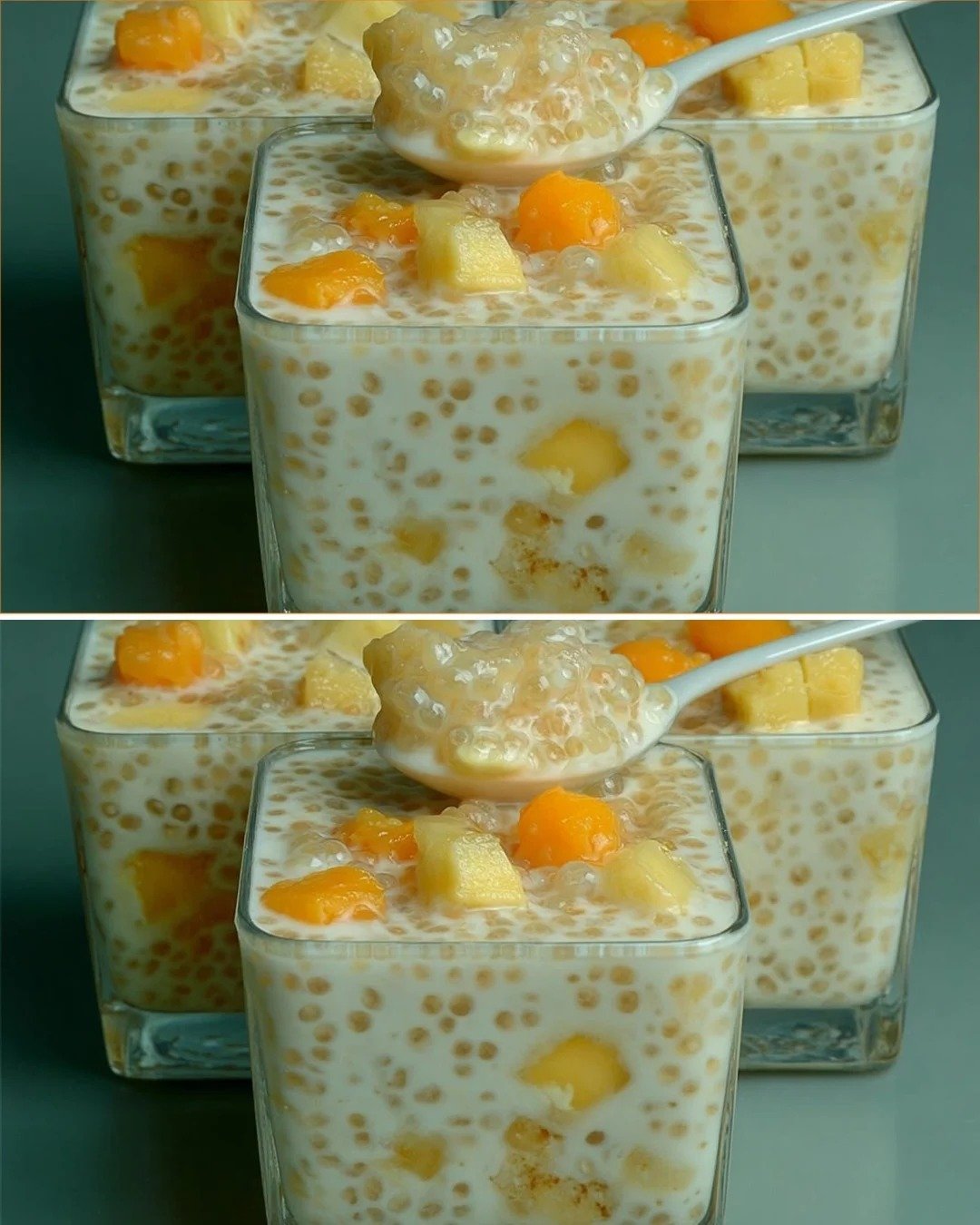
Mango and Banana Sago Dessert
Bring a taste of the tropics to your dessert table with this luscious Mango and Banana Sago Dessert. Tender tapioca pearls are folded into a smooth, creamy mixture of cream, condensed milk, and evaporated milk, then combined with generous amounts of sweet mango and ripe banana. The result is a chilled dessert with a wonderful contrast of chewy, creamy, and fruity textures. It is simple enough for everyday treats but impressive enough for parties and family celebrations. Served ice-cold with extra mango on top, this dessert is especially delicious on warm days and can be prepared ahead for effortless entertaining.
Prep Time: 25 minutes
Cook Time: 25 minutes
Chilling Time: 2–4 hours
Total Time: About 3 hours 30 minutes
Servings: 10–12
Ingredients
For the Sago
2 cups small white tapioca pearls
About 2 liters water, for boiling
Cold water, for rinsing and cooling
For the Fruit
1 kg ripe mangoes, about 3–4 large mangoes, diced into small cubes
6 large ripe bananas, diced into small cubes
For the Creamy Liquid Base
250 ml heavy cream or all-purpose cream
1 can condensed milk, about 300 ml
1 can evaporated milk or 370 ml fresh milk
For Garnishing, Optional
Extra diced mango
Thin banana slices
Small mango cubes
A little cooked sago
Fresh mint leaves, optional
Instructions
Cook the Sago
Bring about 2 liters of water to a rolling boil in a large pot. Using plenty of water is important because tapioca pearls expand considerably as they cook and can make the water thick.
Once the water is boiling, gradually add the sago while stirring gently. This helps prevent the pearls from sticking together or settling heavily on the bottom of the pot.
Cook the sago over medium heat according to the package directions, usually around 15–20 minutes for small pearls. Stir regularly, especially during the first few minutes.
The pearls are ready when most of them have become translucent with only a very small white center remaining. Turn off the heat, cover the pot, and let the sago sit for another 5–10 minutes if necessary. The residual heat will continue cooking the centers.
Avoid cooking the pearls until they become completely mushy because they will continue softening as they cool and absorb some of the creamy mixture.
Drain the cooked sago through a fine strainer. Rinse it thoroughly under cold running water to remove excess starch and stop the cooking process.
Allow the sago to drain completely and set it aside.
Prepare the Mangoes and Bananas
Peel the mangoes and cut the flesh away from the pits. Dice the mango into small, bite-sized cubes.
Peel the bananas and cut them into similar-sized pieces. Slightly firm ripe bananas work especially well because they hold their shape better in the dessert.
Set aside a small amount of mango for topping if desired.
For the best appearance, keep the fruit pieces relatively uniform. This also makes it easier to get mango, banana, and sago in every spoonful.
Make the Creamy Base
In a large mixing bowl, combine the heavy cream or all-purpose cream, condensed milk, and evaporated milk or fresh milk.
Whisk gently until everything is smooth and evenly combined.
Taste the mixture before adding the fruit. If your mangoes and bananas are very sweet, you may prefer a slightly less sweet base. If you want a richer dessert, you can add a little more cream. Avoid adding too much condensed milk at once because the sweetness becomes more pronounced after chilling.
Combine Everything
Add the cooled and well-drained sago to the creamy mixture. Stir gently until the tapioca pearls are evenly distributed.
Add the diced mangoes and bananas. Fold everything together carefully with a large spoon or spatula. Avoid vigorous stirring because the bananas can become soft and the mango pieces can break apart.
Once combined, cover the bowl tightly and refrigerate for at least 2 hours. Four hours of chilling will give the flavors more time to blend and allow the dessert to become nicely cold and creamy.
Serve
Before serving, gently stir the dessert. The sago may absorb some of the liquid while chilling, so check the consistency.
If it has become thicker than you prefer, add a small splash of evaporated milk or fresh milk and gently stir.
Transfer the dessert into individual serving cups or a large chilled serving bowl. Top with reserved mango cubes and a few banana slices just before serving.
Serve cold.
Tips
Use very ripe, fragrant mangoes for the best flavor. Mangoes that are naturally sweet and juicy allow you to use less condensed milk while still creating a delicious dessert.
Do not skip rinsing the cooked sago. The rinsing process removes excess starch and helps keep the pearls separate rather than forming a sticky mass.
Cook the sago in plenty of boiling water. A small amount of water can cause the pearls to stick together and cook unevenly.
Always allow the sago to cool before combining it with the creamy base. Hot sago can thin the mixture and may affect the texture of the cream.
Add the bananas after the sago has cooled. This keeps the fruit fresher and reduces the chance of the bananas becoming overly soft.
For the best presentation, reserve some mango cubes for the top instead of mixing every piece into the dessert.
If preparing the dessert a day ahead, consider adding a portion of the banana shortly before serving. Bananas can darken and soften during prolonged refrigeration.
The dessert naturally thickens as it chills because the tapioca pearls continue absorbing some of the liquid. Always check the consistency before serving.
If the dessert becomes too thick, loosen it with a little milk rather than adding water. Milk maintains the creamy flavor.
For a richer version, use full-fat evaporated milk and heavy cream. For a lighter version, use fresh milk and a smaller amount of cream.
Chilling the serving bowls or glasses before serving can make the dessert especially refreshing.
For gatherings, keep the dessert refrigerated until close to serving time. Because it contains dairy and fresh fruit, it should not be left at room temperature for an extended period.
Variations
For a coconut version, replace the evaporated or fresh milk with 1–2 cans of full-fat coconut milk. Coconut milk gives the dessert a richer tropical flavor that pairs beautifully with mango and banana.
For a mango-only version, leave out the bananas and increase the diced mango. This creates a brighter, more intensely fruity dessert.
For a mixed tropical version, add diced pineapple, young coconut, or nata de coco. Keep the additional fruit well drained so it does not make the dessert watery.
For a richer celebration dessert, add a little extra all-purpose cream and garnish each serving with mango cubes and a spoonful of sago.
For extra texture, add toasted coconut flakes, chopped cashews, or crushed graham crackers just before serving.
For a mango float-inspired variation, layer the sago mixture with crushed graham crackers and additional mango pieces in individual glasses.
For a less sweet dessert, reduce the condensed milk and rely more heavily on the natural sweetness of the ripe mangoes and bananas.
For a dairy-free variation, use full-fat coconut milk and a suitable dairy-free condensed milk alternative.
You can also create individual dessert cups by placing a layer of mango cubes at the bottom, followed by the creamy sago mixture, another layer of mango, and a final spoonful of cream on top.
Q&A
Can I make Mango and Banana Sago Dessert ahead of time?
Yes. It is an excellent make-ahead dessert. Prepare it several hours before serving and keep it refrigerated.
How long does Mango and Banana Sago last in the refrigerator?
For the best quality, enjoy it within about 2 days. The bananas may darken and soften as the dessert sits.
Why is my sago sticky?
Sago can become sticky when it is overcooked or not rinsed thoroughly after cooking. Rinse the cooked pearls under cold water until excess starch is removed.
Can I use coconut milk instead of evaporated milk?
Yes. Full-fat coconut milk is an excellent substitute and gives the dessert a distinctly tropical flavor.
Can I use frozen mango?
Yes. Thaw the mango completely and drain excess liquid before adding it to the dessert.
Can I use large tapioca pearls?
Yes, but cooking time will usually be longer. Follow the package directions and cook until the pearls are translucent.
Why did my dessert become very thick after chilling?
The tapioca pearls continue absorbing liquid as they sit. Stir in a small amount of milk until the desired consistency returns.
Can I reduce the condensed milk?
Absolutely. Start with less if your mangoes and bananas are especially sweet, then taste and adjust.
Can I freeze this dessert?
Freezing is not recommended because the creamy base and fresh fruit can change texture after thawing, while the sago may become unpleasantly chewy.
Nutrition
Approximate nutrition per serving:
Calories: 390
Protein: 6g
Carbohydrates: 65g
Fat: 13g
Fiber: 3g
Sugar: 40g
Sodium: 105mg
Nutrition information is an estimate and can vary depending on the exact brands of cream, milk, condensed milk, and the size and sweetness of the fruit used.
Conclusion
A bowl of chilled Mango and Banana Sago is the perfect combination of creamy comfort and tropical freshness. The soft fruit, chewy tapioca pearls, and sweet cream base create a dessert that is easy to love and even easier to prepare. Make it ahead, let it chill thoroughly, and garnish with plenty of fresh mango for a colorful finish.
#MangoSagoDessert #BananaDessert #FilipinoFood #TapiocaDessert #TropicalTreat