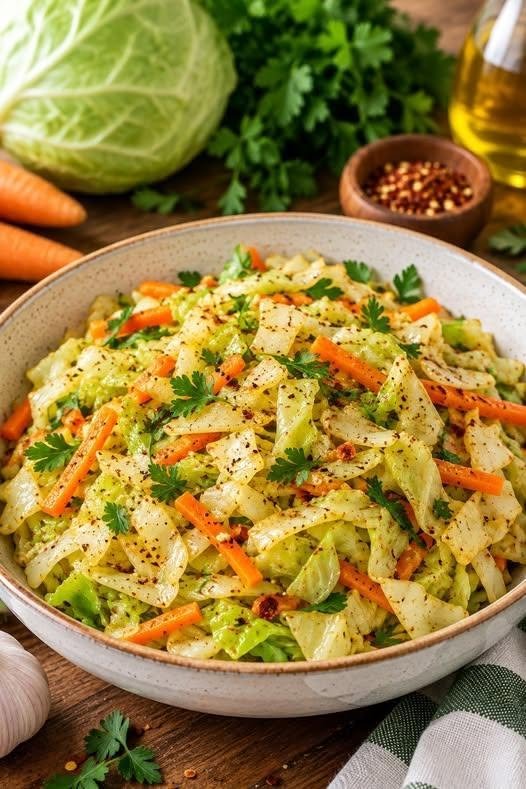
Sautéed Cabbage and Carrots
Description
Sautéed Cabbage and Carrots is a simple, budget-friendly vegetable side dish that transforms everyday ingredients into something incredibly flavorful. Tender-crisp cabbage, naturally sweet carrots, fragrant garlic, and onion are quickly cooked in olive oil and finished with simple seasonings for a colorful dish that works beautifully alongside almost any main course.
This recipe is especially useful when you want a healthy vegetable dish without spending a lot of time in the kitchen. Unlike boiled cabbage, sautéing allows the vegetables to develop lightly caramelized edges while keeping some of their natural texture. The carrots add sweetness, while cabbage provides a mild, slightly earthy flavor that becomes wonderfully tender as it cooks.
A touch of garlic, black pepper, and paprika gives the vegetables extra depth. You can keep the seasoning simple or customize the recipe with red pepper flakes, fresh herbs, lemon juice, or a splash of soy sauce.
Sautéed Cabbage and Carrots can be served as a side dish for roasted chicken, grilled fish, steak, pork, rice, potatoes, or beans. It is also delicious spooned over cooked rice or tossed with noodles for a quick vegetarian meal.
With minimal ingredients, one skillet, and about 20 minutes of cooking time, this is an excellent recipe for busy weeknights.
Recipe Details
Prep Time: 10 minutes
Cook Time: 15–20 minutes
Total Time: 25–30 minutes
Servings: 4–6
Cuisine: American-inspired / International
Course: Side Dish
Difficulty: Easy
Ingredients
- 1 medium green cabbage, about 2 pounds
- 3 medium carrots
- 1 medium yellow onion
- 3 cloves garlic, minced
- 2 tablespoons extra-virgin olive oil
- 1 tablespoon butter, optional
- 1 teaspoon smoked paprika or sweet paprika
- ½ teaspoon black pepper
- ½ teaspoon salt, or to taste
- ¼ teaspoon red pepper flakes, optional
- ½ teaspoon dried thyme
- 2 tablespoons water or vegetable broth, if needed
- 1 tablespoon fresh lemon juice
- 2 tablespoons chopped fresh parsley
Optional Additions
- ½ teaspoon onion powder
- 1 teaspoon soy sauce
- 1 teaspoon Dijon mustard
- ½ teaspoon garlic powder
- Fresh dill
- Fresh thyme
- A pinch of chili powder
- Toasted sesame seeds
Instructions
Step 1: Prepare the Vegetables
Remove any damaged outer leaves from the cabbage.
Cut the cabbage into quarters and remove the tough central core. Slice each quarter into thin strips.
Wash and peel the carrots. Slice them into thin rounds or julienne strips. Try to keep the carrot pieces relatively thin so they cook at approximately the same rate as the cabbage.
Peel and finely dice the onion.
Mince the garlic.
Having all the vegetables prepared before you start cooking makes the sautéing process much easier.
Step 2: Heat the Skillet
Place a large skillet, sauté pan, or Dutch oven over medium-high heat.
Add the olive oil and butter if using.
Allow the oil to heat for about 30 seconds.
The skillet should be large enough to hold the cabbage comfortably. If your pan is small, cook the vegetables in batches rather than overcrowding the pan.
Step 3: Sauté the Onion and Carrots
Add the diced onion and carrots to the skillet.
Cook for approximately 4–5 minutes, stirring occasionally.
The onion should begin to soften and become translucent, while the carrots should start developing lightly browned edges.
If the vegetables appear to be sticking, add a tablespoon or two of water or vegetable broth.
Step 4: Add the Garlic and Seasonings
Add the minced garlic, paprika, black pepper, thyme, and red pepper flakes if using.
Stir everything together.
Cook for about 30–60 seconds, just until the garlic becomes fragrant.
Avoid cooking garlic for too long over high heat because it can burn quickly and develop a bitter taste.
Step 5: Add the Cabbage
Add the sliced cabbage to the skillet.
At first, the cabbage may seem like too much for the pan, but it will shrink considerably as it cooks.
Use tongs or a large spoon to toss the cabbage with the onions and carrots.
Cook uncovered for approximately 7–10 minutes, stirring every minute or two.
For slightly crisp cabbage, cook it for less time.
For softer cabbage, continue cooking for another few minutes.
Step 6: Season and Finish
Add salt gradually and toss well.
Taste the vegetables.
If you want additional flavor, add a small splash of soy sauce or a teaspoon of Dijon mustard.
When the cabbage has reached your preferred tenderness, remove the skillet from the heat.
Drizzle the fresh lemon juice over the vegetables.
Toss gently.
The lemon juice adds brightness and balances the natural sweetness of the carrots.
Step 7: Garnish and Serve
Transfer the sautéed cabbage and carrots to a serving bowl or serve directly from the skillet.
Sprinkle with freshly chopped parsley.
Add a little extra black pepper and, if desired, a drizzle of extra-virgin olive oil.
Serve warm.
Recipe Notes
Choose Fresh Cabbage
Look for a cabbage that feels firm and heavy for its size. The leaves should look fresh without excessive browning or wilting.
Green cabbage works especially well, but you can also use savoy cabbage or Napa cabbage.
Slice the Vegetables Evenly
Thin, evenly sliced vegetables cook more consistently.
If the carrots are thick while the cabbage is thin, the cabbage may become soft before the carrots are fully cooked.
Don’t Overcrowd the Pan
A crowded skillet causes vegetables to steam rather than sauté.
Use the largest skillet available.
If necessary, sauté the cabbage in two batches.
Keep Some Texture
One of the best qualities of this dish is the contrast between tender cabbage and slightly crisp carrots.
Don’t cook the vegetables until they become completely soft unless that is your preference.
Add Lemon at the End
Fresh lemon juice is best added after cooking.
Its acidity provides a bright finishing flavor that makes the entire dish taste fresher.
Helpful Cooking Tips
1. Use Medium-High Heat
Moderately high heat encourages light caramelization without requiring a long cooking time.
Keep an eye on the vegetables and lower the heat if they begin browning too quickly.
2. Cut Carrots Thinly
Carrots take longer to cook than cabbage.
Thin slices help them become tender at approximately the same time.
3. Use Butter for Extra Richness
Olive oil keeps the recipe light, while a little butter gives the vegetables a richer, more comforting flavor.
Using both creates an excellent balance.
4. Add Garlic at the Right Time
Garlic cooks quickly.
Adding it after the onion and carrots have begun cooking prevents it from burning.
5. Don’t Add Too Much Liquid
This is a sautéed vegetable dish rather than a steamed dish.
Use only a tablespoon or two of water or broth if the vegetables need help softening.
6. Taste Before Serving
Cabbage and carrots have naturally mild flavors, so proper seasoning makes a major difference.
Taste at the end and adjust the salt, pepper, lemon, and seasonings.
Flavor Variations
Garlic Butter Cabbage and Carrots
Use 2 tablespoons butter instead of olive oil, or use half butter and half olive oil.
Add extra garlic and finish with parsley.
Spicy Sautéed Cabbage
Increase the red pepper flakes and add a pinch of cayenne pepper.
For additional heat, add finely sliced fresh chili peppers.
Asian-Inspired Version
Add 1 teaspoon soy sauce and 1 teaspoon sesame oil near the end of cooking.
Finish with toasted sesame seeds and sliced green onions.
Herb Version
Add fresh dill, parsley, thyme, or chives after cooking.
Fresh herbs provide a light, garden-fresh flavor.
Smoky Version
Use smoked paprika and add a small amount of cumin.
The combination creates a warm, smoky flavor that pairs beautifully with grilled meats and roasted potatoes.
Lemon Garlic Version
Increase the garlic slightly and finish with additional fresh lemon juice and lemon zest.
This version is especially delicious with grilled fish or chicken.
What to Serve With Sautéed Cabbage and Carrots
This versatile side dish pairs with almost everything.
Serve it alongside:
- Roasted chicken
- Grilled chicken
- Baked salmon
- Pan-seared fish
- Grilled steak
- Pork chops
- Turkey
- Meatloaf
- Roasted potatoes
- Mashed potatoes
- Cooked rice
- Quinoa
- Lentils
- Beans
- Pasta
For a simple vegetarian meal, serve the vegetables over rice or quinoa with white beans and a fried or poached egg.
Make-Ahead Instructions
You can prepare the vegetables ahead of time.
Slice the cabbage, carrots, and onion and store them separately in airtight containers in the refrigerator.
When you’re ready to cook, simply heat the skillet and sauté the vegetables.
For the best texture, cook the dish shortly before serving.
Storage
Allow leftovers to cool before placing them in an airtight container.
Refrigerate for approximately 3–4 days.
To reheat, warm the vegetables in a skillet over medium heat.
You can also microwave them in short intervals, stirring between each interval.
The skillet method is preferable because it helps restore some of the sautéed texture.
Freezing Instructions
Sautéed cabbage and carrots can technically be frozen, but the texture will be softer after thawing.
If you plan to freeze the dish, slightly undercook the vegetables.
Allow them to cool completely before transferring them to freezer-safe containers.
Freeze for up to approximately 2–3 months for best quality.
Thaw overnight in the refrigerator and reheat in a skillet.
Nutritional Information
Approximate nutrition per serving, assuming 6 servings:
- Calories: 125 kcal
- Protein: 2.5 g
- Carbohydrates: 15 g
- Fiber: 5 g
- Total Fat: 7 g
- Saturated Fat: 1.5 g
- Sugar: 7 g
- Sodium: 300–400 mg
- Vitamin C: High
- Vitamin A: High
Nutrition values are estimates and will vary depending on the exact ingredients and quantities used.
Benefits of Sautéed Cabbage and Carrots
1. Rich in Fiber
Cabbage and carrots both provide dietary fiber.
Fiber contributes to digestive health and can help meals feel more satisfying.
2. Provides Vitamin C
Cabbage is a useful source of vitamin C, an important nutrient that supports normal immune function and helps the body absorb iron from plant foods.
3. Excellent Source of Carotenoids
Carrots contain beta-carotene, which the body can convert into vitamin A.
Vitamin A plays important roles in normal vision, immune function, and skin health.
4. Vegetable-Focused Meal
This recipe makes it easy to increase your vegetable intake without complicated preparation.
A generous serving can add substantial volume, color, and nutrients to your meal.
5. Naturally Low in Calories
Cabbage and carrots are relatively low in calories while providing plenty of texture and flavor.
Using a moderate amount of oil keeps the dish satisfying without making it overly heavy.
6. Simple Pantry Ingredients
The recipe doesn’t require specialty ingredients.
Cabbage, carrots, onion, garlic, olive oil, and basic seasonings are enough to create a flavorful side dish.
Frequently Asked Questions
Can I use red cabbage?
Yes. Red cabbage works very well and creates a beautiful color.
Keep in mind that red cabbage can have a slightly stronger flavor and may take a little longer to become tender.
Can I use baby carrots?
Yes. Slice them thinly so they cook quickly.
Can I add potatoes?
Absolutely. Small diced potatoes can be added, although they require more cooking time than cabbage and carrots.
For convenience, par-cook the potatoes before adding them.
Can I make this recipe vegan?
Yes. Use olive oil instead of butter and make sure any optional sauces are vegan.
Is this recipe gluten-free?
The basic recipe is naturally gluten-free.
If you add soy sauce, use gluten-free tamari or certified gluten-free soy sauce if necessary.
Can I use frozen carrots?
Fresh carrots provide the best texture, but frozen carrots can be used in a pinch.
They may become softer during cooking.
Why is my cabbage watery?
Cabbage naturally releases water as it cooks.
If your skillet is overcrowded or the heat is too low, the vegetables may steam instead of sauté.
Cook uncovered over moderately high heat and avoid adding unnecessary liquid.
How do I make cabbage more flavorful?
Proper browning, garlic, onion, paprika, black pepper, and a little lemon juice can dramatically improve the flavor.
You can also add Parmesan, soy sauce, Dijon mustard, or fresh herbs.
Can I add bacon?
Yes. Cook chopped bacon until crisp, remove some of the excess grease if necessary, then sauté the onion, carrots, and cabbage in the remaining bacon fat.
Can I add sausage?
Definitely. Brown sliced or crumbled sausage first, then add the vegetables and continue cooking.
Can I make this in a wok?
Yes. A wok works particularly well because its shape allows the vegetables to cook quickly over relatively high heat.
How can I make the vegetables crispier?
Use a large skillet, avoid overcrowding, and cook over medium-high heat.
Don’t cover the pan.
Can I use coconut oil?
Yes. Coconut oil can be used, although it will give the vegetables a subtle coconut flavor depending on the type used.
What herbs taste best with cabbage?
Parsley, dill, thyme, chives, and basil can all work well.
Dill and parsley are particularly good with lemon-flavored cabbage.
Is this dish good for meal prep?
Yes. It stores well in the refrigerator for several days.
For the best texture, slightly undercook the cabbage and carrots if you know you will reheat them later.
Can children eat sautéed cabbage and carrots?
Yes. The vegetables are naturally mild and slightly sweet.
For children, reduce or omit the red pepper flakes and adjust the seasoning to taste.