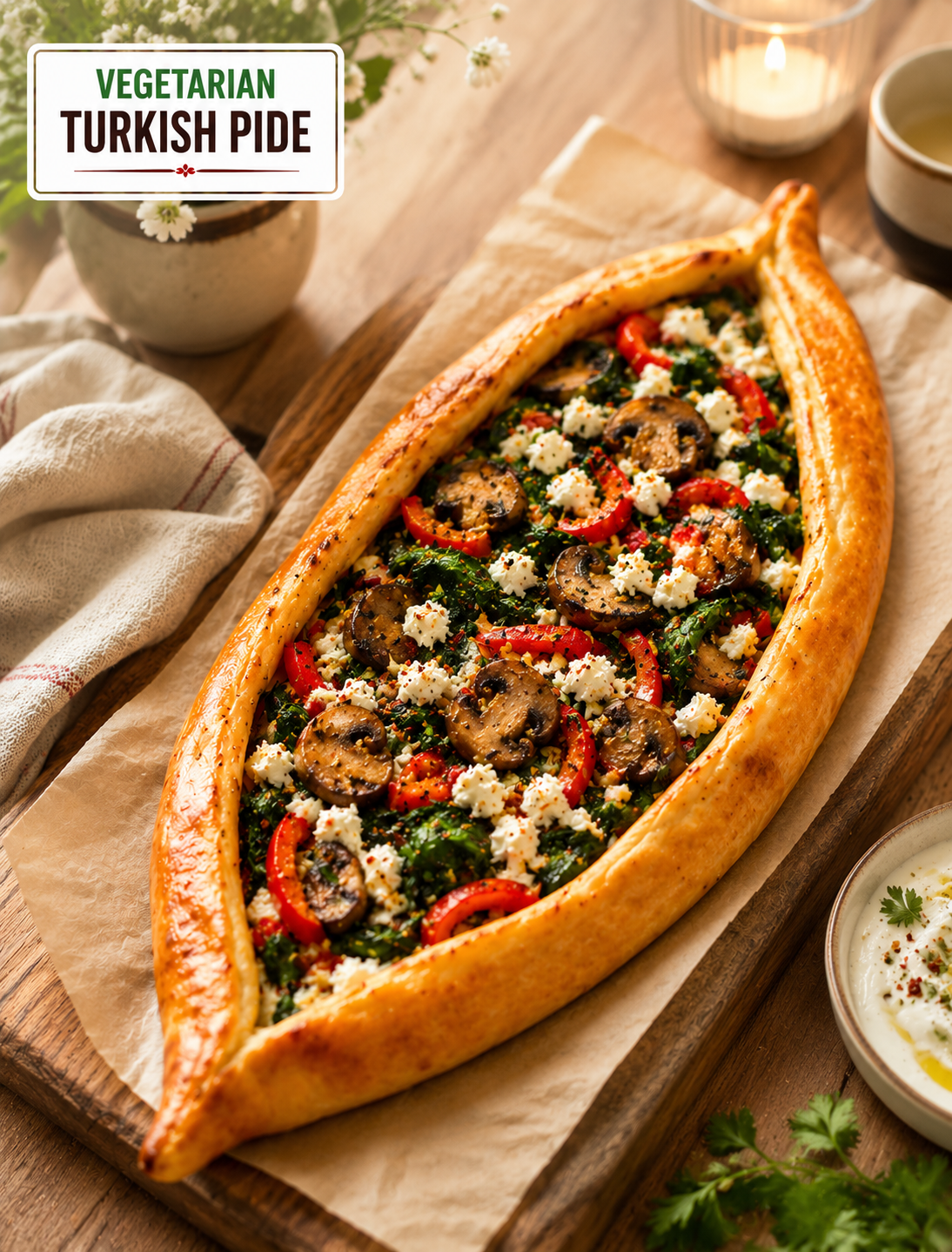
Vegetarian Turkish Pide
Vegetarian Turkish Pide is a golden, oval-shaped flatbread filled with sautéed vegetables, spinach, mushrooms, feta cheese, and mild Turkish spices. It has crisp edges, a soft center, and a savory filling that makes it satisfying enough for lunch, dinner, or a casual weekend meal.
This Turkish-inspired flatbread is a great meatless option when you want something hearty without making a complicated dish. The vegetables are cooked before they go into the dough, which gives the filling a rich flavor and prevents the pide from becoming watery while baking.
The recipe uses simple ingredients that are easy to find in most U.S. grocery stores. Serve the finished pide warm, cut it into slices, and enjoy it with a fresh salad, yogurt sauce, or your favorite Mediterranean side.
Why You’ll Love This Vegetarian Turkish Pide
This homemade Turkish pide combines homemade yeast dough with a flavorful vegetable filling and salty feta cheese. The dough becomes lightly crisp around the edges while staying tender in the middle.
Mushrooms provide a meaty texture, while red bell pepper adds natural sweetness and color. Spinach brings freshness, and feta gives the filling a creamy, tangy finish.
Another advantage is that the dough can be prepared ahead of time. Once the vegetables are cooked, assembling the pide is simple, making this recipe useful for busy weeknight dinners or relaxed family meals.
Ingredients For:
Dough
- 1 cup warm water, about 90–110°F
- 2 ¼ teaspoons instant dry yeast
- 1 teaspoon granulated sugar
- 2 ¼ cups all-purpose flour, about 300 g
- 1 teaspoon sea salt or kosher salt
- 3 tablespoons olive oil, divided
Vegetable Filling
- 2 tablespoons olive oil, divided
- 1 medium onion, finely chopped
- 4 garlic cloves, minced
- 8 ounces cremini or white button mushrooms, sliced
- 1 large red bell pepper, thinly sliced
- 5 ounces fresh spinach, washed and patted dry
- ¾ cup crumbled feta cheese
- 1 teaspoon Aleppo pepper
- Salt and freshly ground black pepper, to taste
Egg Wash
- 1 large egg, beaten
- 1 tablespoon olive oil
How to Make Vegetarian Turkish Pide
Prepare the Dough
Preheat your oven to 400°F and line two baking sheets with parchment paper.
Mix the warm water, instant yeast, and sugar in a medium bowl. Stir gently and let the mixture stand for 5–8 minutes until it becomes slightly foamy.
In a large bowl, whisk together the flour and salt. Make a well in the center and add the yeast mixture and 2 tablespoons of olive oil.
Mix with a wooden spoon or spatula until a sticky, shaggy dough forms. Transfer the dough to a lightly floured surface and knead for 3–4 minutes until smooth and soft.
Add the remaining tablespoon of olive oil and continue kneading. If the dough feels overly wet, add flour one tablespoon at a time rather than adding too much at once.
Place the dough in a lightly oiled bowl and turn it once to coat the surface. Cover it with plastic wrap and let it rise in a warm place for about 1 hour, or until doubled in size.
Cook the Vegetable Filling
Heat 1 tablespoon of olive oil in a large skillet over medium heat. Add the chopped onion, garlic, mushrooms, and red bell pepper.
Cook for about 10 minutes, stirring occasionally. The onions should become translucent, the mushrooms should soften, and the peppers should lose their raw texture.
Turn off the heat and stir in the spinach, feta cheese, and Aleppo pepper. Season with salt and freshly ground black pepper.
Let the filling cool before assembling the flatbreads. Cooling the mixture helps prevent excess moisture from weakening the dough.
Shape the Pide
Transfer the risen dough to a lightly floured surface and knead it for 1–2 minutes to release some of the air.
Divide the dough into two equal portions and shape each portion into a smooth ball.
Stretch each dough ball into an oval approximately 8 x 16 inches. Use a rolling pin for an even shape, or gently stretch the dough with your hands.
Place one oval on a prepared baking sheet. Spread half of the vegetable mixture down the center while leaving about a 1-inch border around the edges.
Fold the long sides inward slightly to create a raised border. Pinch and twist both ends so the pide has its classic pointed shape.
Repeat with the second dough portion and remaining filling.
Add the Egg Wash and Bake
Whisk the beaten egg with 1 tablespoon of olive oil. Brush the mixture over the exposed dough edges.
Bake the two pides at 400°F for 23–25 minutes, or until the crust is golden brown and the edges look crisp.
Let the pide rest for a few minutes before slicing. Serve warm for the best texture and flavor.
Tips for the Best Turkish Pide
Use warm rather than hot water for the yeast. Water that is too hot can interfere with proper yeast activity.
Avoid adding too much flour while kneading. A slightly soft dough produces a more tender crust.
Cook the vegetables until their excess moisture has evaporated. This keeps the center of the pide from becoming soggy.
Do not overload the dough with filling. A moderate layer allows the crust to bake evenly and remain crisp.
For extra browning, brush the dough border evenly with egg wash before baking.
If you prefer a richer cheese flavor, add a small amount of shredded mozzarella alongside the feta.
Serving Suggestions
Slice the baked pide into strips or smaller portions and serve it while warm. A simple cucumber and tomato salad adds freshness and balances the savory filling.
For a creamy side, serve the pide with plain Greek yogurt mixed with lemon juice, garlic, and a pinch of salt.
It also works well with hummus, olives, roasted vegetables, or a light Mediterranean salad. For a casual gathering, cut the pide into small pieces and serve it as a vegetarian appetizer.
Storage and Reheating
Store leftover Turkish pide in an airtight container in the refrigerator for up to 3 days.
Reheat slices in a 350°F oven or air fryer until warmed through and crisp around the edges. Avoid microwaving for too long because it can make the crust soft.
You can also prepare the dough ahead of time and refrigerate it overnight. Let it come closer to room temperature before shaping.
Nutrition Information
Nutrition values vary based on ingredient brands, portion size, and the amount of filling used. An approximate serving may provide carbohydrates from the flour, protein from the feta and egg, fiber from the vegetables, and healthy fats from olive oil.
For a more balanced meal, serve one portion with a large vegetable salad or another fiber-rich side.
Frequently Asked Questions
What is Turkish pide?
Turkish pide is an oval-shaped flatbread traditionally baked with different savory toppings, including vegetables, cheese, meat, or eggs.
Is Vegetarian Turkish Pide healthy?
It can be part of a balanced diet because it combines vegetables, spinach, mushrooms, feta, and olive oil in one meal.
Can I make pide without eggs?
Yes. You can skip the egg wash and brush the edges with olive oil for a simple vegetarian finish.
Can I use whole wheat flour?
Yes, but replacing all the flour may produce a denser crust; start by replacing part of the all-purpose flour with whole wheat flour.
Can I make the dough ahead of time?
Yes. Refrigerate the covered dough overnight and allow it to warm slightly before shaping and baking.
What vegetables can I use in Turkish pide?
You can add zucchini, tomatoes, roasted peppers, broccoli, or other vegetables, but cook watery vegetables first to reduce excess moisture.
How do I keep pide crispy?
Cook the filling until excess moisture is gone, avoid overfilling the dough, and bake until the edges are deeply golden.
What should I serve with Turkish pide?
Serve it with Greek yogurt sauce, hummus, cucumber salad, tomatoes, olives, or a fresh Mediterranean-style salad.
Final Thoughts
Vegetarian Turkish Pide is an easy way to bring Turkish-inspired flavors to your home kitchen. The combination of crisp homemade dough, tender vegetables, spinach, mushrooms, feta, and Aleppo pepper creates a flavorful meatless meal without complicated cooking techniques.
Bake it for a family dinner, weekend lunch, or casual gathering and serve it warm with your favorite Mediterranean sides. Once you master the dough and shaping technique, you can experiment with different vegetable and cheese combinations to create your own version.