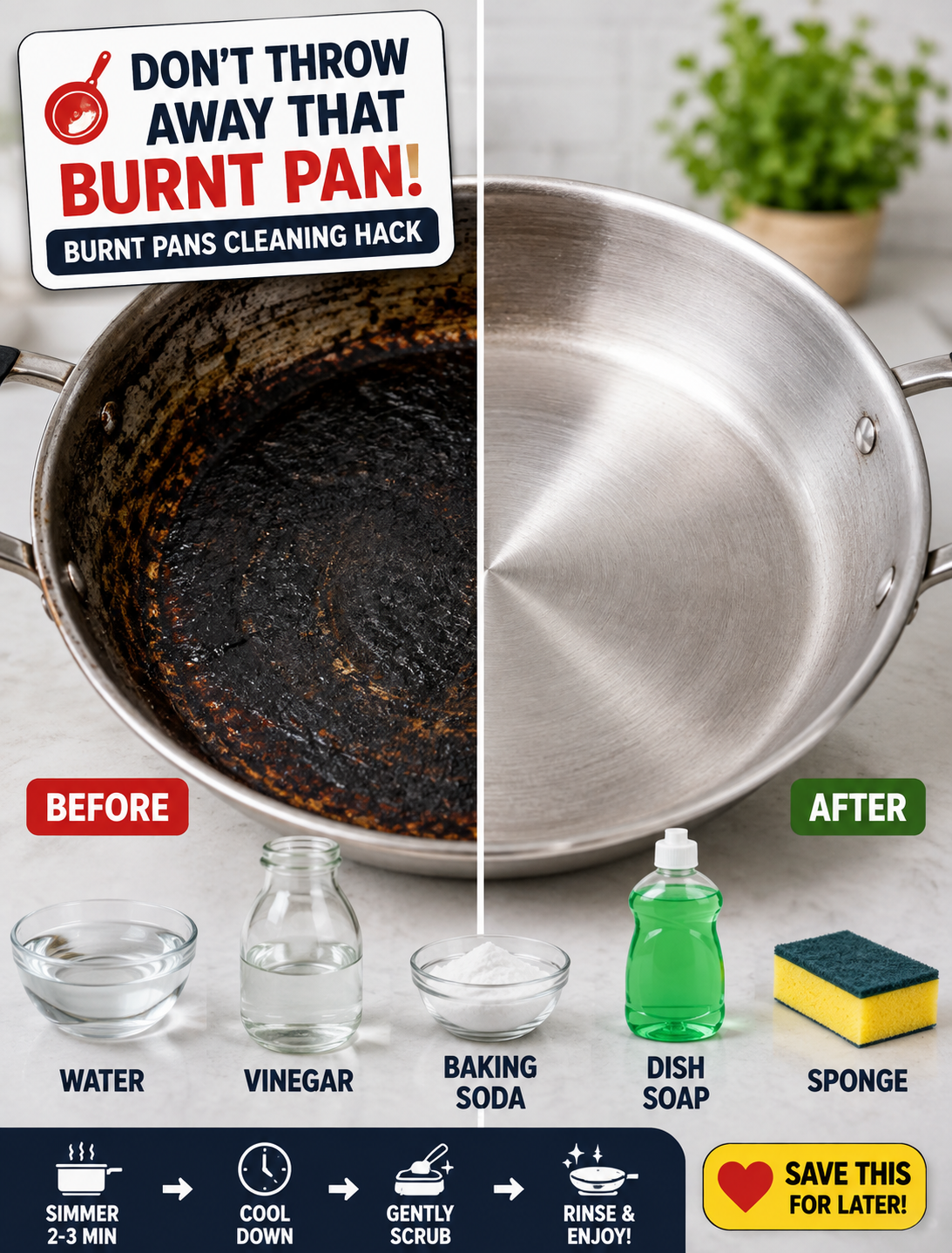
DON’T THROW AWAY THAT BURNT PAN
A burnt pan can look like it is ready for the trash, especially when thick black residue covers the bottom. Before you spend money on a replacement, try a simple cleaning method with common household supplies. With the right approach, you can loosen stubborn burnt-on food and make cleanup much easier.
This burnt pans cleaning hack works best when you give the stuck-on residue time to soften before scrubbing. The goal is not to scrape the pan aggressively. Gentle heat, soaking, and a non-scratch scrubber can do much of the work for you.
Why Burnt Pans Are So Difficult to Clean
Burnt food becomes difficult to remove because high heat dries and hardens food residue onto the cooking surface. Sugars, sauces, oils, and starchy foods can form a tough layer that does not come away with regular dish soap.
Scrubbing a dry burnt pan can also damage the surface, especially when the cookware has a nonstick coating. Softening the residue first is usually a better option.
The type of pan matters, too. Stainless steel, enamel, cast iron, and nonstick cookware require different cleaning techniques. Always check the manufacturer’s care instructions before using a new cleaning method.
What You Need for This Burnt Pan Cleaning Hack
You only need a few basic kitchen supplies:
- 1 cup water
- ½ cup white vinegar
- 1 to 2 tablespoons baking soda
- A small amount of dish soap
- A non-scratch sponge or soft scrub brush
- A clean kitchen towel
These supplies are inexpensive and commonly found in U.S. kitchens. You can also use a wooden or silicone spatula to lift softened food from the pan without scratching the surface.
How to Clean a Burnt Pan Step by Step
Start by removing any loose pieces of food from the pan. Do not scrape hard at the blackened layer because aggressive scraping can scratch some cookware.
Add 1 cup of water and ½ cup of white vinegar to the pan. Place the pan on the stove and bring the liquid to a gentle simmer for several minutes.
The heat helps loosen the hardened residue from the cooking surface. Keep the pan under supervision while it heats, and avoid letting the liquid boil away completely.
Turn off the heat and allow the pan to cool until it is safe to handle. Carefully pour out the liquid if needed.
Add a small amount of baking soda and a little dish soap to the remaining residue. Use a damp, non-scratch sponge to gently work across the affected areas.
For thick buildup, let the baking soda and soap sit on the surface for several minutes before scrubbing again. Use a wooden or silicone spatula to lift softened spots when necessary.
Rinse the pan thoroughly with warm water. If some residue remains, repeat the soaking and gentle scrubbing process instead of applying excessive pressure.
Finally, wash the pan with regular dish soap and dry it completely with a clean towel.
Important: Never seal vinegar and baking soda together in a closed bottle or container. Their reaction produces gas and can create pressure.
The Best Way to Handle Stubborn Burnt-On Food
Some burnt pans need more than one cleaning session. Trying to remove everything in one aggressive scrub can damage the cookware.
For stubborn areas, repeat the warm-water soaking process and allow additional time for the residue to soften. A soft sponge is usually safer than steel wool or a rough abrasive pad.
If the pan has a nonstick coating, avoid metal utensils, abrasive cleaners, and harsh scrubbing. Once the coating becomes scratched or damaged, the cookware may no longer perform as intended.
For stainless steel cookware, a little more gentle scrubbing may be appropriate, but you should still avoid unnecessary scratching.
Common Mistakes to Avoid When Cleaning Burnt Pans
One common mistake is scrubbing a completely dry pan. Hardened residue is much harder to remove when it has not been softened.
Another mistake is using too much force. Strong scrubbing may remove residue faster, but it can also leave scratches.
Do not pour cold water into a very hot pan. A sudden temperature change can stress some cookware and may cause warping.
Avoid mixing household cleaning products unless the product label specifically says they can be combined. In particular, never mix bleach with vinegar, ammonia, or other incompatible cleaners.
Do not use abrasive methods on cookware unless the manufacturer recommends them. The safest cleaning method depends on the material and finish of your pan.
How to Keep Your Pans From Getting Burnt
Preventing heavy buildup is easier than removing it later. Keep cooking temperatures under control and avoid leaving an empty pan over high heat.
When cooking sauces, sugar-based foods, or starchy dishes, stir regularly and monitor the pan closely. Food that sits on a hot surface for too long can quickly become difficult to remove.
Clean the cookware soon after cooking rather than allowing food residue to dry completely. A short warm-water soak can make routine cleanup much easier.
Using the correct burner size can also help prevent food from burning around the sides of the pan.
When You Should Replace a Burnt Pan
A burnt appearance does not automatically mean the pan needs to be replaced. If the cooking surface is intact and the residue can be safely removed, cleaning may be enough.
However, cookware should be replaced when the surface is badly damaged, deeply scratched, cracked, warped, or otherwise compromised. For nonstick pans, peeling or flaking coating is a clear reason to stop using the cookware.
Always follow the care and replacement recommendations provided by the manufacturer.
Frequently Asked Questions
Can I use vinegar and baking soda to clean a burnt pan?
Yes, they can be used during the cleaning process, but do not seal or store them mixed together because the reaction releases gas.
How long should I simmer a burnt pan?
A few minutes is usually a reasonable starting point, followed by cooling and gentle scrubbing; repeat the process if residue remains.
Can this method clean a stainless steel pan?
Yes, the method can help loosen burnt food on stainless steel, but avoid excessive scrubbing that could scratch the finish.
Is vinegar safe for nonstick pans?
Vinegar may be acceptable for some nonstick cookware, but always check the manufacturer’s cleaning instructions before using it.
Can I use steel wool on a burnt pan?
Steel wool can scratch many cookware surfaces, so a non-scratch sponge or soft scrubber is a safer first choice.
What should I do if the burnt residue will not come off?
Repeat the soaking and gentle cleaning process rather than using more force, and check the cookware manufacturer’s recommended cleaning method.
Can a burnt pan still be used after cleaning?
A pan can generally continue to be used if its cooking surface remains intact and undamaged after cleaning.
How can I prevent food from burning onto my pans?
Use appropriate heat, monitor cooking closely, stir foods that tend to stick, and clean the pan soon after use.
Final Thoughts
A badly burnt pan does not always belong in the trash. Taking time to soften the residue can make the cleaning process much easier while reducing the need for harsh scrubbing.
For the best results, use gentle heat, a short soak, dish soap, baking soda, and a non-scratch cleaning tool. Most importantly, match the cleaning method to the cookware material and follow the manufacturer’s care instructions.
The next time you see a blackened pan sitting in the sink, don’t throw it away just yet. Give this simple cleaning approach a try and see whether your cookware can be restored to a usable condition.