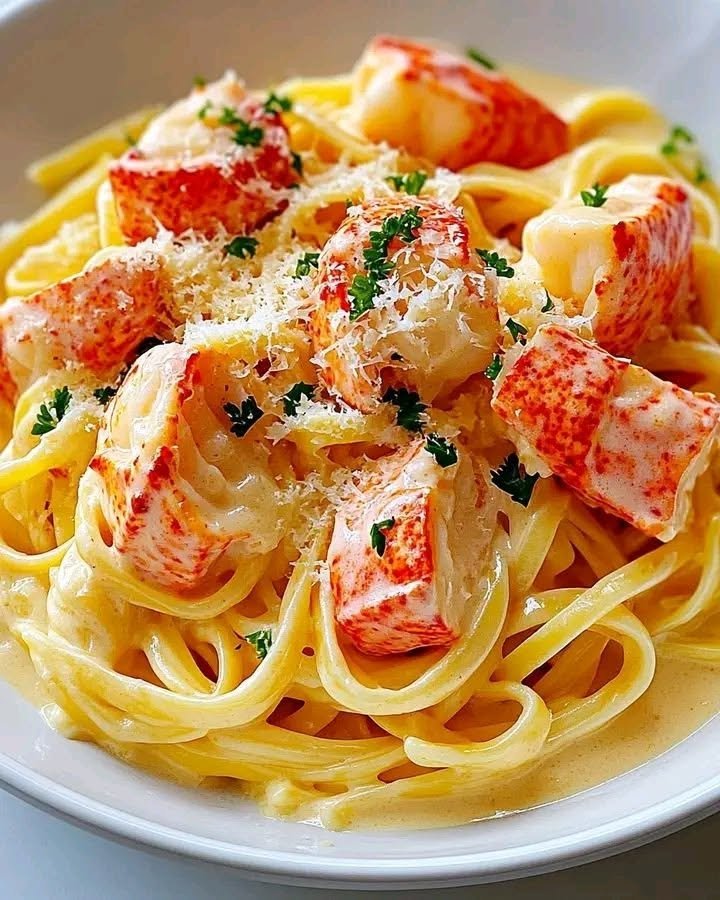
Creamy Lobster Linguine with Garlic Parmesan Seafood
Introduction
Creamy Lobster Linguine with Garlic Parmesan Seafood is an elegant, restaurant-style pasta dish featuring tender lobster meat, perfectly cooked linguine, and a rich garlic Parmesan cream sauce. Every forkful combines sweet, succulent seafood with buttery garlic, freshly grated Parmesan, and fragrant herbs for a luxurious meal that feels special without requiring complicated cooking techniques.
This recipe is perfect for romantic dinners, family celebrations, weekend entertaining, or whenever you want to enjoy a comforting seafood meal at home. The creamy sauce coats every strand of pasta, while lemon juice and fresh parsley brighten the richness and allow the delicate lobster flavor to shine.
You can prepare this dish with cooked lobster meat alone or add shrimp and scallops for an even more indulgent seafood combination. With a few quality ingredients and careful timing, you can create a delicious pasta dinner that looks beautiful and tastes incredible.
Recipe Details
-
Prep Time: 20 minutes
-
Cook Time: 25 minutes
-
Total Time: 45 minutes
-
Servings: 4
-
Course: Main Course
-
Cuisine: Italian-inspired
-
Cooking Method: Stovetop
-
Difficulty: Moderate
Ingredients
For the Pasta
-
12 ounces linguine pasta
-
1 tablespoon salt for the pasta water
-
1 tablespoon olive oil
-
1 tablespoon butter
For the Seafood
-
12 ounces cooked lobster meat, chopped into bite-sized pieces
-
8 ounces large shrimp, peeled and deveined (optional)
-
4 ounces scallops, patted dry (optional)
-
2 tablespoons unsalted butter
-
3 garlic cloves, minced
-
¼ teaspoon paprika
-
¼ teaspoon black pepper
-
Salt, to taste
For the Creamy Garlic Parmesan Sauce
-
2 tablespoons unsalted butter
-
4 garlic cloves, finely minced
-
1 tablespoon all-purpose flour
-
1½ cups heavy cream
-
½ cup low-sodium seafood stock or chicken broth
-
¾ cup freshly grated Parmesan cheese
-
¼ teaspoon Italian seasoning
-
¼ teaspoon red pepper flakes, optional
-
1 tablespoon fresh lemon juice
-
½ teaspoon lemon zest
-
Salt and black pepper, to taste
For Garnishing
-
2 tablespoons fresh parsley, chopped
-
2 tablespoons freshly grated Parmesan
-
Lemon wedges
-
Freshly ground black pepper
-
A small drizzle of extra-virgin olive oil, optional
Instructions
Step 1: Cook the Linguine
Bring a large pot of water to a boil. Add the salt, then carefully add the linguine.
Cook according to the package instructions until the pasta is al dente, meaning it is tender but still has a slight bite.
Before draining, reserve approximately one cup of the pasta cooking water. This starchy water helps loosen the creamy sauce and allows it to cling beautifully to the linguine.
Drain the pasta without rinsing it. Toss with a small amount of olive oil if necessary to prevent sticking, then set aside.
Avoid overcooking the pasta because it will be returned to the sauce briefly before serving.
Step 2: Prepare the Seafood
Pat the shrimp and scallops dry with paper towels if you are using them. Season lightly with paprika, black pepper, and a small pinch of salt.
Heat two tablespoons of butter in a large skillet over medium heat. Add the shrimp in a single layer and cook for approximately 2–3 minutes per side, depending on their size, until pink, opaque, and cooked through.
If using scallops, sear them separately for approximately 1–2 minutes per side, depending on their thickness, until browned and cooked through.
Transfer the cooked seafood to a clean plate.
Because the lobster meat is already cooked, it does not need to be cooked again at this stage. It will be warmed gently in the sauce later.
Step 3: Sauté the Garlic
Using the same skillet, reduce the heat to medium-low. Add two tablespoons of butter if the pan is dry.
Add the minced garlic and cook for approximately 30–45 seconds, stirring constantly until fragrant.
Do not let the garlic become dark brown because burnt garlic can give the entire dish a bitter flavor.
If you have flavorful seafood juices in the pan, leave them there. They add depth to the finished sauce.
Step 4: Make the Creamy Parmesan Sauce
Sprinkle the flour over the butter and garlic. Stir continuously for about one minute to create a light roux.
Gradually pour in the seafood stock while whisking to prevent lumps. Add the heavy cream and continue stirring until the mixture becomes smooth.
Allow the sauce to simmer gently for approximately 3–5 minutes until it begins to thicken. Avoid boiling it aggressively.
Reduce the heat to low and gradually stir in the grated Parmesan cheese. Add the Italian seasoning, black pepper, and optional red pepper flakes.
Continue stirring until the cheese melts and the sauce becomes creamy.
Taste the sauce before adding more salt, since Parmesan and seafood stock can already contain sodium.
Step 5: Add Lemon and Adjust the Flavor
Stir the lemon juice and lemon zest into the sauce.
The lemon adds brightness that balances the richness of the cream, butter, and cheese. It also complements the naturally sweet flavor of the lobster.
If the sauce is too thick, add a few tablespoons of reserved pasta water or additional stock. Stir until it reaches a smooth, pourable consistency.
If it seems too thin, let it simmer gently for another minute or two before adding the seafood.
For the smoothest texture, keep the heat low once the Parmesan has been added.
Step 6: Add the Lobster and Other Seafood
Gently fold the cooked lobster meat into the creamy sauce. If using shrimp and scallops, return them to the skillet as well.
Stir carefully so the seafood remains intact.
Allow everything to warm for approximately 2–3 minutes. Do not simmer the lobster for too long, as it can become tough and lose its delicate texture.
Taste the sauce again and adjust the seasoning with a little black pepper, lemon juice, or Parmesan if desired.
Step 7: Combine the Linguine and Sauce
Add the cooked linguine directly to the skillet.
Using tongs, gently toss the pasta through the sauce until every strand is coated. Allow it to cook for another 1–2 minutes over low heat so the linguine absorbs some of the garlic Parmesan flavor.
If the pasta appears dry, add reserved pasta water one tablespoon at a time until the sauce coats the noodles smoothly.
Make sure the seafood is distributed evenly throughout the pasta so each serving contains a generous amount.
Step 8: Garnish and Serve
Remove the skillet from the heat. Sprinkle the pasta with chopped fresh parsley, additional Parmesan cheese, and freshly ground black pepper.
Serve with lemon wedges on the side for anyone who enjoys extra citrus flavor.
For an elegant presentation, twist the linguine into small nests using tongs and place them in warm bowls. Arrange pieces of lobster and shrimp on top, then spoon the remaining creamy sauce around the pasta.
Serve immediately while the sauce is silky and the seafood is tender.
Tips for the Best Results
Use good-quality lobster meat. Freshly cooked lobster offers wonderful sweetness, but properly thawed frozen cooked lobster meat is also convenient. Drain and pat it dry before adding it to the sauce.
Grate the Parmesan yourself. Freshly grated cheese generally melts more smoothly than pre-shredded cheese and provides a richer flavor.
Keep the sauce at a gentle simmer. High heat can cause cream-based sauces to separate. Reduce the heat before adding Parmesan.
Reserve pasta water. The starch in the water helps bind the sauce to the linguine and makes it easier to adjust the consistency.
Avoid overcooking the seafood. Shrimp, scallops, and lobster cook quickly. Add cooked lobster near the end and warm it gently.
Balance the richness with lemon. A small amount of lemon juice brightens the sauce without overpowering the seafood.
Delicious Variations
Creamy Lobster and Shrimp Linguine
Increase the shrimp to 12 ounces and use 8–10 ounces of lobster meat. The combination creates a generous seafood pasta with different textures and flavors.
Garlic Butter Lobster Linguine
For a less creamy version, omit the heavy cream and flour. Use additional butter, olive oil, garlic, lemon juice, and a little pasta water to create a lighter garlic butter sauce.
Spinach and Lobster Linguine
Add two handfuls of fresh baby spinach to the sauce during the final two minutes. Stir until wilted before adding the linguine and seafood.
Spicy Parmesan Seafood Pasta
Add extra red pepper flakes and a pinch of cayenne pepper. This variation provides gentle heat that contrasts beautifully with the sweet lobster.
Mushroom Garlic Parmesan Linguine
Sauté sliced mushrooms after cooking the seafood, then prepare the sauce in the same skillet. Mushrooms add earthy flavor that pairs well with garlic, cream, and Parmesan.
What to Serve with Creamy Lobster Linguine
This rich pasta pairs well with fresh, simple sides that balance its creamy texture.
-
Garlic bread: Perfect for soaking up the remaining Parmesan sauce.
-
Lemon arugula salad: Peppery greens and a citrus dressing provide freshness.
-
Roasted asparagus: Adds color and a tender-crisp texture.
-
Steamed broccoli: Offers a simple vegetable side.
-
Cherry tomato salad: Sweet tomatoes and fresh basil complement the seafood.
-
Roasted zucchini: A light vegetable side that works well with garlic and herbs.
For a special dinner, serve the linguine with roasted asparagus, a crisp green salad, and lemon wedges.
Storage and Reheating
Refrigeration: Transfer leftovers to an airtight container and refrigerate within two hours. For the best quality and food safety, consume within 3–4 days.
Reheating: Warm the pasta gently in a skillet over low heat with a splash of milk, cream, or seafood stock. Stir carefully until heated through.
Microwave: Reheat in short intervals at medium power, stirring between intervals to distribute the heat.
Freezing: Freezing is not recommended for the best texture because the cream sauce may separate and the seafood can become tough after thawing.
Avoid repeatedly reheating the same portion.
Nutritional Information
Estimated nutrition per serving, assuming four servings and the optional shrimp and scallops are included:
| Nutrient | Approximate Amount |
|---|---|
| Calories | 650–800 |
| Protein | 35–45 g |
| Carbohydrates | 50–65 g |
| Fat | 30–42 g |
| Fiber | 2–4 g |
Actual values vary with lobster quantity, pasta brand, cream, cheese, and optional seafood.
Potential Benefits
-
Protein: Lobster, shrimp, and scallops provide protein that supports muscle maintenance and normal body functions.
-
Vitamin B12: Lobster and other seafood can provide vitamin B12, which supports nerve function and red blood cell formation.
-
Minerals: Seafood supplies minerals such as selenium and zinc, although quantities vary by species and portion size.
-
Balanced meal potential: Serving a moderate portion with vegetables and a fresh salad adds fiber and variety.
-
Flavorful ingredients: Garlic, lemon, and fresh parsley enhance flavor without requiring excessive additional seasoning.
This is a rich meal due to the cream, butter, Parmesan, and pasta. Portion sizes and side dishes can be adjusted to suit your preferences.
Frequently Asked Questions
1. Can I use frozen lobster meat?
Yes. Thaw it safely in the refrigerator and drain it thoroughly before adding it to the sauce.
2. Can I make this recipe without shrimp and scallops?
Absolutely. Use lobster alone, or replace the additional seafood with extra lobster meat.
3. What pasta works best?
Linguine is ideal because its long, flat strands hold the creamy sauce well. Fettuccine or spaghetti can also be used.
4. How can I prevent the sauce from becoming too thick?
Add reserved pasta water or a small splash of warm stock, stirring until the sauce becomes smooth.
5. Can I prepare the sauce ahead of time?
You can prepare the sauce a few hours ahead and refrigerate it promptly, but it is best to cook the pasta and combine everything shortly before serving. Reheat the sauce gently and add a little stock or cream if needed.
6. How do I know when shrimp and scallops are cooked?
Shrimp should be opaque and pink, while scallops should be opaque and firm. Avoid prolonged cooking, which can make both tough.
7. Can I make this recipe lighter?
Use half-and-half instead of heavy cream, reduce the butter and Parmesan, and add spinach or other vegetables. The sauce may be thinner and less rich.