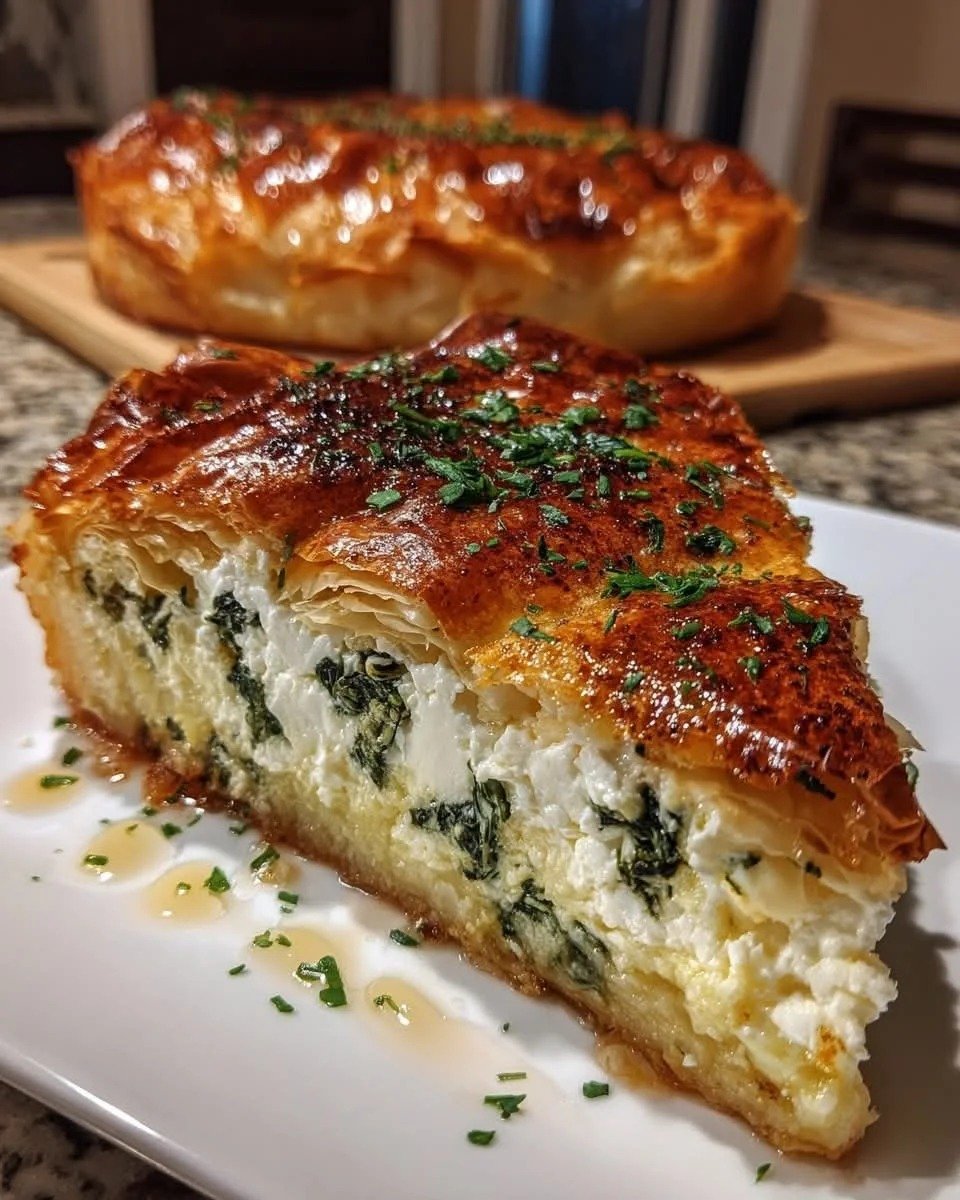
Authentic Greek Spanakopita
Authentic Greek Spanakopita is a classic savory spinach and feta pie made with layers of crisp, golden phyllo pastry and a flavorful filling of spinach, Greek feta, fresh dill, mint, onions, and eggs. Each slice combines delicate, flaky pastry with a savory, herb-filled center that makes this traditional Greek dish incredibly satisfying.
This homemade spanakopita is perfect as a main vegetarian meal, appetizer, side dish, or addition to a Mediterranean-style table. The key to a flavorful filling is removing as much moisture as possible from the spinach, while the secret to beautifully crisp pastry is generously brushing each phyllo layer with olive oil or melted butter.
Prep Time: 35 minutes
Cook Time: 50 minutes
Total Time: 1 hour 25 minutes
Servings: 8–10
Ingredients
For the Pastry
Phyllo dough sheets: 1 package, about 1 lb (450 g), preferably thicker country-style horiatiko phyllo or standard pastry phyllo
Extra virgin Greek olive oil or melted unsalted butter: about ¾ to 1 cup, for brushing between the phyllo layers
For the Greens & Aromatics Filling
Fresh spinach: 1.2 to 1.5 lbs, washed thoroughly, chopped, and squeezed completely dry
Green onions or scallions: 4–6, finely chopped
Yellow onion: 1 medium, finely diced
Small leek: 1, finely diced, if using instead of the yellow onion
For the Cheese & Binder Mixture
Authentic Greek feta cheese: 10–14 oz, preferably a block packed in brine and crumbled by hand
Large eggs: 2–3, beaten well
Greek yogurt: 2–3 tablespoons, optional, for extra creaminess
Ricotta or mizithra cheese: 2–3 tablespoons, optional, if desired
For Herbs & Seasonings
Fresh dill: ½ bunch, finely chopped
Fresh spearmint or mint leaves: 10–15, roughly chopped
Ground nutmeg: a pinch
Freshly cracked black pepper: to taste
Sea salt: a small pinch, if needed
Instructions
Prepare the Spinach
Wash the fresh spinach thoroughly under cool running water to remove any dirt or grit. Drain it well and roughly chop the leaves.
The most important step is removing excess moisture. Place the chopped spinach in a clean kitchen towel and squeeze firmly until as much liquid as possible has been removed. You can also squeeze handfuls of spinach between your hands.
Do not skip this step. Excess water can make the filling watery and can prevent the bottom phyllo layers from becoming properly crisp.
Prepare the Aromatics
Heat a large skillet over medium heat and add a small amount of the olive oil you are using for the recipe.
Add the finely diced yellow onion and chopped green onions. Cook gently until softened and translucent, stirring occasionally.
If using leek instead of yellow onion, sauté it gently until soft and fragrant. Avoid browning the onions heavily because the filling should have a fresh, delicate flavor rather than a strongly caramelized taste.
Remove the skillet from the heat and allow the onions to cool slightly.
Combine the Greens and Herbs
Place the well-drained spinach in a large mixing bowl. Add the cooked onions and green onions.
Add the finely chopped fresh dill and mint. These herbs are essential to the characteristic flavor of traditional Greek spanakopita, with dill providing a fragrant herbal note and mint adding freshness.
Season with a small amount of freshly cracked black pepper and a pinch of ground nutmeg.
Be very careful with the salt. Feta cheese is naturally salty, so the filling may require little or no additional salt.
Add the Feta and Eggs
Crumble the feta into the spinach mixture using your hands or a fork. Avoid mashing it into a completely smooth paste because small pieces of feta throughout the filling create a much better texture.
Beat the eggs separately and add them to the bowl. Mix gently until the eggs are evenly distributed.
If you want a slightly creamier filling, add a few tablespoons of Greek yogurt, ricotta, or mizithra. This is optional and can be omitted for a more traditional, straightforward spinach and feta filling.
Taste the mixture and adjust the pepper and salt if necessary.
Prepare the Phyllo
Preheat the oven to 350°F (175°C).
Carefully unroll the phyllo dough and place it on a clean work surface. Cover the sheets with a slightly damp kitchen towel while you work. This prevents the delicate pastry from drying out and becoming difficult to handle.
Keep your olive oil or melted butter ready with a pastry brush.
If using frozen phyllo, make sure it has completely thawed according to the package instructions before attempting to separate the sheets.
Build the Bottom Layers
Lightly grease a large baking dish with olive oil or melted butter.
Place one sheet of phyllo into the dish, allowing some of the edges to hang over the sides. Brush the surface gently but thoroughly with olive oil or melted butter.
Add another sheet and brush again.
Continue layering the phyllo, brushing each sheet before adding the next. For a sturdy bottom crust, use several layers before adding the filling.
Do not worry if the phyllo becomes slightly wrinkled or extends unevenly over the edges. Those folds create additional flaky texture.
Add the Spinach Filling
Spread the spinach and feta mixture evenly over the phyllo base.
Use the back of a spoon or spatula to distribute the filling into an even layer. Avoid pressing it down too firmly because you want the filling to remain light rather than dense.
Leave enough room around the edges for the pastry layers to fold neatly over the filling.
Add the Top Phyllo Layers
Begin placing the remaining phyllo sheets over the spinach filling, brushing each layer generously with olive oil or melted butter.
Continue until all or most of the remaining phyllo has been used.
Fold the overhanging pastry edges inward toward the center of the pie. Brush the folded edges with more oil or butter.
Finish with a final sheet or two of phyllo, brushing the top thoroughly so it develops a beautiful golden, crisp finish during baking.
Score the Spanakopita
Using a sharp knife, gently score the top layers of the spanakopita into squares or diamonds.
Do not cut all the way through the filling. Scoring the pastry makes the finished pie much easier to slice and serve and helps prevent the top crust from cracking unpredictably after baking.
You can make small traditional diamond shapes or simple rectangular portions depending on how you plan to serve the pie.
Bake Until Golden
Place the baking dish in the preheated oven and bake for approximately 45–55 minutes, or until the phyllo is deeply golden, crisp, and flaky.
The filling should be fully set in the center.
If the top begins browning too quickly before the filling is finished, loosely cover the surface with aluminum foil and continue baking.
Avoid taking the spanakopita out too early. A properly baked pie should have crisp pastry throughout, including the bottom layers.
Rest Before Serving
Remove the spanakopita from the oven and allow it to rest for at least 15–20 minutes before slicing.
This resting period allows the filling to settle and makes it easier to cut clean pieces without the filling spilling out.
Serve warm or at room temperature. Spanakopita is delicious either way and can be enjoyed as a main dish, appetizer, or side.
Tips
Remove as Much Spinach Moisture as Possible
This is one of the most important secrets to successful spanakopita. Wet spinach can make the filling watery and prevent the bottom crust from becoming crisp. Squeeze the cooked or raw spinach thoroughly before combining it with the other ingredients.
Keep Phyllo Covered
Phyllo dries quickly when exposed to air. Keep unused sheets underneath a slightly damp kitchen towel while assembling the pie.
Brush Every Layer
Do not completely soak the phyllo, but make sure every layer receives a light, even coating of olive oil or melted butter. This is what creates the characteristic flaky layers.
Use Good Feta
A quality Greek feta block packed in brine provides excellent flavor and texture. It is usually preferable to very dry pre-crumbled feta.
Go Easy on Salt
Feta can be quite salty, so taste the filling before adding additional salt. A small pinch may be all that is needed.
Do Not Pack the Filling Too Tightly
Spread the filling evenly without compressing it. A lighter filling gives the finished pie a more pleasant texture.
Allow the Pie to Rest
Cutting spanakopita immediately after removing it from the oven can cause the filling to shift. Letting it rest helps the slices hold together.
Variations
Use Mixed Greens
For a more rustic Greek-style pie, replace part of the spinach with other tender greens such as Swiss chard, beet greens, or sorrel. Make sure the greens are thoroughly drained before using them.
Add More Fresh Herbs
You can increase the amount of dill or add fresh parsley for a more intensely herbal filling. A little extra mint can also create a particularly fresh flavor.
Make Individual Spanakopita
Instead of making one large pie, use individual phyllo sheets to create triangles or small parcels. These are excellent for appetizers, parties, or packed lunches.
Add Creaminess
For a softer and creamier filling, add a few tablespoons of Greek yogurt, ricotta, or mizithra. Keep the amount moderate so the filling does not become too wet.
Use Butter Instead of Olive Oil
Extra virgin Greek olive oil is traditional and gives the pastry a wonderful Mediterranean flavor, but melted unsalted butter can be used for a richer, more buttery crust.
Add Leeks
Leeks provide a naturally sweet, delicate onion flavor and make an excellent alternative to yellow onion. They pair especially well with spinach, dill, and feta.
Q&A
Can I use frozen spinach for spanakopita?
Yes. Frozen spinach is a convenient alternative to fresh spinach. Thaw it completely and squeeze out as much liquid as possible before adding it to the filling.
Why is my spanakopita soggy on the bottom?
The most common reason is excess moisture in the spinach filling. Make sure the spinach is squeezed extremely well. Insufficient baking time or too much liquid in the filling can also contribute to a soft bottom crust.
Can I prepare spanakopita ahead of time?
Yes. You can assemble it ahead of time and keep it refrigerated until ready to bake. You can also bake it in advance and serve it warm or at room temperature.
Can I freeze spanakopita?
Yes. Spanakopita freezes well. It can be frozen before baking or after baking. Wrap it carefully to protect the phyllo from freezer moisture and reheat until hot and crisp.
Should spanakopita be served hot or cold?
It can be served warm, at room temperature, or even chilled. Warm or room-temperature spanakopita generally provides the best combination of crisp pastry and flavorful filling.
What is the best cheese for authentic spanakopita?
Greek feta is the traditional choice. A block of feta packed in brine provides the salty, tangy flavor and crumbly texture that make spanakopita distinctive.
Can I use butter instead of olive oil?
Yes. Extra virgin olive oil is a classic choice, but melted unsalted butter creates a richer pastry with a deeper buttery flavor.
How long does homemade spanakopita last?
Store leftover spanakopita in an airtight container in the refrigerator and enjoy it within a few days. Reheat it in the oven or air fryer when possible to restore the crisp texture.
Can I make spanakopita without eggs?
Yes. Eggs help bind the filling, but an egg-free version can be made by relying on feta and other suitable binding ingredients. The texture will be somewhat different from a traditional egg-bound filling.
What can I serve with spanakopita?
Spanakopita pairs beautifully with a Greek salad, roasted vegetables, lemon potatoes, tzatziki, olives, or a simple cucumber and tomato salad. It also makes an excellent appetizer alongside other Mediterranean dishes.
Nutrition
Approximate nutrition per serving, based on 10 servings:
Calories: 360–420 kcal
Protein: 12–15 g
Carbohydrates: 30–35 g
Fat: 21–27 g
Saturated Fat: 6–9 g
Fiber: 3–5 g
Sugar: 3–5 g
Sodium: 550–750 mg
Nutrition values are estimates and can vary depending on the amount of phyllo, olive oil or butter, feta, eggs, and other ingredients used.
Conclusion
Authentic Greek Spanakopita is a delicious combination of crisp, flaky phyllo and a savory spinach, feta, onion, and herb filling. Fresh dill, mint, quality Greek feta, and plenty of carefully brushed pastry give this classic pie its unmistakable Mediterranean character.
With properly squeezed spinach and patiently layered phyllo, you can create a golden, crisp, flavorful spanakopita that is perfect for family dinners, gatherings, appetizers, or a satisfying vegetarian meal.